
.avif)
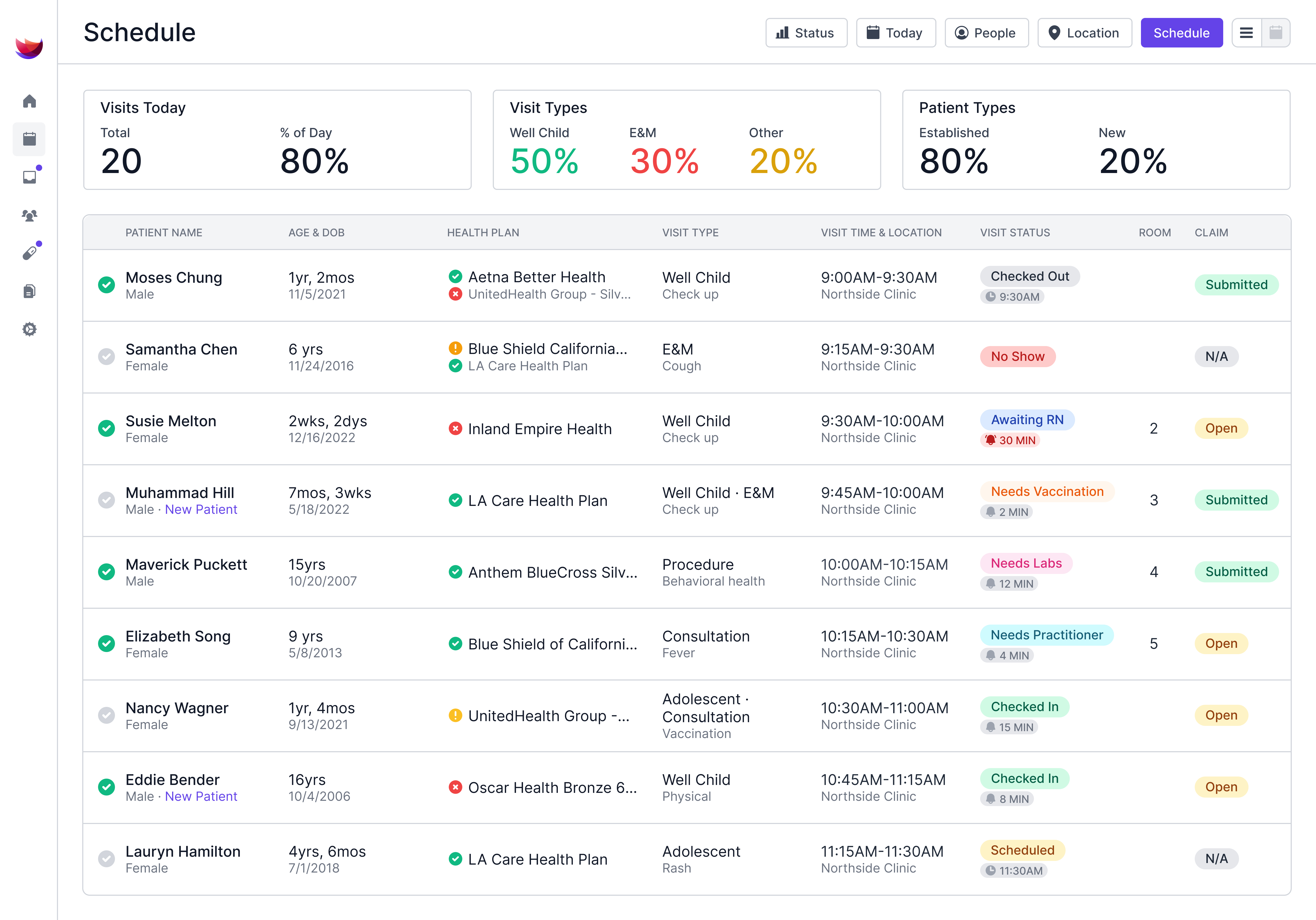
The best Kareo alternatives for pediatric clinics in 2026 are Develo, Office Practicum, and PCC.
After spending weeks digging into pediatric EMRs, billing platforms, and family engagement tools, this list cuts through the noise. You'll see what each option does well, where it falls short, and which type of pediatric practice it actually fits.
6 Best Kareo Alternatives at a Glance
Vendor positioning current as of September 2026. Confirm pricing directly with each vendor.
Why Look for Kareo Alternatives?
Kareo, now part of Tebra, is a cloud-based EMR and billing platform for small independent practices. It's affordable, web-based, and gets the job done for general ambulatory care. The problem? Pediatrics isn't general ambulatory care.
Many generalized competitors are cheaper up front than purpose-built pediatric platforms, but you pay for that price tag in missing functionality. Kareo's main gaps for pediatric clinics:
- No pediatric-specific workflows: Kareo was built for general adult ambulatory care. There's no native vaccine forecasting, no growth charts tuned for pediatric percentiles, no developmental surveillance built in.
- Weak family relationship management. Pediatrics is a family-driven setting. You need to link siblings, manage multiple guardians in blended families, and navigate adolescent confidentiality challenges created by the 21st Century Cures Act information blocking rule, which the AAP's guiding principles for information sharing and blocking in pediatric care address directly.
Generalized platforms like Kareo treat each patient as a standalone record. That leads to duplicated data and claim denials over outdated guarantor information.
- Manual charge capture and billing friction: Kareo handles claims, but pediatric clinics submit massive volumes of low-dollar claims (well child visits, vaccines, screenings). Without automated charge capture, billers reconcile every superbill by hand.
The pediatric billing workload eats labor and lets revenue slip through the cracks.
- No native family engagement layer: Visit reminders, payment reminders, digital intake, and a family portal all sit outside Kareo.
You end up stitching together a separate texting tool, a separate intake vendor, and a generic family portal — none of them built for pediatrics.
TL;DR: Which Kareo Alternative Should You Choose?
- Choose Develo if you run an outpatient pediatric practice, solo or multi-site, and want one system for charting, billing, practice management, and family engagement. Not a fit for multi-specialty or adult primary care groups.
- Choose Office Practicum if you want a pediatric-specific EMR with à la carte pricing and a long track record. Be ready for some legacy interface friction.
- Choose PCC if community, peer benchmarking, and a tight customer support culture matter most. The billing module looks dated.
- Choose athenahealth if you're a multi-specialty group that happens to include pediatrics and need broad cross-platform integration.
- Choose eClinicalWorks if you want bundled revenue cycle services and don't mind missing pediatric-specific niceties like growth charts for premature babies.
- Choose AdvancedMD if you're price-sensitive and your pediatric volume is low enough that a generalized platform still works.
- Stick with Kareo/Tebra if you're a small mixed-specialty practice and pediatric volume is a small slice of your business.
The 6 Best Kareo Alternatives for Pediatric Clinics
1. Develo
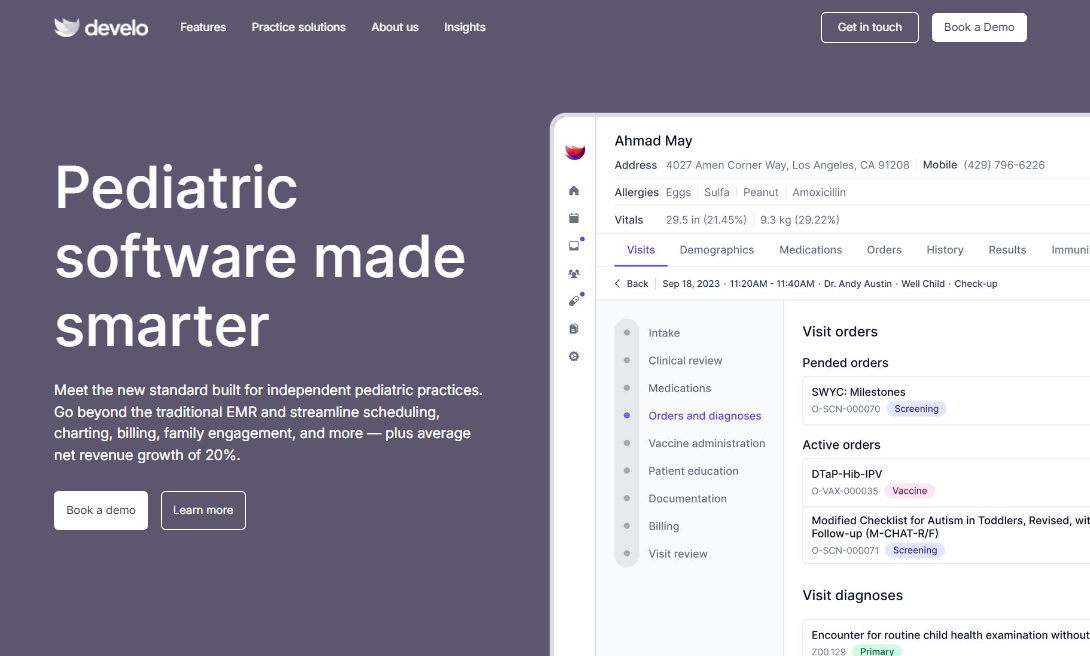
Develo is the AI-native pediatric operating system built solely for independent pediatric practices, unifying charting, billing, practice management, and family engagement in one modern system. It was built for outpatient pediatrics from day one, not retrofitted from an adult ambulatory platform.
It replaces decades-old legacy EMR systems and the patchwork of generic tools that slow down documentation and create gaps in clinical data.
That last point is the real difference between Develo and a generalized platform like Kareo. Most pediatric clinics run an EMR, an intake tool, a payment reminder system, a portal, and a billing service.
Develo collapses that into one platform, with FHIR-native data architecture so the information actually connects.
Key Features
- A suite of AI, not one scribe: Develo provider scribe writes straight into the note from full patient and visit context, not just transcript audio. Develo intake scribe does the same for intake. Ask Develo answers anything about a patient's record, and Develo doc intel auto-tags inbound e-faxes and uploads so they file into the right chart. Documentation finishes during the visit, not at 9 PM at home.
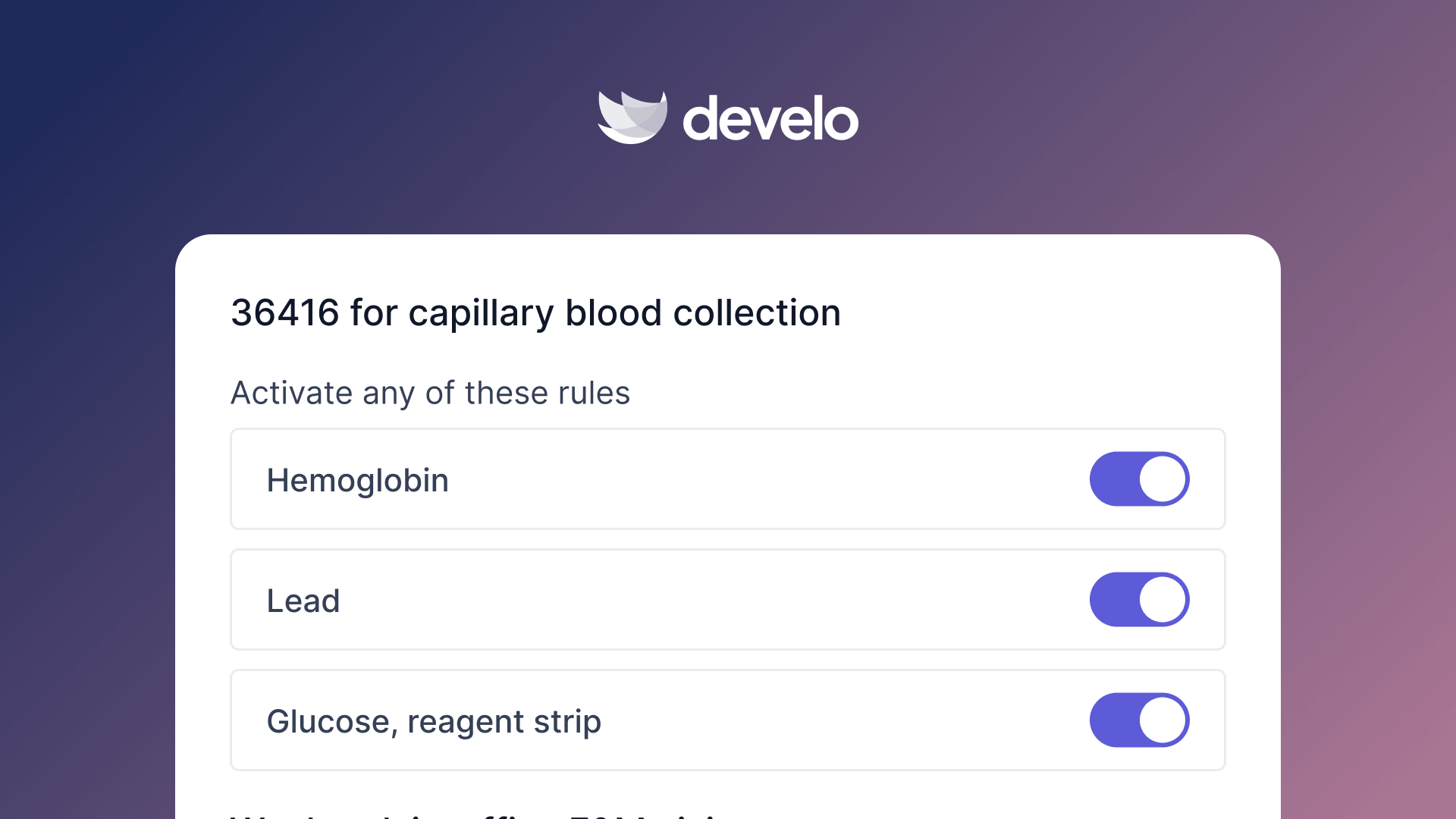
- Automated charge capture: Codes pull from documentation automatically and feed into pre-submission scrubbing. Claim error rates drop and reimbursements come through faster.
- Family-first data architecture: Siblings, guardians, blended families, and adolescent confidentiality all live in the underlying data model, not bolted on top.
- Family portal and engagement: Visit reminders, payment reminders, digital pre-visit check-in, and digital forms run inside the same platform. Native digital screeners — PEDS or SWYC, M-CHAT, PHQ-9, Vanderbilt — go out ahead of the visit, come back scored into the chart, and generate a screening task that flags a concerning result to a provider before the visit starts — so nobody is reading a paper form in the waiting room.
- Pediatric clinical content: Growth charts, immunization schedules following AAP guidelines, vaccine inventory management, pediatric order automation, and standardized screening workflows.
- Built-in integrations: E-prescribe, e-labs, e-fax, and bi-directional state vaccine registry connectivity.
Pros
- ✅ Full-stack pediatrics platform with a native AI suite — provider and intake scribes, Ask Develo, doc intel — plus automated charge capture
- ✅ Family-centered data model designed for pediatric workflows from the ground up
- ✅ Weekly product releases minimum, physician-led, founder-driven
- ✅ Comprehensive pricing with implementation, training, upgrades, and support in the subscription rather than priced as add-ons
Cons
- ❌ Not a fit for multi-specialty or adult primary care groups
- ❌ Newer to market than PCC or OP, smaller user community
Best For
- Independent pediatric practices, solo through multi-site groups, MSOs, and care networks running pediatrics at scale
- Practices replacing a generalized EMR like Kareo with something pediatric-specific
- Clinics tired of stitching together intake, portal, billing, and EMR
Pricing
Develo uses comprehensive pricing tailored to practice size and feature needs. Pricing is shared during a demo. Book a demo to see the platform.
2. Office Practicum (OP)
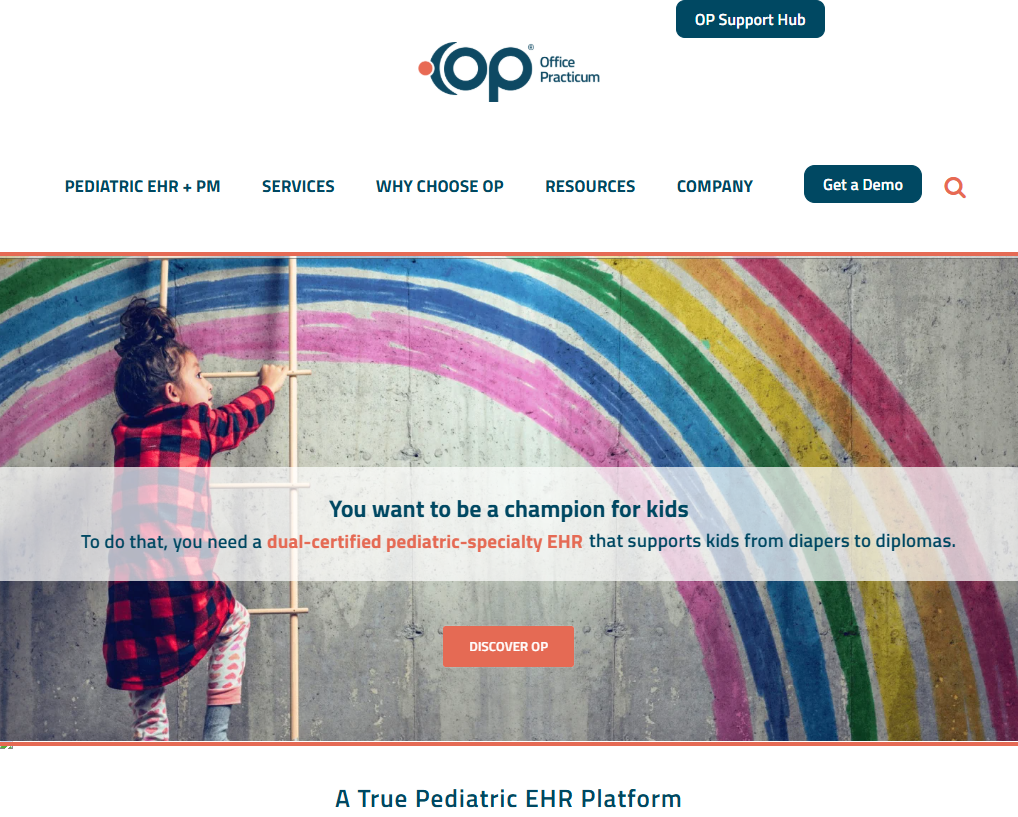
Office Practicum is a pediatric-focused EMR that offers a cloud-hosted solution with roots in on-premise systems.
OP wins on pediatric specificity. You get strong immunization management, growth charts, vaccine forecasting, and an established ecosystem of integrations.
The trade-off? The underlying technology shows its age in some workflows, and the à la carte pricing model means costs add up as you turn on modules.
Key Features
- Immunization management: Strong vaccine tracking, forecasting, and registry workflows
- Pediatric growth charts: Specialized charts including premature babies and Down syndrome
- À la carte modules: Add or remove features to match practice scope
- InteliChart portal: Separate portal product for patient-centric access
Pros
- ✅ Deep pediatric-specific feature set
- ✅ Established user community with frequent webinars and training
- ✅ Modular pricing lets you scale up or down
Cons
- ❌ Some workflows feel dated and require excessive clicks
- ❌ À la carte pricing can lead to nickel-and-diming as you add features
- ❌ Family portal is a separate product (InteliChart), not native
Best For
- Established pediatric practices wanting a pediatric-specific EMR
- Practices that prefer modular pricing
- Clinics that value a long-running user community
Pricing
Custom pricing based on selected modules and practice size. Demo required.
3. PCC (Physician's Computer Company)

PCC is the other major pediatric-specific EMR, privately owned. PCC offers an all-in-one platform available as either on-premise or cloud-hosted.
PCC's strength is community. The customer support is genuinely strong, the user community is tight-knit, and PCC sponsors most of the major pediatric conferences. Their reporting includes anonymized peer benchmarking, which is rare.
The downside? The billing module looks like it's still running on a 90s interface, and integration with modern third-party tools is limited.
Key Features
- Pediatric clinical content: Robust templates, vaccine forecasting, growth charts
- Peer benchmarking reports: Compare your practice metrics against anonymized peer data
- Strong customer support: Tight-knit community and responsive service team
- Bundled SaaS pricing: Includes clearinghouse fees and core features
Pros
- ✅ Excellent customer support and tight user community
- ✅ Long, consistent track record in pediatrics
- ✅ Bundled pricing avoids surprise charges
Cons
- ❌ Billing workflows look dated (users sometimes call them "the dark side")
- ❌ Fewer third-party integrations than large, general-market EMRs
- ❌ Slower innovation pace on AI and automation
Best For
- Pediatric practices that value community and support above feature velocity
- Practices wanting peer benchmarking data
- Clinics not in a rush to adopt AI scribe or automated charge capture
Pricing
PCC doesn't disclose pricing publicly. You need to request a quote for exact pricing.
4. athenahealth
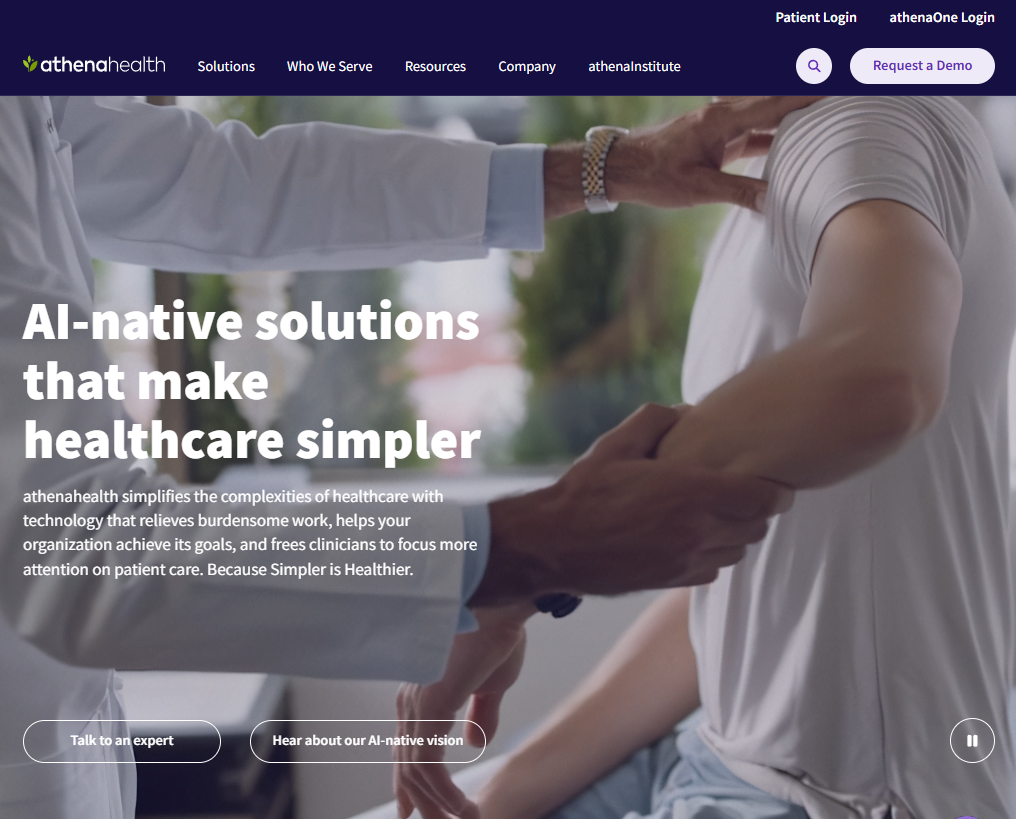
athenahealth is a cloud-based platform serving medical practices, hospitals, and healthcare systems across many specialties. athenahealth is one of the largest broad-specialty vendors and is now backed by private equity.
For pediatric clinics, athenahealth lands in the middle. You get a comprehensive product and reasonably inclusive pricing.
But it's a general ambulatory platform first. Pediatric-specific features like family relationship management and vaccine forecasting are weaker than what you'd get from OP, PCC, or Develo.
Key Features
- Cloud-based EMR with billing and family engagement modules
- Frequent product updates incorporating user feedback
- Strong cross-platform integration with hospitals and health systems
- Mobile app and telehealth built in
Pros
- ✅ Reasonably inclusive pricing without heavy nickel-and-diming
- ✅ Strong fit for groups with hospital affiliations
Cons
- ❌ Lacks pediatric-specific functionality (family record linking, sibling workflows)
- ❌ Some practices supplement with third-party tools to fill admin gaps
- ❌ Charges based on percentage of collections, which can scale awkwardly
Best For
- Multi-specialty groups that include pediatrics
- Practices with hospital system affiliations needing data exchange
- Larger groups comfortable with percent-of-collections pricing
Pricing
athenahealth doesn't publish rates; it states only that "our pricing model corresponds to your organization's collections," so cost scales with what you bring in. Custom quote required.
5. eClinicalWorks
eClinicalWorks is a broad-specialty cloud EMR with bundled revenue cycle management services. For pediatric clinics replacing Kareo, eClinicalWorks is a logical step up if your priority is getting RCM services bundled in. The trade-off is missing pediatric-specific functionality.
Key Features
- Bundled RCM services: Outsourced billing as part of the package
- Healow family portal: Family-facing portal for engagement
- Telehealth and mobile app
- Cross-specialty support
Pros
- ✅ Bundled RCM services reduce billing staffing needs
- ✅ Affordable compared to athenahealth or PCC
- ✅ Broad specialty coverage if your practice mix shifts
Cons
- ❌ Less robust pediatric-specific functionality, particularly around specialized growth charts and family workflows, compared with OP or PCC.
- ❌ Interface feels cluttered for high-volume pediatric workflows
Best For
- Practices wanting bundled RCM services
- Multi-specialty groups not heavily pediatric
- Clinics replacing Kareo with similar broad-specialty positioning
Pricing
Custom pricing based on practice size and RCM services selected. Demo required.
6. AdvancedMD

AdvancedMD is a generalized cloud EMR and practice management platform for small to mid-size ambulatory practices. AdvancedMD sits in a similar lane to Kareo/Tebra. It's affordable, broadly featured, and built for general ambulatory care across multiple specialties.
If you're leaving Kareo specifically because of cost or feature gaps and your pediatric volume is light, AdvancedMD is a familiar shape. You'll still face the same lack of pediatric specificity. The structural problem doesn't go away just because you switch generalized platforms.
Key Features
- Cloud-based EMR with practice management and billing
- Telehealth and family engagement modules
- Reporting and analytics
- Mobile provider app
Pros
- ✅ Affordable compared to pediatric-specific options
- ✅ Familiar feel for practices already on generalized platforms
- ✅ Available add-on modules for billing services
Cons
- ❌ No pediatric-specific workflows or content
- ❌ Family relationship management treats each patient as standalone
- ❌ Billing workflows are more manual for high‑volume pediatric use cases, with less automation than pediatric‑specific systems.
Best For
- Smaller practices with light pediatric volume
- Mixed-specialty offices replacing Kareo on a budget
- Clinics not ready to commit to a pediatric-specific platform
Pricing
Custom pricing based on practice size and modules. Demo required.
How to Evaluate Kareo Alternatives
When you're comparing pediatric EMRs, the question isn't "which platform has the most features." It's "which platform fits how pediatric care actually works." Here's the framework that matters:
- Pediatric specificity vs. general ambulatory: Pediatric care has nuances that general platforms miss: vaccine schedules, growth tracking, developmental surveillance, family relationships, adolescent confidentiality.
Ask vendors to show specific pediatric workflows, not just feature lists. Generalized platforms always claim pediatric support. The proof is in the actual day-to-day operation.
- Family-centered data architecture: Can the system link siblings under one family record? Handle blended families with multiple guardians? Protect adolescent records from parent visibility despite the 21st Century Cures Act's information-sharing mandate?
Newborns are the stress test. A baby arrives before there's a member ID and sometimes before there's a legal name, and the practice has to register the visit against the mother's policy, knowing coverage back-dates to birth. Ask the vendor to show you that exact registration, live. On a generalized platform the answer is usually a placeholder record your front desk merges later — which is the same "we have a workaround" answer, and it's still a no.
- Billing automation depth: Pediatric clinics submit massive volumes of low-dollar claims. Manual charge capture and superbill review eat staff hours.
Look for automated charge capture from documentation, pre-submission scrubbing, and integrated denial management. Billing is where pediatric revenue actually shows up.
- Vaccine inventory and VFC: This is the fastest way to tell a pediatric platform from a generalized one. Ask whether the system tracks VFC and private stock as separate inventories, decrements the right lot at the right eligibility, and reports the administration back to your state registry bi-directionally. Generalized platforms treat a vaccine as a line item and leave the eligibility logic to your staff, which is where both doses and revenue go missing.
- Family engagement integration: Visit reminders, payment reminders, intake, and the family portal should live in the same system as the EMR. Stitched-together third-party tools mean duplicate data entry and missed touchpoints.
- Innovation pace: Pediatric EMRs built in the 80s and 90s rarely deliver meaningful new features. Ask how often new features ship. Ask about the AI roadmap.
Ask whether the company invests revenue in product or has been acquired by private equity that's optimizing for cost cuts.
- Implementation and support fit: Pediatric practices are typically small and lean. Implementation that takes 6+ months or requires dedicated IT staff is a problem.
Look for cloud-based deployment, modern training resources, and accessible support without long ticket queues.
Replace the Pediatric Tech Stack with Develo
Most pediatric clinics leaving Kareo aren't really shopping for a new EMR. They're tired of the patchwork: an EMR that doesn't speak pediatrics, a separate intake tool, a separate texting tool, a separate portal, a billing service that misses charges.
Each tool works fine on its own. The seams between them are where the time and money leak out. Develo replaces that patchwork with one platform purpose-built for pediatrics:
- Six AI capabilities, native — provider and intake scribes, Ask Develo, doc intel, reports Q&A, and AI forms, shipped inside the platform rather than bolted on
- Automated charge capture that pulls codes from documentation and feeds pre-submission scrubbing
- Family-first data model with native sibling linking, blended family support, and adolescent confidentiality
- Family portal for self-scheduling, family messages, payments, after-visit summaries, and immunization records
- Pediatric clinical content following AAP guidelines, including immunization workflows and growth charts
- Built-in integrations with e-prescribe, e-labs, e-fax, and state vaccine registries
- Implementation in weeks, not quarters — configuration, training, data migration, and go-live support are bundled into your subscription, with no implementation fee
- A weekly release cadence — physician-led and founder-driven, not a quarterly upgrade cycle across fragile versions
You don't need five solutions to run a pediatric practice. You need one operating system that connects charting, billing, practice management, and family engagement. Book a free demo and see how Develo compares to Kareo and the other alternatives on this list.
Frequently Asked Questions
1. What Is the Best Kareo Alternative for Pediatric Clinics?
Develo is the strongest option for clinics that want charting, billing, practice management, and family engagement in one AI-native system. Office Practicum and PCC are the best legacy pediatric-specific options. athenahealth fits multi-specialty groups with pediatric volume.
2. Is Tebra the Same as Kareo?
Yes. Tebra is the company formed by the 2021 merger of Kareo and PatientPop, and the Kareo brand was formally retired on December 5, 2024, when kareo.com began redirecting to tebra.com. The product lives on inside Tebra, and most practices still say "Kareo" when they mean the EMR and billing modules.
3. Are Kareo Alternatives More Expensive?
Most pediatric-specific Kareo alternatives are more expensive on paper because they include functionality Kareo doesn't.
Kareo and other general ambulatory platforms tend to run cheaper but ship fewer pediatric features. The total cost of ownership often favors pediatric-specific platforms once you factor in the third-party tools you'd otherwise need.
4. Can I Switch From Kareo to a Pediatric EMR Without Losing Data?
Yes. We have migrated practices off Kareo/Tebra into Develo, and data migration is part of implementation rather than a separate line item. The pediatric-specific fields are where generalized migrations break: immunization histories with lot numbers and VFC eligibility, growth and vitals series, and patient-caregiver links.
Ask any vendor how those three survive the move, not just whether demographics and balances transfer. Develo's data migration page lists the source systems already mapped, Tebra included.

%20(1).png)


.png)
.avif)