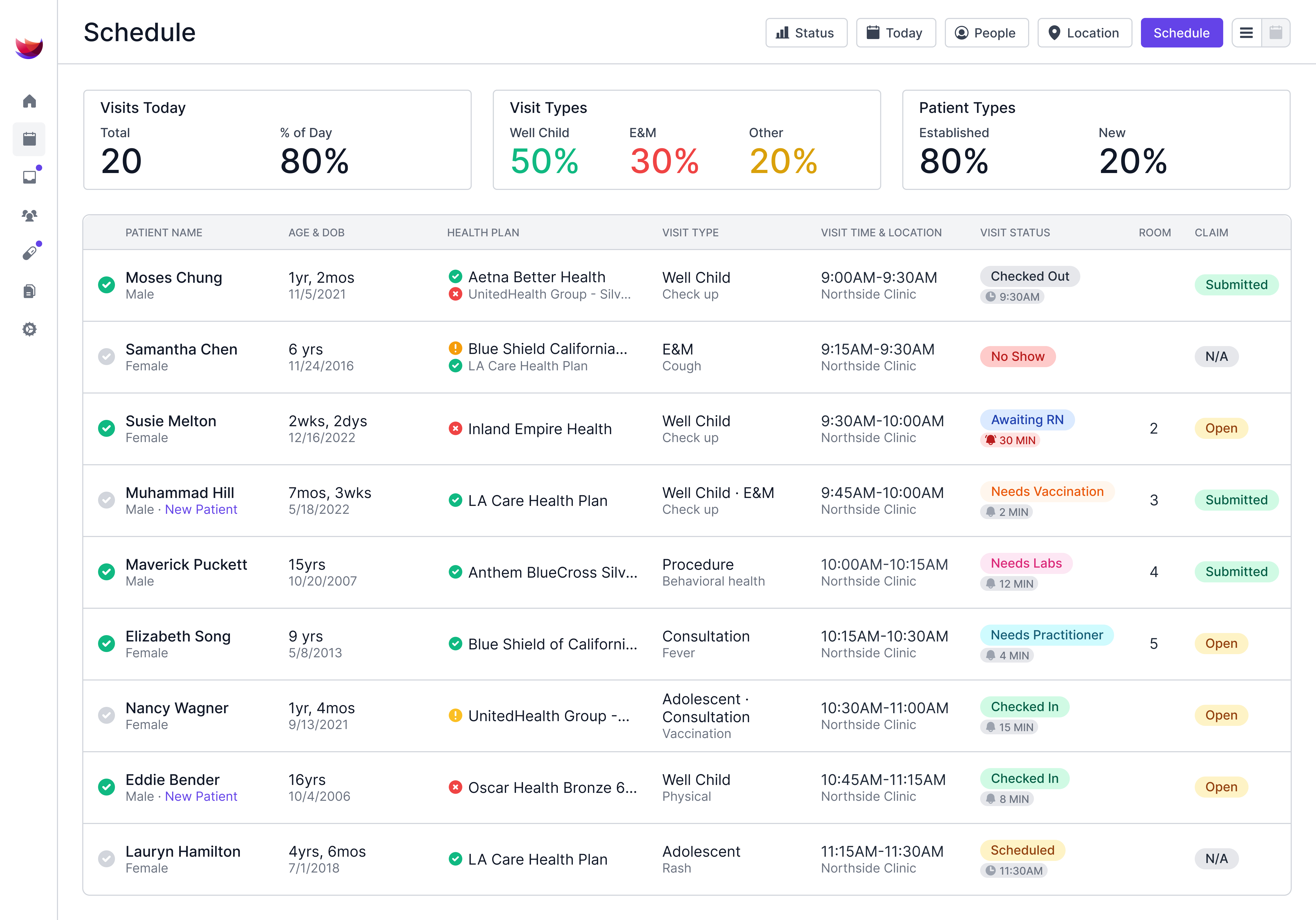


Office Practicum reviews from pediatricians, office managers, and practice administrators tell a consistent story: the pediatric tools and support team win praise, while clunky templates and add-on costs frustrate users. Here's what real users say, and whether OP still fits your clinic in 2026.
Quick Verdict (TL;DR)
Office Practicum is a pediatric-specific EMR that registered its first patients in 1986, when Fred and Dr. Edna Pytlak opened their Park Slope, New York, practice, and it's now based in Fort Washington, Pennsylvania.
It serves independent pediatric practices, with tools tailored to pediatric office workflows like vaccine tracking, growth charts, and well child visit recalls.
Common complaints in Office Practicum reviews are clunky templates, slow rollout of essential modules, and à la carte fees that add up. It's also partway through a staged rebuild of its core platform that runs to the end of 2027.
Best fit: established pediatric practices already invested in OP workflows and comfortable layering on third-party tools.
Office Practicum Features
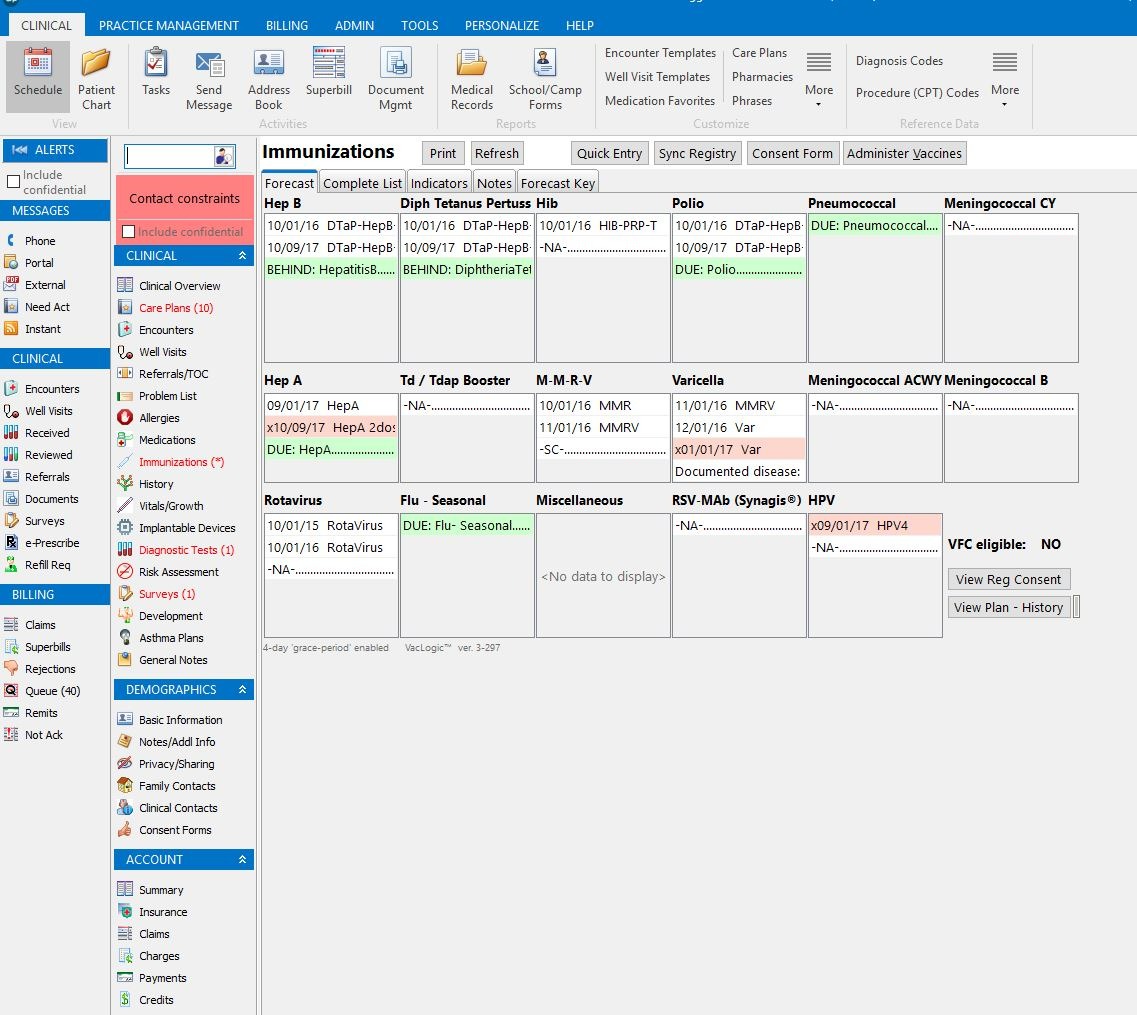
Office Practicum's core capabilities include:
- Pediatric charting and templates: Documentation built for well child visits, sick visits, and growth tracking
- Immunization management: Vaccine inventory, AAP-based vaccine forecasting through VacLogic+ and automatic reporting to state registries
- Patient scheduling and recalls: Visit booking, reminders, and overdue patient outreach that doubles as light pediatrician marketing
- Patient portal (BridgeInteract and InteliChart): Caregiver access to records, forms, and visit history
- Billing and reporting: Claims management, financial reports, and a newer collections module
- Third-party integrations: Phreesia for digital patient intake, CHADIS for clinical screeners (including adolescent tools like CRAFFT screening), and other partner add-ons
Limitations: Many features are priced à la carte, including portal upgrades, certain integrations, and extra training.
Several core tools also come from partner vendors: the portal from BridgeInteract and InteliChart, intake from Phreesia, screeners from CHADIS, and the Opie AI scribe from Insight Health. Each is a separate relationship to manage, and OP doesn't publish what they cost.
Office Practicum Reviews: What Real Users Are Saying
We pulled Office Practicum reviews from Capterra and Software Advice to get a balanced picture. As of October 2026, Office Practicum holds 4.2 out of 5 across 277 Capterra reviews. Here's what stood out:
Pros
✅ Built for pediatric workflows: Kristin C., a medical office manager with 2+ years on Office Practicum, said the system is truly built for pediatric practices and makes a big difference in daily operations.
She called the scheduling, charting, immunization tracking, and recalls intuitive and tailored to pediatrics, and credited the texting and check-in tools with improving front-desk efficiency.
✅ Responsive support team: Cyndi K., a population health manager who has used Office Practicum for 14 years, said the team is very responsive and genuinely invested in its clients' success.
She also noted that when update issues come up, they get addressed quickly.
✅ Strong financial reports and recall tracking: Martin J., a practice administrator with 2+ years on the platform, praised Office Practicum for generating excellent financial and insurance reports.
He also highlighted how easy it is to stay in close contact with parents and children, especially those overdue for a vaccine or a well child visit.
Cons
❌ Clunky templates and extra clicks: Dr. Mylai G., a pediatrician at a practice in Palm Springs, Florida, said she can't combine well child visit template notes with sick visit template notes.
Her workaround is opening a second window and copy-pasting between templates, which adds clicks to every abnormal visit.
❌ Slow to roll out essential modules: Holly V., a practice administrator and CEO with 2+ years on Office Practicum, said her practice waited many years for a built-in collections module.
She's glad it finally launched, but flagged the delay as a meaningful frustration for billing and revenue cycle work.
❌ Update releases can slow things down: Dr. Rosa M., a pediatrician who has used Office Practicum for 18 years, said the ongoing innovation brings valuable features, but "some issues may take a bit longer to resolve during these transitions."
Overall, Office Practicum reviews praise the pediatric focus and engaged support team but point to three fixable frustrations: template workarounds, a long wait for the collections module, and slower fixes after some releases.
Tip: If billing is where OP's friction shows up for your practice, this billing cheat sheet lists the CPT, ICD-10, and vaccine codes your software should capture at every visit.
Office Practicum Reimagined: Inside the Staged Rebuild
Dr. Rosa M.'s comment about transitions is worth reading alongside a bigger change now underway. OP has told its existing customers about the Reimagination Initiative, a roughly two-year program to rebuild its EMR piece by piece with what it calls a "fully cloud-native" platform, running from early 2026 to the end of 2027. Phasing it in lets OP pilot each piece and fix problems before it reaches every practice, and OP said Dr. Barbara Periard, the chief medical officer it named in September 2026, will help shape how its technology develops for pediatric practices.
The order matters for pediatrics: The front desk and sick visits are first in line. Well child visits, the heart of a pediatric schedule, follow them, while charge entry stretches into mid-2027 and payment entry, along with the workflows that support it, lands in the second half of 2027.
Old and new screens, side by side: Instead of moving everyone on one date, OP lets each practice decide when to turn on each new workflow, and both versions share the OP Cloud database. A clinic could chart a sick visit in the redesigned screens in the morning and a well child visit in the familiar ones that afternoon. OP describes the new platform as "not refactored legacy software," yet it sits on that same database. New workflows on an existing data model raise a fair question: is the foundation under well child visits, immunization histories, and family relationships changing, or only the screens on top of it? Ask OP to show which parts of the data model are new, how long your team would work across both versions, and whether training for each stage is included.
More hand-offs to keep intact: The portal (run by two different vendors), reminders, intake, screeners, and the Opie AI scribe all come from partners, so each integration has to hold up through every phase while the core underneath it changes.
Two migrations for server-based practices: Practices that still host OP on their own server have been told to plan a move to OP Cloud now, since new features will be cloud-only. The reimagined platform then arrives as a second migration, and a practice that signs with OP during the rollout could face the same two moves soon after go-live.
For current OP users, the practical step is to confirm which redesigned workflows are generally available, as opposed to running in pilot practices, and to get any promised dates in writing.
Our Take on Office Practicum
The strengths in Office Practicum reviews are real: pediatric scheduling, immunization workflows, and family communication tools feel genuinely built for children's care.
For practices that have run on OP for a decade or more, the muscle memory and pediatric-specific design make a strong case to stay.
The frustrations are equally real: Office Practicum's roots in software first used in the 1980s show up in the click count, the legacy interface, and the third-party integrations needed for intake, screeners, and the portal.
With the reimagined platform arriving one workflow at a time until late 2027, how OP feels day to day will depend on which parts of it your practice has switched over.
If you want a system with deep pediatric history, Office Practicum still does the job. If you want one platform that runs your whole clinic without partner add-ons, OP's limitations may outweigh its strengths, and Develo's AI-native platform is worth comparing.
Is Office Practicum Right for You?
Who will love it:
- Established pediatric practices already trained on OP workflows
- Clinics comfortable with modular, à la carte pricing for features
- Practices that don't mind paying separately for intake, screeners, and a third-party patient portal
Who should avoid it:
- Newer or growing pediatric clinics that want a clean, modern interface from day one
- Practices that want a clear, up-front quote rather than pricing that shifts with every module added
- Teams wanting natively built AI documentation, automated charge capture, and family engagement in one platform, rather than a legacy EMR with bolted-on partner integrations
- Practices modernizing the whole visit, from the waiting room to digital intake to AI documentation
- Server-based OP practices that would rather not migrate twice before the rebuild is done
Final Verdict
Office Practicum is a solid choice if you want a pediatric EMR with a long track record, an active user community, and modular features. If you'd rather run intake, charting, billing, and family engagement in one system without managing partner vendors, Develo is worth a demo.
Develo: A Modern Office Practicum Alternative
If Office Practicum's older architecture and per-module fees are creating friction for your team, Develo works differently.
Develo is the AI-native operating system for pediatrics, unifying charting, billing, practice management, and family engagement in one system built from day one for outpatient pediatric care.
It replaces decades-old legacy EMR systems and the patchwork of generic tools that slow down documentation and create gaps in clinical data. Unlike Office Practicum, Develo doesn't ask you to assemble your stack from third-party intake, screener, portal, and AI vendors. Develo also ships minor releases weekly and major releases biweekly with zero downtime, so a fix or a new module doesn't wait for a quarterly update.
What you get with Develo:
- One note for a combined visit: A sick concern raised during a well child visit is documented in the same note, with separate preventive and problem-oriented sections, so there's no second window and no copy-paste between templates.
- Develo AI scribe: One scribe for intake and the exam room writes into the templates you already use, including sick-and-well splits, drawing on pertinent chart context, not just the audio. It works in dozens of supported languages and suggests diagnoses and the E/M level, with a clinician approving every section. It's priced separately.
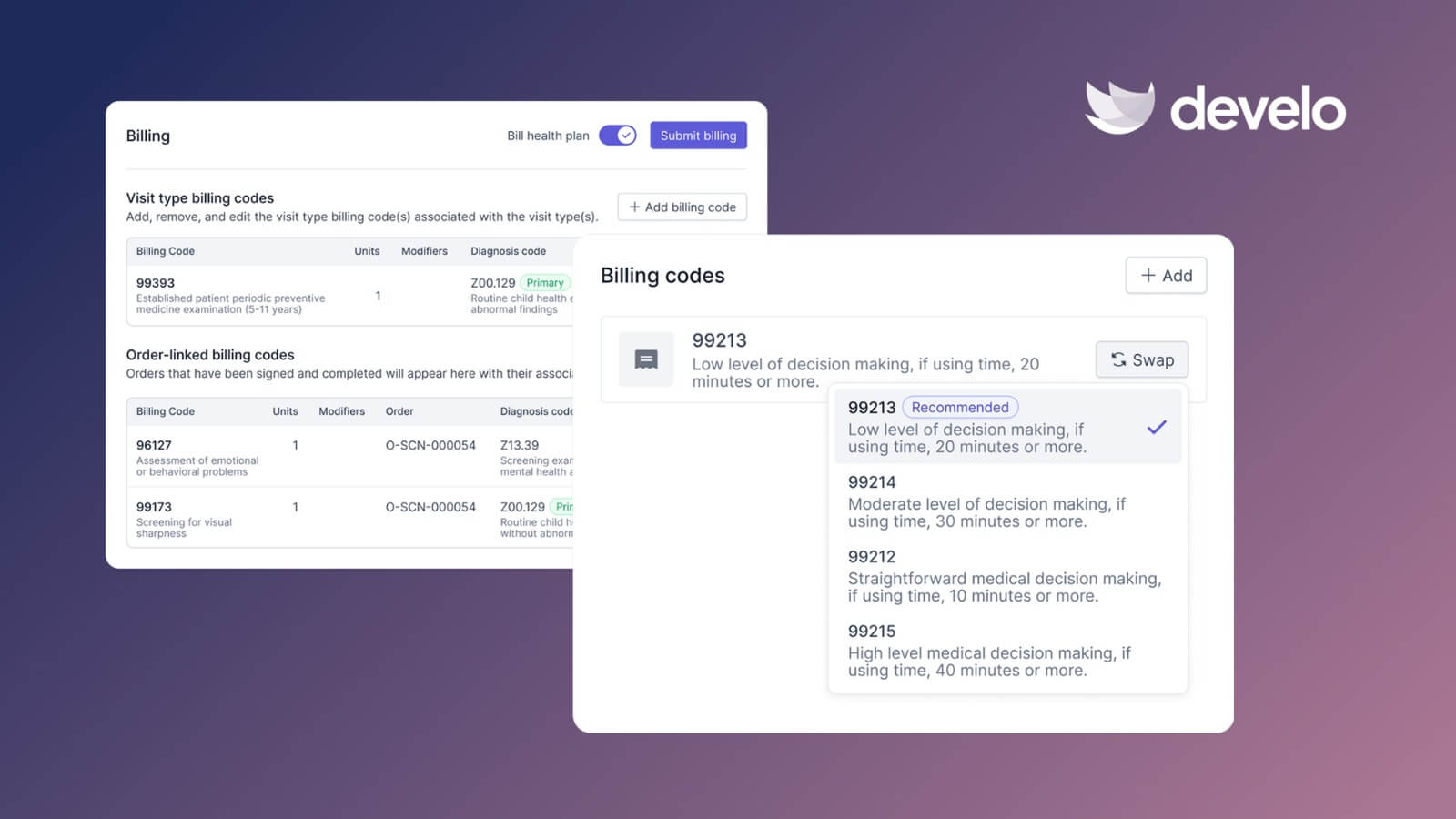
- Automated charge capture: Billing codes are pulled from your visit notes, which reduces biller workload and protects top-line revenue.
- Family-first engagement: Families get visit reminders, payment reminders, digital forms, digital screens, pre-visit intake, and a built-in family portal.
- Built-in integrations: E-prescribe, e-labs, e-fax, and state immunization registry connections come out of the box.
- Comprehensive pricing: One per-provider monthly fee covers digital intake, screeners, and the family portal, and bundles in data migration, configuration, training, and go-live support. The Develo AI scribe is currently the only AI capability priced separately.
Running a modern pediatric practice works best when charting, billing, practice management, and family engagement live in one system. Book a free demo to see a full pediatric visit in Develo, from check-in through charge capture.
Frequently Asked Questions
Is Office Practicum Good for Small Pediatric Practices?
Office Practicum can work for small pediatric practices, especially solo or two-provider clinics already trained on the system. Because OP doesn't publish pricing and several features come through partner vendors, ask for a quote that itemizes the portal, intake, screeners, and AI scribe before comparing total cost.
How Much Does Office Practicum Cost?
Office Practicum doesn't publish its cost on its website. Pricing varies by practice size and the modules you choose, and OP sells many features à la carte or through partner vendors, so the base or package price in a quote is rarely the full cost. As one pediatric practice evaluating Develo told us, "We get many surprise fees from our current EMR [Office Practicum], so we collectively are very sensitive to this." Before you compare quotes, ask OP to price each of these in writing, and whether any are billed per message, per claim, or per transaction:
- Texting and faxing
- E-prescribing
- Clearinghouse fees, and any percentage of collections charged on claims
- Patient portal
- Digital intake
- Digital screeners
- Payments processing
Does Office Practicum Have an AI Scribe?
Yes. In April 2025, Office Practicum announced Opie AI, a white-labeled version of Insight Health's AI scribe customized for pediatrics, with availability starting in May 2025.
The key difference with Develo is architectural: Opie AI is a partner scribe layered onto a legacy EMR, while the Develo AI scribe is built into the platform. It writes into the visit template your practice already uses, including sick-and-well splits, and pulls in what's pertinent from the chart, such as the problem list, growth data, immunizations, in-house tests, and screening results, rather than relying on the audio alone. It captures visits in dozens of supported languages and returns the note in English, suggests diagnoses and the E/M level, and works at intake as well as in the exam room, with a clinician approving every section. It's also part of a native AI suite alongside AI eligibility checks, Ask Develo, Develo doc intel, and Develo reports Q&A.
Is Office Practicum Rebuilding Its Platform?
Yes. OP is rebuilding its EMR one workflow at a time, under a program it calls the Reimagination Initiative that began in early 2026 and is scheduled to finish at the end of 2027. Sick visits and the front desk lead the rollout, well child visits follow, and payment entry is among the last pieces. Until a practice turns a workflow on, it keeps using the existing OP Cloud version, and because both versions share one database, it's fair to ask how much of the foundation is actually new.
What Is the Best Alternative to Office Practicum for Pediatric Practices?
The best Office Practicum alternative depends on what you want to fix. PCC is a pediatric-specific EMR known for strong support, so it's worth a look if support matters most. If you want a modern, integrated system, Develo runs intake, charting, billing, and family engagement in one platform with a native AI suite, backed by hands-on implementation and responsive support, with no implementation fee.
Does Office Practicum Integrate With Phreesia and CHADIS?
Yes, Office Practicum integrates with Phreesia for intake and CHADIS for clinical screeners. Both are separate vendors, and so are BridgeInteract, which powers OP's own portal, and InteliChart, which now contracts with OP practices directly. Each partner is another contract, login, and support line for the practice to manage.
Can You Migrate From Office Practicum to Develo?
Yes. Develo migrates pediatric practices off Office Practicum and the partner tools around it. Develo's data migration page lists a typical OP stack (Office Practicum, InstaMed, Phreesia, InteliChart, and Solutionreach), and every migration runs on a pediatrics-optimized template built for the source system. Whichever vendor you evaluate, ask how it carries over immunization histories with lot numbers and VFC eligibility, growth and vitals series, and the links between each child and their caregivers. Those are the pediatric fields generic migrations break.