

Handwritten prescriptions depend on a pharmacist reading a provider's writing correctly. When it's unclear, pharmacy staff may have to call the practice to confirm the dose, and that call can land in the middle of another child's visit.
E-prescribing replaces the handwritten script with structured data sent straight to the pharmacy's system.
Below, we draw on studies of pediatric prescribing errors and pharmacist practices, as well as current Centers for Medicare and Medicaid Services (CMS) rules, so you can see which e-prescribing benefits a pediatric practice can count on and how a system should be delivering them.
What Are the Benefits of E-Prescribing?
E-prescribing lowers the risk of prescribing errors, shortens pharmacy turnaround time, and cuts down on calls about unclear scripts.
Each script arrives with the drug name, dose, and instructions typed into clear fields, so there's nothing for the pharmacist to decipher. For families, there's also no paper script to lose on the way to the pharmacy counter.
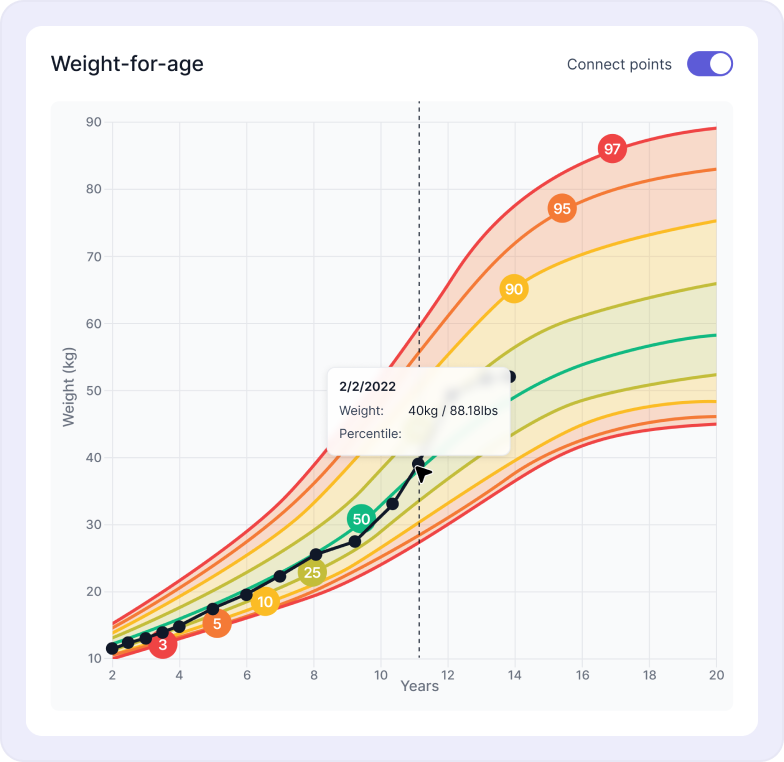
A dose that's correct one day can be wrong months later once a child has grown. Weight, age, and sometimes body surface area all factor into pediatric dosing, and a dose range check compares each new prescription against the expected range before it reaches the pharmacy.
In a 2024 systematic review of 17 pediatric studies, most of them of hospital inpatient orders (Ruutiainen et al., Pediatric Drugs), dose range checks were the most widely used decision support tool, and eight of the studies found a significant drop in dose errors once computerized ordering with those safety checks was in place.
How Does E-Prescribing Reduce Medication Errors in Children?
E-prescribing reduces medication errors in children mainly by cutting down on missing information, illegible handwriting, and manual data entry.
Typed fields make every script legible by default, and a system can flag an order that's missing a required detail before it's sent.
On the inpatient general wards of the University Children's Hospital Zurich (Satir et al., European Journal of Pediatrics, 2023), potentially harmful errors dropped from 18.4 to 10.5 per 100 prescriptions after the hospital introduced computerized ordering.
Before the switch, those wards used a mix of paper and electronic scripts, and the electronic ones already carried fewer potentially harmful errors: 15.7 per 100, compared with 22.6 per 100 for handwritten orders.
A large share of the drop came from missing information, such as an order without a route of administration. Dosing errors didn't change significantly. The researchers linked that to a web-based dosing tool the hospital already used, and the new system had no automated dose check of its own.
In a 2023 systematic review of 28 community pharmacy studies (Hareem et al., Exploratory Research in Clinical and Social Pharmacy), pharmacists reported that safety gains stemmed from clearer scripts, fewer data entry errors, and better access to patient information.
How Does E-Prescribing Save Pediatric Practices Time?
E-prescribing saves pediatric practices time by cutting out manual steps: no faxing, no spelling a drug name over the phone, and no typing the same details into two systems.
A refill request that used to mean a phone call and a wait for a callback can arrive as an electronic renewal request that a provider can approve between patients.
A pediatrician who sends a prescription for something like an ear infection or an ADHD refill without leaving the patient's chart doesn't need to step away to phone it in or track down a fax number.
Front-desk staff spend less time relaying messages between a pharmacist and a provider, too, which leaves more room for check-in, scheduling, and the rest of the office workflow.
How Does E-Prescribing Help With Compliance and Billing?
E-prescribing can help practices meet federal requirements and cut down on the paperwork tied to controlled substances and prior authorizations.
Under Section 2003 of the 2018 SUPPORT Act and the CMS rules that carry it out, prescribers must send at least 70% of their Medicare Part D controlled substance prescriptions electronically each measurement year. CMS automatically exempts prescribers who write 100 or fewer of those prescriptions in a year. Medicare Part D covers very few children, so most pediatric prescribers fall under that exemption, and the EPCS rules that reach a pediatric practice usually come from the state.
States can set their own EPCS requirements, separate from the CMS program, and those rules can apply to the stimulant ADHD medications that pediatric providers prescribe regularly.
E-prescribing systems can also check a medication against a patient's insurance formulary while the prescriber is writing it, using real-time benefit tools that Medicare Part D plans have had to support since 2021. Few children are on Part D, though, so for a panel weighted toward Medicaid, CHIP, and commercial plans, how much formulary detail comes back depends on the payer.
When it does, a family hears that a drug isn't covered while they're still in the exam room, and the provider can suggest a covered option on the spot.
Flagging coverage before the script is sent can also mean fewer prior authorization requests land on the billing team after the visit.
What Should Pediatric Practices Look for in an E-Prescribing System?
A general e-prescribing tool built for adult primary care may lack native support for weight-based pediatric dosing and formulations. Features worth checking before you choose a system include:
- Weight-based dose checks: The system pulls the patient's latest growth data into each prescription automatically.
- EPCS certification: Included as a standard feature, so controlled substance scripts don't need a separate tool.
- Pediatric-tuned alerts: Formulary and drug interaction warnings built around pediatric medications and dosing ranges.
- Chart integration: Prescriptions sit next to the allergy list and growth history in the same record.
- Concentration and mL dosing: Oral liquids like amoxicillin come in more than one strength, so the script should carry the concentration and the dose in mL. The AAP recommends metric, mL-based dosing for oral liquids instead of teaspoons.
Practices juggling a separate pediatric EMR, e-prescribing tool, and vaccine inventory management system often end up entering the same patient details more than once in software that doesn't share data.
A single system that handles prescribing, growth tracking, and immunizations keeps that information in one chart, which is worth weighing when you're choosing an EMR built for pediatrics.
That same community pharmacist review also reports the downsides of e-prescribing. Slow processing, unresponsive systems, and transmission problems frustrate pharmacists, and a poorly designed system can hurt the quality of care. Ask any vendor how often its prescribing tool goes down and how failed transmissions get flagged.
Simplify E-Prescribing for Your Pediatric Practice With Develo
Pediatric prescribing goes smoothly when the dose, the allergy list, and the latest weight are all in front of the provider when the order gets written.
Develo is the AI-native operating system for pediatrics, unifying charting, billing, practice management, and family engagement in one platform built solely for pediatrics.
Develo is ONC-certified for electronic medication ordering, and the e-prescribing benefits it supports include:
- Electronic prescription transmission: Medications are created, recorded, and sent to the pharmacy directly from the patient's chart.
- Controlled substance e-prescribing (EPCS): Controlled substance prescriptions, including ADHD stimulants, are sent electronically from the same workflow as every other script, included as standard.
- Favorite medications and sigs: Favorite medications, including favorite sig (dosing instruction) options, can be saved at the practice, location, or individual prescriber level.
- Weight-based dose checks: Each prescription pulls in the patient's latest recorded weight automatically, so the dose is checked against it before the script is sent.
- Concentration and mL dosing: Liquid prescriptions carry the concentration and the dose in mL, so the pharmacy label and the family's dosing syringe match what the provider ordered.
- Drug-drug and drug-allergy interaction checks: The patient's allergy list is pushed into the prescribing workflow automatically, so potential interactions are flagged at the point of prescribing, with warnings and dosing ranges built around pediatric medications.
- Electronic renewals: Pharmacy renewal requests arrive in the provider's queue to approve or decline, with no callback.
- Formulary checks: Coverage and covered alternatives show while the prescription is being written.
- Drug reference: A linked drug reference sits one click from the order, to help with medication and dosage decisions.
- Prescribing agents: Practices can set up select nurses as prescribing agents who send select non-controlled prescriptions on a prescriber's behalf.
Develo's e-prescribing is built into a clinical workflow designed only for pediatrics:
- One pediatric chart: Prescribing lives in the same system as Develo's pediatric charting, growth charts, and immunization records. Prescriptions can be sent outside a visit, without the orders-only encounters many other systems require.
- Prescribing from tasks: Triage calls, refill requests from family messages, and other tasks can end in a prescription, because e-prescribing is built into every task workflow.
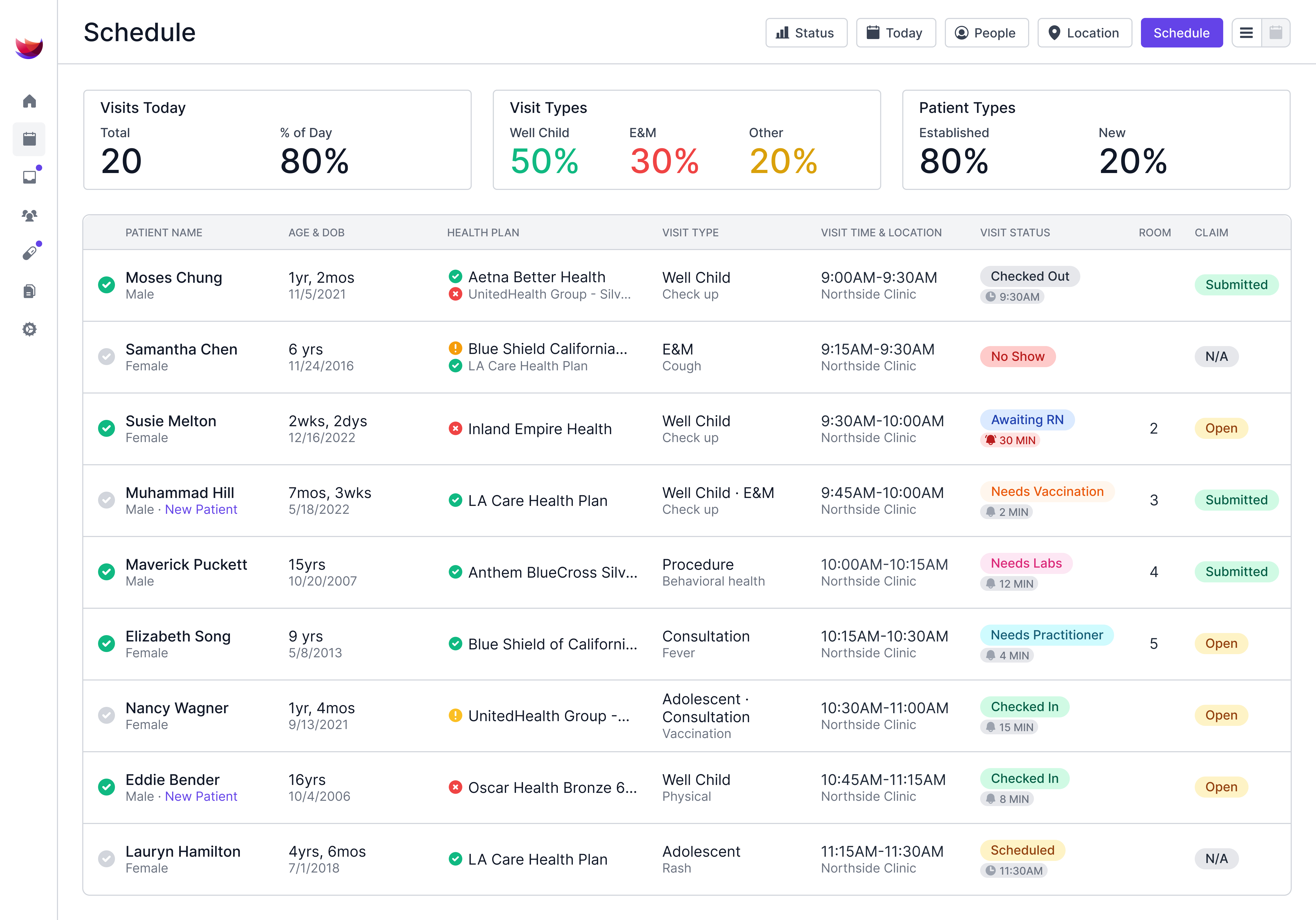
- Default pharmacy: Each patient's default pharmacy, plus a practice-wide list of favorite pharmacies, is available at front-desk check-in and in nurse, medical assistant, and provider workflows, so prescriptions go to the right pharmacy.
- Ask Develo: Ask anything about a patient to get caught up on their history before writing the prescription.
Book a demo to see how e-prescribing works in Develo and fits into broader pediatric visit workflows.
Frequently Asked Questions
What Is E-Prescribing?
E-prescribing is the electronic transmission of a prescription from a provider's software to the pharmacy's software. The pharmacy gets a digital record it can open, check, and fill.
Can E-Prescribing Be Used for Controlled Substances?
Yes, controlled substances can be e-prescribed, but only through software that has passed a third-party audit or certification under Drug Enforcement Administration rules. A system cleared for routine e-prescribing may still need that separate EPCS approval.
Does E-Prescribing Work for Prescription Refill Requests?
Yes, a pharmacy can ask for a refill electronically, and the provider approves or declines it from inside the prescribing software. Certified systems handle this through standard renewal request and response messages.
Is E-Prescribing Required by Law?
Partly. The federal mandate covers controlled substance prescriptions for Medicare Part D patients, a group that rarely includes children, so state requirements usually matter more to a pediatric practice. Your state board of pharmacy can confirm which rules apply to your practice.
How Is Pediatric E-Prescribing Different From Adult Care?
The main difference between pediatric and adult e-prescribing is dosing. Many pediatric doses are calculated per kilogram, so a pediatric-ready system needs the latest recorded weight to flag a dose outside the safe range.