

Well child visits from the first week of life through age 21 each have their own set of screens, from hearing tests for newborns to depression questionnaires in the teen years. With several screens due at some visits, a busy day can make it easy for one to go unsent, unscored, or missing from the chart.
Bright Futures screening lays out which checks belong at which visit, so your team isn't relying on memory to track every form. The timing for each screen comes from the AAP's periodicity schedule (an age-by-age chart of preventive care) last updated in February 2025. The AAP's Bright Futures toolkit then lists the matching questionnaires.
With each age matched to its questionnaire and billing code in one place, your team can check its visit templates and catch skipped screens.
What Does Bright Futures Screening Include at Each Visit?
At set visits, Bright Futures screening combines standardized questionnaires for development, mental health, and substance use with measured checks like vision, hearing, and lab work.
The AAP doesn't endorse any single instrument, but its screening toolkit links to commonly used options for each questionnaire, grouped below by age.
Infancy: First Week to 9 Months
- Newborn checks (first week): Verify the newborn's hearing and blood screen results, and confirm that the bilirubin and critical congenital heart defect screens were completed.
- Maternal depression (1, 2, 4, and 6 months): The AAP's perinatal depression guidance calls for a caregiver screen at all four visits. Listed tools include the Edinburgh Postnatal Depression Scale (EPDS), which also appears in modified form in the Survey of Well-being of Young Children (SWYC), and the Patient Health Questionnaire-9 (PHQ-9).
- Oral health (6 and 9 months): The AAP Oral Health Risk Assessment tool looks at cavity risk and whether the child has a regular dentist.
- Development (9 months): Common options include the SWYC milestones form and the Parents' Evaluation of Developmental Status, along with other developmental screening tools on the AAP's list.
Early Childhood: 12 Months to 4 Years
- Development (18 and 30 months): The same tools from the 9-month visit apply, since AAP guidance calls for formal developmental screens at 9, 18, and 30 months and developmental surveillance at every well child visit. For babies born premature, score developmental screens against corrected age (counted from the due date rather than the birth date) through about age 2, or a typical preemie can look delayed.
- Autism (18 and 24 months): A standardized autism screen is due at both 18 and 24 months, so the 18-month autism screen gets repeated 6 months later. Listed options include the M-CHAT-R/F and the Parent's Observations of Social Interactions (POSI), a section of the SWYC.
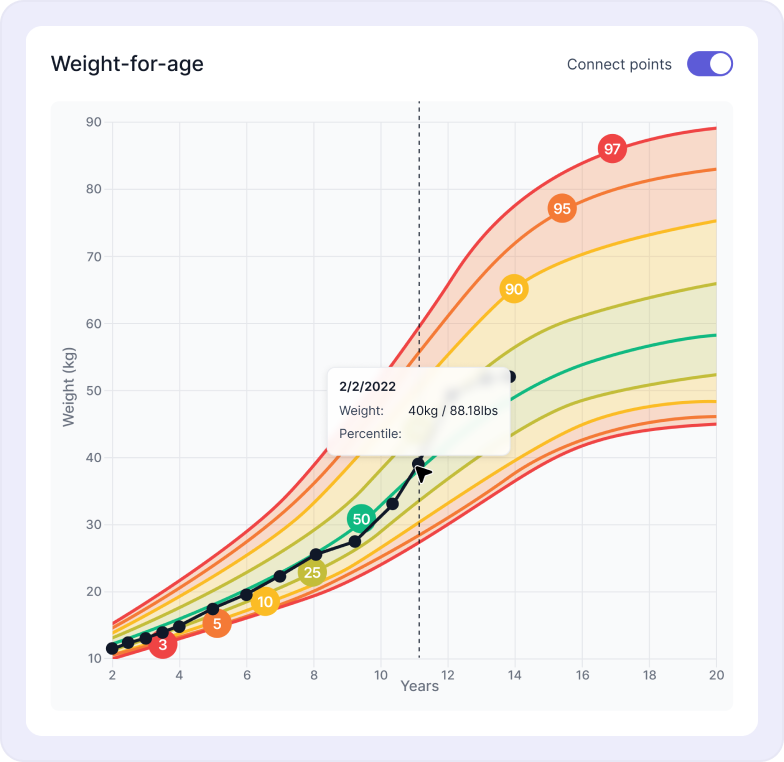
- Growth, labs, and vitals: Plan for a hemoglobin check at 12 months, BMI on growth charts from age 2, and blood pressure and vision checks from age 3. Children enrolled in Medicaid must have a blood lead test at 12 and 24 months, and children in high-prevalence areas may need one too.
Middle Childhood: 5 to 10 Years
- Vision and hearing: Both screens are due at 5 and 6 years, then every other year, at 8 and 10.
- Cholesterol: One lipid (blood fat) screen is due once from age 9 to 11.
- Behavior and emotions (every visit): The Pediatric Symptom Checklist (PSC) and the Strengths and Difficulties Questionnaire are common choices for the behavioral and social-emotional screen that Bright Futures sets for every well child visit from birth through age 21.
Adolescence: 11 to 21 Years
- Substance use risk (yearly from 11): Commonly used tools include the CRAFFT questionnaire, Screening to Brief Intervention, and the Brief Screener for Tobacco, Alcohol, and other Drugs.
- Depression and suicide risk (yearly from 12): The PHQ-9 Modified for Teens or the PHQ-2 covers the depression screen that adolescent depression guidelines call for, and the Ask Suicide-Screening Questions tool covers suicide risk.
- Labs and hearing: Expect a second lipid screen from age 17 to 21, HIV screening at least once from age 15 to 21, and one hearing screen in each of three age windows (11 to 14, 15 to 17, and 18 to 21).
When a child misses a visit or joins your practice late, the AAP advises catching up on the schedule as soon as possible.
Why Do Bright Futures Screens Get Missed?
Bright Futures screens can get missed when practices rely on paper forms that someone has to hand out, score, and enter by hand.
Nationally, only 36.5% of children ages 9 to 35 months had a parent-completed developmental screen in the past year, based on National Survey of Children's Health data from 2023 and 2024.
A 2024 study of electronic developmental screening notes that many practices keep the paper step even after moving to an EMR, which can drag down screening rates. In that study, one federally qualified health center raised its developmental screening rate from 62.7% to 73.6% across nearly 10,000 well child visits after switching to electronic screens and training staff on a new workflow.
Maternal depression screens can face an added hurdle when a chart isn't built around families, since the parent answers the questionnaire but the visit belongs to the baby. Without a clear place to record it, a positive result can go unnoticed, and the AAP notes that perinatal depression is already under-diagnosed and under-treated.
How Do You Bill for Bright Futures Screening?
Bright Futures screening is billed with CPT codes for each standardized questionnaire, reported on top of the preventive visit code.
Each code covers the scoring and documentation of one instrument, so the chart should record which tool was used and its score. The pediatrician's interpretation is part of the preventive visit, and developmental surveillance without a standardized tool doesn't qualify for these codes.
Common CPT codes for Bright Futures questionnaires include:
- 96110: Developmental and autism screens, such as the SWYC or M-CHAT-R/F
- 96127: Brief emotional and behavioral assessments, such as a teen depression screen or the PSC
- 96161: Caregiver-focused assessments, such as the EPDS given to a parent at an infant visit
Because the Health Resources and Services Administration (HRSA) includes the periodicity schedule in its preventive care guidelines, many private health plans must cover the listed screenings without cost-sharing, meaning no copays, coinsurance, or deductibles for families.
For children on Medicaid, developmental screening is a required part of the Early and Periodic Screening, Diagnostic, and Treatment benefit, and 47 state Medicaid programs reimbursed 96110 as of NASHP's 2021 state tracker. CMS also lets states cover maternal depression screening as a service for the child, so where a state has adopted that option, an EPDS given at an infant visit can be billed on the baby's Medicaid claim.
Unit limits for 96110 and 96127 vary by payer, so check each plan's written policy before reporting more than one instrument under the same code at a visit.
Run Bright Futures Screening in One System With Develo
Each Bright Futures screen has to travel from intake to the chart to the claim, and every switch between tools can give a questionnaire another chance to get lost.
Develo is the AI-native pediatric operating system built solely for independent pediatric practices, unifying charting, billing, practice management, and family engagement in one modern system.
Develo supports each step of Bright Futures screening with:
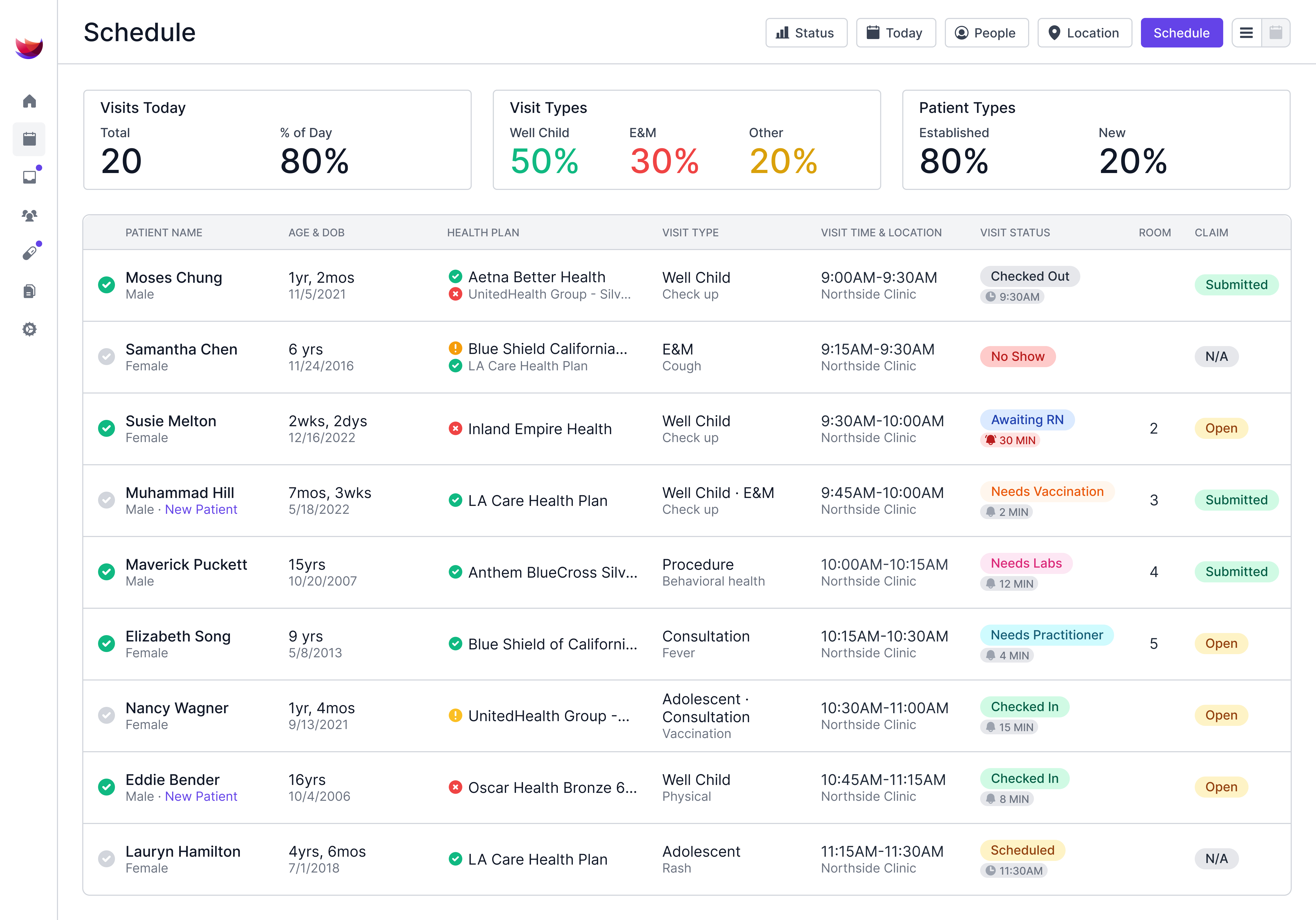
- Age-based screeners: The system identifies the screener that fits each patient's well child visit and sends it to families ahead of time through digital intake.
- Automatic scoring and filing: Results are scored and saved to the chart with no scanning or retyping, abnormal results are flagged to the pediatrician ahead of the visit, and scores pass to the Develo AI scribe as pertinent visit context.
- Caregiver screens in the baby's chart: The EPDS is recorded in the infant's chart and can be rescored if needed, and an abnormal or critical result creates a screening task for the pediatrician to review, as early as ten days before the visit when the family completes it digitally.
- Automated charge capture: When a screen is completed, its screening order closes and the matching billing code drops in with the right diagnosis code, so a completed screen can't go unbilled unless someone deliberately deletes the charge.
- Adolescent confidentiality: Develo auto-generates confidential visit summaries for teens and limited summaries for their parents.
- Missed-screen safeguards: Screeners are built into well child visit templates, automated well child recall reminds families when a visit is due, and Develo reports on screening completion rates, so a skipped screen shows up in a report instead of an audit.
Book a demo to see how Develo can help you fit Bright Futures screening into your practice's well child visits.
Frequently Asked Questions
What Screenings Happen at Well Child Visits?
Well child visit screenings cover growth, development, and behavior, with vision, hearing, and lab checks added at specific ages. A 9-month visit, for instance, calls for a developmental screen, while a 15-year visit includes depression, suicide risk, and substance use screens, plus the first window for HIV screening.
How Often Does the Bright Futures Periodicity Schedule Change?
The Bright Futures periodicity schedule can change once a year, after an AAP expert panel reviews new evidence and HRSA accepts the proposed update. Recent changes have been small: a wider age range for HIV screening in 2023 and footnote revisions in 2024, and the current schedule is dated February 2025.
At What Age Does Bright Futures Recommend Depression Screening?
Bright Futures recommends depression screening starting at age 12 and repeating once a year through age 21, along with a suicide risk check. For infants, parents and caregivers get a postpartum depression screen at each of the four well child visits from 1 to 6 months.
Does Insurance Cover Bright Futures Screenings?
Yes, insurance covers Bright Futures screenings at no out-of-pocket cost under many private plans when families use an in-network provider, since federal rules tie preventive coverage to the HRSA-supported schedule. Older, grandfathered plans don't have to meet the requirement, so confirm the benefits with each insurer.
Which Autism Screening Tool Does Bright Futures Use?
The autism screening tools in the AAP's Bright Futures toolkit include the M-CHAT-R/F and the POSI section of the SWYC. Parents complete either questionnaire at the 18- and 24-month visits, in line with AAP autism guidance.