

Opening any medical practice involves a long list of business decisions before the first patient visit. Leases, legal paperwork, and insurance applications all need attention before launch.
Pediatric clinics need a few additional steps of their own, such as enrolling in the Vaccines for Children (VFC) program and building records that connect siblings and guardians.
If you're starting your own medical practice, having a complete plan and timeline for every major decision, from payer applications to your first hires, can help keep your launch on track.
What Does Starting Your Own Medical Practice Involve?
Starting your own medical practice means lining up funding, licenses, and a location first, then adding the software and staff.
The business side of running a clinic helps explain why fewer doctors are working in physician-owned clinics than in years gone by. In 2024, only 42.2% of physicians worked in private practice, down from 60.1% in 2012, according to the AMA's Physician Practice Benchmark Survey.
Physicians whose practices were sold most often cited the need to negotiate better payment rates, access costly resources, and manage payer rules as their top reasons for the sale.
A strong launch plan should account for reimbursement, startup costs, and admin workload before you sign a lease.
7 Steps to Starting Your Own Pediatric Practice
Starting your own pediatric practice can feel more manageable when the setup is split into clear steps, each with explicit tasks and deadlines. Here are seven stages to work through.
1. Choose Your Care Model
Your care model affects many later choices, including how many families you need and which software fits your clinic.
Options to compare include:
- Traditional insurance: You bill health plans for each visit, which brings more claims and credentialing work.
- Direct primary care: Families pay a regular membership fee, and the clinic doesn't bill insurance for primary care visits.
- Concierge: Families pay a membership fee for added access, such as longer visits and direct contact with the pediatrician, and many concierge practices don't bill insurance.
- Hybrid: Families pay a membership fee for extra services, and the clinic still bills insurance for covered care.
Decide where visits will happen, too. You can blend clinic visits, telemedicine, and house calls. Traditional insurance practices see most families in the clinic, while direct primary care practices often mix clinic visits with house calls. Most practices offer some telemedicine, but skipping it entirely is also an option.
Pick your model before building a budget, because staffing, pricing, and software needs can vary a lot between approaches.
2. Build Your Financial Plan Around Payer Mix
Payer mix, the share of patients covered by each type of insurance, has a big effect on revenue, so estimate your mix before you tour office spaces.
Direct primary care and concierge practices can avoid insurance altogether. Revenue comes from membership payments plus one-time charges for services outside the membership, so payer mix and insurance credentialing matter far less to your plan.
If many local families use public coverage, plan for lower payments per visit. Medicaid fees averaged 75% of Medicare fees across physician services in 2024, and 66% for primary care, according to Urban Institute researchers writing in Health Affairs (2025).
Base your revenue estimates on the pediatric CPT codes you'll likely use most:
- Well child visits: 99381–99385 for new patients and 99391–99395 for established patients
- Sick visits: Office E/M codes 99202–99215
- Vaccine administration with counseling: 90460 and 90461 for patients through age 18
Ask your state Medicaid agency for its fee schedule, and request proposed rates from each commercial plan during contracting.
Set aside several months of operating cash, since insurance payments arrive after visits, and staff costs begin before you see patients.
3. Start Licensing and Credentialing Early
Credentialing (the review insurers use to confirm your training before adding you to their network) and any license updates should start the moment your legal entity and practice address are set, so form the entity first. The process often takes several months, and health plans won't pay you as an in-network provider until they approve your application.
Direct primary care and concierge practices can skip payer credentialing. If you won't bill insurance, you don't need the CAQH profile or the Medicaid and commercial payer applications below, though you still need your state license, DEA registration, NPI, and malpractice coverage.
Your setup checklist:
- Form a legal entity, such as a professional corporation or professional limited liability company, with help from a healthcare attorney.
- Get a Type 2 National Provider Identifier (NPI) for the group and confirm your individual Type 1 NPI.
- Update your address with your state medical board and the Drug Enforcement Administration.
- Apply for a CLIA certificate before running in-office tests such as rapid strep. A certificate of waiver, the most common type in physician offices, covers simple waived tests.
- Buy insurance, including malpractice and general liability.
- Complete your CAQH Provider Data Portal profile (formerly ProView), a free credentialing record you fill out once and share with your health plans.
- Apply to Medicaid, its managed care plans, and each commercial payer you want to accept.
Any visits before your approval date with a plan may go unpaid, so ask each insurer about retroactively effective dates when you apply.
4. Pick a Location That Works for Families
When you're visiting locations, think about what families would find convenient. For instance, how easy would it be to reach the clinic with a car seat and a stroller? A site near schools may also mean shorter drives for parents fitting sick visits around work schedules.
Ground-floor space, wide doorways, and nearby parking make visits easier. Some parents, especially those with newborns, also look for separate sick and well areas. As you tour each space, picture how the waiting area would work for a toddler, a sick sibling, and a tired parent at the same time.
Budget extra time for build-outs. A good rule of thumb: if a space needs contractor work to build out or renovate, assume it will take longer than planned, and leave room for that in your opening date.
If you'll be seeing babies in a hospital nursery, a site near that hospital can cut travel time between rounds. Applying for privileges early can help you start rounding on schedule.
House calls change the location math. Direct primary care and concierge practices that make house calls may need less clinic space, and a site central to the families they visit keeps drive time between homes short.
5. Set Up Your Vaccine Program Before Opening Day
Vaccines take up a significant share of practice costs, and payer rates for buying and giving them don't always cover the full cost. In a national survey fielded in 2011 (Allison et al., Academic Pediatrics, 2017), 12% of pediatricians said financial concerns had led them to stop buying at least one vaccine, and another 24% had seriously considered it.
Clinics often pay for privately purchased doses up front and wait for insurers to reimburse them, so having supply, storage, and billing ready before your first patient can help protect your budget.
Outsourcing private stock is another option. If you'd rather not tie up capital and staff time in buying and managing private vaccine stock, services such as VaxCare and Canid take over ordering, billing, and much of the financial risk for those doses. The tradeoffs: the vaccine reimbursement no longer runs through your practice, so less of the vaccine revenue stays with you, and VaxCare doesn't supply or manage VFC stock, so you'll still run a separate VFC workflow. Compare the terms against managing your own stock, and see how VaxCare competitors stack up, before you sign.
Steps to take before your first vaccine order:
- Enroll in VFC: Sign up through your state immunization program to get free vaccines for eligible children.
- Buy the right storage: Choose purpose-built or pharmaceutical-grade units, plus the digital data logger the VFC requires for continuous temperature tracking.
- Lower purchase costs: Ask about online ordering, prompt-pay, and bulk-order discounts, which 81%, 78%, and 65% of pediatricians in that survey used, and compare pediatric vaccine buying groups, which negotiate manufacturer pricing for member practices.
- Connect to your registry: Link your system to your state immunization registry.
- Write standing orders: Base them on the AAP immunization schedule.
6. Choose a Modern, Full-Featured Pediatric EMR
An EMR built for pediatrics can hold family records, vaccine data, and billing in one system.
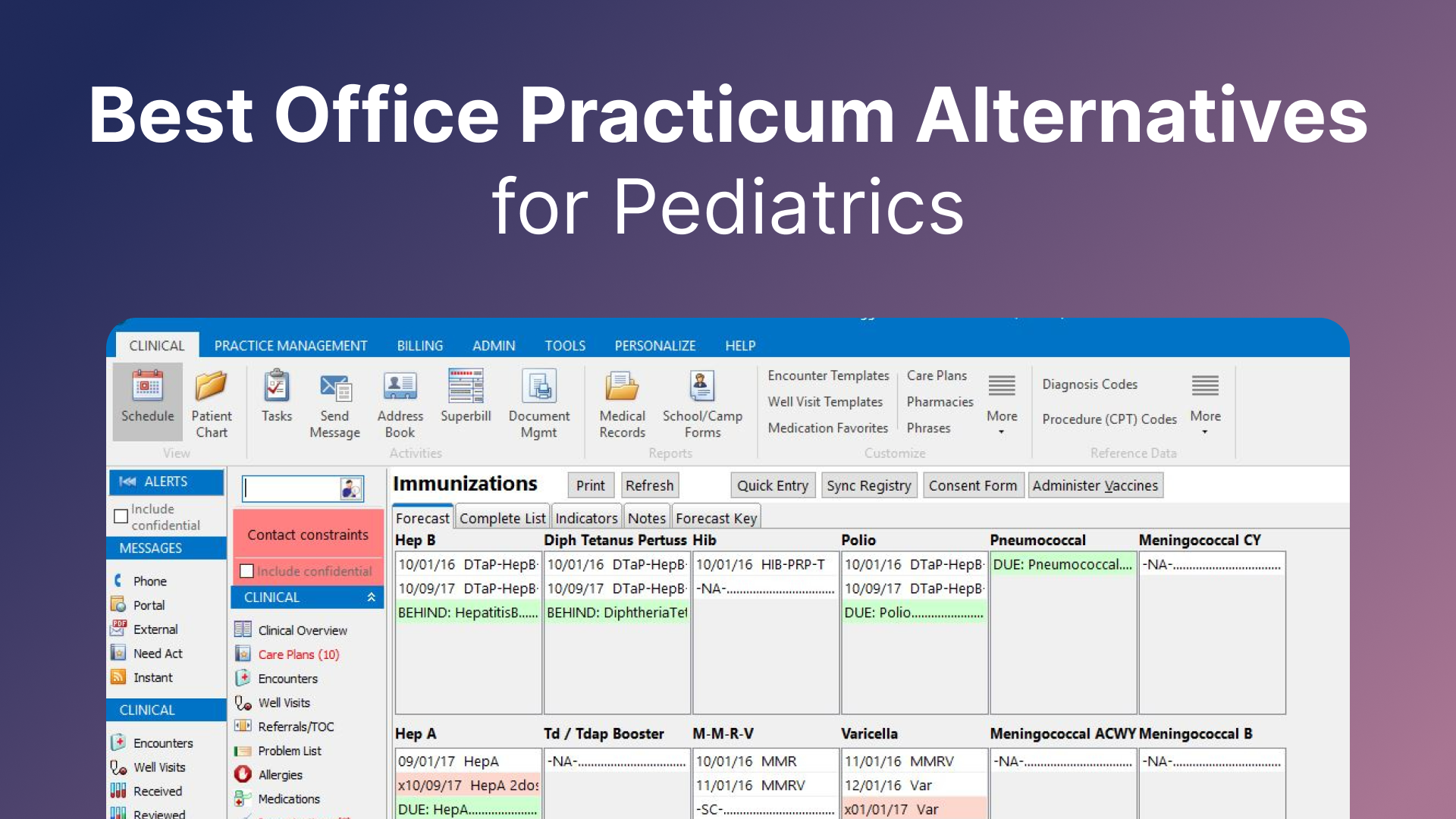
Look for a system that is modern, full-featured, and built for pediatrics. Generalist EMRs aren't designed around children and families, so pediatric workflows become workarounds. Long-standing pediatric EMRs such as PCC and Office Practicum understand pediatrics but were built on older technology. Office Practicum is rebuilding its platform through its OP Reimagined initiative, with new workflows planned to roll out in stages through late 2027 at the earliest, if its timeline holds, so a practice that starts on it now will go through that transition after launch. Many vendors also piece together separate products for intake, screening, payments, and the family portal, which leaves a new practice juggling disconnected tools, logins, and contracts.
Teen privacy adds another challenge, since limited tech capabilities and varying state laws can make confidentiality hard to protect.
Charting can also run past the end of the workday. At Nationwide Children's Hospital, primary care pediatricians logged about 10 minutes of EMR work outside scheduled hours for every hour of EMR use within their scheduled clinic time.
Questions to ask each EMR vendor include:
- Does it link siblings, guardians, and guarantors (the adults responsible for the bill)?
- Are intake forms, screeners, and a family portal included or sold as add-ons?
- Does it add pediatric well child and vaccine billing codes automatically?
- Does it check VFC eligibility for each dose and keep VFC and private stock separate?
- How long does setup take, and who trains your staff?
- If your opening date slips, can your go-live date move with it?
Moving charts to a new system after launch takes time and planning, so compare pediatric EMR options before you sign a contract.
7. Hire, Map Workflows, and Market Before Launch
Hiring, workflow planning, and marketing all need a head start before your clinic opens. Bringing staff on early gives your team time to practice on mock visits.
A lean starting team might include a front-desk lead, medical assistants to room patients, and a biller or an outside billing service, with headcount scaled to the number of providers. Map each part of your clinic workflow, such as check-in, rooming, and checkout, and give every task one owner.
For marketing, claim your Google Business Profile and start on local search early, since rankings can take time to build.
Create a simple marketing plan that includes outreach to local obstetrics practices. The AAP's current periodicity schedule recommends a prenatal visit for first-time parents, parents at high risk, and anyone who asks for one, so expecting families get an early chance to meet you.
Simplify Starting Your Own Medical Practice With Develo
The software you pick before launch will shape how your front desk, clinicians, and billers work for years. A system built around children and families means fewer workarounds once visits start.
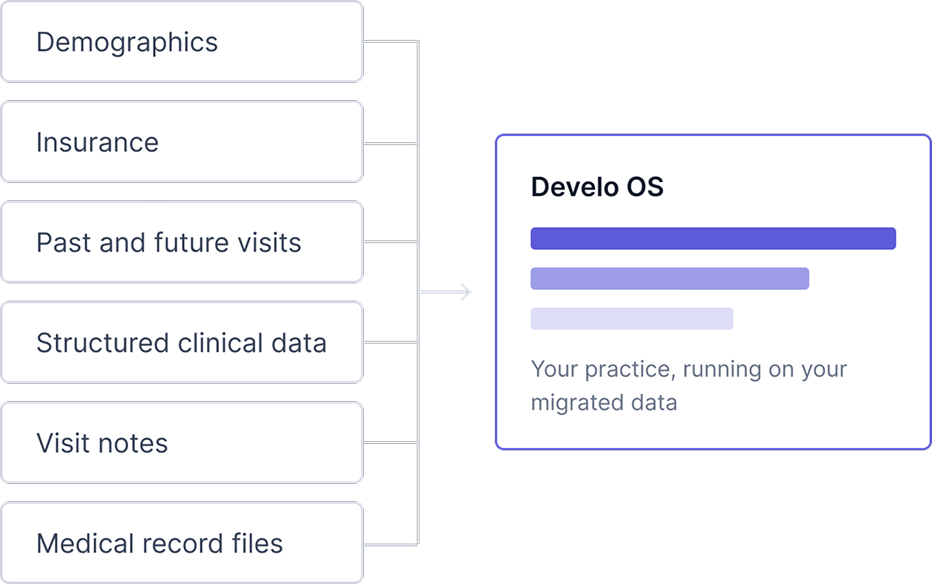
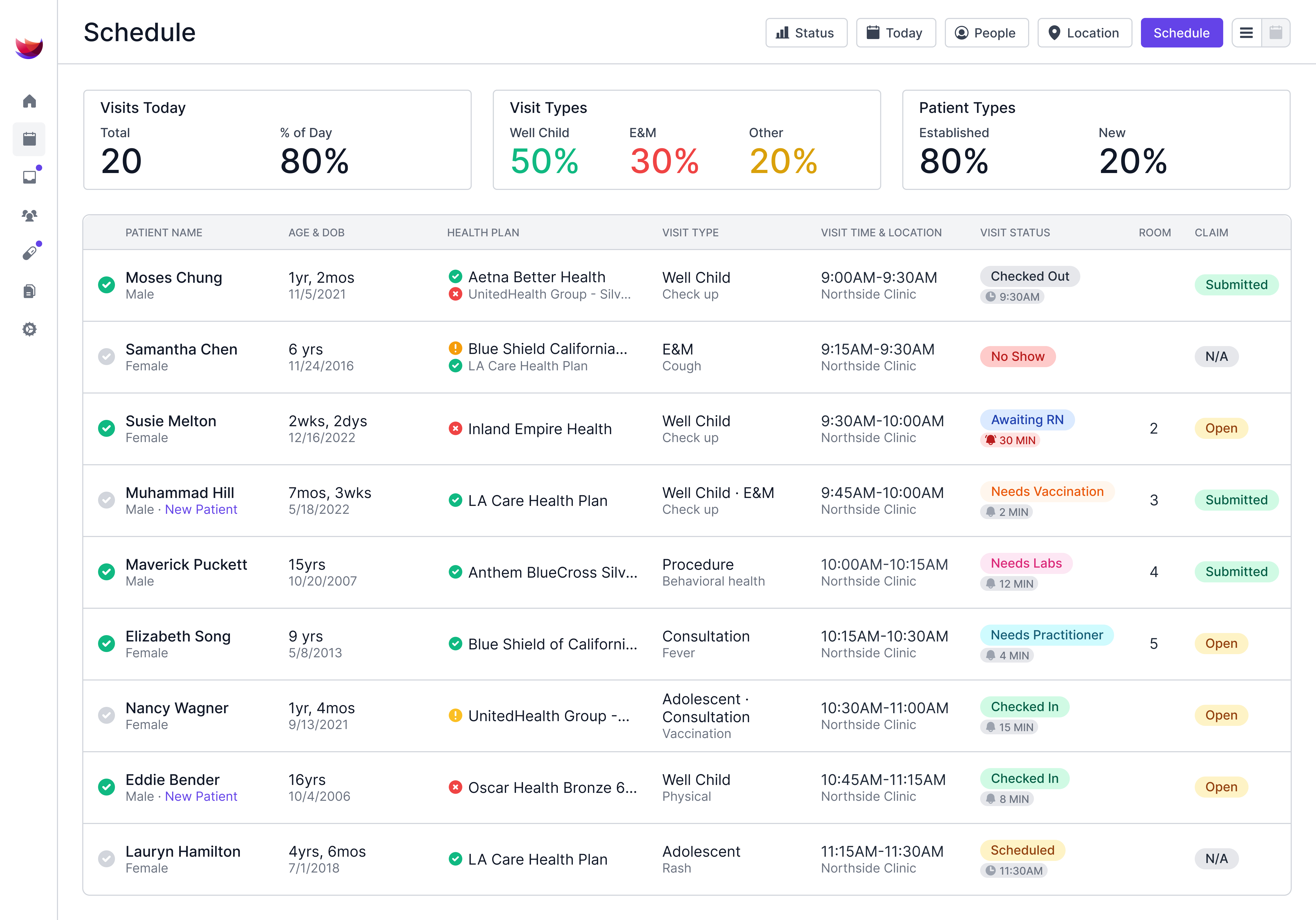
Develo is the AI-native pediatric operating system built solely for independent pediatric practices, unifying charting, billing, practice management, and family engagement in one system. A new practice can start on it from day one instead of switching systems after launch.
Features that can help a new clinic include:
- Digital intake, no app or login: Caregivers update demographics and insurance and sign forms on their phones before the visit, with no app to download or family portal login required, so your front desk has less data to enter.
- Age-based screeners: Well child screens go out automatically before visits and come back scored in the chart.
- Family relationship management: Records link each child to siblings, guardians, and guarantors, including blended families, and adolescent confidential visit summaries are generated automatically for teens.
- Automated charge capture: Pediatric rules set billing codes, units, and modifiers by visit type, and alerts flag possible underbilling while final coding stays with the provider.
- Develo AI scribe: It writes into your visit note using the conversation and pertinent chart data, and a clinician approves every section before it enters the note. The scribe is priced separately.
- Immunizations and VFC: Develo connects bi-directionally and in real time with many state immunization registries, checks each dose's VFC eligibility against its funding source, and prioritizes the soonest-expiring lots.
- Family payments: Automatic text reminders include payment links, and real-time balances show every sibling's charges in one view.
- Comprehensive pricing: One per-provider monthly fee covers digital intake, screeners, and the family portal, and bundles in configuration before your first login, live and on-demand training, and go-live support, with no implementation fee. AI capabilities are priced separately.
- Flexible go-live: Build-outs and credentialing often run late, so Develo plans implementation around your opening and moves your go-live date when your opening moves.
- Billing services: If you'd rather not hire a biller, Develo's onshore, pediatric-only billing team works inside the same system and is priced as a percentage of collections.
- Every care model: Develo supports traditional insurance, direct primary care, concierge, and hybrid practices, including membership plans, tiers, and family-level billing.
If you're starting your own medical practice in pediatrics, book a demo to see how Develo handles intake, charting, and billing for a new clinic.
Frequently Asked Questions
How Much Does It Cost to Start Your Own Medical Practice?
The cost to start your own medical practice depends mostly on your market, your space, and your care model, so no single figure fits every clinic. Big early bills for a pediatric clinic often include build-out, a first vaccine order, and payroll that starts before the first claims are paid.
How Long Does It Take to Start a Medical Practice?
How long it takes to start a medical practice depends on insurance approvals, build-out, and hiring, and payer credentialing alone can stretch over several months. Running these tasks side by side can help shorten the wait.
Can a Pediatrician Open a Practice Right After Residency?
Yes, a pediatrician can open a practice right after residency, though it may mean building business skills and a patient base at the same time. A clear budget and early outreach to local families can help ease the transition.
Do You Need a Business Plan to Start a Medical Practice?
Yes, you'll likely need a business plan to start a medical practice, especially if you apply for a loan, since lenders may ask to see one. A lender-ready plan covers your care model, expected patient volume, and startup costs, and it shows how you'll pay bills until the insurance payments come through.