
.avif)
Balancing vaccine inventory against cash flow is one of the hardest parts of running a pediatric practice, and for years VaxCare has been the popular fix for offices that want to skip the upfront vaccine spend and hand off billing.
That model suits some practices and frustrates others, usually over VFC stock, payer coverage, or how much of the vaccine revenue stays with the practice.
The five VaxCare competitors below cover every part of the vaccine workflow, from buying groups that cut your purchase price to pediatric systems that run inventory, coding, and registry reporting inside the chart. The decision underneath all of them is the same: how much of the vaccine workflow you want to hand to a third party, and how much of the vaccine revenue you want to keep.
VaxCare Competitors at a Glance
Pricing correct as of September 2026. Verify with each vendor.
Why Look for VaxCare Alternatives?
VaxCare's model does remove upfront costs and inventory risk. Practices that switch tend to cite the same handful of trade-offs.
- No VFC stock: VaxCare doesn't supply or manage Vaccines for Children (VFC) inventory. VFC covers children who are Medicaid-eligible, uninsured, underinsured, or American Indian/Alaska Native — a large share of most pediatric panels — so your team still runs the full VFC ordering, storage, and reporting workflow in parallel. You end up managing two vaccine systems instead of one.
- The vaccine revenue goes with the stock: VaxCare buys the doses and bills the payer, then pays you an administration fee per dose. That removes the upfront spend, but the vaccine reimbursement no longer runs through your practice.
- Out-of-network payers: VaxCare isn't in network with every plan, so those claims get handled differently through partner billing, which can catch you off guard if nobody flagged it.
- Buy-back terms: when you switch, VaxCare buys your existing stock. Ask how that inventory gets valued before you transition, since it may not come back at what you paid.
- Billing visibility: VaxCare bills for you and pays per administration, so practices that want a line-by-line view of what was collected and deducted have less of it.
- Less control: the other side of no inventory risk is less say over ordering, delivery timing, and which claims get worked.
Which VaxCare Alternative Should You Choose?
Choose a physician buying group (like Atlantic Health Partners) if you want lower vaccine costs but plan to keep owning your inventory and billing. It won't erase upfront spending the way VaxCare does.
Choose dedicated vaccine software (like VaccineXpress or TruMed) if your EMR is fine, but your inventory lives in a spreadsheet, and you want ordering, storage, and reporting handled without switching systems.
Choose a pediatric system with built-in vaccine management (like Develo) if you want to own your vaccine stock and the revenue that comes with it, without your team carrying inventory in a spreadsheet. Inventory, charge capture, and registry reporting run inside the chart, so managing your own doses stops being the reason to outsource them.
Stick with VaxCare, or run it alongside a pediatric system if upfront vaccine spend is the constraint you actually need to solve. VaxCare sources the vaccines, carries the working capital, and takes inventory management off your staff. Practices on Develo can keep VaxCare for private stock and still run VFC, coding, and registry reporting in the same system, so this isn't an either/or.
The 5 Best VaxCare Competitors
1. Atlantic Health Partners

Atlantic Health Partners is the closest fit if you like VaxCare's savings but want to keep owning your stock. It's a physician buying group, which works differently from VaxCare's buy-and-bill setup.
A buying group pools purchasing power to negotiate lower prices directly with manufacturers such as Merck, Sanofi, GSK, Pfizer, and others. You still order, own, and bill your own vaccines. You just pay less for them.
Key features
- Manufacturer-direct pricing: access to negotiated rates across major pediatric and adult vaccine lines.
- Reimbursement guidance: support on coding and payer reimbursement alongside purchasing.
- No membership fee: joining an established buying group like Atlantic is free.
Pros
✅ You stay in full control of ordering, stock, and billing
✅ Nothing to lose by trying it, since joining costs nothing
✅ Reimbursement support means it's more than a pricing discount
Cons
❌ Doesn't remove upfront purchasing cost or inventory risk
❌ You still carry all the storage, ordering, and billing work
Best for
- Practices that want lower prices but plan to keep owning their vaccine stock
- Independent pediatric offices comfortable managing their own inventory
Pricing
- Membership in an established physician buying group is typically free. The savings come from negotiated vaccine pricing.
2. TruMed AccuVax
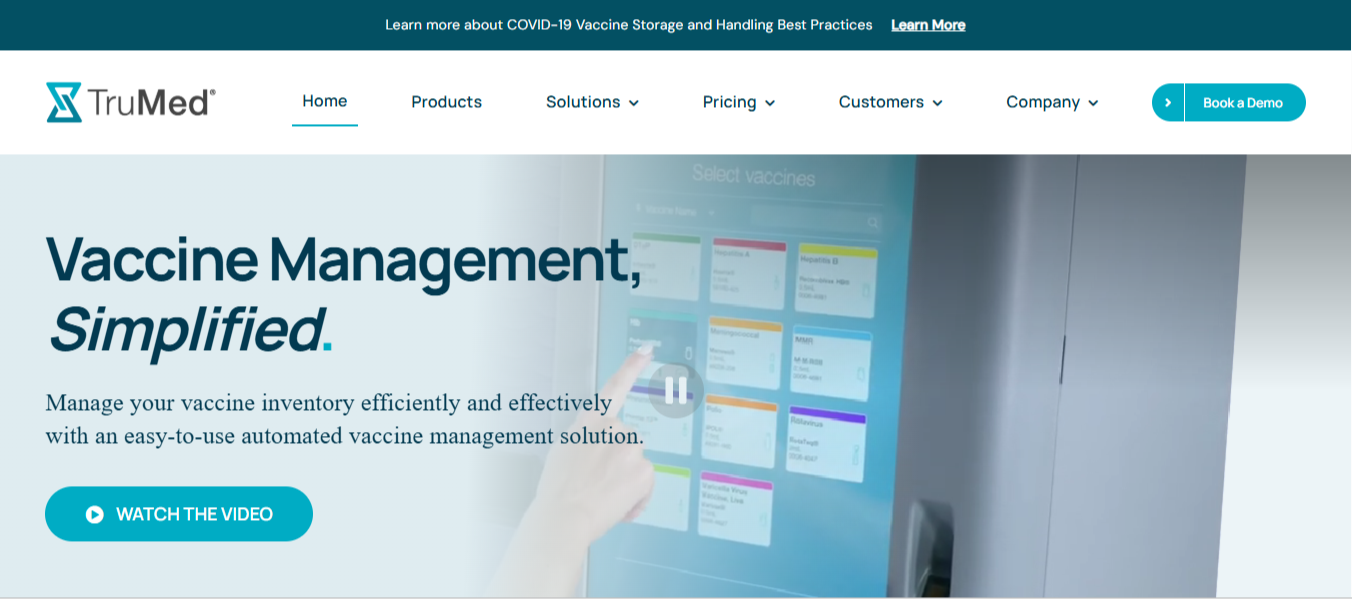
Where VaxCare handles supply and billing, AccuVax handles the fridge itself. TruMed's AccuVax focuses on the physical aspects of vaccines (storage, security, and waste reduction).
It's an automated storage system that holds your doses, controls who can access them, tracks what's on hand in real time, and reduces stock losses from expiration or mishandling.
Key features
- Automated storage and dispensing: controlled, monitored access to every dose.
- Real-time inventory tracking: know exactly what's on hand and what's expiring.
- Waste and loss reduction: fewer expired doses and fewer stock errors.
Pros
✅ The lockable, monitored storage helps with audit and compliance headaches
✅ Pays for itself faster in high-volume practices that lose doses to spoilage
✅ Drops into your current setup without replacing your EMR or billing
Cons
❌ Hardware-based, so it's a larger commitment than software alone
❌ Doesn't address purchasing cost or handle billing
Best for
- Practices where vaccine waste and storage compliance are the main pain
- Larger offices that can justify automated storage hardware
Pricing
- Quote-based. Contact TruMed for pricing on the AccuVax system.
3. VaccineXpress
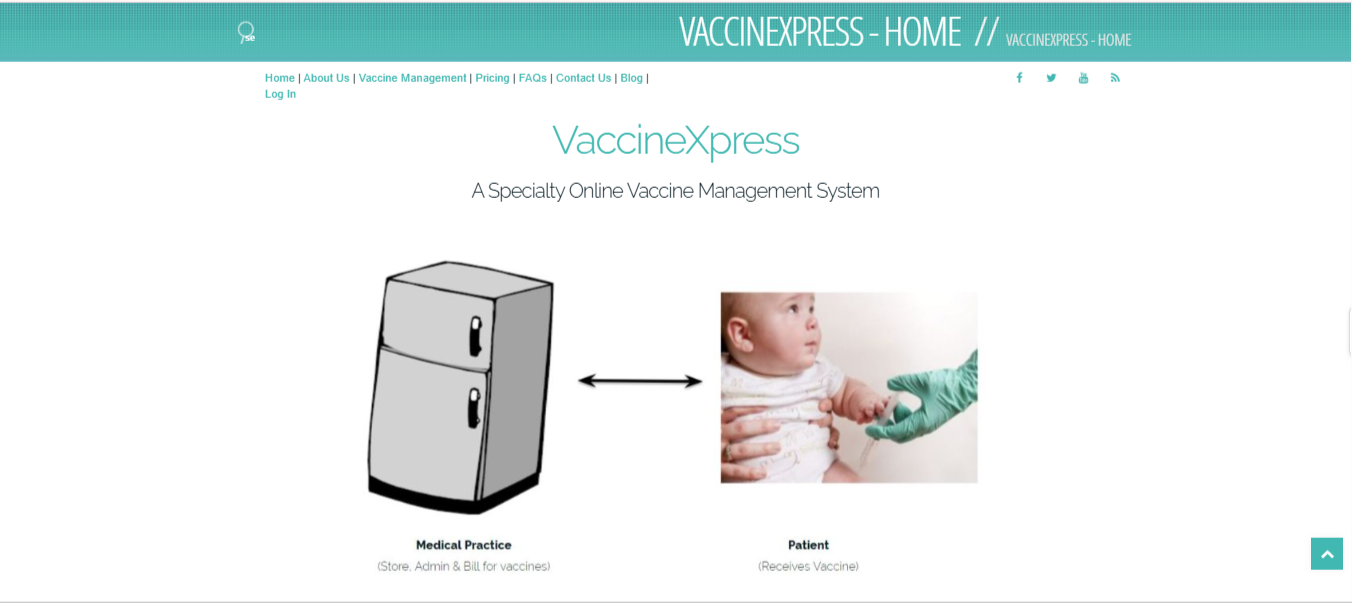
VaccineXpress is vaccine inventory software for practices that want better tracking without switching EMRs. It ties inventory to patient records and billing, so the stock you track and the claims you send stay in sync.
Key features
- Inventory management: track stock, lot numbers, and expiration without a spreadsheet.
- Patient record integration: tie doses to patients for accurate records and billing.
- Built by an EMR vendor: VaccineXpress comes from PhysicianXpress, which also sells its own EMR and billing services.
Pros
✅ Retires the spreadsheet without forcing a full system migration
✅ Quick to roll out compared with a whole new platform
Cons
❌ A point tool from a different EMR, so vaccine data still lives outside the chart
❌ Doesn't remove upfront vaccine cost the way a buy-and-bill service does
Best for
- Practices happy with their EMR but frustrated with manual inventory
- Offices that want vaccine tracking without a bigger migration
Pricing
- The VaccineXpress module runs $59/month for the first provider and $9/month per additional provider.
4. Develo
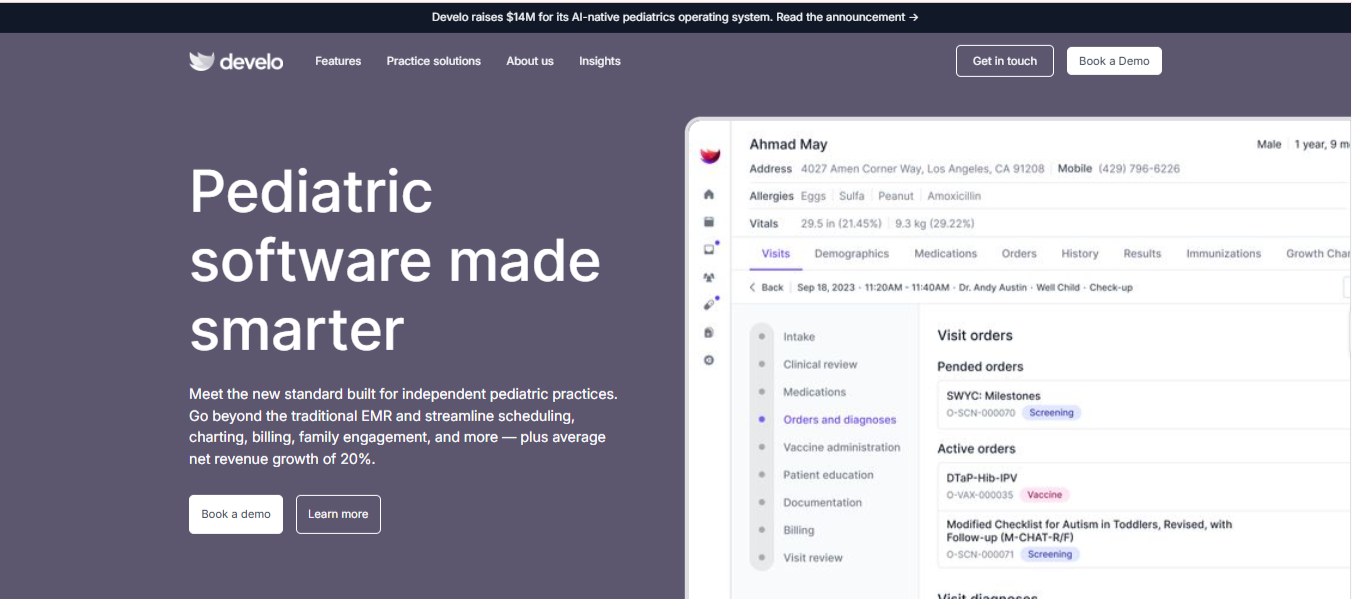
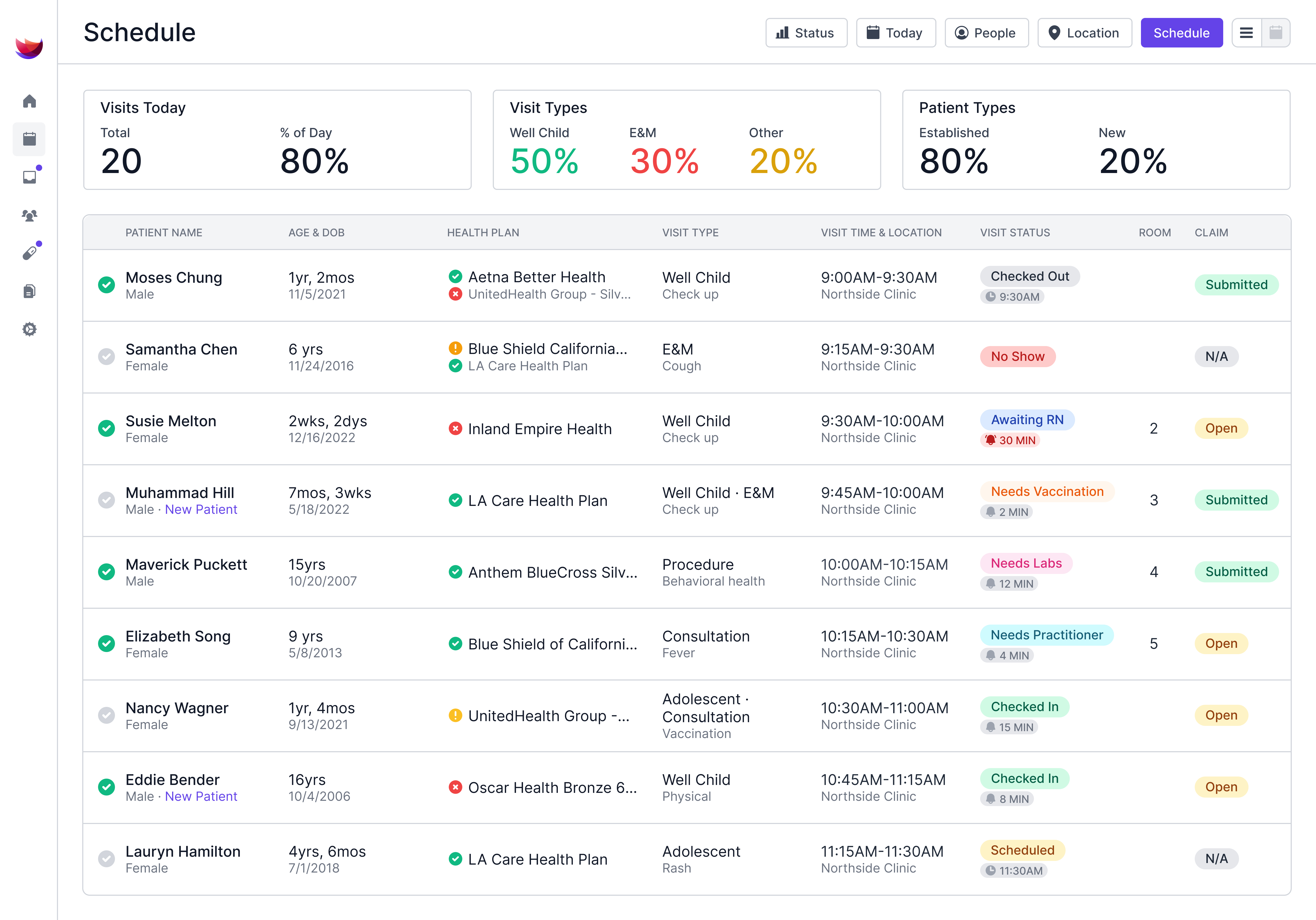
Develo takes a different route from the other options here: instead of outsourcing the vaccine workflow, it removes the work that made outsourcing attractive in the first place. Its AI-native operating system for pediatrics unifies clinical (EMR), billing (RCM), and family engagement (CRM), so the dose you give is charted, coded, and billed in one place.
Legacy EMRs were built for adult medicine and retrofitted for pediatrics, which is why vaccines so often end up in a spreadsheet or a bolt-on tool. Develo was built for pediatrics from the start, so VFC and private stock separation, component-based vaccine codes, and registry reporting are native — not customizations you have to request. Practices that want to keep the vaccine margin and administration revenue in-house can do that without adding staff hours to manage it.
Key features
- Vaccine inventory management: track private and VFC stock against the right billing codes inside the chart.
- Automated charge capture: administration codes are applied to the documented visit, so doses aren't charted and then missed at billing.
- Registry connection: administered doses connect to state immunization registries, so the record and the vaccine claim agree.
Pros
✅ Vaccine inventory, charge capture, and records in one pediatric system
✅ Pediatric-specific coding logic (component-based vaccine codes, age-based visits)
✅ Removes the re-keying between a vaccine tool and the chart
Cons
❌ You still own and purchase your vaccine stock, so it doesn't remove the upfront spend the way a buy-and-bill service does — practices that need that specifically can keep VaxCare and run it alongside Develo
❌ Switching your clinical and billing stack is a bigger change than adding a point tool to the EMR you already have
Best for
- Pediatric practices rethinking their EMR and billing together with vaccines
- Offices that want inventory and billing in the chart rather than in a separate service
- Practices that want the vaccine margin and administration revenue to stay in-house
- Practices already on VaxCare that want VFC, coding, and registry reporting in the same system as the chart
Pricing
- Custom, as part of the Develo platform. Book a demo for pricing specific to your practice.
5. Office Practicum

Office Practicum is a pediatric-focused traditional EMR with built-in vaccine management. Notably, Office Practicum’s own answer to the vaccine workflow leans on VaxCare — the two companies announced an enhanced integration in April 2026, with Office Practicum as the clinical platform and VaxCare as the managed vaccine service. Practices that want vaccines handled inside their own system, rather than synced in from a third party, are comparing a different thing.
Key features
- Pediatric EMR with immunization tools: vaccine tracking inside a purpose-built pediatric chart.
- Established pediatric templates: an existing library of pediatric sick and well visit workflows.
- Registry and reporting support: immunization reporting built for pediatric compliance.
Pros
✅ Established pediatric-only use, so the workflows are well broken in
✅ Can integrate with vaccine registries
✅ Large peer community to lean on for setup and best practices
Cons
❌ You still buy and carry your own vaccine stock
❌ Practices coming from newer browser-first tools may find the interface less modern
❌ In the midst of OP Reimagined initiative where system will be iteratively rebuilt and released piecemeal
Best for
- Established pediatric practices that value a long operating history
- Offices wanting vaccine tools inside a familiar pediatric EMR
Pricing
- Custom. Office Practicum doesn't publish standard pricing; contact their sales team.
How to Evaluate VaxCare Alternatives
Before you compare features, four questions sort the options faster than any spec sheet.
- Stock ownership: do you want to keep owning your vaccine stock? Buy-and-bill services remove upfront cost and inventory risk but take billing control with them, while buying groups and in-system vaccine tools keep you in control and keep the upfront spend.
- Payer mix: VaxCare isn’t in network with every plan, which is a common complaint, so check how each option handles your actual payers, especially Medicaid and your Vaccines for Children (VFC) volume, since VFC doses have to be tracked and billed separately from private stock.
- Scope of the problem: if your EMR and billing are fine and only inventory hurts, a dedicated tool or buying group is a lighter fix. If you're rethinking documentation, coding, and billing together, a pediatric operating system with built-in vaccine management solves more at once.
- Total cost: weigh the buy-back terms, per-administration deductions, storage hardware, and staff time, not only the vaccine price or software fee. The cheapest sticker isn't always the cheapest year.
Vaccines Bundle Three Jobs Into One
The reason there's no single "VaxCare replacement" is that VaxCare bundles three jobs into one outsourced service: purchasing, inventory, and billing. When you go looking for an alternative, you're deciding which of those jobs you want to own and which you want handled for you.
The VaxCare competitors above split along exactly that line. For many pediatric practices, the cleanest answer is a pediatric system where inventory, charge capture, and registry reporting already live together.
A dose administered in the room becomes a coded, tracked, billable claim without anyone having to re-key it. That's the case for handling vaccines inside a pediatric-built platform like Develo, which keeps the whole vaccine workflow in one place:
- Inventory: tracks private and VFC stock against the right billing codes
- Coding: applies the pediatric vaccine and administration codes straight from the documented visit
- Reporting: syncs each dose to your state immunization registry
And it isn't an either/or. Practices that want a third party to carry the vaccine spend can keep a buy-and-bill service for private stock while VFC, coding, and registry reporting run in Develo.
Book a demo to see how Develo runs vaccine inventory, vaccine administration, and billing end-to-end.
Frequently Asked Questions
Who Are VaxCare's Main Competitors?
VaxCare's main competitors fall into four groups: rival buy-and-bill services, physician buying groups like Atlantic Health Partners, traditional EMRs like Office Practicum, and pediatric operating systems like Develo. Which comparison matters depends on whether you want to outsource the vaccine spend or own your stock and the revenue that comes with it — and in some cases the answer is both, with a buy-and-bill service handling private stock inside a pediatric system.
What Is the Difference Between VaxCare and a Physician Buying Group?
The difference is ownership. VaxCare owns the vaccine stock, bills for it, and pays you per administration, so you carry no upfront cost. A physician buying group negotiates lower manufacturer prices, but you still buy, own, store, and bill your own vaccines.
Is There a VaxCare Alternative That Works Inside an EMR?
Yes. Develo’s pediatric operating system manages vaccine inventory, charge capture, and registry reporting inside the pediatric chart, so vaccine work lives in the same system as documentation and billing. Office Practicum also includes immunization tools in its traditional EMR offering.
Why Do Pediatric Practices Look for VaxCare Alternatives?
Pediatric practices look for VaxCare alternatives for three main reasons: VaxCare doesn't supply or manage VFC stock, the vaccine reimbursement runs through VaxCare rather than the practice, and billing visibility is limited. VaxCare removes upfront cost and inventory risk, but some practices would rather own their vaccine revenue cycle directly.
Does Develo Replace VaxCare?
Develo can replace VaxCare, or run alongside it. VaxCare's real service is capital and labor — it sources the vaccines, carries the upfront cost, and manages the inventory, then pays an administration fee per dose. Develo doesn't front your stock. It makes owning your stock manageable, running inventory, coding, and registry reporting inside the pediatric chart so the practice keeps the vaccine revenue. Practices that want VaxCare for private stock can keep it and still run VFC, coding, and registry reporting in Develo.
.png)


.avif)