

Electronic records are now the norm in office-based medicine, where 95% of physicians use an EMR, yet paper charting still runs some clinics, especially solo practices. For a low-volume practice, a well-kept filing cabinet can feel simpler than any software.
By the end of this article, you'll know whether paper still fits your clinic and which route away from paper would match your pace. None of the three routes requires ripping everything up at once.
What Is Paper Charting?
Paper charting is the practice of recording patient care by hand in a physical file, from vitals and orders to visit notes. The folder itself (including tabs, paper charts, and physical attachments) is the entire medical record. Nothing exists unless someone writes it down.
It predates every EMR on the market, and today it shows up most often in solo practices. Even then, paper usually covers only the clinical record: most paper-charting practices already schedule and bill in software, and some keep paper charts alongside a full EMR because its clinical side doesn't fit how they work.
Pros of Paper Charting
Paper's advantages explain why some practices keep it. Each one solves a day-to-day problem, at least until chart volume outgrows what a filing cabinet can handle.
Cons of Paper Charting
Paper's simplicity is real on day one and expensive by year three. The risks below build as the patient list grows.
- Documentation errors: Handwritten notes are hard to read and easy to leave incomplete. In a 2023 audit of hospital discharge summaries from a single orthopaedics department, published in Cureus, only 58% of the handwritten versions were rated understandable, compared with 100% of the electronic ones.
- Slow retrieval: Staff lose time hunting for physical charts and loose pages that an electronic system pulls up in seconds.
- Missing audit trails: Paper keeps no built-in record of who viewed, changed, or signed a chart, which leaves the practice exposed during compliance reviews.
- Permanent physical loss: A fire, a burst pipe, or a misplaced folder can destroy records for good when there's no digital backup to restore from.
- Inefficient care coordination: Sharing records with schools, specialists, or other clinics means copying and faxing, so information arrives late and reflects only the day it was sent.
- Poor scalability: State retention rules mean charts can't be purged for years after a patient's last visit, so every new patient adds to a filing load and storage footprint that only grows, and the odds of a misfiled record grow with it.
Where Paper Charting Falls Short in Pediatrics
Three problems hit harder in pediatrics than in adult care, and paper has no good answer for any of them. A pediatric chart has to follow growth across years, report vaccines to a state registry, and link siblings who share a guarantor.
- Longitudinal growth trends: Staff calculate percentiles by hand and plot points across years of loose pages, so a slow drift off a growth curve is easy to miss.
- Dual data entry: Every vaccine dose gets logged twice, once in the paper chart and once in the state registry, which costs clinical time and leaves the registry incomplete when the second entry slips.
- Fragmented family records: Each child lives in a separate folder with no household view, so staff and caregivers piece together sibling visits, histories, and balances by hand.
Alternatives to Paper Charting
Moving off paper rarely happens in one weekend. Most practices make the move in one of three ways, and each pathway trades speed against disruption differently.
Full EMR Migration
Active records move to a certified system at once, with a defined cutover date. This is the fastest way to stop paper's problems, but it's the most disruptive in the short term. Our guides to choosing an EMR for pediatrics and the best EMR for small pediatric practices describe how to weigh that decision.
Hybrid Transition
New patients and visits go digital immediately, while existing paper charts get scanned or moved through EMR data migration in batches over several months. This spreads the disruption but extends the period of running two systems at once.
Backfill Digitization
Paper stays the primary record for now, but historical charts get scanned into a searchable digital archive. This speeds up retrieval and protects older records from loss while daily workflow is unchanged, though new notes stay handwritten and there's still no clinical decision support. Backfill matters more in pediatrics because a child's chart has to be kept longer. In Texas, for example, physicians must keep a minor's record until the patient turns 21 or for seven years after the last treatment, whichever is longer, so a newborn chart opened today can sit in the cabinet for more than 20 years.
Whichever path fits, the decision usually comes down to how much disruption a practice can absorb against how much longer it can tolerate paper's risk.
Moving Off Paper Charting in a Pediatric Practice
The pediatric problems covered earlier (growth trending, registry reporting, and linked family records) are where a pediatric-specific system handles the tracking that paper leaves to staff.
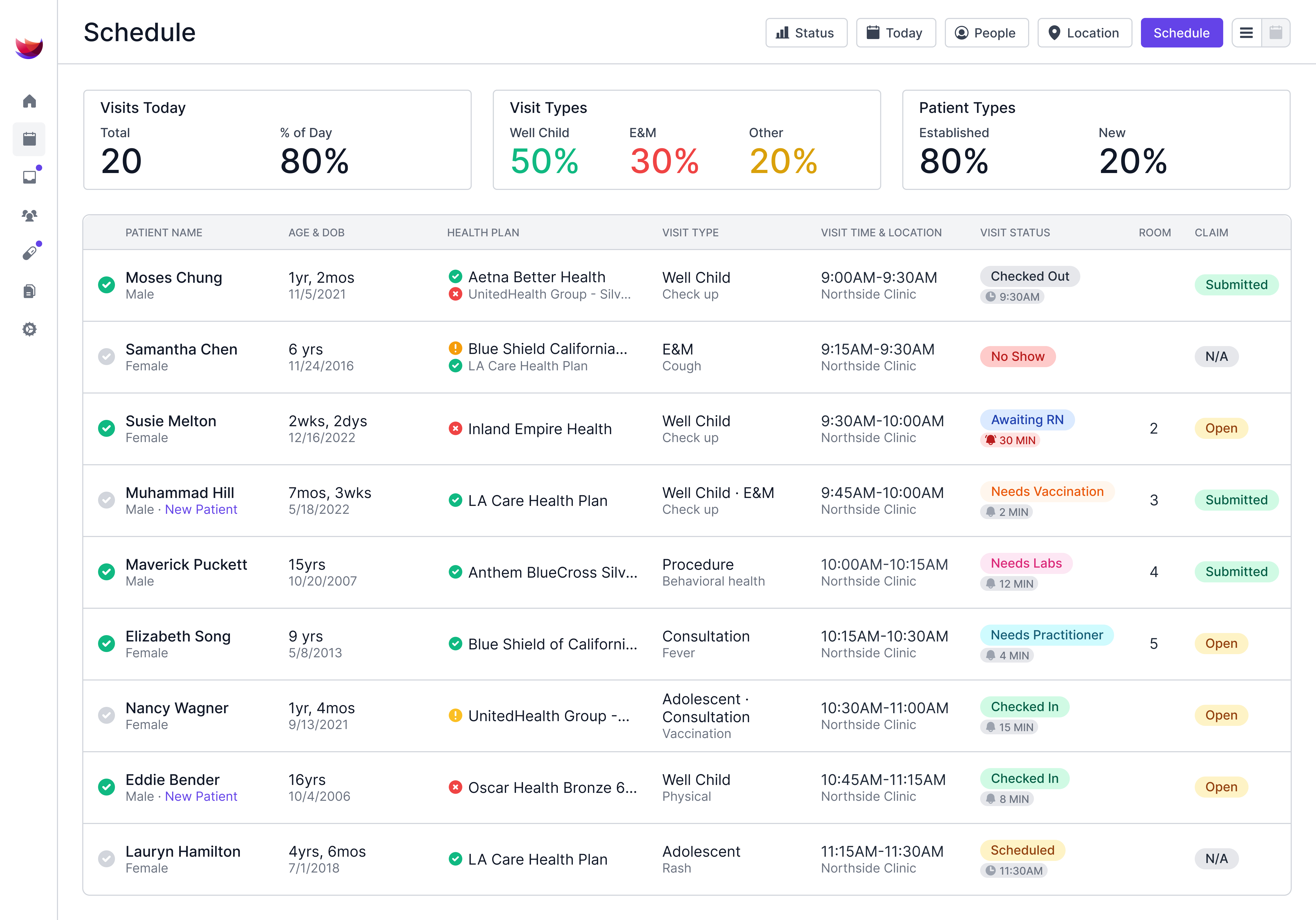
Develo is the AI-native pediatric operating system built solely for independent pediatric practices, unifying charting, billing, practice management, and family engagement in one system.
- Growth charts: Measurements plot on CDC, WHO, and Down syndrome growth charts with percentiles and Z-scores built in, plus corrected-age plotting for infants born early.
- Registry exchange: Develo connects bi-directionally in real time with supported state immunization registries, so a dose recorded in the chart goes up to the registry and prior records come back down.
- Family-level records: Balances, payments, and portal records span siblings, so a parent covering three children reviews and pays in one place.
- Documentation: Develo provider scribe writes straight into the visit note using the visit's context, not just the transcript, so charting keeps paper's speed and freeform detail without the handwriting. Develo intake scribe streamlines visit intake for nurses and medical assistants, so more of the documentation is done before the pediatrician walks in.
- Filing: Develo doc intel auto-tags uploaded scans and e-faxes by patient and document type for single-click filing into the right chart.
- Digital intake: Families complete forms and age-based screeners from a text link before the visit, with no app or family portal login required, so they arrive pre-registered and the front desk has nothing to scan.
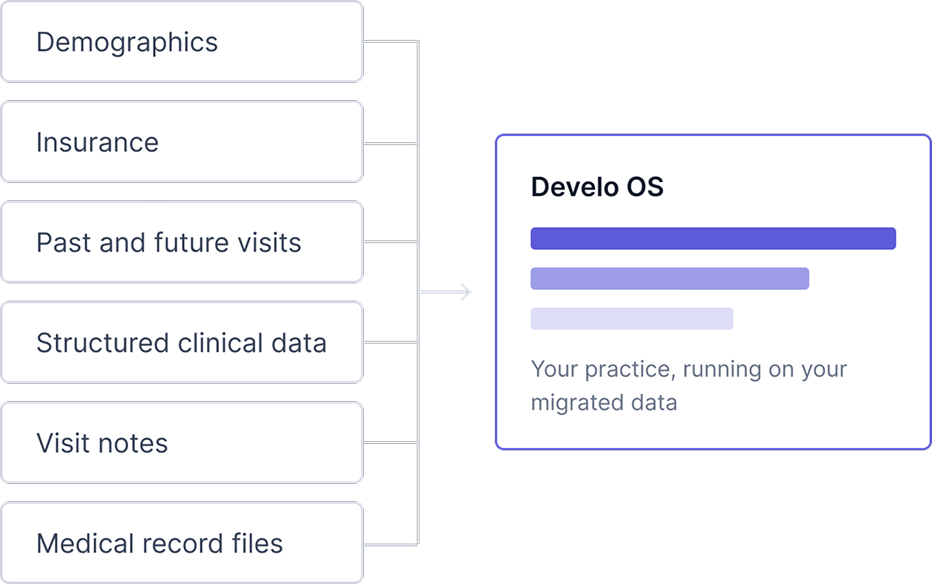
Develo has moved multiple practices off paper charts. For an established practice, that includes digitizing historical paper charts into each patient's record, with the practice choosing how many files migrate and how each one is titled. Those moves have included practices bringing scheduling and billing software and paper charts over in one transition, and practices that kept paper charts alongside an EMR whose clinical side didn't work for them. With Develo, up-front data migration (including from paper charts), system configuration, and training are bundled into the subscription, with no implementation fee.
Book a demo to see how a move off paper charting can work for your clinic's family and visit volume.
Frequently Asked Questions
Is Paper Charting Still Used in Medical Practices?
Yes, a small share of physicians still chart on paper. In 2024, 5% of office-based physicians reported using no electronic records system at all, and solo practices had the highest rate, at 14%, according to ONC Data Brief No. 84.
Is Paper Charting HIPAA Compliant?
Paper charting can be HIPAA compliant when the right protections are in place. HIPAA covers health information on paper as well as on screens, and the Privacy Rule's safeguards standard requires administrative, technical, and physical protections. For paper, that means locked storage, controlled access, and secure disposal.
What Are the Main Disadvantages of Paper Charting?
The main disadvantages of paper charting are documentation errors, slow retrieval, and no audit trail. Pediatric practices also lose time plotting growth by hand and entering each vaccine twice.
What Are the Alternatives to Paper Charting?
The three main alternatives are a full EMR migration, a hybrid transition, and backfill digitization of historical charts. Full migration is the fastest of the three, while backfill digitization changes the least about daily work.
How Do You Convert Paper Charts to an EMR?
Clean the charts before migrating, decide what moves as structured data versus scanned documents, and set a fixed cutover date. Older, inactive charts are commonly scanned into an archive, since converting every field to structured data rarely justifies its cost. In a pediatric practice, prioritize the data that has to stay structured: immunization histories with dates and lot numbers, growth measurements for plotting, allergies and problem lists, and links between guardians and siblings. Where the state registry supports queries, pulling prior doses down from the registry beats re-keying them from paper.