
.avif)
Developmental screening in pediatrics is the standardized check that turns a hunch about a child's progress into a documented score. Every well child visit is a chance to catch a delay early, while there's still time to change the path a child is on. In a busy pediatric clinic, though, that chance is easy to lose: to a paper form that never makes it into the chart, a score that takes ten minutes to tally by hand, or a positive screen that slips through without follow-up.
The fix is a workflow that handles the tracking, scoring, and billing for you, so screening stays consistent without adding to anyone's plate.
What Is Developmental Screening in Pediatrics?
Developmental screening in pediatrics uses short, validated questionnaires to check a child's progress in communication, motor skills, problem-solving, and social-emotional development. It runs at set ages during well child visits to flag possible delays early.
Think of screening as a checkpoint. A positive screen doesn't diagnose anything on its own. It tells you a child needs a closer look.
The AAP recommends formal developmental screening at 9, 18, and 30 months, plus autism-specific screening at 18 and 24 months. The AAP periodicity schedule lays out exactly what to screen at every visit.
Why Developmental Screening Matters for Outcomes and Revenue
A delay caught at 18 months means a child can start early intervention while the brain is most adaptable, long before kindergarten. That early start supports language, behavior, and school readiness in ways that are much harder to reach once a child has already fallen behind.
Developmental screening also protects practice revenue. Every documented screen ties to a reimbursable CPT code. Miss the screen or miss the documentation, and you leave money on the table. The gap usually shows up in three places:
- Parents skip or fill out paper forms incorrectly.
- Staff score by hand and forget to document.
- Billers miss the linked code during charge capture.
Across hundreds of well child visits a year, even small gaps add up. Developmental screening is a required EPSDT component, and 47 state Medicaid programs reimburse 96110 separately from the well child visit — so on a Medicaid-weighted panel, an uncoded screen is work the practice has already done and won't be paid for.
A consistent screening program also strengthens trust with families, which feeds the word-of-mouth growth at the heart of pediatrician marketing.
AAP Developmental Screening Schedule by Age
The AAP and Bright Futures recommend specific developmental screening intervals during well child visits. Knowing what to screen and when keeps your clinic aligned with national standards:
What to Track During Developmental Screening
A clinic with a tight screening program tracks five things every time:
- Completion: Was the screen done at the scheduled age? Missed screens equal missed clinical and billing opportunities.
- Score: What did the tool show? Pass, fail, or borderline drives the next step.
- Action taken: Did the provider review the result, place a referral, or schedule a recheck?
- Billing code: Did the right CPT code attach so the work is reimbursed?
- Corrected age for preemies: For a child born preterm, milestones and screening cutoffs are read against age from the due date, not the birth date, through roughly age 2. A system that stores gestational age and applies the correction automatically prevents a normally developing former 32-weeker from screening positive.
When any one of those five breaks, the program quietly leaks value.
Common Developmental Screening Tools in Pediatric Practice
Pediatric clinics use different validated screening tools depending on the child's age and what you're screening for. The most common include:
- PEDS: Parents' Evaluation of Developmental Status — a brief, parent-completed screener used across infancy and early childhood.
- SWYC: Free, brief screener covering development, behavior, and family risk.
- M-CHAT-R/F: Standard autism screen used at 18 and 24 months, with a short follow-up interview for borderline scores.
- EPDS: Maternal depression screen completed at the infant's early well child visits.
- PHQ-A: Adolescent depression screen tied to annual visits.
- CRAFFT: Adolescent substance use screen, often paired with depression screening.
Extra tip: For a deeper dive on adolescent risk, see our breakdown of CRAFFT screening workflows.
Where Manual Developmental Screening Breaks Down
Here are a few reasons why manual developmental screening doesn't cut it:
- Paper forms can get lost: Parents fill them out in the waiting room, hand them to the medical assistant, and somewhere between the front desk and the chart, the score never gets entered.
- Manual scoring can eat time: A medical assistant can spend 5 to 10 minutes scoring and entering one tool by hand. Multiply that across every well child visit on the schedule.
- Billing codes slip: When the screen lives on paper, the linked CPT code often never makes it onto the claim.
- Follow-up drops off: Positive screens need recall, referral, and tracking. Without an automated trigger, those tasks depend on whoever happens to remember.
What to Automate in Your Developmental Screening Workflow
Modern pediatric software should pull the manual labor out of screening. Look for these automations:
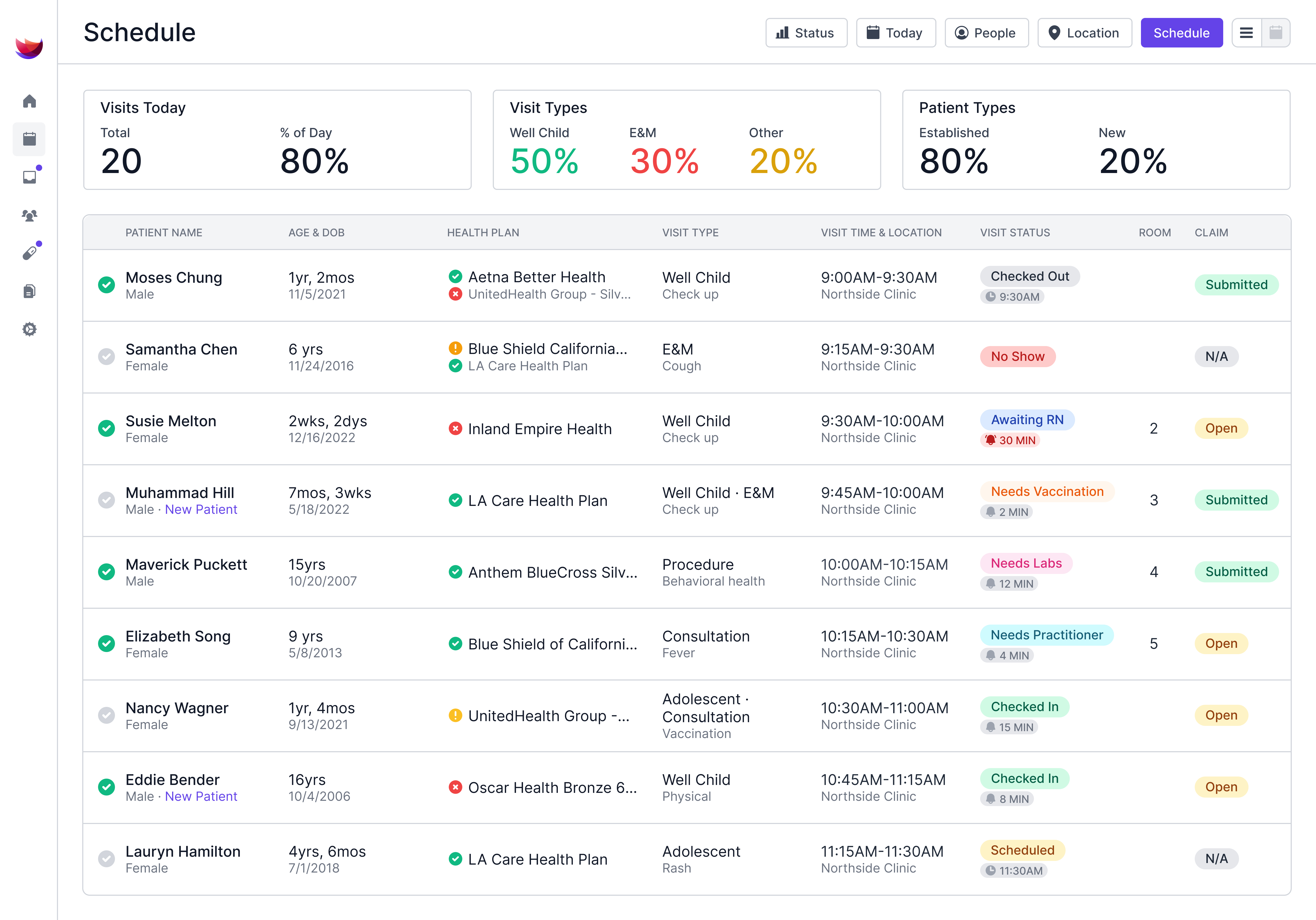
- Age-based assignment: The system pulls the right tool for each patient based on date of birth and visit type, with no front-desk lookup.
- Pre-visit delivery: Parents complete the screen on their phone before they arrive. Digital intake cuts wait time and improves completion rates.
- Automatic scoring: The system scores the tool the moment a parent submits, with results in the chart before the provider walks in.
- Linked billing: The right CPT code attaches automatically through automated charge capture. For a full code reference, see our pediatric billing cheat sheet.
- Triggered follow-up: Positive screens generate tasks, referrals, and recall reminders without staff intervention.
Where a Positive Screen Goes Next
A positive screen is only useful if the referral actually gets made, and the pathway depends on the child's age.
- Birth to 3 years: refer to the state's Early Intervention program under IDEA Part C, which covers the evaluation at no cost to the family.
- Three years and older: refer to the local school district under IDEA Part B, a different agency with its own intake process.
The most common failure here is a positive screen with no referral logged — the score reaches the chart, the visit ends, and the loop never closes. Track screening referrals the way you track abnormal labs.
How to Build a Developmental Screening Workflow That Scales
A scalable developmental screening program runs the same way whether you see 30 patients a day or 300. Five steps make it work:
- Map the schedule to the AAP Bright Futures periodicity schedule so every age gets the right screen.
- Move intake to digital so parents complete screens from home before the visit.
- Score automatically and route results to the chart in real time.
- Tie the screen to billing so charge capture picks up every reimbursable code.
- Trigger follow-up automatically for positive screens, with screening tasks and automations for family messages built in.
For the bigger picture on simplifying your clinic day, see our guide on pediatric office workflow design.
Run Developmental Screening Without the Paper Trail
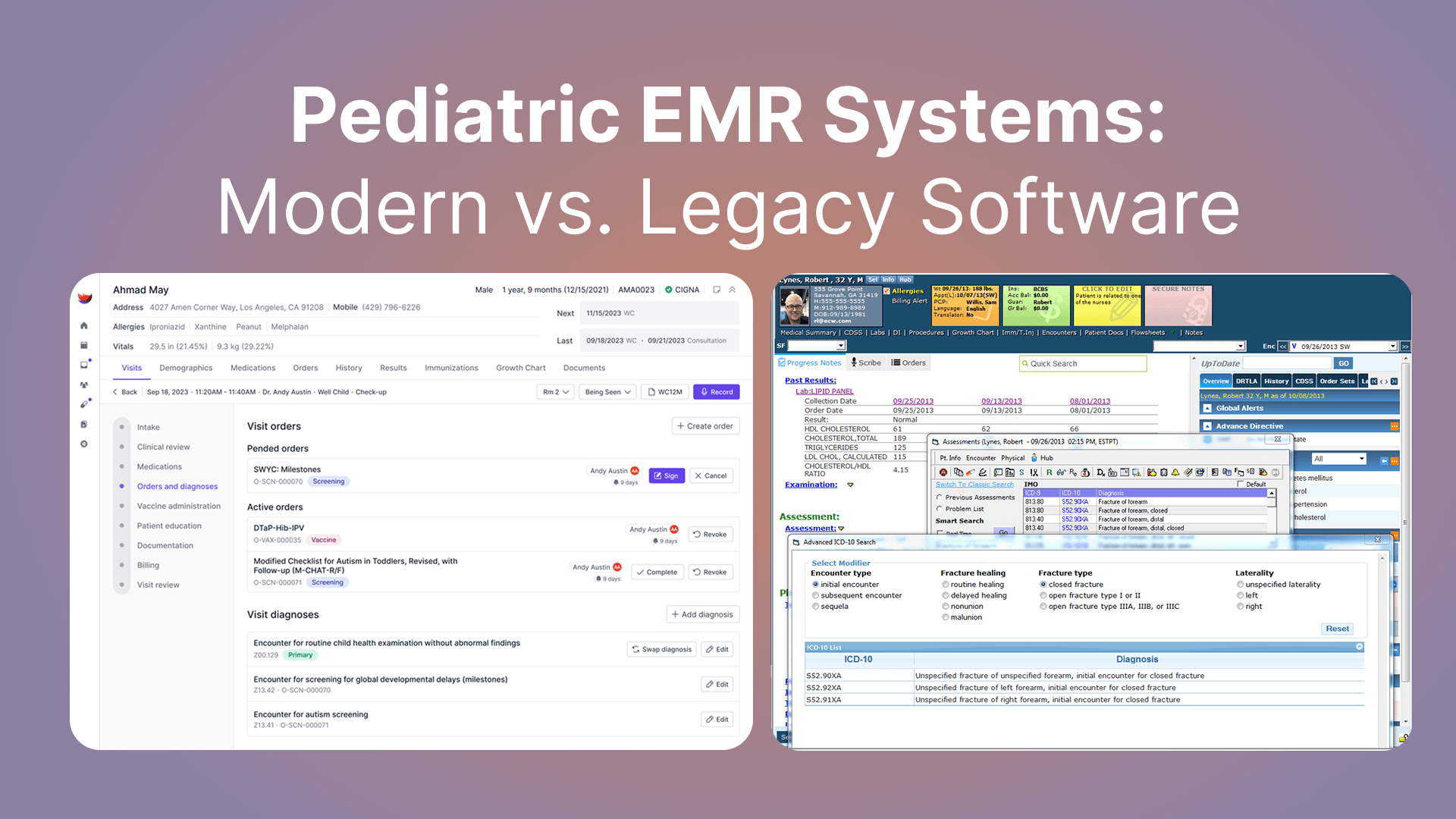
Develo is the AI-native pediatric operating system built solely for independent pediatric practices, unifying charting, billing, practice management, and family engagement in one system. Traditional EMRs are largely adult systems retrofitted for pediatrics, and even the pediatric-specific systems run on dated code — which is why screening in most practices still depends on paper, bolt-on tools, and someone remembering.
For developmental screening, that unified design is what lets the work run on its own. Because the screen, the score, the code, and the follow-up all live in the same system, nothing has to be handed off, re-entered, or remembered.
With Develo, pediatric practices can:
- Assign the right screen automatically, with native digital screeners including PEDS, SWYC, M-CHAT-R/F, EPDS, PHQ-A, and Vanderbilt firing from age-aware triggers on the patient record, with scoring logic and billing codes also wired in
- Deliver screens before the visit, so parents complete and submit them from their phone in their preferred language — no app download or family portal login required
- Score instantly and flag before the visit, with results in the chart and a screening task surfacing concerning scores to the pediatrician ahead of the visit
- Capture the billing automatically, attaching the right CPT code to every completed screen through automated charge capture
- Keep the cost predictable, with developmental and behavioral screeners as platform components rather than a separate vendor add-on or a per-screen fee
- Trigger follow-up on its own, routing positive screens to screening tasks, referrals, and family message follow-ups without a manual handoff
You shouldn't need a bolt-on screening tool, a separate intake vendor, and a paper backup just to run a strong screening program. One pediatric platform can handle all of it. Book a free demo and see how Develo runs developmental screening from intake to claim.
Frequently Asked Questions
What Is the Difference Between Developmental Surveillance and Developmental Screening?
Developmental surveillance is the informal monitoring a pediatrician does at every visit through observation, history, and parent concerns. Developmental screening uses a validated, standardized tool at specific ages to formally check for delays.
Which Developmental Screening Tools Are Most Common in Pediatric Practice?
Widely used developmental screening tools include PEDS and SWYC for general development, M-CHAT-R/F for autism, EPDS for maternal depression, PHQ-A for adolescent depression, and CRAFFT for adolescent substance use.
Is Developmental Screening Reimbursable?
Yes. Developmental screening is reimbursable when documented with the correct CPT codes: 96110 for standardized developmental screening, billed per instrument; 96127 for brief emotional or behavioral assessment such as the PHQ-A; and 96161 for caregiver-focused screens such as the EPDS. Bill each instrument separately — a general screen plus an autism screen at 18 months is two units of 96110, reported as separate line items with modifier 59 where the payer requires it.
Automated charge capture helps make sure every completed screen attaches the right code.
How Can a Pediatric Clinic Automate Developmental Screening?
A pediatric clinic can automate developmental screening with software that assigns tools by age, sends them to parents before the visit, scores results automatically, links billing codes through automated charge capture, and triggers follow-up tasks for positive results.
%20(1).png)

.png)