
.avif)
After testing multiple EHR platforms for pediatric practices, the best Tebra alternatives are PCC for long-standing pediatric support, Office Practicum for vaccine management, and Develo for pediatric-specific workflows.
6 Best Tebra Alternatives: At a Glance
Pricing models correct as of April 2026. Contact each vendor for a personalized quote.
Why Look for Tebra Alternatives?
Tebra is a solid generalist EHR. It handles scheduling, billing, documentation, and patient engagement through a single cloud-based dashboard. For many small practices, that's enough. But pediatric clinics aren't "many small practices."
Here’s why you might want to look at an alternative to Tebra:
- No pediatric-specific templates or workflows: Tebra is built for general independent practices. You won't find built-in CDC growth charts, age-based dosing calculators, or immunization forecasting.
- Family relationship management is missing: Pediatrics revolves around families: siblings, blended households, and multiple guardians. Tebra tracks individual patients the same way adult-focused platforms do.
- Limited clinical screener support: Standardized developmental screeners, like CRAFFT, aren't built into Tebra's intake. You'd need third-party tools to handle what a pediatric-specific EHR does natively.
- Billing customization gaps for pediatric codes: Pediatric billing has unique patterns: vaccine administration codes, preventive visit modifiers, and split-billing for VFC inventory.
Which Tebra Alternative Should You Choose?
Choose PCC if you're an established independent pediatric practice that values hands-on support and a strong user community. Expect a three-year contract commitment.
Choose Office Practicum if you need deep vaccine forecasting and have staff comfortable with a legacy interface. The platform is powerful but carries a steeper learning curve.
Choose Develo if you want a modern, pediatric-only platform that handles charting, billing, intake, and family engagement without bolt-on tools. It's not a fit for a multi-specialty or adult practice.
Choose athenahealth if you're a larger pediatric group that needs broad interoperability and a massive billing rules network. Pediatric-specific features will require customization.
Choose AdvancedMD if you run a multi-specialty group that includes pediatrics alongside other departments.
Choose eClinicalWorks if you need an affordable generalist EHR and can work around the missing pediatric features.
Stick with Tebra if you run a general independent practice where pediatric-specific workflows like growth tracking, immunization management, and family-based billing aren't daily priorities.
The 6 Best Tebra Alternatives
1. PCC (Physician's Computer Company)

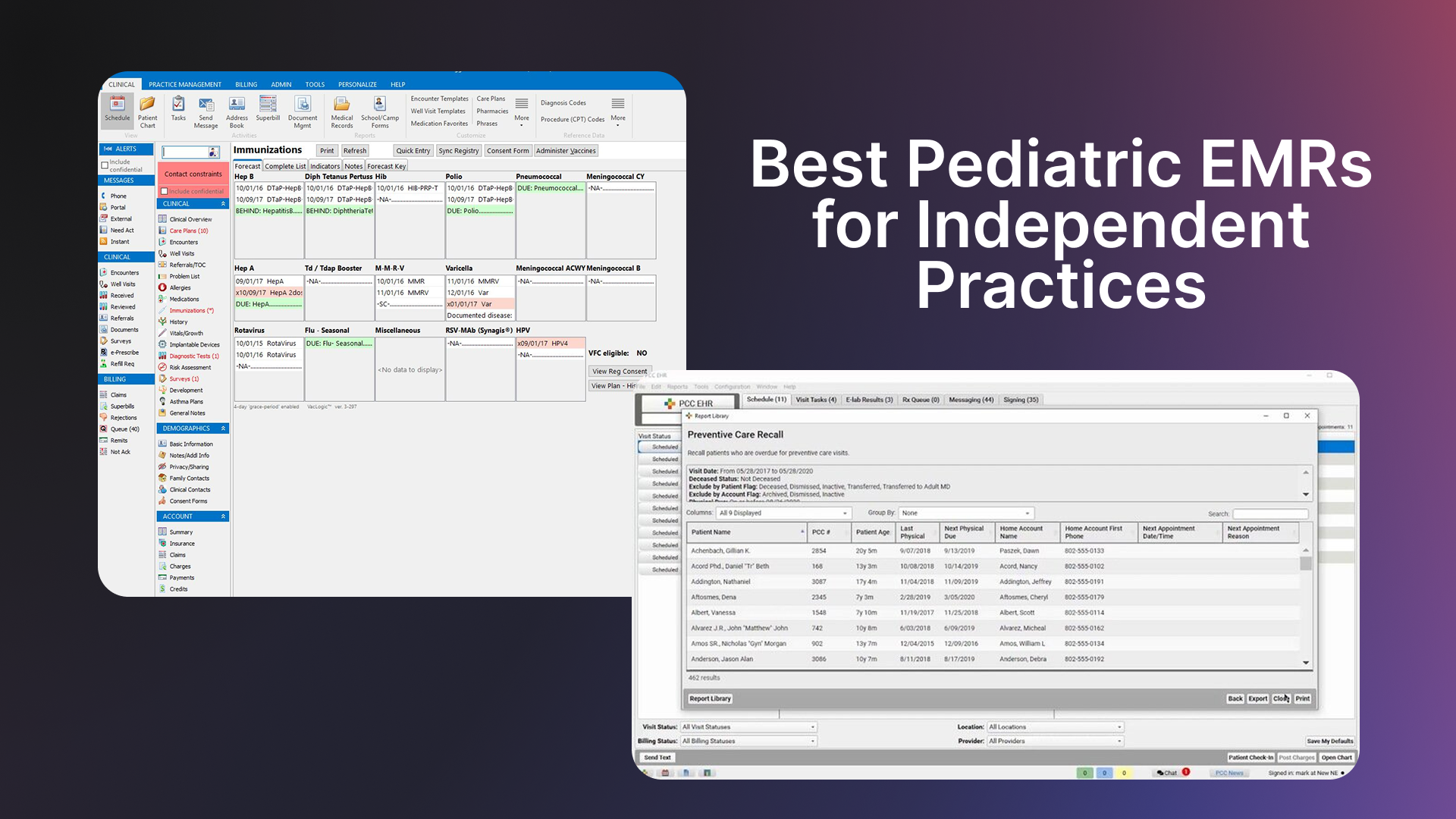
PCC is a pediatric-focused EHR and practice management system with deep clinical tools for growth tracking, immunization management, and well child documentation.
Key Features
- Specialized growth charts, including Fenton charts for preterm infants and Down syndrome-specific tracking
- Immunization forecasting with automatic alerts for overdue vaccines and VFC inventory management
- Customizable visit templates built with direct pediatrician input
- Practice analytics for tracking financial and clinical performance metrics
Pros
✅ Deep pediatric specialization backed by 40+ years in the market
✅ Dedicated client advocacy model with personalized onboarding and ongoing coaching
✅ Strong user community with annual conferences and peer networking
Cons
❌ Slower to adopt newer features like AI-powered documentation
❌ Interface can feel dated compared to modern cloud-native platforms
Best For
- Established independent pediatric practices that value long-term vendor relationships
- Clinics where a consultative support model outweighs the need for cutting-edge technology
Pricing
PCC charges a monthly fee covering software, support, training, upgrades, and the patient portal with some add-on optionality. Contact PCC for a personalized estimate.
2. Office Practicum (OP)
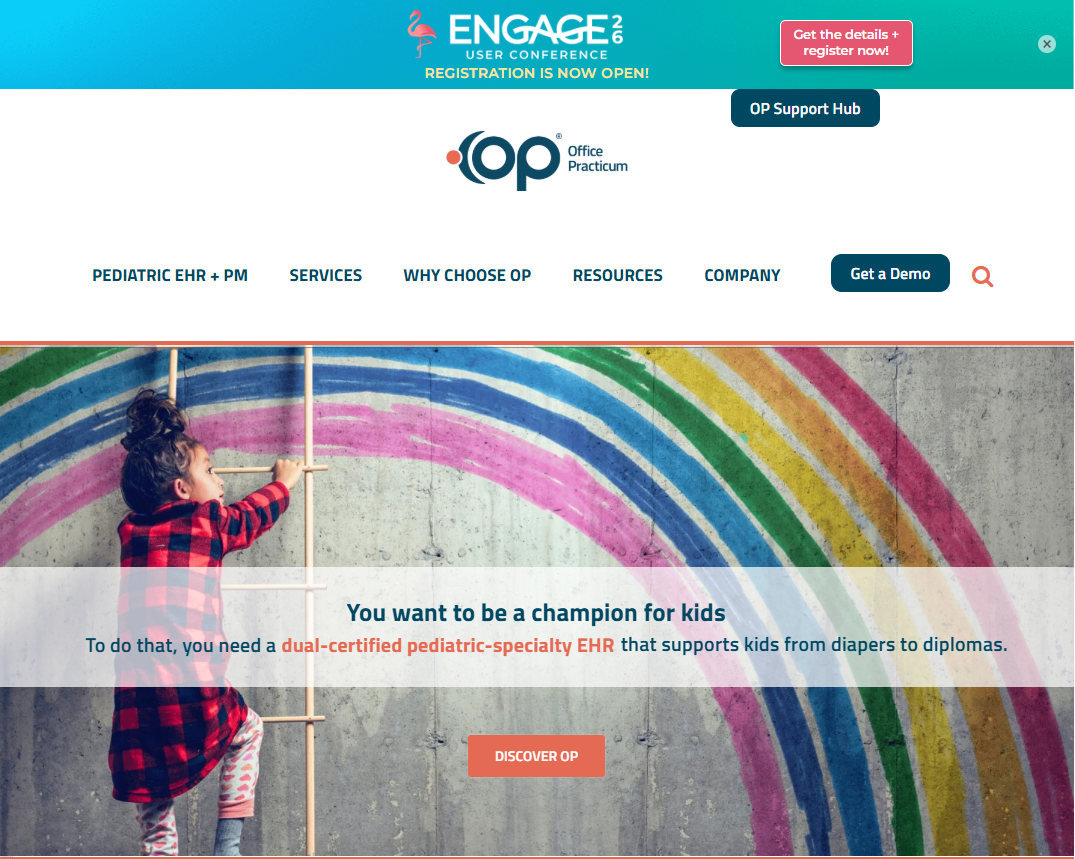
Office Practicum is a pediatric-specific EHR that covers charting, practice management, billing, and patient engagement with a strong emphasis on vaccine workflows and AAP-aligned resources.
OP's standout feature, VacLogic+, forecasts immunization schedules and tracks vaccine inventory across VFC and private stock. The platform also includes pre-built pediatric templates, electronic school and camp forms, and integrated AAP periodicity schedules.
Key Features
- VacLogic+ immunization forecasting automates vaccine scheduling and inventory tracking
- Hundreds of sick-visit templates pre-built for common pediatric presentations
- Integrated AAP resources, including periodicity schedules and developmental recommendations
- Electronic school and camp forms that auto-populate from patient records
Pros
✅ Deep vaccine management that few competitors match
✅ Pediatric-specific templates reduce documentation time
✅ Large installed base with an active user community
Cons
❌ Dated user interface that requires more clicks than modern platforms
❌ Software updates can introduce bugs that take time to resolve
❌ Requires third-party tools for intake (Phreesia, IntakeQ), adding cost
Best For
- Pediatric practices where vaccine management is a top priority
- Clinics comfortable with a legacy interface that has deep feature depth
Pricing
Office Practicum uses subscription-based pricing that varies based on practice size and selected modules. Clearing house fees are separate. Contact Office Practicum for a custom breakdown.
3. Develo

The only EHR built from the ground up for outpatient pediatrics, not retrofitted from an adult template.
Develo was designed from day one for pediatric practices. It's a single platform that covers charting, billing, scheduling, intake, and family engagement without requiring third-party add-ons.
The architecture is FHIR-native, meaning data flows cleanly among clinical, billing, and family-facing features.
Where most Tebra alternatives require patching together separate tools for intake, screening, and payments, Develo bundles everything into a single system. Digital pre-visit check-in, clinical screeners, and payment collection happen before the patient walks through the door.
Key Features
- AI-powered charge capture: Billing codes auto-generate based on visit documentation, reducing under-billing and coding errors
- Family-centered data architecture: Manages siblings, blended families, and multiple guardians natively. Insurance, demographics, and contact details stay connected across family members
- Built-in digital intake and screeners: Pre-visit forms, developmental screens, and consent documents arrive on caregivers' phones before the appointment
- Automated visit reminders and recall: Text-based confirmations, cancellation handling, and patient recall reduce no-shows without front-desk effort
- Adolescent confidentiality controls: Teen data is segregated from parent-facing portals, keeping your practice compliant with privacy requirements
- State vaccine registry integration: Bidirectional connectivity pushes immunization data directly to state registries
Pros
✅ Pediatric-specific workflows eliminate the need for bolt-on tools
✅ Modern, intuitive interface with fewer clicks than legacy systems
✅ Comprehensive pricing with no nickel-and-diming
✅ Onshore support and engineering with no outsourced teams
✅ Weekly product releases and continuous innovation
Cons
❌ Focused on outpatient pediatrics, not designed for multi-specialty or family medicine
❌ Newer to market compared to legacy pediatric vendors
Best For
- Independent pediatric practices looking to replace an outdated or generalist EHR
- Clinics that want charting, billing, intake, and family engagement in one platform
- Practices tired of managing multiple software tools for tasks a single system should handle
Pricing
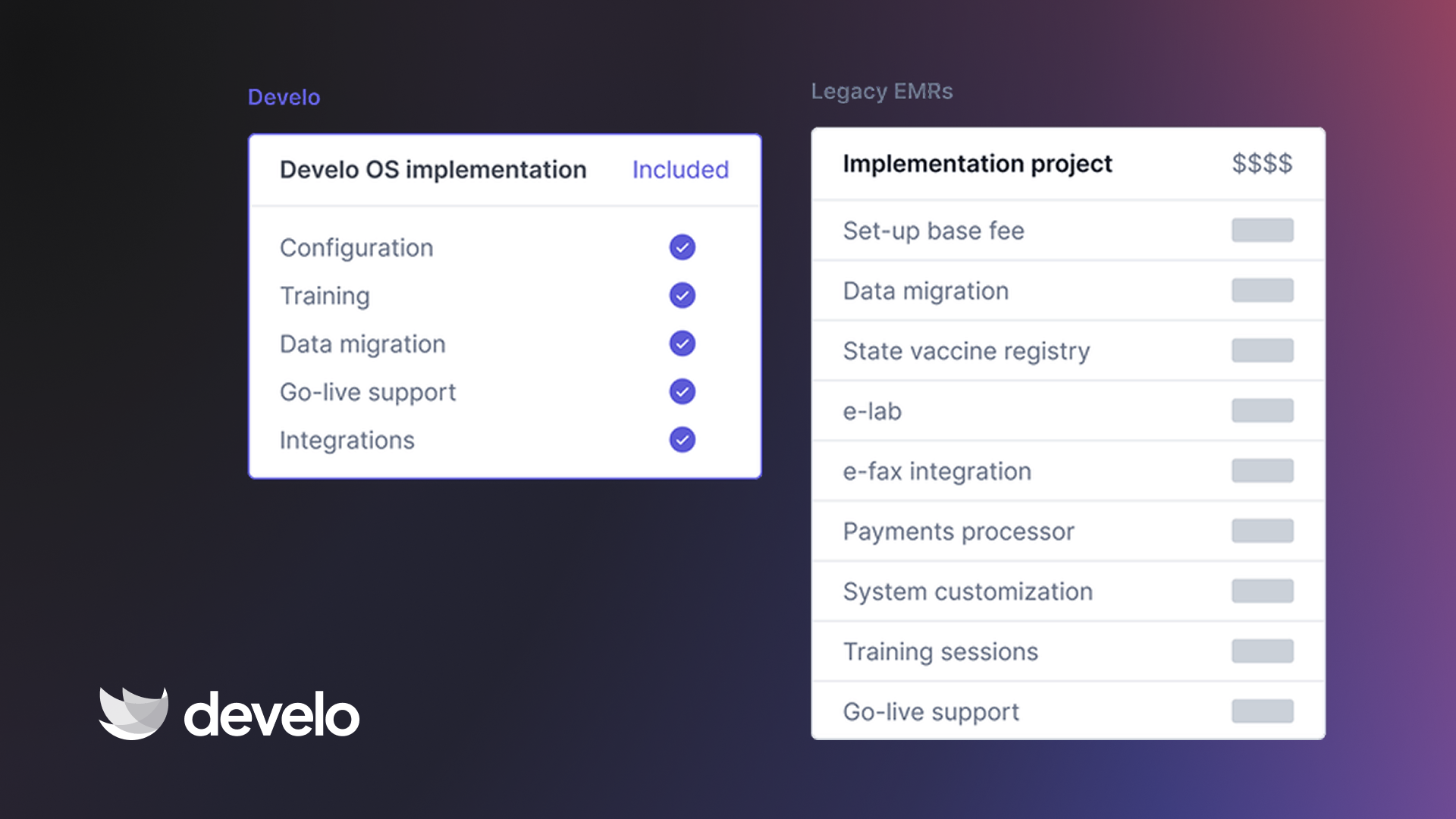
Develo uses per-practitioner, per-month comprehensive pricing that bundles software, implementation, data migration, training, and ongoing support. Book a demo for a custom quote.
4. athenahealth
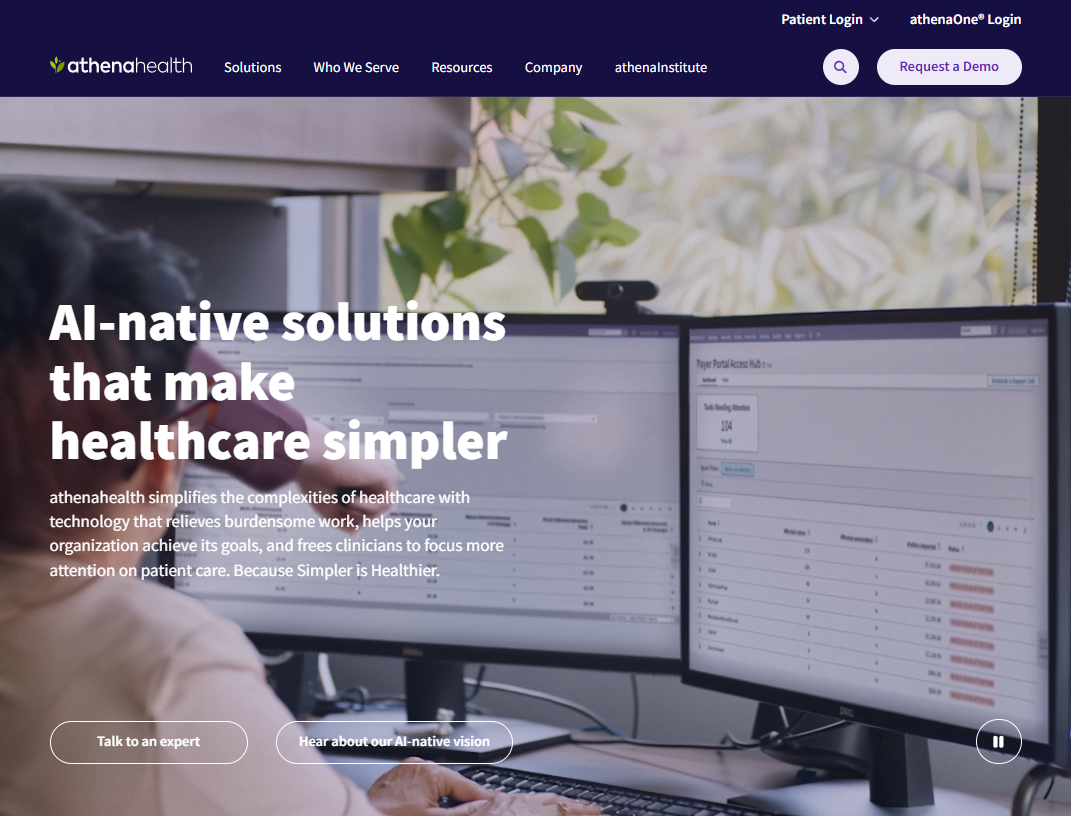
athenahealth is a broad-specialty, cloud-based EHR. It's known for its billing rules network, which updates automatically based on real-time claim data across its entire user base.
For pediatric practices, athenahealth offers a competent general EHR with strong revenue cycle management. But it lacks the pediatric-specific workflows that dedicated platforms provide out of the box.
Key Features
- 30,000+ automated billing rules that adapt to payer changes in real time
- Broad interoperability with labs, pharmacies, hospitals, and specialist networks
- Patient self-scheduling and communication tools for family engagement
- Mobile app for on-the-go charting and scheduling
Pros
✅ Powerful revenue cycle management with high first-pass claim rates
✅ Strong interoperability across healthcare networks
✅ Dedicated customer success managers for onboarding and ongoing coaching
Cons
❌ Not pediatric-specific: no native growth charts, immunization forecasting, or family linking
❌ Percentage-of-collections pricing model adds up quickly for high-revenue practices
❌ Workflows require customization to fit pediatric needs
Best For
- Larger pediatric groups or multi-site practices that need broad network connectivity
- Practices that prioritize billing optimization and are willing to customize clinical workflows
Pricing
athenahealth uses a hybrid pricing model: A base subscription per provider per month plus a percentage of net collections processed through their RCM service.
This model means athenahealth only gets paid when you do, but costs can escalate for high-revenue practices. No long-term contracts required. Request a demo for a custom quote.
5. AdvancedMD

AdvancedMD is a cloud-based EHR and practice management suite for independent practices across multiple specialties. It offers modular pricing, letting you pick the features you need: EHR only, practice management, billing, or the full stack.
For pediatric clinics within a multi-specialty group, AdvancedMD's configurability is its biggest strength. For pediatrics-only practices, you'll spend time building templates and workflows that purpose-built platforms include by default.
Key Features
- Modular pricing lets you start with EHR and add billing or patient engagement later
- Configurable templates adaptable for pediatric documentation
- Integrated telemedicine for virtual sick visits
- Advanced reporting with real-time financial and clinical dashboards
Pros
✅ Highly configurable for multi-specialty groups
✅ Strong reporting and analytics tools
✅ Telemedicine built in without third-party tools
Cons
❌ No pediatric-specific features out of the box
❌ Full suite pricing can get expensive at scale
❌ Complex setup process requiring significant configuration time
Best For
- Multi-specialty groups that include pediatrics alongside other departments
- Practices that need granular control over which modules they purchase
Pricing
AdvancedMD uses a modular, per-provider pricing model where costs vary based on which products you bundle (EHR, practice management, billing, patient engagement, telehealth). Request a demo for a custom quote.
6. eClinicalWorks
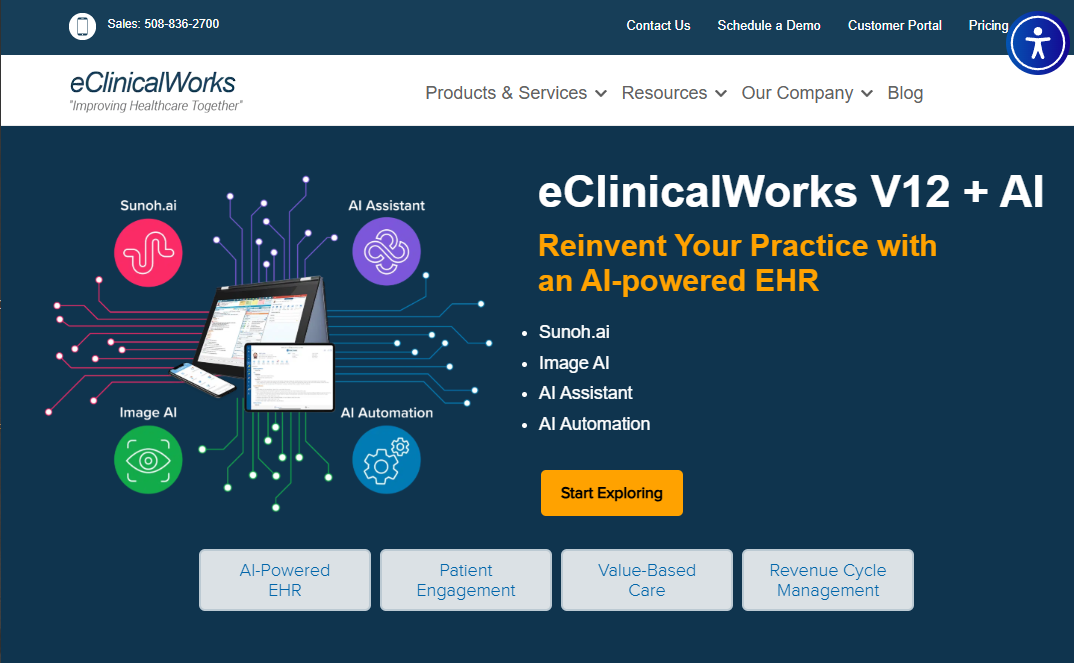
eClinicalWorks serves practices of all sizes and specialties, offering a broad feature set that includes scheduling, charting, billing, telehealth, and population health tools.
For pediatric practices, eClinicalWorks can technically handle the workload. But the platform lacks pediatric-specific features, like growth charts for premature babies and children with Down syndrome, immunization forecasting, and family relationship management.
Key Features
- Broad EHR functionality covering scheduling, charting, billing, and patient communication
- Population health tools for tracking quality measures across patient panels
- Telehealth integration for virtual visits
- RCM services available as an add-on
Pros
✅ Affordable compared to niche competitors
✅ Large feature set covering most practice management needs
✅ Telehealth and population health included
Cons
❌ Missing pediatric-specific features like specialized growth charts and vaccine forecasting
❌ No native family relationship management or adolescent confidentiality controls
❌ Interface can feel cluttered and overwhelming
❌ Pediatric workflows require significant manual configuration
Best For
- Budget-conscious pediatric practices that can tolerate workarounds for pediatric-specific needs
- Clinics already using eClinicalWorks for other departments
Pricing
eClinicalWorks has three pricing plans, each with no startup costs:
- EHR Only starts at $449/month/provider
- EHR with Practice Management starts at $599/month/provider
- RCM as a Service costs 2.9% of your practice’s collections
Whether you’re starting a new practice and need help setting up your EHR from scratch or you’re already using an EHR and could use help switching, you can schedule a demo for eClinicalWorks to assist you.
How to Evaluate Tebra Alternatives for Your Practice
Switching your EHR is a big decision. Before you sign a contract, consider these features:
- Pediatric-specific workflows: Does the platform include growth charts, immunization tracking, developmental screeners, and well child visit templates natively? Or will you build them from scratch?
- Family relationship management: Pediatrics is family-driven care. Your EHR needs to link siblings, manage blended households, connect guarantors to the right patients, and share insurance data across family members.
- Billing accuracy for pediatric codes: Vaccine administration codes, preventive visit modifiers, and VFC split-billing are daily realities in pediatrics. Ask vendors to walk you through a typical well child visit billing workflow.
- Intake and screener support: Digital intake should cover pre-visit check-in, clinical screeners (PHQ-A, Edinburgh, etc.), consent forms, and demographic updates.
- Adolescent confidentiality: The 21st Century Cures Act creates compliance challenges for adolescent confidentiality by requiring broad sharing of electronic health information. Ask vendors how their platform handles teen data segmentation to protect sensitive records from parent-facing portals.
- Total cost of ownership: Compare the full picture: base subscription, add-on modules, clearing house fees, implementation, training, and ongoing support. A cheaper per-provider price with $500/month in bolt-on tools isn't the deal it looks like on paper.
Stop Stitching Together General-Purpose Tools for a Pediatric Practice
Develo is the first end-to-end pediatric software built from day one for independent pediatric practices. It replaces the patchwork of disconnected tools that slow your clinic down.
Here's what you can do with Develo:
- Automate charge capture based on visit documentation with AI-powered billing codes optimized for pediatric reimbursements.
- Manage family relationships natively: Siblings, blended families, multiple guardians, and guarantors stay connected across the entire platform.
- Run digital intake and clinical screeners before patients arrive, cutting waiting room bottlenecks and freeing up front-desk staff.
- Send automated visit reminders and patient recall texts that reduce no-shows without adding admin work.
- Submit immunization data bidirectionally to state vaccine registries with minimal clicks.
- Protect adolescent confidentiality with built-in privacy controls that separate teen data from parent-facing portals.
You don't need five different apps to run your pediatric practice. You need one platform that ties everything together from intake to final payment. Book a free demo and see how Develo’s pediatric-specific features answer the Tebra alternatives question once and for all.
Frequently Asked Questions
1. What Is the Best Tebra Alternative for Pediatric Clinics?
PCC stands out as the top Tebra alternative for pediatric clinics because it's backed by over 40 years of specialization in the field.
Unlike Tebra, which is a generalist platform, PCC includes the clinical tools that pediatric practices actually need out of the box, like specialized growth charts, immunization forecasting with VFC inventory management, and customizable visit templates developed directly with pediatricians.
2. Is Tebra Good for Pediatric Practices?
Tebra works for general independent practices, but it lacks pediatric-specific features like growth charts, immunization forecasting, family relationship management, and developmental screeners. Pediatric clinics using Tebra typically need third-party tools to fill these gaps.
3. How Much Does Tebra Cost per Month?
Tebra doesn’t publish fixed pricing on its website. Costs are customized based on your specialty, number of providers, and selected modules.
You can request a personalized quote through their pricing page. Tebra's own resources indicate that its billing platform ranges from $99 to $399 per provider per month, with additional fees for onboarding, AI features, and payment processing.
4. Can I Switch From Tebra to a Pediatric-Specific EHR?
Yes, most pediatric EHR vendors offer data migration support as part of implementation. PCC, Office Practicum, and Develo all include assistance with migration. The typical transition takes a few weeks to a few months, depending on practice size and data complexity.
5. What Features Should a Pediatric EHR Include?
A pediatric EHR should include growth charts, immunization tracking and forecasting, developmental screeners, family relationship management, age-based dosing, adolescent confidentiality controls, and pediatric-specific billing automation.


.avif)