

PCC is a familiar name in pediatrics. But "best" depends on what your practice needs next. The best PCC EHR alternatives win on seamless connections with other systems, automation, and patient-facing convenience. You get faster updates, cleaner workflows, and fewer bolt-on tools.
This guide compares seven options for 2026, beginning with pediatric-first platforms and moving to general EHRs that can still serve pediatric care.
7 Best PCC EHR Alternatives: At a Glance
How We Evaluated These PCC EHR Alternatives
Selecting the right PCC EHR alternative depends on how well a system matches pediatric-specific clinical needs, operational workflows, and practice growth goals.
The evaluation focused on six areas:
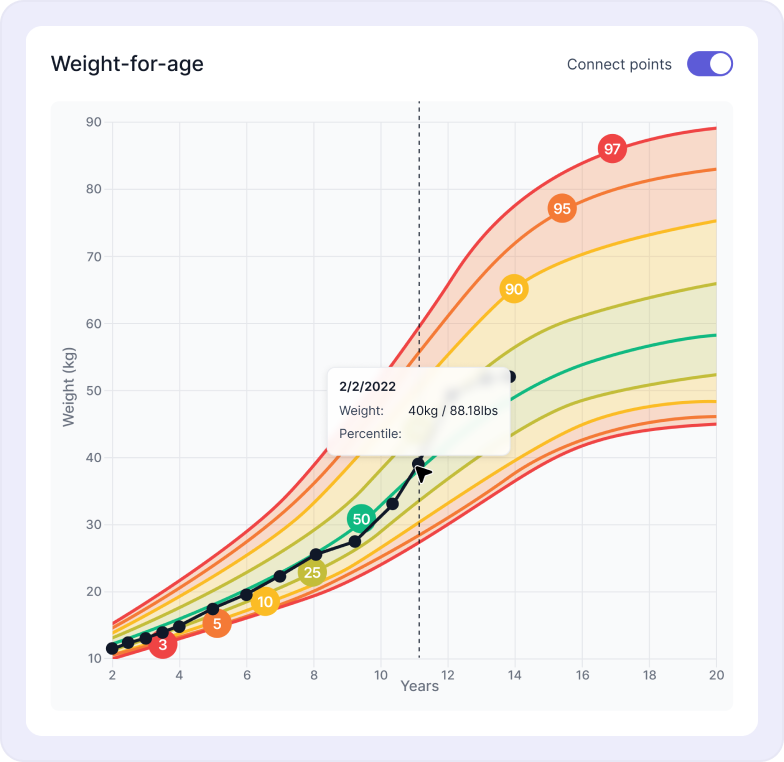
- Pediatric-specific functionality: Does the system offer native pediatric growth charts (including preemie and Down syndrome curves), vaccine forecasting, age-based screener automation, and family relationship management?
These features matter because pediatric care is fundamentally different from adult ambulatory care, and workarounds add time and error risk.
- Technology architecture: Is the platform cloud-native, browser-based, and FHIR-compatible? Systems built on 1980s to 1990s architecture carry technical limits that weigh down integration speed, user experience, and feature delivery. Do all customers get new features at the same time, or does it depend on how the system is deployed?
- Billing and charge capture: Pediatric billing is complex. Vaccine administration codes, well child visit coding, and insurance-specific rules (Medicaid vs. commercial) require the pediatric context that general systems often miss.
Each system was reviewed for how it handles automated charge capture and claims scrubbing in pediatric encounters.
- Family-centered workflows: Pediatrics is a family-driven specialty. Systems need to handle siblings, blended families, multiple guardians, guarantor management, and adolescent confidentiality at the data architecture level, not as afterthoughts.
- Integration ecosystem: We checked state immunization registry connections, e-lab and e-prescribe integrations, and the depth of third-party partnerships.
- User satisfaction and support: Ratings and reviews from Capterra, G2, and Software Advice show how real users experience each platform.
1. Develo: Best PCC EHR Alternative for Pediatric Practices
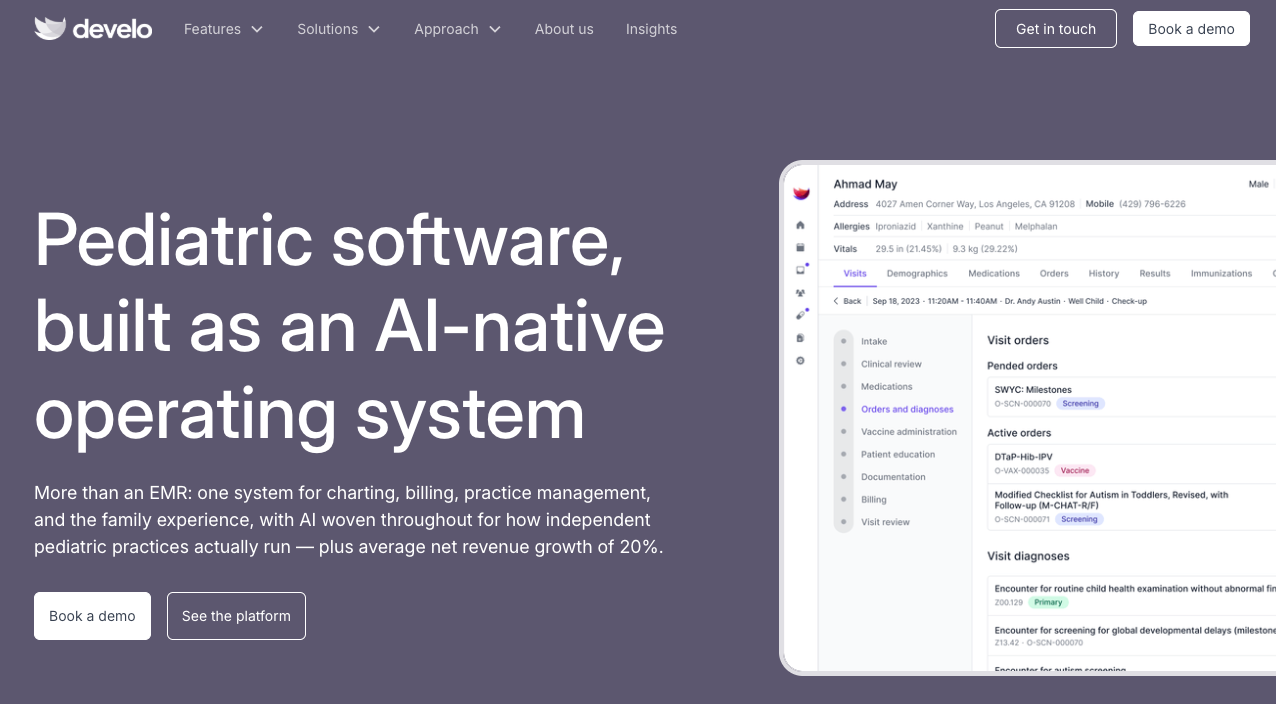
Develo is the AI-native operating system for pediatrics, built exclusively for independent pediatric practices. It covers scheduling, charting, billing, family engagement, and clinical screeners in one platform.
Who it's for: Independent pediatric clinics of all sizes that want to replace legacy systems with a pediatric-specific platform built on current technology.
Develo stands out among PCC EHR alternatives because it was designed from day one for pediatric care. PCC, by comparison, was founded in 1983.
Develo is FHIR-native and cloud-native, so interoperability, AI-powered workflows, and automated charge capture sit in the core platform instead of on top of decades-old code.
Why It Beats PCC
✅ Modern web experience with fewer legacy constraints and significantly faster updates
✅ Automation-first billing and documentation
✅ Family-centered workflows built into the platform
✅ Detailed statements in the family portal instead of paper statements mailed by a third party
✅ New releases reach every practice at once, with no local installation required
Key Features
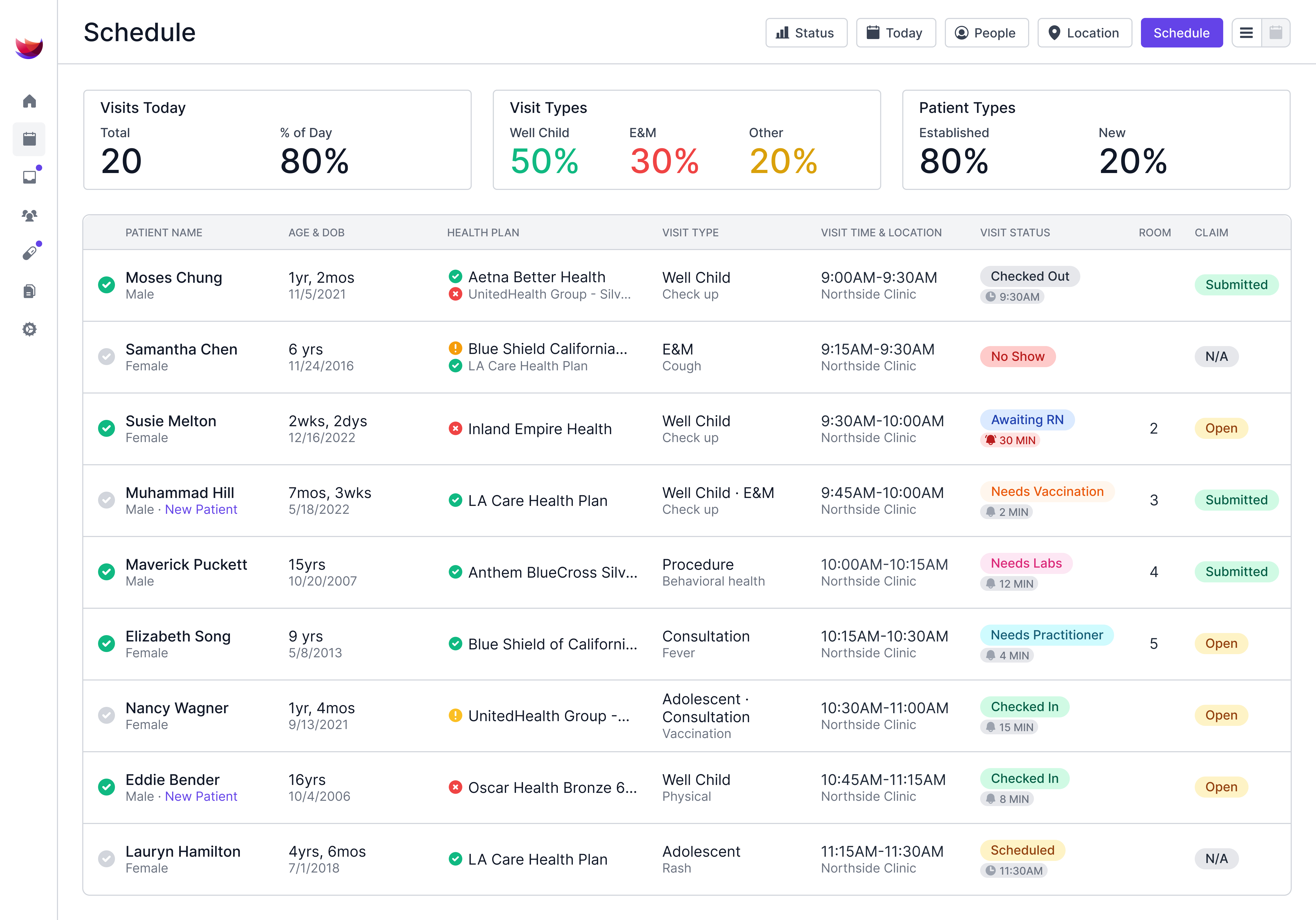
- Automated charge capture: Rules set pediatric codes, units, and modifiers by visit type, including vaccine administration codes tied to patient age, and alerts flag possible underbilling to providers. This reduces underbilling and manual coding errors.
- AI scribe: Develo AI scribe writes into the visit note section by section, drawing on pertinent chart data as well as the conversation. A clinician approves every section before it enters the note, which keeps documentation off providers' evenings.
- Family-centered portal: Caregivers access a portal using only their mobile number. They schedule visits, complete age-appropriate digital screeners before visits, view visit summaries, see detailed statements, and pay balances for multiple children.
- Built-in integrations: Bi-directional connections to state immunization registries, e-labs, e-fax, e-prescribe, and intake come standard. No third-party bolt-ons needed.
- Digital clinical screeners: Developmental, behavioral health, and autism screeners auto-populate based on patient age and are automatically scored and billed.
Pros
✅ Pediatric-only focus means every workflow, template, and automation is purpose-built for child and adolescent care
✅ Browser-based interface that works on any device, with no server installation or special hardware needed
✅ Multiple users can access and edit the same patient chart at the same time
✅ Weekly product releases keep the platform evolving faster than competitors
✅ Comprehensive pricing, with the family portal, screeners, and e-fax included rather than sold as add-ons
Cons
❌ Smaller community than legacy pediatric vendors
❌ Fewer legacy integrations than long-established systems
Pricing
Develo uses straightforward bundled pricing with a per-practitioner-per-month fee. The subscription covers ongoing product upgrades, maintenance, and support, with a 24/7 on-call engineer for critical issues.
Schedule a demo to request pricing for Develo.
Bottom Line
Develo is the strongest PCC EHR alternative for pediatric practices that want a system built specifically for pediatrics on modern technology. It matches PCC's pediatric focus while delivering faster innovation, cleaner workflows, and an automation-first approach to billing and documentation.
Practices ready to leave legacy architecture behind without giving up pediatric depth should put Develo at the top of their list.
2. Office Practicum (OP): Best for Established Pediatric Practices
Office Practicum is a pediatric-focused EMR with practice management, billing, patient engagement tools, and an established ecosystem of add-on services.
Who it's for: Mid-to-large pediatric practices that want a proven pediatric platform with a broad service ecosystem, including RCM, website management, and after-hours answering services.
The platform offers over 200 out-of-the-box pediatric templates, integrated AAP Bright Futures questionnaires, VacLogic+ immunization forecasting, and hybrid WHO/CDC growth charts, including Down syndrome and preemie curves.
Why It Beats PCC
✅ More pediatric-specific modules if you want to add them à la carte, from OP and its partners
✅ Deep pediatric content for well child visits and workflows
✅ Optional services for practices that want outsourcing support
Key Features
- VacLogic+ immunization forecasting: Forecasts which vaccines are due and manages the full immunization lifecycle from inventory to administration alerts.
- Over 200 pediatric templates: Sick visit, well child visit, and specialty templates with integrated Bright Futures content.
- Bi-directional CHADIS integration: Connects with developmental and behavioral screening tools such as M-CHAT and Vanderbilt ADHD assessments.
- À la carte module purchasing: Practices can buy only the modules they need, which can reduce costs for smaller clinics.
Pros
✅ Pediatric-first design and content
✅ Large pediatric community and long-term adoption
✅ Wide services menu beyond the EHR
Cons
❌ Costs can rise as services and modules add up
❌ Support experience varies by practice
Pricing
Office Practicum doesn't publish pricing publicly. The à la carte model means costs vary based on which modules a practice selects. Contact Office Practicum to request a quote.
Bottom Line
Office Practicum is a solid PCC EHR alternative for established pediatric practices that value a large user community and a wide service ecosystem.
The trade-off is an older technical foundation and a pricing model that can add up. Practices prioritizing modern architecture and built-in automation may find Develo's approach more forward-looking.
3. athenahealth: Best PCC EHR Alternative for Multi-Specialty Groups
athenahealth (athenaOne) is a cloud-based EHR, practice management, and RCM platform for ambulatory practices across multiple specialties, including pediatrics.
Who it's for: Pediatric practices within larger multi-specialty groups or organizations that need a single platform across different provider types.
The platform supports pediatric workflows, but it was designed for general ambulatory care, not pediatrics. It covers EHR, billing, and patient engagement in one subscription.
Why It Beats PCC
✅ One suite for mixed-specialty workflows
✅ Strong RCM orientation for operational performance
Key Features
- Network-scale insights: Diagnosis and care gap alerts surfaced at the point of care based on data from across the athenahealth network.
- Interoperability: 277,000+ clinical integrations with labs, pharmacies, and other EHR systems.
Pros
✅ Good fit for multi-specialty ops
✅ Strong billing and workflow tooling
✅ Cloud delivery with frequent updates
Cons
❌ Not pediatric-first out of the box
❌ Pediatric workflows may need configuration
Pricing
athenahealth uses a per-provider subscription model for its core offering, but it doesn't publish its pricing online. Request a demo to find out how much it may cost you.
The full athenaOne suite with RCM services takes a percentage cut of practice collections. This means costs scale with revenue, which can be a benefit or a drawback depending on practice volume.
Bottom Line
athenahealth is a strong PCC EHR alternative for practices embedded in multi-specialty groups or those prioritizing network-scale data insights and RCM automation.
It falls short on pediatric-specific workflows, making it a better fit for organizations willing to tolerate some customization. Practices that want a pediatric-first experience should consider purpose-built options like Develo or Office Practicum.
4. eClinicalWorks: Best for Budget-Conscious Practices
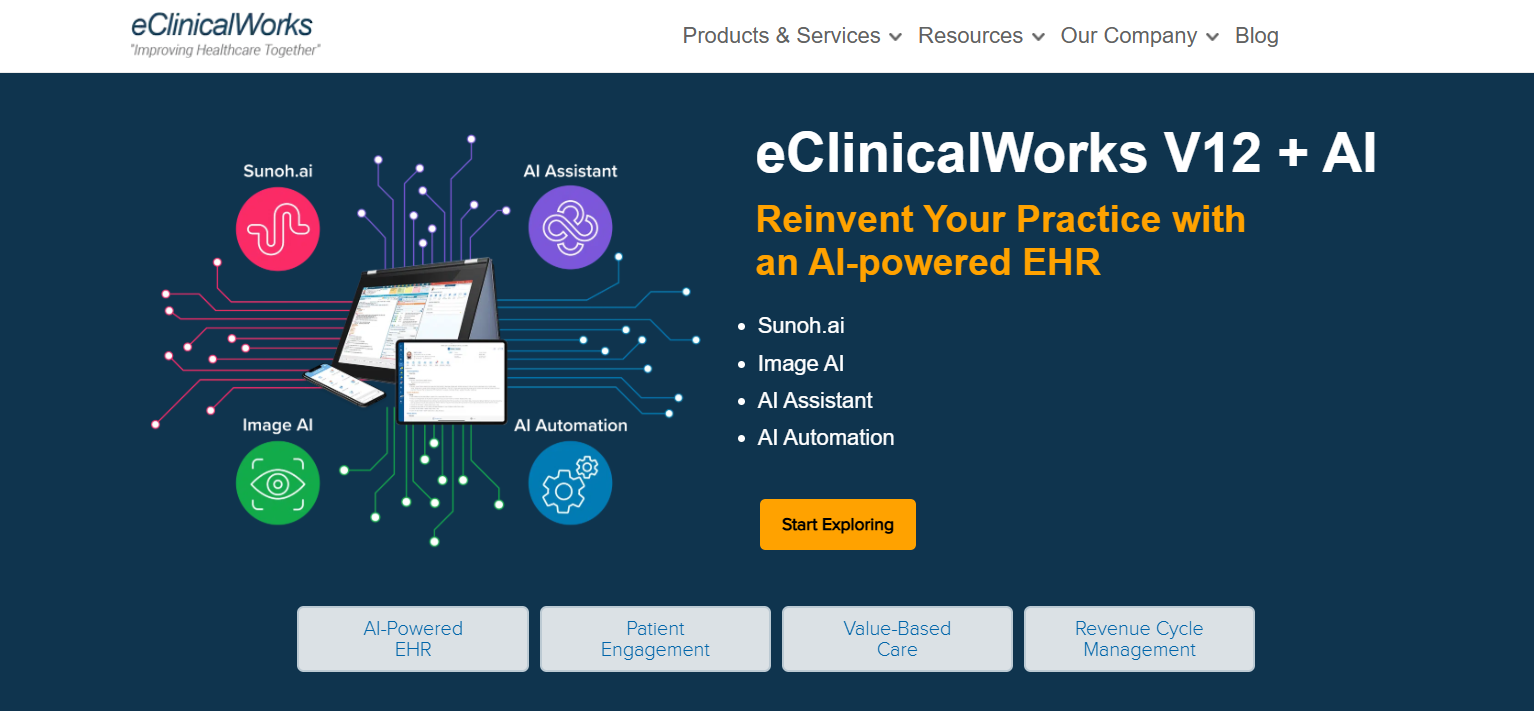
eClinicalWorks is a cloud-based EHR and practice management system with a broad feature set spanning clinical documentation, billing, population health, and patient engagement through its healow ecosystem.
Who it's for: Cost-sensitive pediatric practices that want a published starting price and a wide range of features, and that can work around the lack of pediatric-specific design.
Why It Beats PCC
✅ Large ecosystem built for many specialties
✅ Wide feature coverage in one vendor
✅ Strong patient engagement via healow Genie
Key Features
- healow ecosystem: Patient engagement tools covering scheduling, check-in, telehealth, and health records access.
- Population health management: Tools for tracking care gaps and quality measures across patient populations.
- Broad feature coverage: Documentation, billing, labs, imaging, and e-prescribing in one platform.
Pros
✅ Broad functionality across ambulatory care
✅ Large footprint with many integrations
✅ Multiple configuration paths for different practice types
Cons
❌ Not pediatric-native in core design
❌ UX/performance complaints
Pricing
eClinicalWorks lists EHR with practice management at $599 per provider per month. That's the base price with no add-ons: per-statement and messaging transaction fees, extra implementation fees for practices with more than nine providers, and healow add-ons cost more. RCM services are priced separately at 2.9% of collections.
Bottom Line
eClinicalWorks offers a cost-effective PCC EHR alternative for pediatric practices that prioritize breadth of features over pediatric-specific depth.
Practices switching from PCC will likely miss PCC's pediatric-tailored workflows. It works best when the budget is the primary decision factor and the practice can invest time in custom configuration.
5. NextGen Office: Best for Small Practices Wanting Simplicity
NextGen Office is a cloud-based EHR and practice management platform designed for small to mid-sized ambulatory practices, with specialty templates available for pediatrics.
Who it's for: Small pediatric practices with fewer than 10 providers that want a straightforward cloud-based system with integrated billing tools and don't need deep pediatric-specific features.
NextGen offers NextGen Navigator, an AI customer service agent, and NextGen Office Ambient Assist.
Why It Beats PCC
✅ Simpler setup for small teams
✅ Cloud-first workflow without heavy infrastructure
✅ AI options to reduce admin burden
Key Features
- Customizable templates: Specialty-specific templates, including options for pediatrics.
- Integrated billing: Built-in practice management and billing workflows.
- NextGen Navigator: AI customer service agent that handles routine patient and practice inquiries.
Pros
✅ Straightforward workflow for small teams
✅ Cloud delivery
✅ Works for mixed-age practices too
Cons
❌ Not pediatric-first for vaccine forecasting and family structures
❌ Template customization may be required
Pricing
NextGen Office uses custom pricing based on practice size and features selected. Pricing isn't publicly listed and requires a consultation for a specific quote. Contact NextGen for pricing.
Bottom Line
NextGen Office is a reasonable PCC EHR alternative for small pediatric practices that want a simple, cloud-based system. Larger groups, or practices that need deep pediatric workflow support, will find it lacking compared to Develo, PCC, or Office Practicum.
6. Greenway Health: Best for Multi-Specialty Groups Needing Reporting Depth
Greenway Health offers on-premise and cloud-based EHR solutions (PrimeSuite and Intergy) for multi-specialty ambulatory practices with advanced reporting capabilities.
Who it's for: Larger organizations or multi-specialty groups that include pediatric providers and need granular reporting, IT support services, and broad specialty coverage.
Why It Beats PCC
✅ Reporting depth for analytics-driven teams
✅ Multi-specialty fit across one organization
✅ Services support for teams without internal IT
Key Features
- Granular reporting: Advanced reporting tools for practices with technical staff who can build custom queries.
- Multi-specialty support: Designed for organizations with providers across different specialties.
- IT and hardware support: Offers technical support services for practices without in-house IT.
Pros
✅ Strong reporting when you have ops support
✅ Useful for complex org structures
Cons
❌ Not pediatric-native in daily workflows
❌ UI efficiency complaints
Pricing
Greenway Health uses custom pricing that varies significantly by contract. Clearinghouse fees are charged separately.
Contact Greenway Health for pricing.
Bottom Line
Greenway Health is only a PCC EHR alternative in the broadest sense. It serves pediatric providers within multi-specialty groups, but its workflows weren't designed around pediatric care.
Practices leaving PCC for a better pediatric experience should look at Develo or Office Practicum instead. Greenway fits organizations that need a general ambulatory platform with strong reporting.
7. Veradigm: Best for Multi-Location Practices That Need Customization
Veradigm is an ambulatory EHR and practice management platform built for physician groups that need configurable workflows, specialty-specific content, and broader operational tooling.
Who it's for: Multi-location pediatric groups or larger organizations that want a flexible, customizable EMR and can configure workflows for pediatrics as needed.
Why It Beats PCC
✅ More configurable workflows for larger or more complex organizations
✅ Broader practice management and operational tooling
✅ Better fit for multi-location groups that want customization
Key Features
- Customizable workflows and specialty-specific content: Practices can tailor templates and workflows to match their clinical and operational needs rather than relying on a rigid out-of-the-box setup.
- Integrated practice management: Scheduling, billing, and claims support are part of the broader Veradigm ecosystem.
- Patient engagement and telehealth options: Veradigm offers patient engagement tools and telehealth capabilities to help practices connect with families beyond the visit.
Pros
✅ Strong fit for multi-location ambulatory organizations
✅ Flexible configuration for specialty workflows
✅ Broader operational stack than many lighter-weight EMRs
Cons
❌ Not pediatric-first for growth charts, vaccine forecasting, and family structures
❌ Can require more configuration than purpose-built pediatric systems
❌ Pricing isn't publicly listed
Pricing
Veradigm doesn't publish standard EHR pricing publicly. Contact Veradigm for a custom quote based on practice size, configuration, and services.
Bottom Line
Compared with PCC, Veradigm offers more customization, broader practice management, and more patient engagement options, but it doesn't match the native pediatric workflows of pediatric-first systems.
For independent pediatric clinics that want out-of-the-box pediatric depth, Develo is a much stronger fit.
Which PCC EHR Alternative Should You Choose?
The right choice depends on your practice size, specialty focus, and priorities.
Choose Develo if you:
- Run an independent pediatric practice of any size and want a system built exclusively for pediatrics
- Want modern, browser-based architecture with AI-powered documentation and automated charge capture
- Need native family relationship management, adolescent confidentiality, and bi-directional state immunization registry integrations
- Prefer comprehensive pricing, with implementation, training, upgrades, and support in the subscription
- Want families to see detailed statements online instead of paper statements in the mail
Choose Office Practicum if you:
- Value an established pediatric user community with decades of shared resources
- Need a broad ecosystem of bundled services (RCM, marketing, answering services)
- Are comfortable with custom pricing and an older technical foundation
Choose athenahealth if you:
- Operate within a multi-specialty group that needs a single platform across provider types
- Prioritize network-scale data insights and RCM automation over pediatric-specific features
- Can tolerate configuring pediatric workflows manually
Run Your Pediatric Practice on One Modern Platform
When comparing PCC EHR alternatives, the decision comes down to which system matches how your practice operates today and where you want it to go.
PCC delivers strong community and support. Office Practicum offers an established ecosystem. General systems like athenahealth bring network scale.
But if you want a pediatric operating system built on modern architecture with automation at its core, Develo was built for that.
Develo is an end-to-end platform designed exclusively for independent pediatric practices.
Here's what it delivers:
- Automated charge capture that sets pediatric codes, units, and modifiers by visit type and flags possible underbilling to providers
- Develo AI scribe, which reads the chart as well as the room and drafts each note for a clinician to approve
- Family-centered data architecture that manages siblings, blended families, multiple guardians, and adolescent confidentiality at the system level
- Built-in digital clinical screeners that auto-populate by patient age, score automatically, and add billing codes without manual entry
- Bi-directional integrations with state immunization registries, e-labs, e-fax, and e-prescribe, included in the base subscription
- A caregiver portal where families schedule visits, complete pre-visit forms, view growth charts and immunization records, and review detailed statements and pay balances from their phones
You don't need to piece together five different tools to run your pediatric practice. You need one platform that ties scheduling, charting, billing, and family engagement together from check-in to claim submission.
Book a free demo to see how Develo helps pediatric practices move beyond legacy systems like PCC and into a platform built for how pediatrics works today.
Frequently Asked Questions
What Is the Best PCC EHR Alternative for Pediatric Practices?
The best PCC EHR alternative for pediatric practices is Develo.
Like PCC, it serves pediatrics only, and it adds a cloud-native architecture, automated charge capture, an AI scribe, and family-centered workflows. Practices switching from PCC gain faster innovation cycles and comprehensive pricing that bundles implementation, support, and weekly upgrades.
Why Do Pediatric Practices Switch From PCC?
Common reasons include a billing back end that users call the "Dark Side," family statements that still arrive on paper, wanting a more modern user interface, faster third-party integrations, more automated billing workflows, and a platform built on current web technology rather than architecture dating back to the 1980s.
Some also want AI that isn't tied to installed software. PCC's own 2026 training says Scribe transcription is available on local PCC EHR installations only, meaning the desktop program installed on each workstation. As most practice software moves to the browser and the cloud, that's a step the other way.
Does PCC Send Electronic Statements to Families?
Not itemized ones. PCC routes patient statements through a third-party bill printer, OSG (formerly Diamond Health), which prints and mails them on paper. Families can pay online through the PCC portal, but the portal shows a balance, not an itemized statement. Parents who expect to see the charges and pay in one place on their phone are less likely to use it.
Is PCC Still the Best Pediatric EHR?
PCC was named 2026 Best in KLAS for Ambulatory Pediatric Solutions. Its customer support and community are widely praised.
However, its technology foundation is older, and which new features a practice gets can depend on how its PCC is deployed.
Can a General EHR Like athenahealth Work for Pediatrics?
athenahealth can support pediatric practices, but it was built for general ambulatory care.
Pediatric clinics using athenahealth often report needing workarounds for growth charts, vaccine management, family structure handling, and teen confidentiality. Practices that prioritize pediatric-specific workflows typically prefer a dedicated system.