
.avif)
athenahealth pricing starts at $140 per provider per month, but most pediatric clinics pay 6-8% of total collections through their percentage-based model. Some pay even more for additional billing services.
Here’s a full breakdown of what that looks like in practice, what costs hide beneath the surface, and whether it makes financial sense for your clinic.
athenahealth Pricing Plans: At a Glance
athenahealth doesn’t publish pricing on its website. You have to request a demo to get a quote.
The $140 starting price is widely reported across third-party review sites like SoftwareFinder and ITQlick, though athenahealth doesn’t publish this figure on its own website.
The 6-8% range for smaller pediatric practices comes from market competitive intelligence, which notes that lower per-visit revenue in pediatrics pushes rates toward the higher end.
The 8-11% Enhanced Claim Resolution figure is based on market competitive intelligence, drawn from direct sales encounters with athenahealth clients.
athenahealth Pricing Plans Breakdown
athenaOne (Base): $140/Provider/Month + 6-8% of Collections
What's included: EHR (athenaClinicals), practice management (athenaCollector), revenue cycle management, claims scrubbing, payment posting, and access to the athenaOne network of 170,000+ providers.
Best for: Pediatric clinics with 3-10 providers that want billing support baked into the platform without hiring additional staff.
Pros:
✅ Low upfront cost reduces risk for growing practices
✅ Bundled RCM means fewer separate vendor contracts
✅ Cloud-based access from any browser or mobile device
Cons:
❌ Costs scale directly with revenue, so your bill grows as your practice grows
❌ Pediatric practices pay toward the higher end of the percentage range due to lower per-visit revenue
athenaOne + athenaCommunicator: Add $100-$200/Provider/Month
What's included: Everything in the base plan plus patient portal, appointment reminders, broadcast messaging, and reputation management tools. The $100-$200/provider/month add-on drives increased cost.
Best for: Clinics focused on parent engagement and reducing no-shows through automated text and email reminders.
Pros:
✅ Automated reminders cut no-show rates
✅ Patient portal gives families self-service access to records and scheduling
Cons:
❌ This isn’t included in the base percentage fee, which surprises many buyers
❌ Adds $1,200-$2,400 per provider annually on top of the collections percentage
athenaOne Enhanced Claim Resolution: 8-11% of Total Collections
What's included: Full billing outsourcing with claim preparation, submission, denial management, and payment follow-up handled by athenahealth's team.
Best for: Pediatric practices without in-house billing staff who want to hand off the entire revenue cycle.
Pros:
✅ Near-complete billing outsourcing reduces administrative headcount
✅ athenahealth reports a 98.4% clean claim submission rate
Cons:
❌ At 8-11%, costs add up fast for practices collecting over $300,000 per provider
❌ athenahealth still leaves certain denial types for you to manage internally
Which athenahealth Plan Should You Choose?
Choose athenaOne (Base) if you:
- Already have an in-house billing team and want the EHR plus partial RCM support
- Want to keep costs closer to 6-8% rather than double digits
Choose athenaOne + athenaCommunicator if you:
- Need automated reminders to reduce no-shows across a high-volume pediatric schedule
- Want families to access records and schedule appointments through a portal
Choose Enhanced Claim Resolution if you:
- Have no billing staff and want athenahealth to handle claims end-to-end
- Are willing to pay 8-11% for a hands-off billing experience
What Pediatric Clinics Actually Pay
A 5-provider pediatric clinic collecting $1.5 million per year at a 6% rate pays roughly $90,000 annually to athenahealth. That doesn’t include athenaCommunicator or any third-party tools you bolt on for clinical screeners, intake, or developmental tracking.
Here’s what the math looks like at different practice sizes:
Note: These dollar figures are calculated estimates based on the percentage ranges sourced above rather than figures published by athenahealth. Actual costs vary by contract.
Hidden Costs to Watch For
- athenaCommunicator is billed separately. Most pediatric clinics need it for parent-facing communication, but it’s not part of the base package.
- Third-party tools like Phreesia for intake or CHADIS for developmental screeners add monthly fees that athenahealth doesn’t cover natively.
- Data migration costs $5,000-$20,000 if you decide to switch away from athenahealth, with variance driven by practice size.
- Implementation typically takes roughly 4 to 11 weeks, with smaller practices or new practices with minimal data on the shorter end of the range, according to Business.com's review. Larger organizations face longer timelines and potential one-time setup fees.
Is athenahealth Worth the Cost for Pediatric Clinics?
Yes, athenahealth delivers a strong, cloud-based platform with proven RCM capabilities. But it’s not always the right fit for every pediatric practice.
athenahealth is worth it if you:
- Need a generalist EMR with solid billing support, and are willing to pay the percentage premium
- Want access to the athenaOne network for benchmarking your practice against similar organizations
- Have no dedicated IT staff and want zero server management overhead
Skip athenahealth if you:
- Run an independent pediatric clinic where pediatric-specific workflows matter more than broad multi-specialty features
- Collect over $300,000 per provider annually and want predictable, flat-rate costs
- Need built-in family relationship management, pediatric growth charts, vaccination workflows, or age-appropriate screeners without bolting on third-party software
The core tension for pediatric practices is this: athenahealth was built to serve dozens of specialties.
That breadth means pediatricians often end up requesting features through an upvote system where requests sit idle for years. If pediatric-specific innovation is a priority, a purpose-built solution may deliver more value.
athenahealth Alternatives and Pricing Comparison
Develo vs. athenahealth: Which Should You Choose?
Develo is better for pediatric clinics that want a platform built from the ground up for outpatient pediatrics. Develo uses a comprehensive, flat-rate per-provider model, making it nearly half the cost of athenahealth's percentage-based model for most practices.
You also get built-in intake, digital screeners, family relationship management, AI scribe, and automated charge capture without paying for third-party add-ons.
athenahealth is better for large, multi-specialty groups or practices that prioritize the breadth of a generalist platform and want the vendor to handle a significant portion of billing operations.
Use both if: Your practice operates across pediatrics and other specialties and needs athenahealth's multi-specialty support alongside pediatric-specific workflows. In most cases, though, an independent pediatric clinic gets more value from a single, purpose-built system.
Develo was built from day one for independent pediatric clinics. It replaces the patchwork of tools that slow you down and drive up costs.
Here’s what you can do with Develo:
- Chart visits with pediatric-specific templates, growth tracking, and vaccination workflows designed around the way you practice
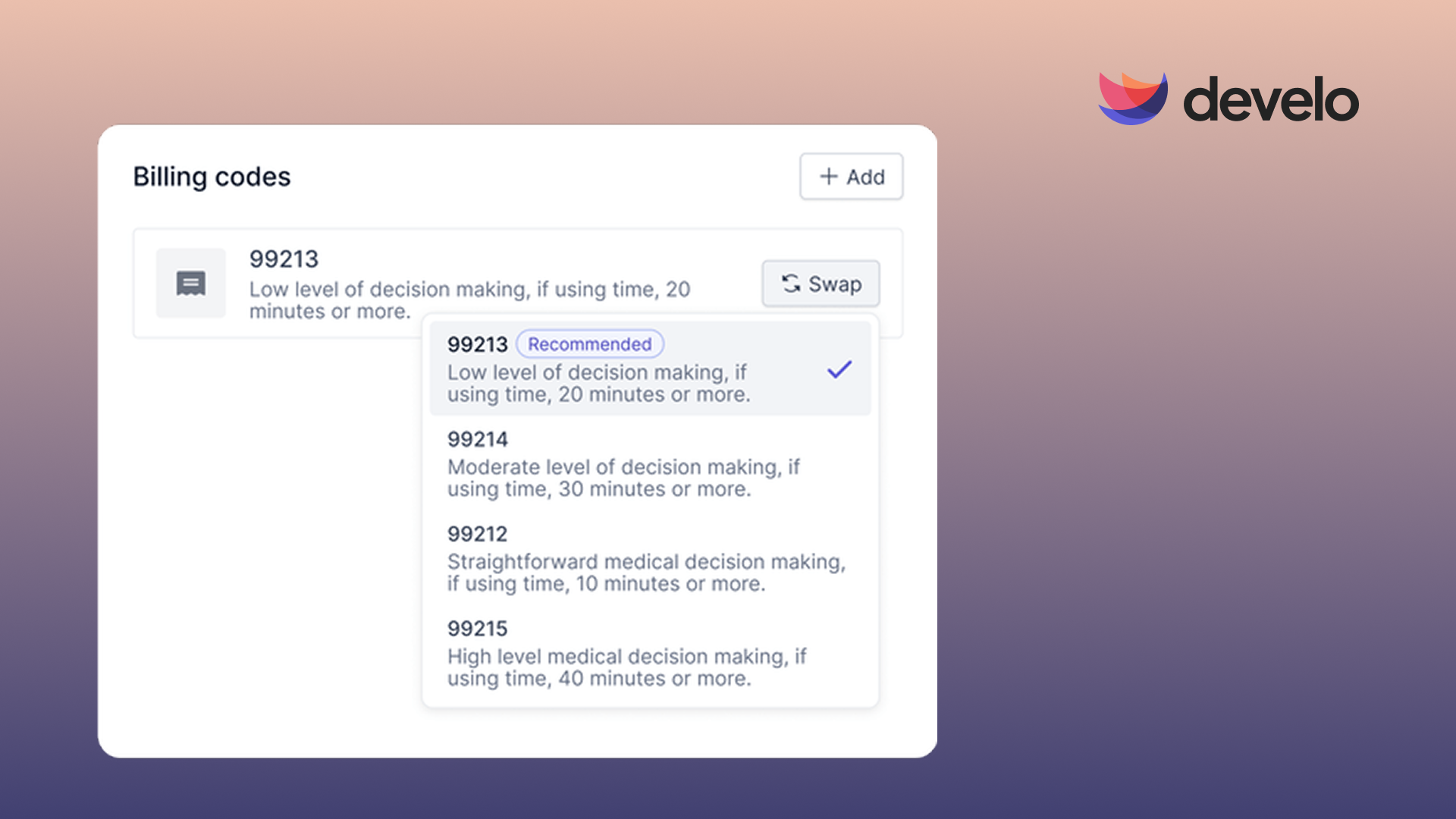
- Automate charge capture with AI-powered billing that applies the right codes based on visit context, patient age, and payer rules
- Reduce documentation time with an AI scribe built into clinical workflows, so providers finish notes before they leave the exam room
- Run digital intake, clinical screeners, and payment collection through a family portal without needing Phreesia, CHADIS, or other bolt-ons
- Track family relationships across siblings, guardians, and blended families with a data architecture built for pediatric care
You don’t need to pay a growing percentage of your collections to run your pediatric clinic well. You need a platform that was built for it. See how Develo helps you take control of your practice from check-in to claim submission.
My Bottom Line on athenahealth Pricing
athenahealth offers a powerful generalist EMR with strong RCM and network benchmarking. But for independent pediatric clinics, the percentage-of-collections model creates a cost that grows every year as your marketing and operations improve.
A 5-provider practice collecting $1.5 million pays roughly $90,000 per year before add-ons. That number only goes up. Flat-rate alternatives built specifically for pediatrics can deliver the same core functions, plus workflows tailored to how your clinic operates, at a fraction of the cost.
If you are an independent pediatric clinic evaluating your options, run the math on what you are paying today versus what a predictable, flat-rate EMR would cost over three years. The difference is often significant.
Frequently Asked Questions
1. How Much Does athenahealth Cost per Month for a Pediatric Clinic?
athenahealth pricing starts at $140 per provider per month plus 6-8% of your total collections. For a pediatric practice with 5 providers collecting $1.5 million annually, that works out to roughly $7,500 per month before add-ons like athenaCommunicator.
2. Does athenahealth Charge Extra for Patient Communication Tools?
Yes, athenaCommunicator is a separate module that costs $100-$200 per provider per month. It covers appointment reminders, the patient portal, broadcast messaging, and reputation management. Most pediatric clinics need it, but it’s not included in the base fee.
3. Can You Negotiate athenahealth Pricing?
Yes, practices with 10 or more providers can typically negotiate rates 0.5-1.5 percentage points lower. New practices usually start at 6-7% and may renegotiate after 12-18 months of consistent collections. Volume commitments and multi-year contracts offer the most leverage.
4. Is athenahealth a Good Fit for Independent Pediatric Clinics?
Athenahealth can work for pediatric clinics, but a dedicated pediatrics-focused operating system typically delivers better value and more relevant functionality for independent practices. Develo is the first AI-native pediatrics OS unifying EMR + RCM + CRM capabilities.
athenahealth works well for larger, multi-specialty groups. Independent pediatric clinics often find that the platform lacks pediatric-specific features like family relationship management, built-in developmental screeners, and vaccination workflows.
.png)


.avif)