
.avif)
A child with a complex condition might see a pediatrician, a neurologist, a gastroenterologist, a physical therapist, and a home nursing agency in one month, and each keeps its own records. Usually, the parent ends up holding the pieces in a folder or a phone full of notes.
Pediatric case management is the coordinated process of assessing a child's needs, building one care plan, and keeping that plan current across every provider, visit, prescription, and payer, so the family no longer has to.
What Is Pediatric Case Management?
In a child's care, someone has to make sure the pieces fit together: that the specialist's plan reaches the pediatrician, that a new prescription doesn't clash with an old one, and that a test isn't repeated.
That person is the case manager, who is usually a nurse or social worker. They assess the child's needs, develop a care plan, connect the family with services, and ensure all providers use the same information.
Done well, it produces one organized plan that the family no longer has to assemble themselves. Case management sits alongside a couple of related terms that are easy to blur, so here's how they differ.
- Case management is the broad process of assessing needs, planning, and coordinating a child's care over time.
- Care coordination is the day-to-day connective work within that process, such as sharing records, aligning visits, and following up.
- The medical home is the AAP's approach to comprehensive, high-quality primary care built on partnerships with families and community partners, and the AAP calls it especially important for children and youth with special health care needs.
In a small pediatric practice, one person often handles both case management and care coordination. In a larger one, a dedicated care coordinator or case manager handles them. Either way, the goal is the same: a single plan that coordinates a child's care across all providers.
Which Children Need Case Management?
Not every child needs formal case management. Most kids come in for well child visits and the occasional sick visit, and their care is straightforward. Case management matters most for two overlapping groups.
Children with special health care needs are a broad group: kids who need more health services than children generally do. Many are identified early through developmental screening at well child visits.
Children with medical complexity (CMC) are the smaller, higher-need core. The AAP defines them by conditions affecting two or more body systems, heavy use of health services, and often dependence on medical technology.
That core group drives the case for coordination. The same AAP page notes that CMC make up less than 1% of US children but account for more than a third of all pediatric healthcare costs.
Gaps between providers add to that cost through duplicate tests, missed follow-ups, avoidable emergency room visits, and phone calls that shouldn't have been needed.
What a Pediatric Case Manager Does
The role is part clinical, part logistical, and part advocacy. In a given week, a pediatric case manager might handle several of these at once.
- Assessment: Review the child's full history, current conditions, medications, and the family's situation, and keep that picture up to date as things change.
- Care planning: Build a written plan with the family and the care team, set goals, and update it as the child grows or the condition shifts.
- Coordination: Line up visits across specialists, make sure records move between them and the child's school (medication authorizations, a care plan for the school nurse, input for an IEP or 504 plan), and close the loop after referrals so results don't vanish.
- Family support: Explain what's happening in plain language, connect families to community and financial resources, and act as the one reliable point of contact.
- Transitions: Manage the risky handoffs (hospital to home and pediatric to adult care), where things fall apart most often. Got Transition's Six Core Elements start transition planning at ages 12 to 14 and move care to an adult practice between 18 and 21.
The through-line is that the case manager carries the full context, so the family and the individual providers don't have to.
How to Run Pediatric Case Management in 5 Steps
A workable pediatric case management process follows five steps, and clinics that do it well give each step a clear owner and system so the process survives staff turnover.
1. Identify the Children Who Need It
You can't coordinate what you haven't flagged. Your practice can use its patient data, including what families report through digital intake, to identify children with chronic conditions, frequent hospitalizations, or multiple specialists and enroll them in a coordinated care track before a crisis forces the issue.
2. Build and Share the Care Plan
Each enrolled child receives a written care plan that the entire team can see, including diagnoses, medications, specialists, goals, and next steps. The plan only works if it's shared. A plan living in one person's inbox is how coordination fails.
3. Coordinate Visits and Referrals
This is the daily work: scheduling around a family's real life, sending complete information with every referral, and following up so a specialist's findings make it back into the record. Closing the referral loop is where much pediatric coordination quietly succeeds or fails.
4. Track and Follow Up
Someone has to watch the queue, the pending referrals, the overdue follow-ups, and the kids who missed a visit. Automated flags help, but the point is that follow-up is a tracked task with a clear owner.
5. Communicate With the Family
Regular, plain-language contact keeps the family engaged and surfaces problems early, such as a new symptom, a medication they stopped taking, or a barrier to getting to their visits. Much of the value of case management lies in catching these before they become admissions.
Where Pediatric Case Management Breaks Down
Coordination tends to fail in small ways. A handoff drops, a follow-up slips, a call never gets made. These failures gather in a few predictable spots.
- Information is scattered: When records live in separate systems that don't talk to each other, the case manager reassembles the child's history by hand every time, and details get missed.
- Referrals don't close: A referral goes out, and nothing comes back. Without a tracked loop, the finding sits in another office while the family assumes it's handled.
- Follow-up depends on memory: When the pending list lives in one coordinator's head, a vacation or a resignation takes the whole system with it.
- The family carries the load: If the clinic isn't coordinating, the parent is, repeating the same history at every visit and ferrying results between offices.
- Billing for coordination gets missed: Care coordination and complex-care management have their own billing codes, and practices often under-capture that work because it happens outside a standard visit.
Every issue leads back to the same root problem. A child's information and the team's coordination work live in isolated tools that were never designed to connect.
How the Right System Supports Case Management
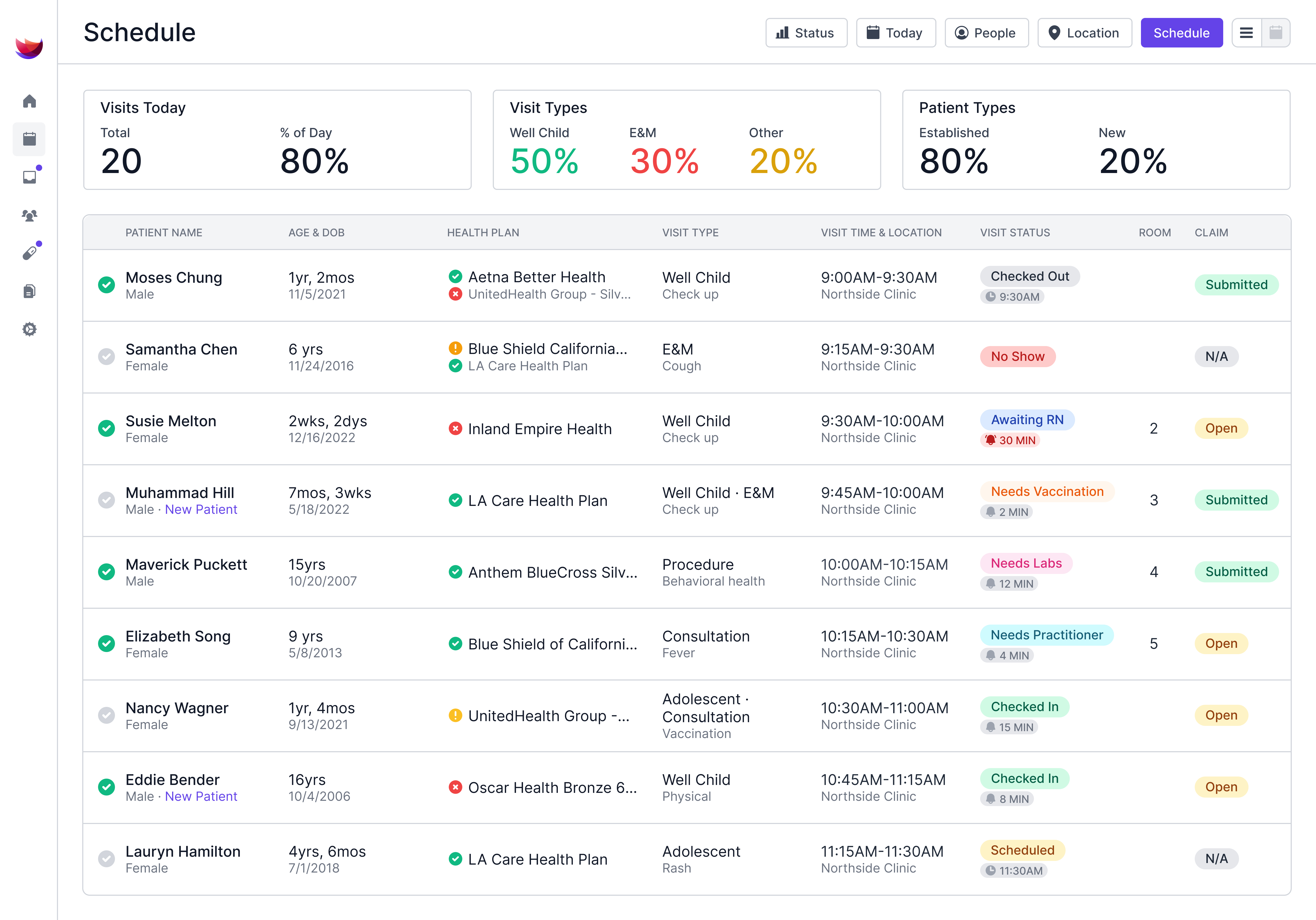
Effective case management depends on data continuity, which comes from a unified system where your whole care team works from the same up-to-date patient profile. Develo is the AI-native operating system for pediatrics, unifying charting, billing, practice management, and family engagement in one platform built solely for pediatric practices.
Because charting, follow-up, and billing sit in one place, less coordination work happens outside the chart, where it can get lost.
For a practice coordinating complex care, that unified base means:
- One shared record: The full clinical history, medications, specialists, and care plan live in the chart every team member opens, and Ask Develo answers any question about a patient with links back to the record, so whoever picks up the case gets caught up without a full chart review.
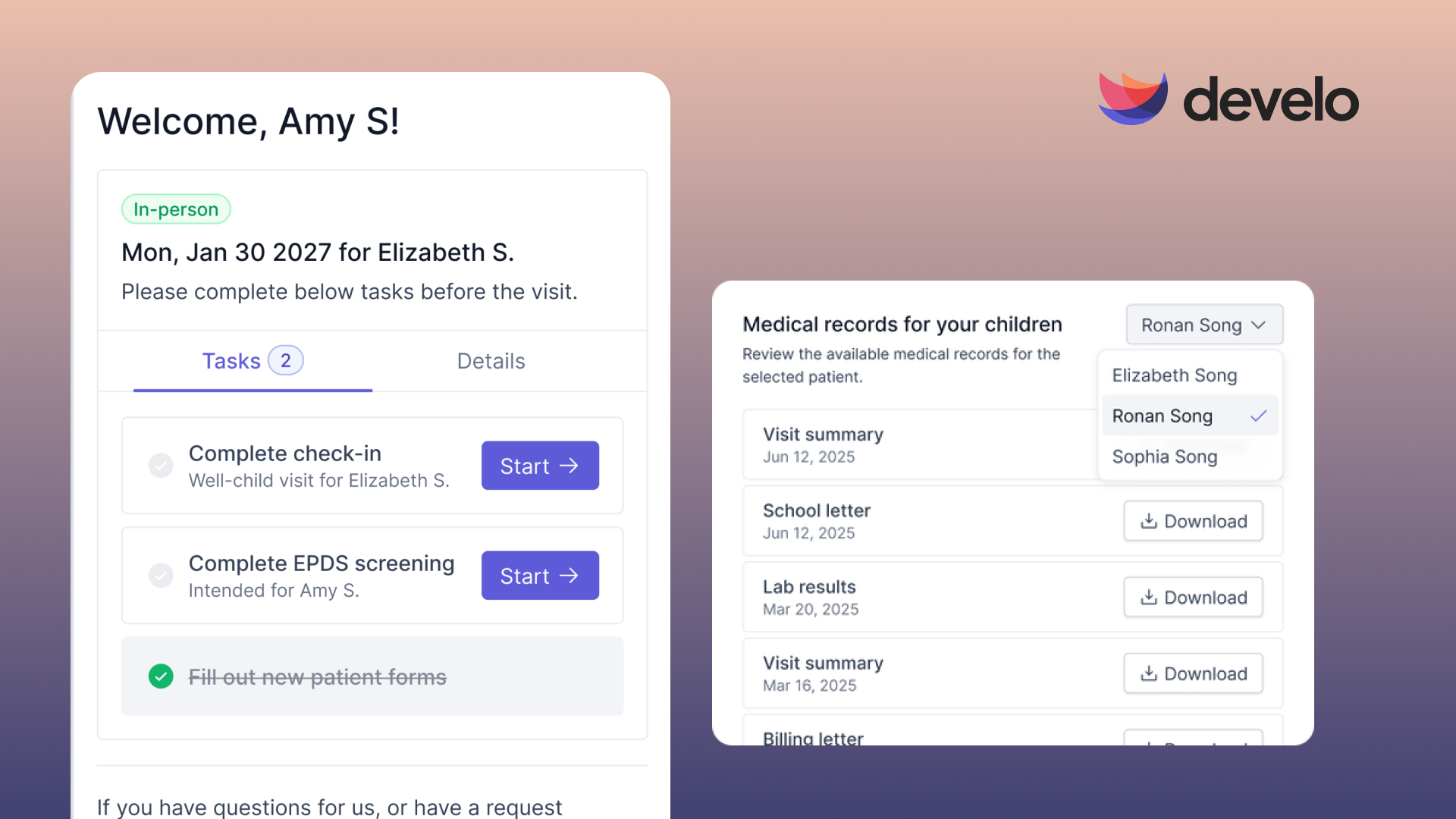
- Shared care plans: Care plans are built in the chart, with macrophrases to speed completion, shared automatically with the patient and their guardians, and updated as the child's needs change.
- Family engagement: Automated visit reminders and two-way secure messaging in the family portal, including shared pictures and files, keep parents in the loop between visits, so problems surface early.
- Tracked follow-up: Referral workflows track each referral until the specialist's findings come back and the loop is closed. Automated queues cover well child recalls and provider scheduling orders, inbound e-faxes are auto-tagged and filed to the right chart, and specialist notes and lab results arrive with follow-up actions to complete.
- Automated charge capture: Orders carry billing and diagnosis code defaults, and alerts flag charges that might be missed, with final coding always the provider's call. Non-visit billing lets practices bill care management, including CCM, without creating a placeholder visit.
With records, follow-up, and billing in one system, your care team spends less time chasing information and more time with families. Book a demo to see how Develo supports pediatric case management.
Frequently Asked Questions
What's the Difference Between Case Management and Care Coordination?
The difference is scope. Case management is the broad process of assessing, planning, and managing a child's care over time. Care coordination is the day-to-day connective work inside it: sharing records, aligning visits, and following up on referrals.
Who Needs Pediatric Case Management?
Children with chronic or complex conditions need pediatric case management most, especially children with medical complexity. These children see multiple providers and carry a high risk of missed handoffs, which coordination is designed to prevent.
What Does a Pediatric Case Manager Do?
A pediatric case manager keeps a child's care organized end-to-end. That means assessing needs, building and updating a care plan, coordinating visits and referrals across providers, supporting the family, and managing high-risk transitions, such as the move from hospital to home.
Can Pediatric Practices Bill for Care Coordination?
Yes, practices can bill for care coordination and complex-care management, though the codes and requirements vary by payer. Chronic care management (99490) and complex chronic care management (99487 and 99489) apply when a child has two or more chronic conditions expected to last at least 12 months, and Medicaid rules differ by state. For a child with one complex chronic condition, principal care management (99424–99427) applies instead, for a condition expected to last at least 3 months.
.png)
.avif)

.avif)