

Prior authorization is the approval a health plan requires before it will pay for a specific medication, test, or treatment.
For a pediatric practice, that approval step can turn a same-day need into a multi-day wait. A child with a stubborn ear infection might need a specific antibiotic, only for the pharmacy to put the prescription on hold while a nurse pulls together paperwork and a parent calls the office to ask why.
This article follows a request from the exam room to the payer's decision, drawing on federal rules and pediatric research to show where requests tend to stall.
Getting the prior authorization process right means fewer stalled prescriptions, fewer confused parents, and less staff time spent re-explaining information an insurer already has.
What Is the Prior Authorization Process?
The prior authorization process starts when a clinician orders a service that the child's plan flags for review. It ends when the payer approves, denies, or asks for more information.
A provider requests approval, submits clinical details supporting the request, and waits for the payer to review the case before the child's care can move forward.
Insurers use this process to confirm that a service is medically necessary and fits the plan's coverage rules.
In pediatrics, ADHD medications are a common example: 34 state Medicaid fee-for-service programs required prior authorization for these medications as of April 2023. Durable medical equipment and select imaging studies often need approval, too, though requirements vary widely by plan and by state.
Prior authorization is separate from insurance verification, which only confirms that a child has active coverage. Pediatric practices need both checks running cleanly to avoid denied claims.
The Prior Authorization Process: Step by Step
Payers use different forms and portals, but most requests move through six steps:
- Confirm the requirement: Before ordering, check whether the specific medication, test, or procedure needs prior authorization under the child's plan. Requirements vary by procedure code, drug, and even by plan within the same insurer.
- Gather clinical documentation: Pull together the diagnosis, the treatments already tried, and the clinical reason the requested service is necessary. Insufficient documentation is a reason payers give for denying requests, so aim for completeness as much as accuracy.
- Submit the request: Most requests go through a payer portal, by fax, or via an electronic prior authorization system built into the EMR. Include the correct diagnosis and procedure codes with the submission.
- Track the review: Turnaround time depends on the payer and whether the request is urgent or standard. Someone on staff needs to own follow-up, since payers don't always flag what's missing from a request.
- Receive the decision: An approval lets you schedule the service or fill the prescription. A denial can usually be appealed with more documentation. In Medicare Advantage, 80.7% of appealed denials were partly or fully overturned in 2024, though only 11.5% of denials were appealed. Since January 2026, payers covered by federal prior authorization rules must also state a specific reason for each denial of a medical item or service, which tells your team what to fix.
- Document the outcome: Log the authorization number, approval window, and any visit limits in the chart, so billing has what it needs at claim submission.
Each step above exists because payers check for it during the review, so missing one will likely add a delay.
What Complicates Prior Authorization in Pediatrics
Prior authorization gets complicated because so many children's medications are used off-label, meaning outside the age, dose, or indication a drug is approved for. A 2024 meta-analysis of 45 studies put the share of off-label or unlicensed prescriptions for hospitalized children at 56%.
In pediatric and congenital cardiology, insurers' prior authorization protocols are largely based on adult cardiology practice, which adds delays and paperwork to care that doesn't follow adult norms.
Add in Medicaid and CHIP, which covered roughly 37% of U.S. children in 2024, and a pediatric practice can end up working through several different sets of prior authorization rules, depending on which program covers each patient.
Denials are common there, too: an HHS review found that the Medicaid managed care plans it examined denied 1 in 8 prior authorization requests in 2019.
For children on Medicaid, federal EPSDT rules add a protection most prior authorization guides miss. CMS's May 2026 EPSDT guide for states says prior authorization "must be conducted on a case-by-case basis," evaluating each child's needs under EPSDT coverage standards, and that it may not delay needed treatment or be required for EPSDT screening services. A denial that applies a flat limit to a child on Medicaid is worth challenging on those grounds, and any full or partial denial carries fair hearing rights.
How Long Does Prior Authorization Take?
Prior authorization timelines vary by payer, service, and how complete the initial request is, so there's no single number that applies everywhere.
Under a CMS rule that took effect January 1, 2026, Medicare Advantage plans, state Medicaid and CHIP programs, and their managed care plans must decide standard requests within seven calendar days and urgent requests within 72 hours.
Employer-sponsored commercial plans and federal Marketplace plans aren't on that list, so their timelines follow the plan's own terms and other federal or state rules. The CMS deadlines also cover medical items and services only, not drugs. Medication requests, like the antibiotic and ADHD examples earlier in this article, follow pharmacy-benefit rules instead. In Medicaid, federal law requires a state's drug prior authorization program to respond within 24 hours and to allow at least a 72-hour supply in an emergency.
A 2025 study of pediatric pulmonary hypertension medications (Yung et al., Pulmonary Circulation) found that 72% of 283 prescriptions needed prior authorization. Nearly all were approved in the end, but the mean delay was 4.2 days per request, and 39% needed a repeat request.
Delays carry clinical costs: a 2025 systematic review of 25 studies, including pediatric research, tied prior authorization requirements to disease exacerbation, preventable hospitalizations, and lower disease-free survival.
Common Reasons Prior Authorization Requests Get Denied
Paperwork problems are an avoidable cause of many prior authorization denials. In a 2024 study of more than 28,000 adult hip and knee replacements, poor clinical documentation and lack of coverage were tied as the top reasons for hip-replacement denials, at 25.9% each.
A missing or wrong CPT code, an expired authorization window, or a diagnosis code that doesn't match the requested service can stop a claim before a reviewer even looks at the clinical picture.
Other common culprits include missing chart notes, step-therapy requirements that haven't been completed, and requests sent to the wrong plan after a coverage change.
A 2025 JAMA study (Shen et al.) estimated that 61% of U.S. children are enrolled in Medicaid or CHIP at some point before their 18th birthday, and 42% spend time uninsured, so an authorization tied to an old policy is another frequent, preventable cause of denial.
How to Reduce Prior Authorization Delays
A late-2024 AMA survey found that practices complete an average of 39 prior authorizations per physician each week, with physicians and staff spending about 13 hours on them.
These habits help cut down on prior authorization delays:
- Check requirements before the visit ends: Confirm whether a service needs prior authorization while the family is still in the office.
- Submit complete documentation the first time: Rework costs more time than getting it right from the start.
- Assign clear ownership: One person or team should track every open request, so nothing sits untouched in a queue.
- Record the authorization where billing will see it: Note the authorization number, approved units or visit count, and expiration date on the order or referral, and check them before billing, so a claim can't go out after the window closes or the visit count runs out.
- Keep a coding reference current: A well-maintained billing reference cuts down on the coding mismatches that trigger denials.
- Fold prior authorization into your revenue cycle: Treating it as a billing function (as well as a clinical one) keeps authorizations from falling through the cracks between departments.
Most practices can put these habits in place with the team they already have, as long as everyone follows the same written process.
How Develo Supports Prior Authorization
Tracking each step of the prior authorization process by hand usually means switching between a payer portal, a spreadsheet, and whatever note has the latest status scribbled on it. None of that shows up on an invoice, but it eats hours out of a front desk and billing team's week.
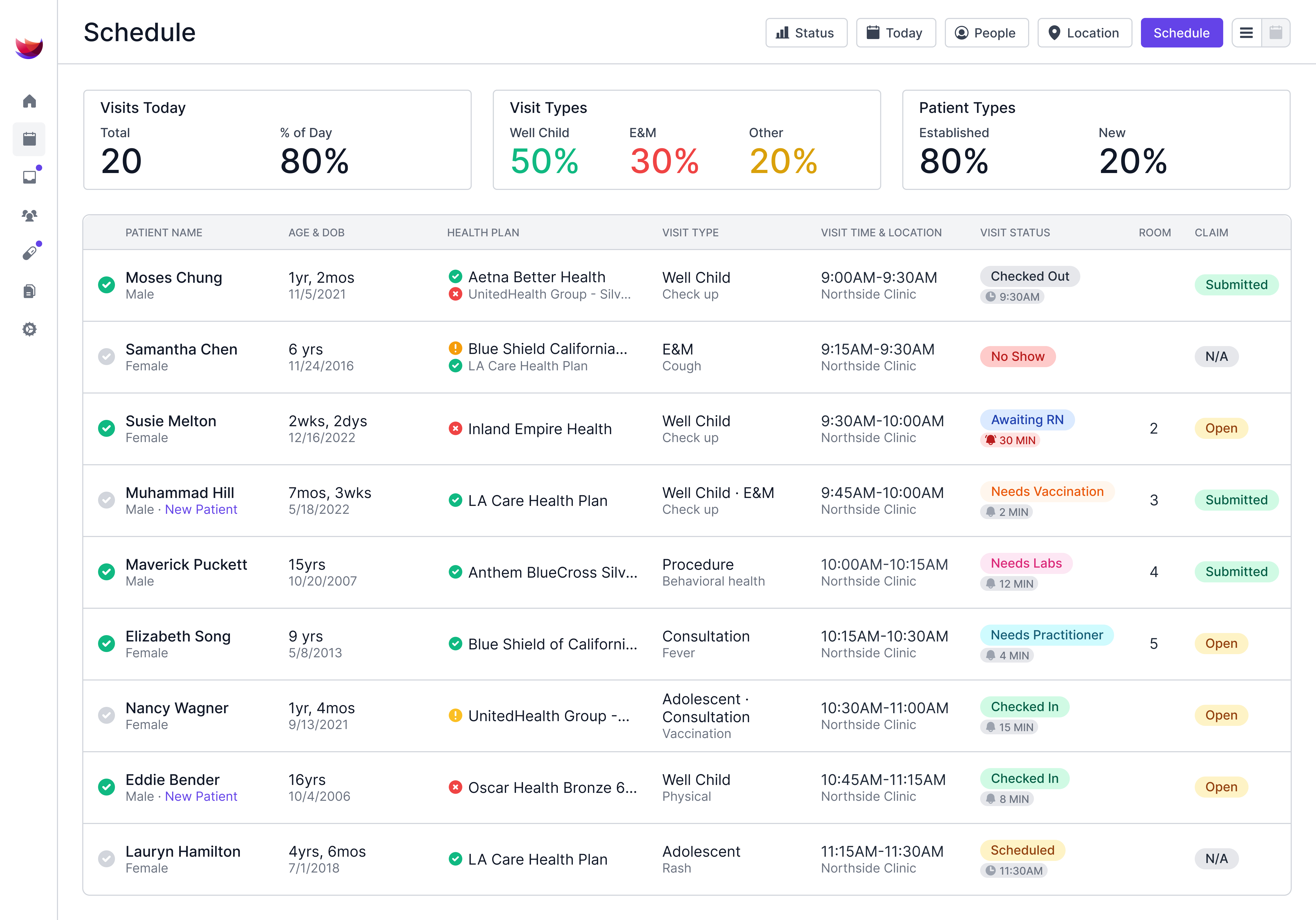
Develo is the AI-native pediatric operating system built solely for independent pediatric practices, unifying charting, billing, practice management, and family engagement in one modern system. For prior authorization, specifically, that unification changes how much manual tracking falls on your staff:
- Develo doc intel: Inbound e-faxes, such as a payer's decision letter, are tagged to the right patient chart and route into task queues with auto-tagged context, priority, and a full audit history, so a decision doesn't sit unread in a fax inbox.
- Electronic prior authorization for medications: A request for a prescription, such as an ADHD medication, goes to the payer electronically from Develo rather than by fax.
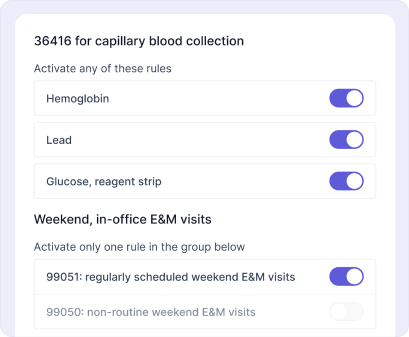
- Automated charge capture: Charge capture starts during the visit, before the claim is generated: orders carry billing and diagnosis code defaults, and pediatric rules set codes, units, and modifiers by visit type, so fewer claims go out with a code that doesn't match the approved service.
- One shared record: Charting, billing, and practice management run in one system, so staff pull the documentation for a request from a single chart.
- AI eligibility checks: Develo reads the insurance card automatically and runs each eligibility response through AI-assisted interpretation, so staff catch a coverage change before a request goes to the wrong plan or an authorization stays tied to an old policy.
- Optional billing services: Practices that use Develo's embedded billing services get onshore, pediatric-only billers who work denials and Level-1 appeals inside the same system.
Book a demo to see how these workflows fit around your practice's prior authorization process.
Frequently Asked Questions
Does Prior Authorization Guarantee Payment?
No, prior authorization doesn't guarantee that a claim will be paid. It means the payer agreed ahead of time that the service meets its coverage criteria. Payers can still deny payment later over coding errors, lapsed coverage, or other billing issues found during claims review.
What Happens If a Prior Authorization Request Is Denied?
If a prior authorization request is denied, the provider or family can ask the plan to reconsider through a formal appeal. Many plans also let the ordering clinician request a peer-to-peer review, a call with the plan's physician reviewer about the case.
Does Prior Authorization Apply to Every Prescription or Test?
No, prior authorization only applies to specific services a health plan lists in its policy, most often costly treatments, specialty procedures, or drugs with a cheaper alternative available first. Routine sick visits, well child visits, and standard vaccines typically don't require it.
Who's Responsible for Submitting a Prior Authorization Request?
The ordering provider's office typically submits the request, since it holds the clinical documentation the payer needs. Some plans let families start a request themselves, but the payer will still need clinical notes that only the office can provide.
Can Prior Authorization Be Done Electronically?
Yes, many payers already take requests electronically. The 2024 CMS rule behind the federal decision deadlines also requires the payers it covers to offer a prior authorization API starting in January 2027 for medical items and services, so an EMR can send a request and receive the decision electronically. Medication requests usually go through electronic prior authorization tied to e-prescribing instead.