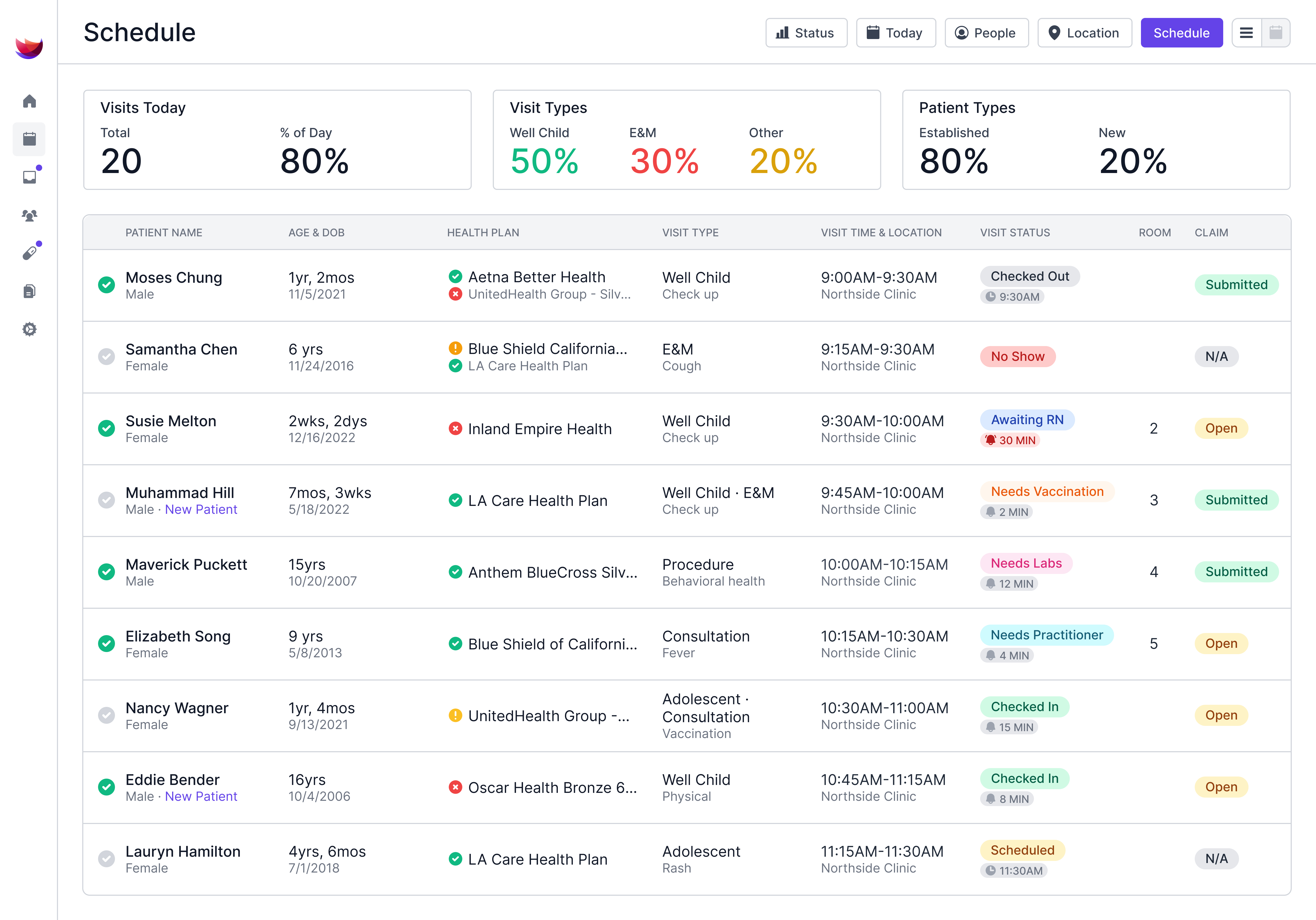


Pediatric practices run on tight margins, high visit volume, and a coding landscape that seems to change every quarter. Denials quietly drain revenue every day, and the answer isn't to hire more billers. Smarter pediatric revenue cycle management solves this.
What Is Pediatric Revenue Cycle Management?
Pediatric revenue cycle management is the end-to-end financial workflow a pediatric practice uses to get paid for care. It covers scheduling, eligibility checks, charge capture, claims submission, denials work, and payment posting.
Pediatrics works differently from adult care. Kids need more visits. Parents are the guarantors. Vaccine codes shift every year. Generic RCM tools bleed money in places adult practices never see.
Why Pediatric RCM Has a Denial Problem
Denial rates now average approximately 10% for many organizations nationwide, making denials one of the biggest ongoing threats to revenue integrity.
Pediatric practices face specialized billing requirements that can push them toward the higher end.
Three forces pile on at once:
- High volume: A single pediatrician can see dozens of patients a day, creating large daily claim counts per provider.
- Family complexity: Guarantors change, custody splits, insurance shifts between parents. Outdated data triggers denials fast.
- Coding churn: Vaccine admin codes, well child codes, and the 2026 standalone immunization counseling CPT codes 90482 to 90484, which allow billing for vaccine counseling when no vaccine is administered that day.
Every denial is a claim you've already worked. Twice, if you rework it. Multiply that by a full day of visits across several providers, and the math gets ugly quickly.
Where Do Pediatric Claim Denials Come From?
Industry research consistently shows that bad data collected at registration and on the claim are among the top drivers of denials, especially missing or inaccurate claim data and incomplete or incorrect patient registration information.
Here’s a closer look at instances where denials happen:
- Stale insurance data: The parent changed jobs, the policy changed, but the chart didn't.
- Demographic errors: Misspelled names, wrong birthdates, wrong guarantor assignments.
- Missed or undercoded charges: A BMI Z-code was left off a well child visit. A vaccine admin code was skipped.
- Authorization gaps: Behavioral health visits that required prior authorization but were not pulled.
- Sibling mix-ups: A visit posted to the wrong kid when both share a last name.
If that list makes you wince, good. Most of it is fixable without hiring another FTE, and a well-organized pediatric billing reference helps your team catch these before claims go out.
How to Cut Denials Without Hiring More Staff
Automating the right six steps shrinks denials without adding headcount. Here's the playbook pediatric practices use to protect margins:
1. Verify Eligibility in Real Time, Before the Visit
Real-time eligibility (RTE) checks run against the payer the moment an appointment is booked, then again at check-in. Staff see co-insurance, deductibles, and plan status before the family walks in.
This prevents one of the most common causes of denials: invalid insurance on the date of service.
2. Make Check-In Flag the Data That Actually Changed
A smart check-in workflow asks families to confirm demographics and insurance from their phone. It also tells the front desk which patients need extra verification, rather than a blanket "update everything."
Families who preregister before they hit the waiting room cut transcription errors and speed throughput at the same time.
3. Automate Charge Capture From the Visit Note
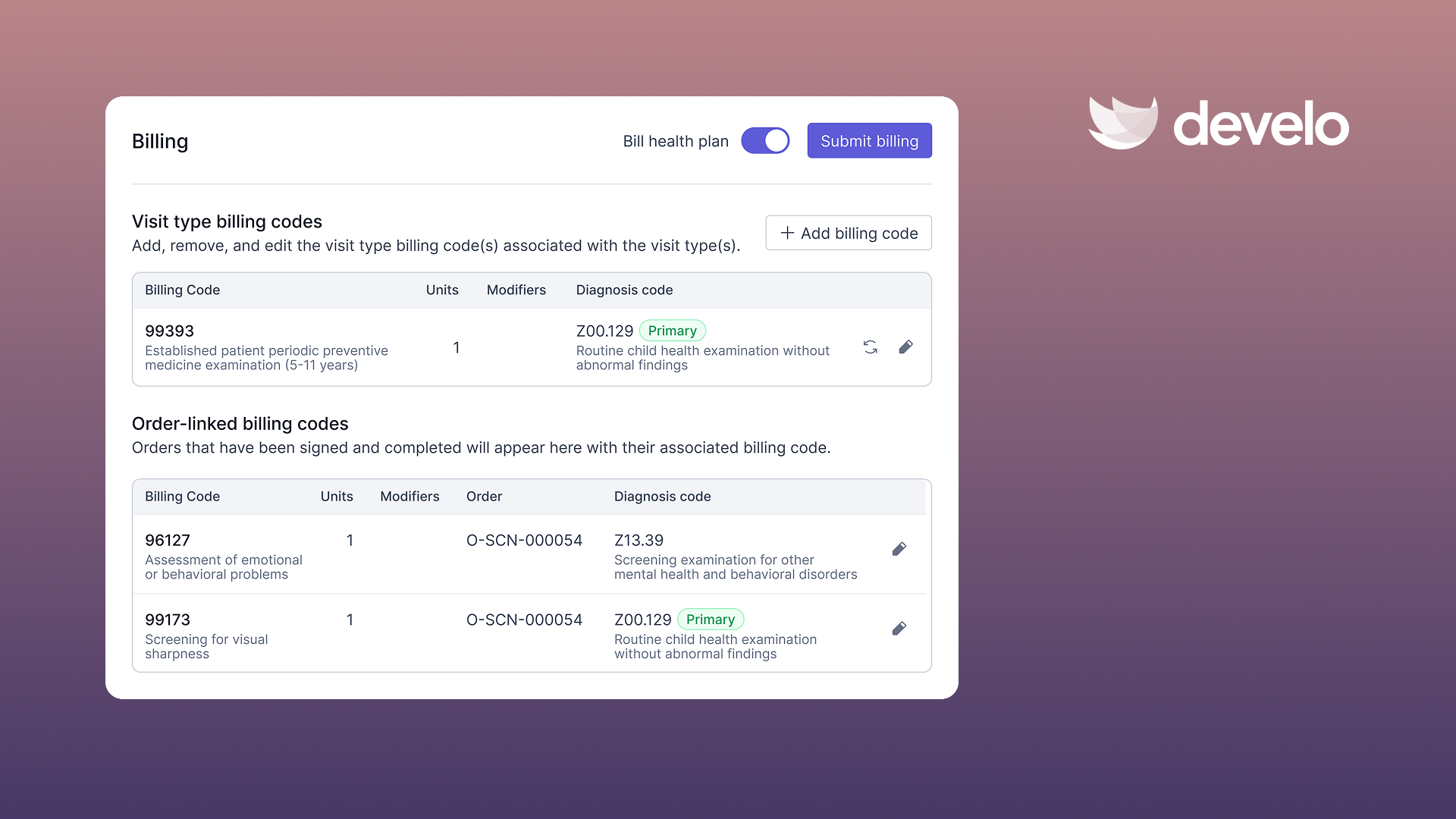
Automated charge capture pulls billing codes straight from documentation, attaching the right CPT, ICD-10, and Z-codes based on what happened during the visit.
A well-built engine catches things like:
- BMI Z-diagnosis codes on well child visits for kids ages 2 and up
- Vaccine admin codes 90471 to 90474 on Medicaid nurse visits
- E/M leveling suggestions based on time and medical decision-making
- Adolescent screening codes tied to standardized tools
You're not billing for new work. You're billing correctly for work you already did.
4. Scrub Claims Before They Leave the Building
Claims pre-submission checks catch payer-specific errors before the claim hits the clearinghouse. Modifier issues, missing linked diagnoses, bundled service conflicts. All flagged in-house. Billers review only the exceptions instead of every single claim.
5. Work Denials in a Queue
Denials management belongs in a prioritized work queue, sorted by dollar value, payer, and time to the timely-filing deadline. Each denial should carry the original claim, the remit reason, and a suggested next action.
Insurance companies speak in code. Your system should translate that code into the next step for your biller.
6. Consolidate Tools So Data Doesn't Drift
Disconnected systems are where revenue dies. An intake tool that doesn't talk to the EMR. A clearinghouse that can't post ERAs. A family portal that can't collect balances across siblings.
Every manual hand-off is a denial waiting to happen. The fewer systems in the chain, the fewer places data can rot.
Which Metrics Should Pediatric Practices Track for RCM?
Five numbers tell you whether your revenue cycle is healthy:
- Clean claim rate: The share of claims accepted on first pass. Higher is better.
- Denial rate: The share of submitted claims initially denied. Lower is better.
- Days in A/R: Average time it takes to collect payment after the visit. Lower is better.
- Net collection rate: The share of collectible revenue you actually collect. Higher is better.
- First-pass resolution rate: The share of claims paid without rework. Higher is better.
Track these month over month and compare by payer, provider, and code trend. Issues show up in the trend line before they show up in the bank account.
Clinical tools like integrated growth charts matter here too, because clinical completeness drives billing completeness.
Signs Your Current EMR Is Costing You Revenue
Your software might be the bottleneck if any of this sounds familiar:
- Billers manually transcribe codes between charge capture and claims submission.
- The front desk retypes data from paper forms into the EMR.
- Payments are posted days after the ERA arrives.
- You pay extra for a third-party intake tool featuring partial data sync with your EMR.
- Vaccine admin codes don't update automatically when AAP immunization guidelines change.
- Denials pile up in an inbox with no triage.
Most legacy pediatric EMRs were built decades ago. Their revenue cycle tooling reflects that era, and every manual workaround is a tax on your margin.
Run Intake, Billing, and Denials in One Pediatric Platform
Develo is an AI-native operating system for pediatrics that unifies clinical (EMR), billing (RCM), and family engagement (CRM) capabilities. It’s built from day one for outpatient pediatric care and handles the full revenue cycle from scheduling to ERA posting, with no bolted-on tools required.
Here's what Develo's modern pediatric revenue cycle management workflow covers:
- Real-time eligibility checks that flag coverage issues before the family checks in.
- Automated charge capture that pulls in the right CPT as well as billing code units, ICD-10 diagnoses, and modifiers based on visit documentation.
- Claims pre-submission checks and automated claims submission, plus electronic remittance advice (ERA) posting and corrected claims re-billing.
- Denials management with a prioritized work queue so billers work on exceptions rather than stacks.
- Family portal payments that let caregivers pay balances across all their kids and update insurance in one place.
- Vendor consolidation across intake, scheduling, clinical EMR, billing, and family engagement under a single product with comprehensive pricing.
Your billers shouldn't spend their day chasing denials that better software would have prevented. Book a demo and see how Develo's pediatric solutions turn pediatric revenue cycle management from a staffing problem into a software problem.
Frequently Asked Questions
1. How Is Pediatric Revenue Cycle Management Different From General RCM?
The main difference between pediatric revenue cycle management and general RCM comes down to who they’re designed for.
Pediatric revenue cycle management is built around family-level billing, frequent well child visits, vaccine administration codes, and Medicaid payers. General RCM tools handle these poorly because they're designed for adult, individual-patient billing models.
2. Can Automation Really Replace Billing Staff?
No, automation doesn't replace billers. It reassigns them. Instead of manually reviewing every claim, billers work on the exceptions flagged by the system. The rest flows through clean. Staff shifts to higher-value work like denials appeals and payer contract analysis.
3. What's the Fastest Way to Reduce Denials in a Pediatric Practice?
The fastest way to reduce denials in pediatrics is to start with real-time eligibility and accurate check-in workflows.
Most denials trace back to insurance or demographic errors caught too late. Fixing the front end prevents rework downstream and recovers revenue faster than chasing claims on the back end.
4. Should Pediatric Practices Outsource Billing or Use an Integrated EMR?
Deciding whether your pediatric practice should outsource billing or use an integrated EMR depends on your budget.
Outsourced billing makes sense when your EMR can't keep up, but vendors typically charge a percentage of collections that adds up over time. An integrated pediatric EMR with automated claims submission and denials management can deliver similar outcomes at a flat per-provider rate.
5. What Role Does the Family Portal Play in Pediatric Revenue Cycle Management?
A family portal reduces denials by moving the most error-prone tasks, insurance updates, demographic confirmations, and balance payments to the caregiver before the visit even starts.
When a parent updates their insurance in the portal, that's one fewer stale coverage record hitting the clearinghouse. When they confirm their child's demographics the night before, your front desk isn't correcting misspelled names at check-in. When they pay a balance across all their kids in one place, your billing team isn't chasing individual accounts.
.png)
.png)
.avif)
.avif)