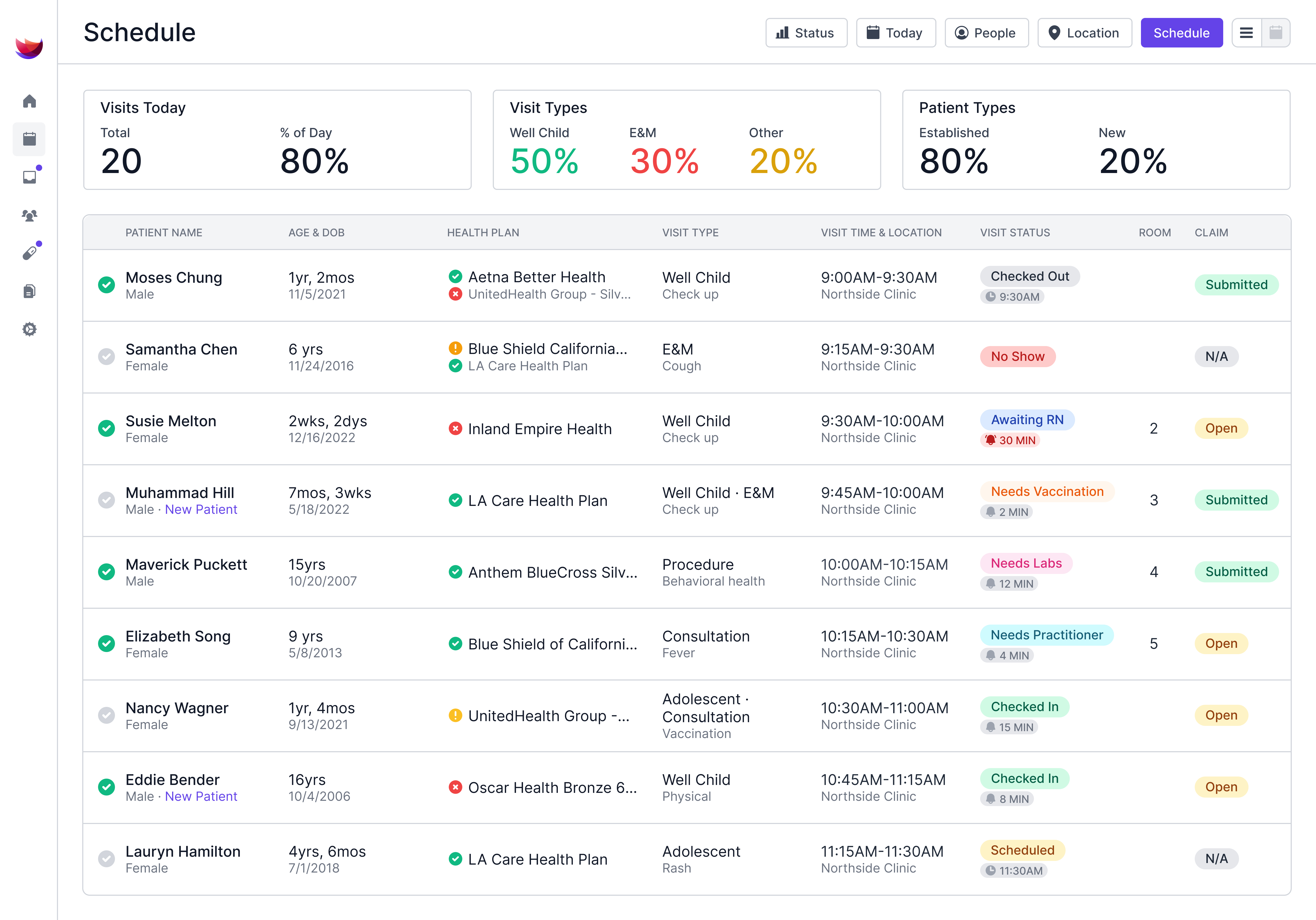


The best Practice Fusion alternative for pediatric clinics is a system built for siblings, vaccines, and family billing, the workflows a generalist EMR leaves you to configure by hand.
Develo leads for child-focused practices, with Office Practicum and PCC as established pediatric-specific options. athenahealth and eClinicalWorks may fit multi-specialty groups that include peds. Below, you'll see what each does well, where it falls short, and who it fits.
7 Best Practice Fusion Alternatives: At a Glance
Pricing verified September 2026. Verify with vendor before signing.
Why Look for Practice Fusion Alternatives?
Practice Fusion built its name as a free, cloud-based EMR for small primary care practices. Allscripts, now Veradigm, acquired it in 2018, and the free model ended.
In January 2020, Practice Fusion entered a deferred prosecution agreement and paid $145 million to resolve federal criminal and civil investigations, admitting it had solicited kickbacks from pharmaceutical companies to design clinical decision support alerts that steered prescribing — including nearly $1 million from an opioid manufacturer. It was the first criminal action the Justice Department brought against an EMR vendor.
The product is now a paid subscription starting at $199 per month per provider with a required annual commitment, per Practice Fusion's own pricing page. It still serves general adult primary care reasonably well. Pediatric clinics outgrow it fast.
- Pediatric workflows aren't native: Growth charts, vaccine forecasting, and developmental milestones feel bolted onto an adult-focused chart. You spend time configuring what a peds-built system gives you on day one.
- Family structures are flat: Siblings appear as separate, disconnected patient records. Parents can't manage three kids in one thread. Guarantor logic doesn't flow into one family-level statement.
- Family engagement is light: Reminders, intake, and the family portal are basic. You'll likely bolt on Phreesia, IntakeQ, or text-reminder tools, which means more vendors and more disconnected data.
TL;DR: Which Practice Fusion Alternative Should You Choose?
Use this section as a quick filter before the deep dives:
- Choose Develo if you run an independent pediatric practice and want one AI-native system for charting, billing, practice management, and family engagement instead of an EMR plus a stack of bolt-ons. Not a fit if you're a multi-specialty group needing adult primary care or surgery workflows.
- Choose Office Practicum if you want a long-tenured pediatric-specific platform with an established peds community, and you're comfortable with a la carte pricing and an older UI.
- Choose PCC if you have deep pediatric billing complexity (Medicaid-heavy, multi-location), strong existing tech staff, and you value PCC's advocacy programs over a modern interface.
- Choose athenahealth if you're a multi-specialty group where pediatrics is one of several lines and you want billing services priced against what you collect.
- Stick with Practice Fusion if you run a small general primary care clinic without pediatric volume, and you're satisfied with a basic, cloud-based chart.
The 7 Best Practice Fusion Alternatives
1. Develo
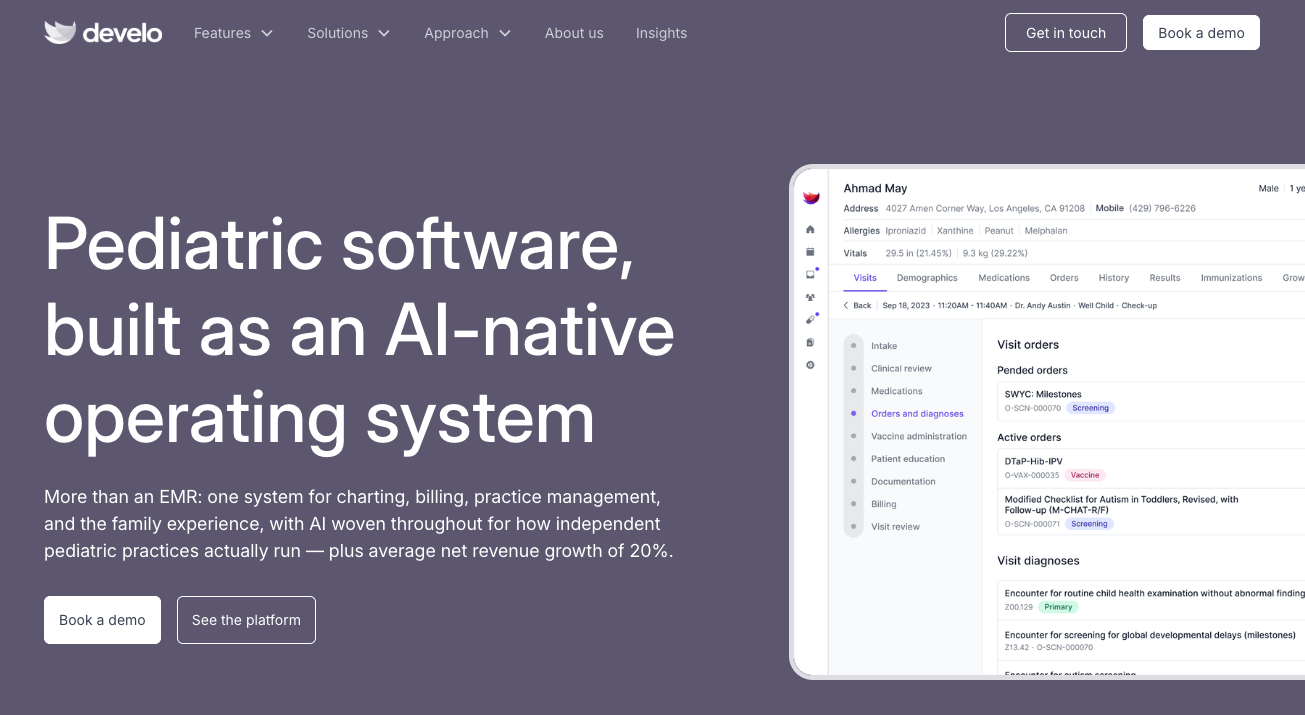
Develo is the AI-native pediatric operating system built solely for independent pediatric practices, unifying charting, billing, practice management, and family engagement in one system designed from day one for outpatient pediatric care.
It replaces decades-old legacy EMRs and the patchwork of generic tools that slow documentation and create gaps in clinical data. Independent practices consolidate intake, scheduling, the EMR, billing, and the family portal under one vendor.
Key Features
- Develo provider and intake scribe, embedded in the chart: The provider scribe writes straight into the note, no copy-paste, powered by visit context beyond the transcript. The intake scribe brings the same multilingual, context-backed experience to visit intake for nurses and medical assistants.
- Automated charge capture: Pulls codes from the visit record, applies pediatric-specific rules, and reduces under-coding on well child visits and vaccine admin.
- Native vaccine forecasting and VFC handling: Automatically checks each patient's immunization history to recommend vaccines due and flag invalid doses, tracks inventory by funding source and location, matches VFC eligibility to the right funding source, and prioritizes the soonest-expiring lots.
- Family-centered data architecture: Siblings, guarantors, and caregivers connect at the family level, so one statement covers the whole household.
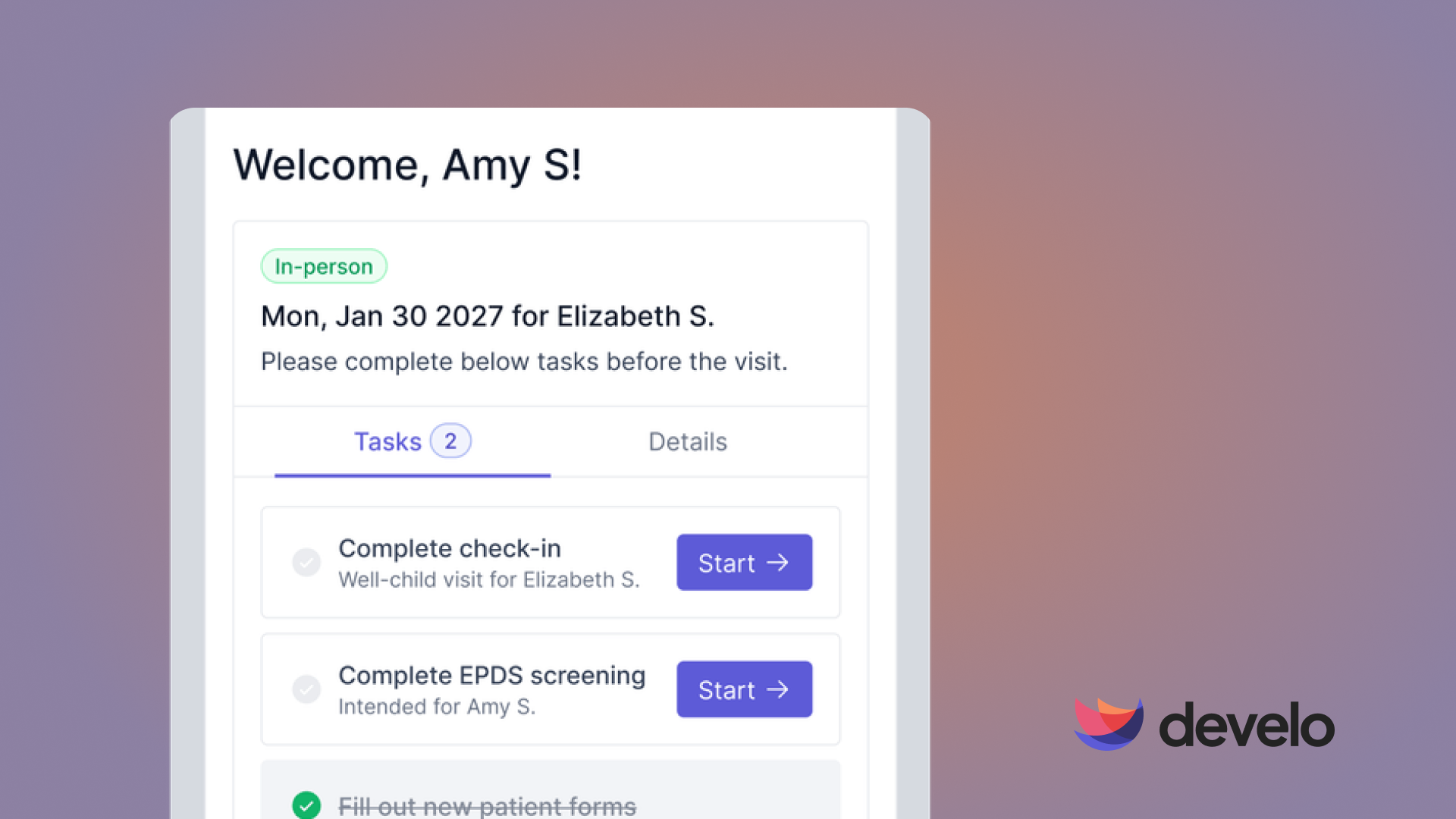
- Built-in digital intake and screens: Families complete forms on their phones before the visit, including EPDS for postpartum depression screening and other age-appropriate screeners.
- Bi-directional integrations: E-prescribe, e-labs, e-fax, and state vaccine registries work without manual workarounds.
Pros
✅ A pediatric AI suite rather than one scribe: Develo provider scribe, Develo intake scribe, Ask Develo, Develo doc intel, Develo reports Q&A, and Develo AI forms, all built into the workflow.
✅ Comprehensive pricing with implementation, training, data migration, clearing house, and support in the subscription rather than quoted as separate lines.
✅ Modern web-based stack with no onsite server, regular releases, and U.S.-based support.
✅ Family-first data model eliminates the duplicate-record problems generalist EMRs create.
Cons
❌ Requires replacing your EMR rather than bolting on to the one you already run.
❌ Not built for adult-only or multi-specialty groups.
Best For
- Independent pediatric practices replacing Practice Fusion or a legacy peds EMR.
- Practices wanting one vendor for clinical, billing, and family engagement.
- Clinics consolidating Phreesia, CHADIS, or text-reminder bolt-ons into one system.
Pricing
Comprehensive per provider per month software fee, with implementation, training, and data migration included. Demo required.
2. Office Practicum (OP)
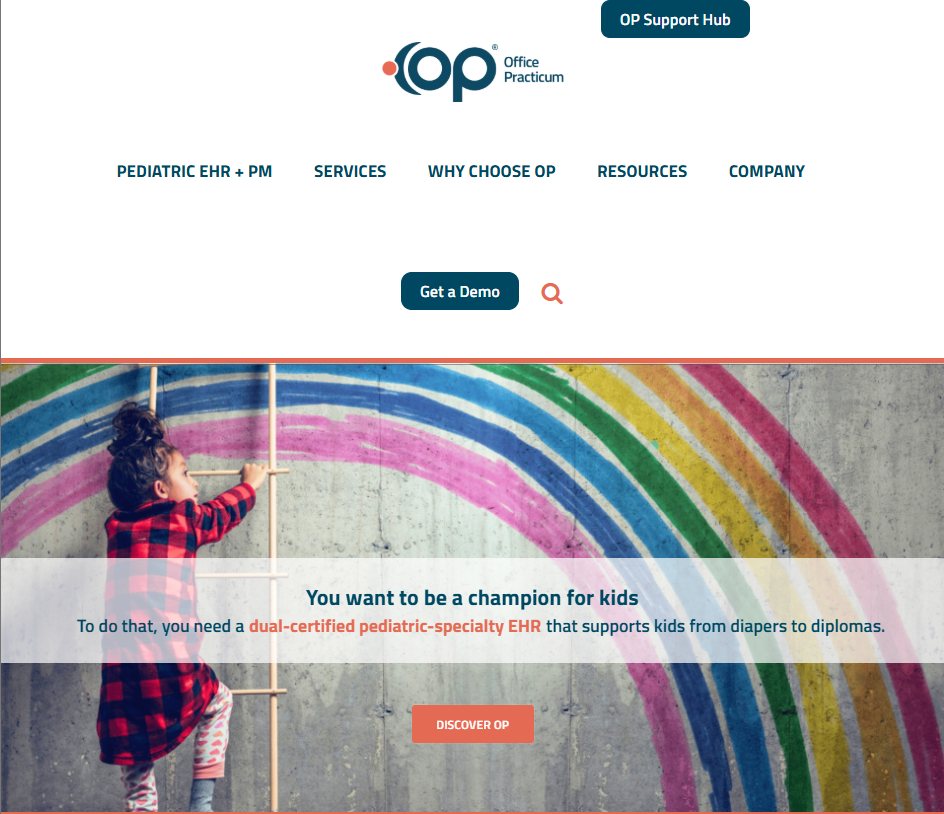
Office Practicum is among the longest-running pediatric-specific EMRs, headquartered in Pennsylvania and tracing its origins to a pediatric practice that opened in 1986.
OP holds significant market share among pediatric practices and offers an established user community, peds-tailored templates, and a deep partner ecosystem. The interface and architecture reflect the system's age.
Key Features
- Pediatric templates: Visit templates, growth charts, and vaccine schedules built for peds out of the box.
- Immunization management: Strong vaccine inventory and forecasting capabilities, with state registry integrations.
- A la carte modules: Buy intake, portal, RCM, or marketing tools individually based on practice needs.
- Established user community: Frequent webinars, training resources, and a long history of pediatric-focused content.
Pros
✅ Deep pediatric focus with mature vaccine forecasting.
✅ Large user community and peer practices to reference.
✅ A la carte structure lets you start small.
Cons
❌ Older interface with many clicks per task and a steeper learning curve.
❌ The family portal is a third-party product: InteliChart has powered OP patient portals since 2018, and InteliChart builds for the broad ambulatory market, not pediatrics alone.
❌ The core system is mid-rebuild. OP is rewriting its EMR as a cloud-native platform over a roughly 24-month rollout running into late 2027, released in stages — front desk and charge entry first, clinical workflows after, with well child visits late in the sequence — so the experience varies by module until it's done.
Best For
- Practices already in the OP ecosystem looking to upgrade modules.
- Clinics needing well-established vaccine forecasting capabilities.
- Solo to small group practices comfortable with a la carte pricing.
Pricing
Custom pricing not publicly listed. Request a quote from Office Practicum.
3. PCC (Physician's Computer Company)
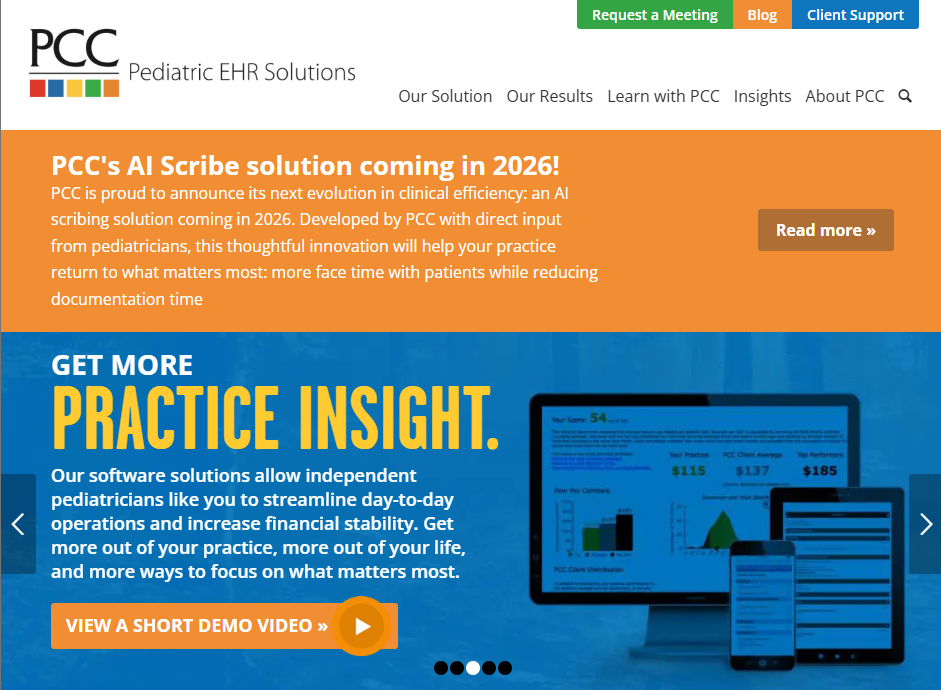
PCC is an independently owned, pediatric-only software company known for advocacy work and deep billing capabilities.
PCC has loyal customers in the independent peds community and a strong reputation for support. The clinical interface and back-end billing screens still reflect the platform's pre-cloud origins.
Key Features
- Pediatric billing depth: Mature claim scrubbing, denial workflows, and Medicaid handling.
- Pediatric advocacy programs: PCC actively engages in AAP-aligned advocacy and pediatric standards work.
- Comprehensive pricing model: PCC publishes "$0 Startup Costs. $0 Data Conversion." and bundles training, 24/7/365 emergency support, the portal, and server upgrades into one monthly fee. It does not publish how that fee is calculated.
- Established peds content: Templates, screening tools, and reporting built around pediatric needs.
Pros
✅ Independent, pediatric-focused company with stable ownership.
✅ Strong billing capabilities and customer support reputation.
✅ Active advocacy and pediatric thought leadership.
Cons
❌ Billing interface retains a text-heavy, legacy-style layout that may feel dated compared with newer web UIs.
❌ Limited interoperability with outside tools and modern bolt-ons.
❌ The standard contract term is three years, and an early termination fee applies, per PCC's own pricing page.
Best For
- Independent pediatric practices wanting comprehensive pricing and billing depth.
- Multi-location practices with in-house technical or billing staff.
- Practices that prioritize advocacy alignment and long-term vendor stability.
Pricing
Comprehensive single monthly fee covering software, support, and updates. Specific dollar amounts not publicly listed. Request pricing from PCC.
4. athenahealth

athenahealth is a cloud-based, multi-specialty platform headquartered in Massachusetts, serving practices, hospitals, and health systems.
The platform sells on three value props: less work, more money, and faster collections. Pediatric clinics use it most often when they're part of a multi-specialty group or want outsourced billing services.
Key Features
- Collections-based billing services: athenahealth prepares and submits claims as part of its fee, useful for practices with limited billing staff.
- Strong scheduling module: Easy-to-use scheduling that's a frequent compliment from current customers.
- Large partner ecosystem: Robust interoperability with third-party tools across specialties.
- Cloud-native, SaaS platform: Regular updates, no on-prem server, accessible from anywhere.
Pros
✅ Built-in billing services help low-volume or under-staffed practices.
✅ Mature interoperability and large integration ecosystem.
✅ Strong scheduling and front-office workflows.
Cons
❌ Complex multi-specialty UI adds clicks for peds-only workflows.
❌ Pricing tied to collections can become expensive as the practice grows.
Best For
- Multi-specialty groups where pediatrics is one of several lines.
- Practices wanting outsourced billing without hiring a separate RCM vendor.
- Clinics already inside a health system using athenahealth.
Pricing
Pricing is tied to collections; athenahealth says only that "our pricing model corresponds to your organization's collections." No rate is published. Learn more on athenahealth's cost and value page.
5. eClinicalWorks
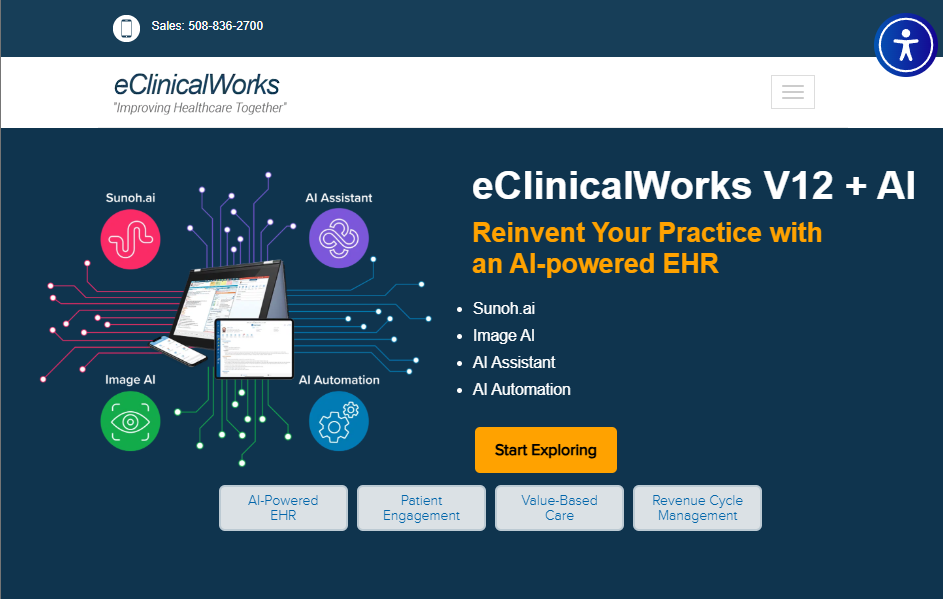
eClinicalWorks is a long-running ambulatory EMR used across primary care, specialty, and pediatric practices. Current offerings are primarily cloud-hosted.
The platform offers a wide feature set, multiple deployment options, and strong interoperability. Pediatric practices use it mostly when they're part of a larger multi-specialty group or already entrenched.
Key Features
- Comprehensive ambulatory EMR: Clinical documentation, practice management, billing, and family portal in one platform.
- Healow patient app: Companion app for messaging, telehealth, and records access.
- Multiple deployment models: Cloud, on-premise, and managed hosting options.
- AI-assisted features: Voice navigation, summarization, and workflow automation tools added in recent releases.
Pros
✅ Broad feature set covering clinical, billing, and engagement.
✅ Long market history and large install base.
✅ Multiple deployment options to fit practice infrastructure.
Cons
❌ Interface feels dated and click-heavy.
❌ Pediatric workflows aren't tailored, leading to manual workarounds.
❌ Support quality varies by region and account size.
Best For
- Multi-specialty groups with mixed adult and pediatric volume.
- Practices that need on-prem deployment for IT reasons.
- Clinics already invested in the eCW ecosystem.
Pricing
$499/month per provider for EHR Only, or $599/month per provider for EHR with Practice Management. Both tiers list no start-up costs. See current eClinicalWorks pricing.
6. Tebra (Formerly Kareo + PatientPop)
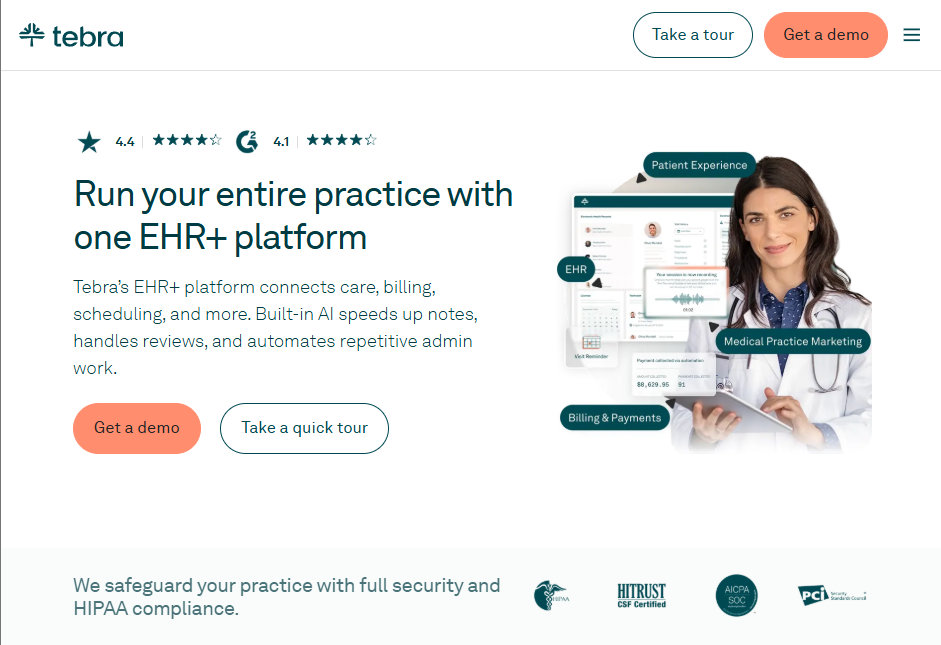
Tebra is the result of a Kareo and PatientPop merger, focused on small independent practices. The platform combines EMR, billing, and digital front-door tools (web, reputation, and scheduling). It's positioned for solo and very small practices, including some pediatric users.
Key Features
- Integrated EMR plus practice growth tools: Combines clinical, billing, scheduling, and online presence in one stack.
- Digital front door: Website, online reviews, and self-scheduling tools targeted at pediatrician marketing and patient acquisition.
- Cloud-based platform: No on-prem server, mobile access for providers.
- Telehealth built in: Native virtual visit capabilities.
Pros
✅ Strong fit for solo and very small independent practices.
✅ Combines marketing and practice management in one bill.
✅ Cloud-native with mobile access.
Cons
❌ Not pediatric-specific. Family structures, vaccine forecasting, and peds billing rules aren't native.
❌ Reporting and billing capabilities limited for higher-volume practices.
Best For
- Solo pediatricians or 1 to 2 provider practices.
- Clinics that want a digital front-door tool bundled with the EMR.
- Practices prioritizing patient acquisition over operational depth.
Pricing
Quote required. See current Tebra pricing.
7. NextGen Healthcare
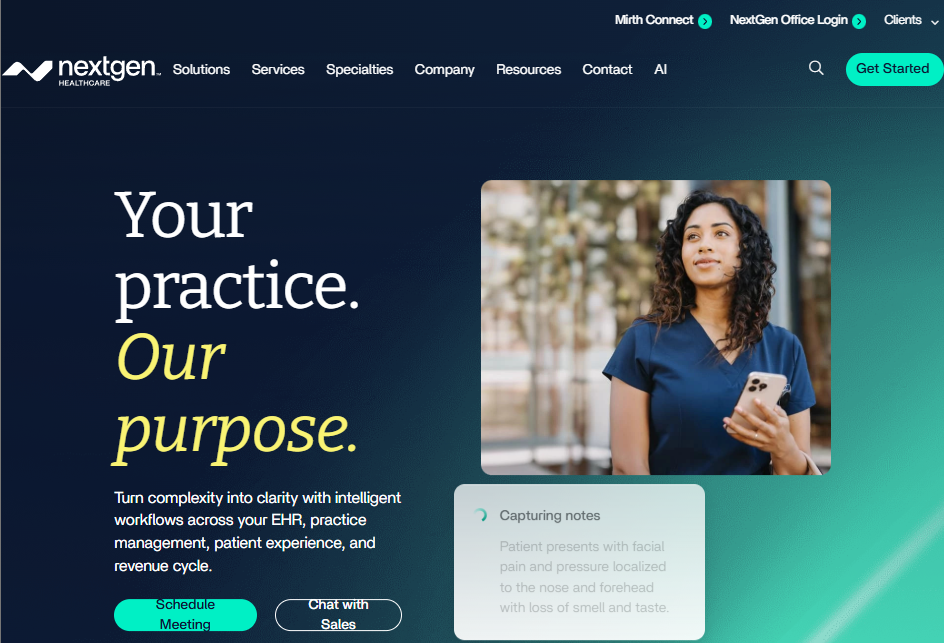
NextGen Healthcare is a long-established ambulatory EMR used across multi-specialty and primary care groups. NextGen offers an enterprise-style feature set, ambulatory and behavioral health products, and interoperability tools aimed at mid-to-large practices.
Key Features
- Enterprise ambulatory EMR: Clinical documentation, practice management, and analytics for mid-to-large groups.
- Interoperability tools: Strong HIE participation and data exchange capabilities.
- Specialty-specific content: Templates across pediatrics, behavioral health, OB/GYN, and others.
- Integrated revenue cycle services: Optional RCM outsourcing.
Pros
✅ Scales to mid-and-large multi-specialty groups.
✅ Strong interoperability and data exchange.
✅ Available RCM services for practices wanting outsourced billing.
Cons
❌ Click-heavy workflows and a steep learning curve.
❌ Long contract commitments are common.
❌ Pediatric workflows aren't a primary product focus.
Best For
- Mid-to-large multi-specialty groups including peds.
- Practices in HIE-heavy regions needing strong interoperability.
- Clinics open to longer implementations and contracts.
Pricing
Custom pricing not publicly listed. Request a demo from NextGen Healthcare.
How to Evaluate Practice Fusion Alternatives
Use these criteria to narrow your shortlist for the best Practice Fusion alternative for your clinic:
- Pediatric specificity: Generalist EMRs handle adult primary care well but force workarounds for siblings, vaccines, and developmental screeners.
Ask vendors how growth charts, immunization forecasting, and family relationships work natively on day one. Pediatricians follow the AAP immunization schedule, and a pediatric-built system should forecast against it by default.
- Total cost of ownership: A low monthly fee can hide clearing house charges, integration fees, portal subscriptions, and per-feature add-ons.
Compare comprehensive pricing models against a la carte pricing across a 3-year horizon, including the cost of any tools you'd buy separately for intake, screening, or waiting room check-in.
- Billing automation: Pediatric practices file high volumes of claims with strict vaccine admin coding and Medicaid rules.
Ask how the system handles automated charge capture, claim scrubbing, and denial management. A useful reference is a billing cheat sheet for pediatric coding patterns.
- Family engagement depth: Reminders, intake, payments, and the family portal should work as one connected experience across the whole visit.
Ask whether the family portal supports adolescent confidentiality controls aligned with the 21st Century Cures Act.
- Implementation and support model: Cloud-native systems with onshore support and weekly product releases behave differently from legacy systems with patch cycles and offshored teams.
Ask about data migration support, average ticket resolution times, and who you'll work with during onboarding.
- Control over what surfaces in your system: Your EMR decides what a clinician sees at the moment of a decision — which alerts fire, which suggestions appear, which messages reach your staff. That surface should answer to your practice, not to whoever is paying the vendor.
Ask whether any outside party can place alerts, content, or product promotions in the chart, and whether the vendor takes money from pharmaceutical companies, labs, or device makers for placement. Ask the same about the family-facing side: whether families see advertising in the portal, or in reminders that arrive under your practice's name. The answer you want is a flat no on both.
The federal case against Practice Fusion is the reason to ask this out loud rather than assume it.
Stop Patching Together Generic EMRs and Bolt-On Tools
When you compare Practice Fusion vs. legacy pediatric EMRs vs. modern pediatric-built platforms, the question is which one fits how your practice works.
Practice Fusion is primarily designed for general adult primary care. Office Practicum and PCC bring deep peds history with older architectures. athenahealth and eClinicalWorks scale across specialties.
For independent pediatric practices that want one modern system covering clinical, billing, and family engagement, the best Practice Fusion alternative is Develo.
Develo is the AI-native pediatric operating system, unifying charting, billing, practice management, and family engagement in a single platform designed from day one for outpatient pediatric care. Here's what Develo does for your practice:
- AI scribe and automated charge capture that turn the visit into a complete note and a clean claim, reducing under-coding on well child visits and vaccine admin.
- Family-centered data architecture so siblings, guarantors, and caregivers connect at the household level, fixing the duplicate-record problem generalist EMRs create.
- Comprehensive pricing that includes clearing house, integrations, and updates, with no a la carte surprises.
- Built-in digital intake, screens, and family portal aligned with AAP guidance and adolescent confidentiality requirements.
- Bi-directional integrations for e-prescribe, e-labs, e-fax, and state vaccine registries, removing the manual workarounds that drag down pediatric office workflow.
- Implementation, training, and data migration included in the subscription, with U.S.-based support rather than an offshored ticket queue.
- Continuous product releases delivered weekly, driven by feedback from practicing pediatric clinicians and customers.
- No paid placement anywhere in the product — no third party buys alerts, suggestions, or advertising in your chart, or in what families see from your practice, portal and reminders alike.
One modern system can run an independent pediatric practice end to end, from intake through claims. Book a demo and see how Develo handles the workflows that jack-of-all-trades EMRs leave half-finished.
Frequently Asked Questions
What Is the Best Practice Fusion Alternative for Pediatric Clinics in 2026?
The best Practice Fusion alternative for pediatric clinics in 2026 is Develo. Develo is the AI-native pediatric operating system, unifying charting, billing, practice management, and family engagement in one platform built for child-focused care.
Office Practicum and PCC remain options for practices wanting longer-tenured pediatric-specific software.
Is Practice Fusion Still Free for Pediatric Practices?
No, Practice Fusion is no longer free. Allscripts (now Veradigm) acquired Practice Fusion in 2018, and the platform moved to a paid subscription model. The Provider License plan starts at $199 per month per provider with a required annual commitment, per Practice Fusion's official pricing page.
Pricing and packaging can change, so verify with Practice Fusion directly. The shift away from the original free model is one reason many practices started looking for the best Practice Fusion alternative.
Can I Migrate Patient Records from Practice Fusion to a New EMR?
Yes, you can migrate patient records from Practice Fusion to a new EMR. Most modern alternatives offer data migration support, including demographics, problem lists, medications, allergies, immunizations, and historical visit notes.
Migration scope, timeline, and fees vary by vendor. Develo has migrated practices off Practice Fusion, and the fields a generalized migration tends to break are the pediatric ones: immunization histories with lot numbers and VFC eligibility, growth and vitals series, and patient-caregiver links. Confirm exactly which of those transfer, and how historical attachments are handled, before signing a contract. Data migration is included in a Develo subscription rather than quoted separately.
Which Practice Fusion Alternative Offers the Best Pediatric Billing?
Develo and PCC offer the strongest pediatric billing among Practice Fusion alternatives. Develo uses automated charge capture to pull codes from documentation and apply pediatric-specific rules for vaccine admin and well child visits.
PCC offers mature claim scrubbing and denial workflows backed by an established RCM team. The right fit depends on whether you want AI-driven automation or a more services-led RCM partner.

%20(1).png)
%20(1).png)
.avif)
.avif)