
.jpeg)
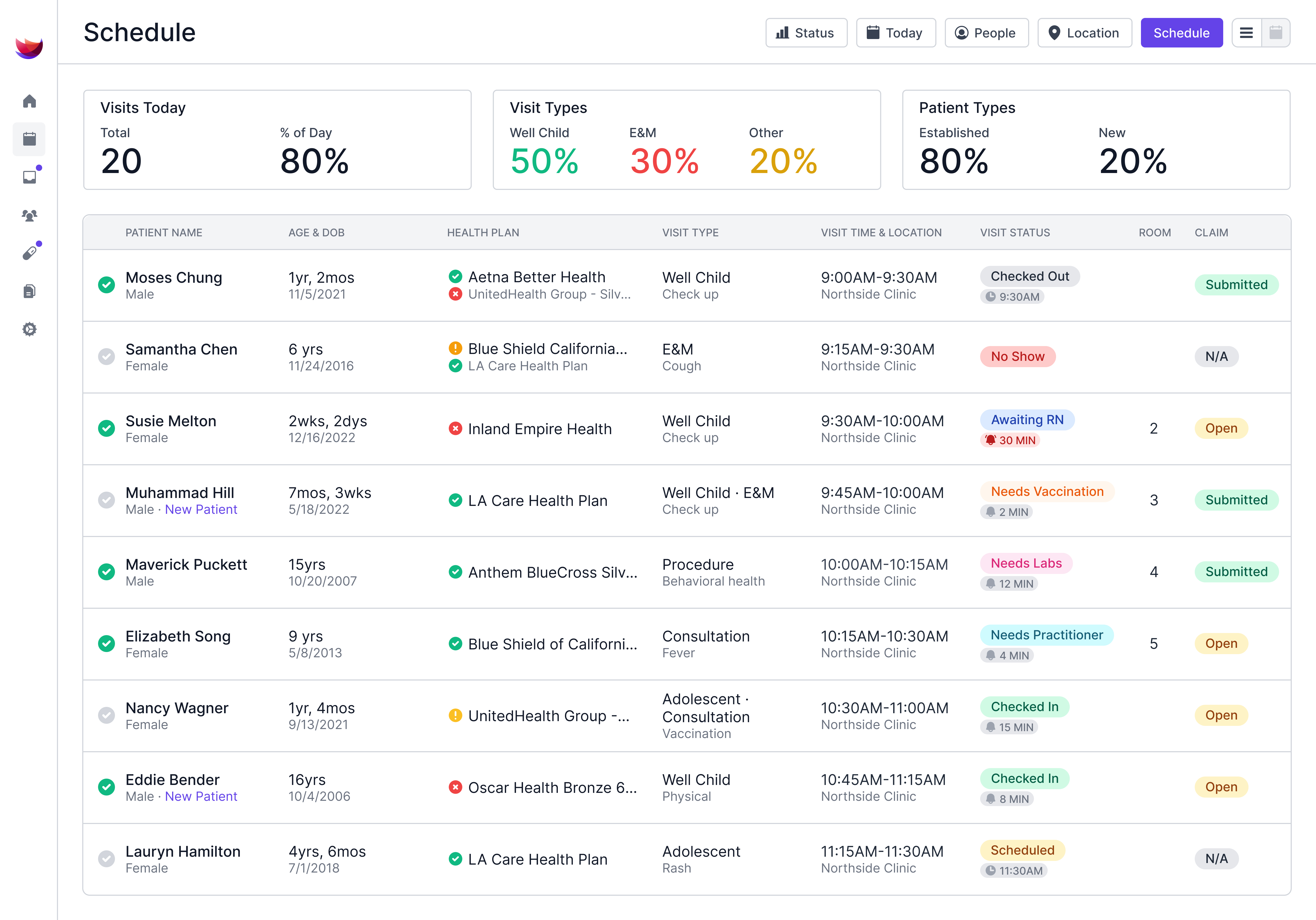
If you're running NextGen at a pediatric clinic, you've probably hit the same wall most peds practices do: it works, but it wasn't designed around kids, families, or the volume of low-dollar claims that peds billing runs on.
The pediatric EMR space has matured, and there are real alternatives built around how pediatric care really runs day to day.
The top NextGen alternatives for pediatric clinics in 2026 are Office Practicum, PCC, and Develo. We compared the six most-mentioned options and pulled together an honest breakdown of what each does well, where it falls short, and which kind of pediatric practice it best fits.
6 Best NextGen Alternatives: At a Glance
Pricing verified September 2026. Verify with each vendor.
Why Look for NextGen Alternatives?
Pediatric clinics look for NextGen alternatives because the platform was built for multi-specialty ambulatory care rather than pediatrics, and that shows up daily across the front desk, exam room, and billing team. NextGen Healthcare works as a generalist EMR, but pediatric workflows are configured on top instead of built in from the start.
- Generic patient records: NextGen treats every patient as an individual, not as part of a family. You can't easily link siblings, share documents across caregivers, or manage blended family structures without manual workarounds.
- Limited pediatric clinical content: Growth charts for premature infants, age-specific vaccine schedules following AAP guidelines, and developmental screening tools either require third-party add-ons or custom configuration.
- Manual billing workflows: Pediatric clinics run high volumes of low-dollar claims. Without automated charge capture, billers do everything one click at a time. Errors compound, denials pile up, and a pediatric billing cheat sheet only gets you so far.
- Bolted-on intake and screening tools: Most NextGen pediatric users run separate software for digital intake, developmental screeners, and family messaging. Each add-on means another vendor, contract, and login.
- Dated interface and slow front desk: Practices report excessive clicking to complete routine tasks. Add slow check-in workflows and you end up with a busy waiting room and providers who can't keep pace with high-volume schedules.
TL;DR: Which NextGen Alternative Should You Choose?
- Choose Office Practicum if you want the most established pediatric-specific platform with broad market adoption. Not a fit if you want predictable pricing without a la carte add-ons.
- Choose PCC if you value an active user community, predictable subscription pricing, and onshore customer support. Not a fit if a modern billing interface is a deal breaker.
- Choose Develo if you want the AI-native operating system for pediatrics, unifying charting, billing, practice management, and family engagement in one place. Not a fit if you need the broadest third-party integration catalog available today.
- Choose athenahealth if you run a larger multi-location group and want bundled RCM services. Not a fit if you want pediatric-specific clinical content out of the box.
- Stick with NextGen if your practice spans multiple specialties (peds + adult IM, OB-GYN, etc.), you're inside a 3+ year contract window, and the cost of switching outweighs the workflow gains.
The 6 Best NextGen Alternatives
1. Office Practicum
Office Practicum is a pediatric-specific EMR headquartered in Pennsylvania, serving solo providers and large multi-location groups across the U.S.
The platform was built specifically for pediatric workflows from the start, with strong immunization management, growth tracking, and a long history of customer feedback shaping the product.
Key features
- Immunization management: Tracks vaccines and syncs with state registries
- Growth tracking: Pediatric-specific charts, including premature infant curves
- Family-linked records: Sibling charts connected for easier management
- A la carte modules: Buy only the components your practice needs
Pros
✅ Established pediatric workflows refined over three decades
✅ Active user community with frequent webinars and conferences
✅ Integrations with VaxCare, Canid, and other peds tools
Cons
❌ Add-on charges across a large menu of third-party bolt-on software options
❌ Support response times can run long during busy periods
❌ Older technology core with roots in on-premise software: currently undergoing OP Reimagined initiative to iteratively rebuild and release the EMR
Best for
- Established pediatric practices that want the most widely-used peds-specific platform
- Solo providers who prefer to start small and add modules later
- Clinics comfortable with older interfaces and managing third-party integrations
Pricing
Office Practicum doesn't publish rates publicly. Practices need to book a demo to receive a custom quote based on practice size and selected modules.
2. PCC
PCC is a pediatric-first EMR that's privately owned and has built a loyal following through onshore customer support, an active client conference, and pediatric subject-matter experts.
The platform uses a monthly fee that bundles software, training, and support into one predictable charge.
Key features
- Vaccine forecasting: Identifies which patients are due for upcoming shots
- Performance benchmarking: Compare your practice metrics against anonymized peers
- Subscription pricing system: One monthly fee covers software, support, and training
- Built-in pediatric templates: Well child, sick visit, ADHD follow-up, and more
Pros
✅ Clear-cut monthly fee with no surprise add-on charges
✅ Onshore customer support with tight client relationships
✅ Long-standing pediatric expertise across the company
Cons
❌ Billing interface is dated
❌ Limited modern integrations compared to newer platforms
❌ Standard contract term is three years, which can feel long
Best for
- Practices that prioritize customer support and community over UI polish
- Pediatric clinics that want predictable monthly costs
- Providers who value active peer benchmarking and learning
Pricing
PCC uses a bundled pricing model that covers the EMR, medical billing software, training, and support in a single monthly fee. Specific dollar amounts aren't published publicly. Standard contracts run three years.
3. Develo
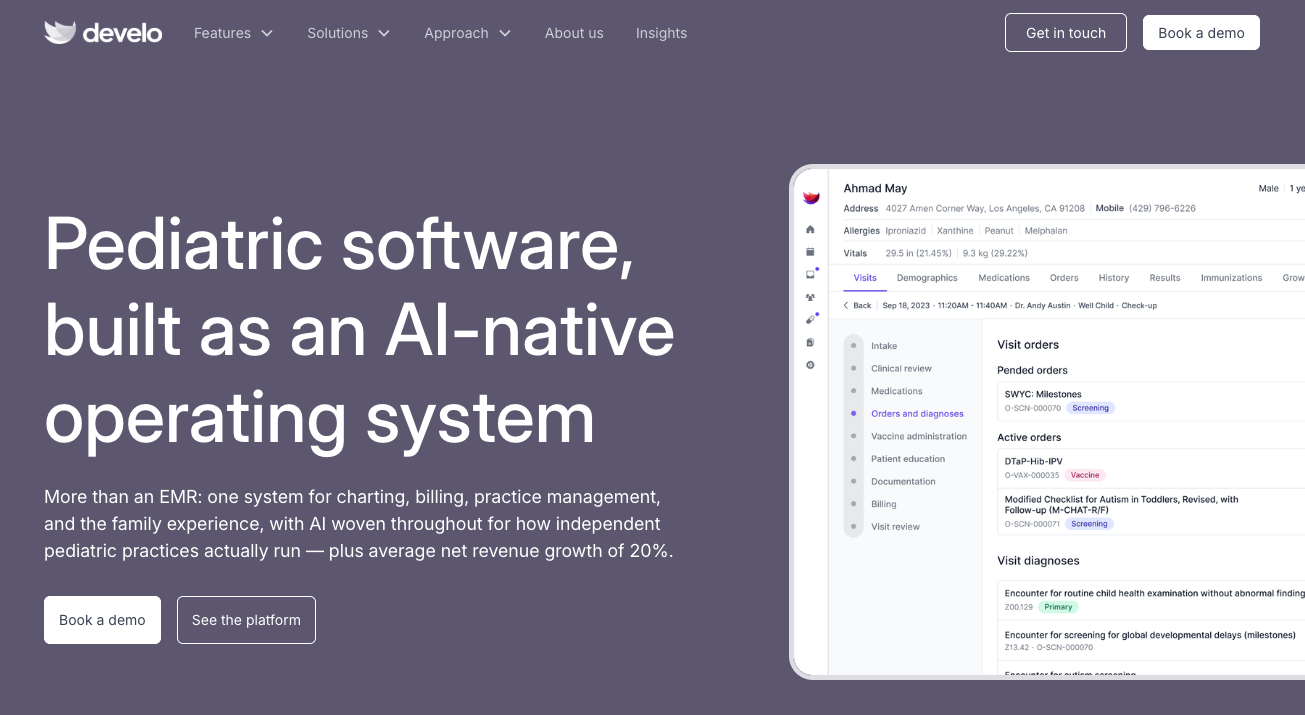
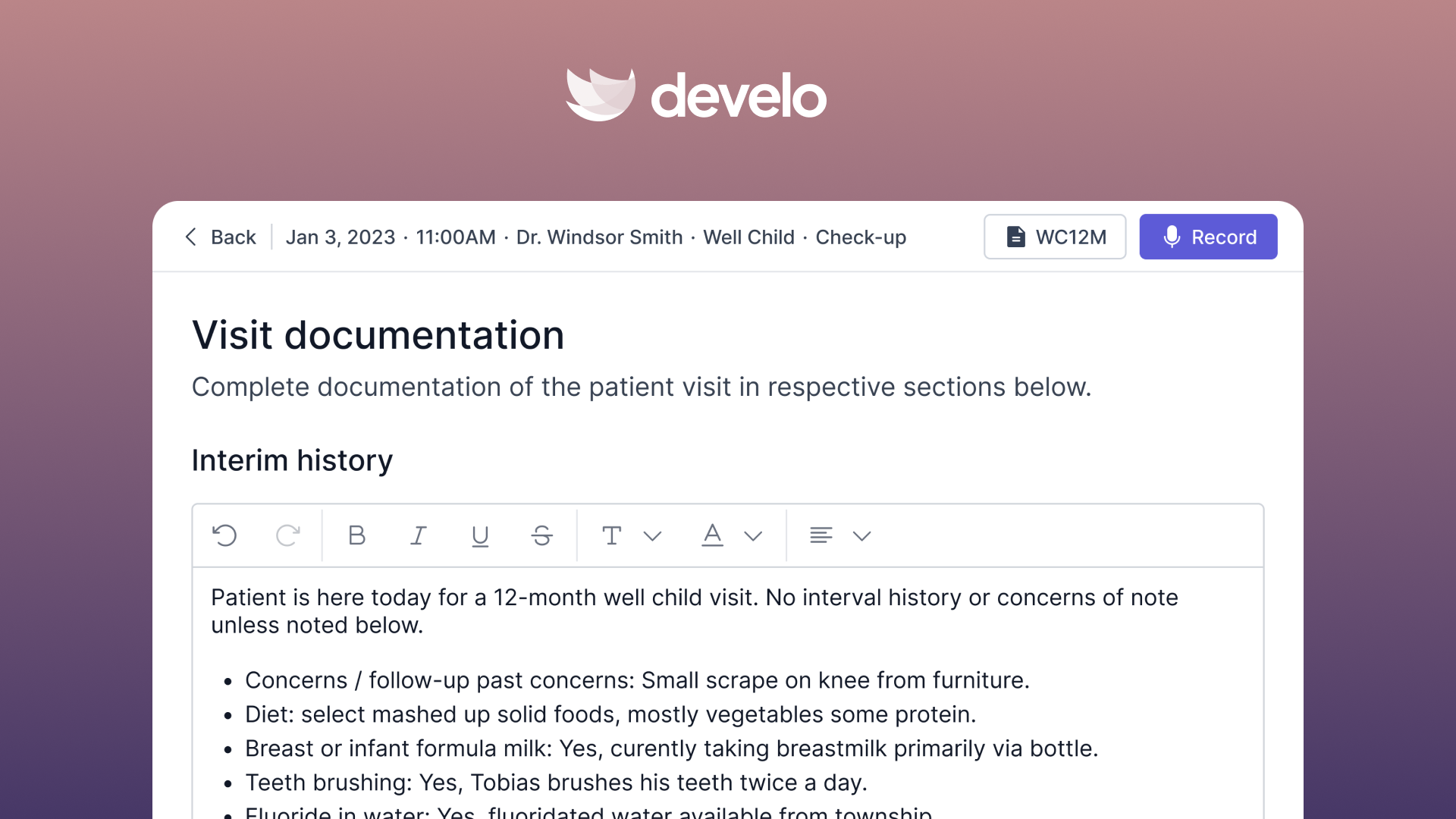
Develo is the AI-native operating system for pediatrics, unifying charting, billing, practice management, and family engagement in one platform built from day one for outpatient pediatric care. It replaces decades-old legacy EMR systems and the patchwork of generic tools that slow down documentation and create gaps in clinical data.
For an independent pediatric practice, that consolidation shows up in the day-to-day. It looks like a provider finishing notes during the visit instead of bringing them home, a front desk where families pre-register via SMS instead of clipboards, and a billing team reviewing only the claims flagged for human attention instead of every single superbill.
The operating system combines solutions such as automated charge capture, an embedded AI scribe, automated patient recall, and family-first features in one modern web-based system, with bi-directional state immunization registry connections that push administrations up and pull records down.
Key features
- Automated charge capture: Suggests billing codes based on visit documentation to reduce denials and undercoding
- AI suite, not one scribe: Develo provider scribe writes straight into the note using pertinent visit context beyond the transcript; Develo intake scribe streamlines visit intake; Ask Develo answers questions about a patient's full record; Develo doc intel auto-tags inbound e-faxes for single-click filing
- Family portal: Protects adolescent confidentiality while keeping caregivers informed
- Complete vaccine workflow: VFC eligibility category as discrete data, vaccine inventory management, automated decrement against inventory as vaccines are administered, a forecasting engine that flags what each child is due for, and bi-directional state registry reporting
Pros
✅ Built for pediatrics from day one with complete pediatric workflows
✅ Modern, web-based platform with no installation or on-site server required
✅ Pricing covers intake, screens, claims, and family engagement
Cons
❌ Newer to market with a smaller customer base than Office Practicum or PCC
❌ Smaller third-party integration catalog than long-standing platforms like athenahealth or eClinicalWorks
Best for
- Practices that want to consolidate vendors into one pediatric platform
- Clinics frustrated with legacy tech, manual workflows, and bolt-on tools
- Pediatricians looking to reduce after-hours documentation time
- Solo practices through multi-site groups, MSOs, and care networks running a centralized back office
Pricing
Develo uses comprehensive pricing: a single per-provider monthly fee with implementation, training, upgrades, and support bundled in rather than priced as add-ons. Specific rates aren't published publicly, and practices need to book a demo for a custom quote.
4. athenahealth
athenahealth is a cloud-based general ambulatory EMR with a significant pediatric customer base among broad-specialty vendors.
The platform serves multi-specialty practices, hospitals, and health systems. Pediatric workflows are added through configuration, not built in from the start. The platform is known for its bundled revenue cycle management services and its cloud-native architecture.
Key features
- Cloud-based access: Browser-based with no installation required
- Bundled RCM: Claim preparation, submission, and denials management included
- Strong scheduling: Easy patient self-scheduling and provider availability views
- Partner ecosystem: Wide range of third-party integrations
Pros
✅ True cloud SaaS with regular updates pushed automatically
✅ Strong RCM services for practices with limited internal billing capacity
✅ Broad partner ecosystem and modern interoperability
Cons
❌ Percentage-of-collections pricing scales up as practices grow
❌ Not built for pediatrics, requiring third-party tools for intake and screeners
❌ Offshore support can feel disconnected from your practice
Best for
- Larger multi-location pediatric groups that need scale and breadth
- Practices that want outsourced billing bundled with the EMR
- Practices needing tight data exchange with local hospitals or health systems
Pricing
athenahealth uses a percentage-of-collections pricing model, where fees scale with what the practice collects each period. Specific rates aren't published on the official site and require a custom quote.
5. eClinicalWorks
eClinicalWorks is a generalist EMR used across many specialties, with a market presence dating back to 1999. The platform offers a wide feature set bundled with optional RCM services and a patient portal app called Healow.
Pediatric customers often choose ECW for its transparent published pricing and bundled services, though pediatric-specific functionality has been a known gap.
Key features
- EMR plus practice management bundled: Clinical and admin features in one
- Healow patient portal: Mobile app for caregivers to view records and book visits
- Telehealth built-in: Native video visit capability
- RCM services available: Optional billing services bundled with the platform
Pros
✅ Transparent published pricing with no start-up costs
✅ Bundled RCM services for practices that want outsourced billing
✅ Long-standing market presence with a mature feature set
Cons
❌ Missing pediatric-specific features like growth charts for premature infants
❌ Limited pediatric-specific innovation roadmap
Best for
- Smaller pediatric practices comfortable with a generalist EMR
- Multi-specialty clinics where pediatrics is one of several lines
- Practices that don't need pediatric-specific clinical content
Pricing
eClinicalWorks publishes three tiers on its pricing page. EMR only runs $499 per provider per month. EMR with practice management runs $599 per provider per month. RCM as a service runs 2.9% of practice collections. All three have no start-up costs.
6. Greenway Health
Greenway Health offers a generalist EMR with two product lines: Intergy and PrimeSuite.
Like NextGen, Greenway has been around for decades and serves a mix of specialties, with pediatric practices typically running workarounds to fill clinical and workflow gaps. The platform offers a la carte pricing, which gives flexibility but adds complexity when costs need to scale.
Key features
- A la carte modules: Pay for what you use, skip what you don't
- Practice management: Scheduling, admin, and reporting features built-in
- Customizable templates: Charting tailored to various specialties
- Reporting and analytics: Built-in reports for billing, claims, and operations
Pros
✅ Established platform with deep features per module
✅ Multi-specialty support if your practice covers other lines
✅ Solid practice management and reporting capabilities
Cons
❌ Long contractual commitments and slow pricing adjustments
❌ Frequent additional charges for new modules and updates
❌ Lacks core pediatric features like vaccine forecasting and family-linked records
Best for
- Practices already entrenched in the Greenway product line and integrations
- Multi-specialty groups that need broad EMR coverage
- Clinics willing to use third-party tools for pediatric workflows
Pricing
Greenway Health doesn't publish standard rates on its site. Pricing varies by practice size, deployment model, and selected modules. Practices need to request a demo for a custom quote.
How to Evaluate NextGen Alternatives
When you're comparing NextGen alternatives, the right framework matters as much as the feature list. Here's how to think through the decision:
- Pediatric-specific clinical content: Look for built-in templates for well child visits, developmental screening, immunization workflows, and growth tracking. Generic EMRs force you to build these from scratch or buy add-ons.
- Family relationship management: Pediatrics treats families, not individuals. The platform should link siblings, manage multiple guardians, and handle blended family structures without manual workarounds.
- Modern technology foundation: Cloud-native, browser-accessible platforms outperform legacy systems. Look for real-time updates, multi-user simultaneous access, and no installation requirements.
- Comprehensive vs. a la carte pricing: A la carte sounds flexible but adds up fast. Comprehensive pricing keeps your monthly bill predictable and avoids surprise charges for new vaccine codes or basic features.
- Billing performance: Automated charge capture, real-time eligibility checks, and claim scrubbing matter for high-volume pediatric workflows. Manual processes kill margins on low-dollar claims.
- Family engagement and screening: A modern platform should run digital screenings like the CRAFFT and EPDS, manage two-way text messaging, and accept payments directly through the family portal.
- Comprehensive vaccine experience: Pediatric practices administer a mix of VFC and privately purchased vaccines daily. Ask whether the system tracks VFC eligibility, decrements the right inventory when a dose is given, offers a vaccine forecasting engine, and has a bi-directional integration with the state vaccine registry. A generalist EMR leaves manual work for clinicians at every step.
- Patient recall and growth: Automated reminders and follow-up scheduling tied to the EMR bring families back for well child visits without manual phone tag.
- Onshore customer support: When something breaks during a busy clinic day, response time and product knowledge matter more than feature checklists.
Stop Patching Generic Tools to Fit Pediatrics
When you compare NextGen alternatives like Office Practicum, PCC, and athenahealth, the real choice is how many workarounds you want to live with. Every patchwork of "best of breed" tools means another login, another vendor relationship, and another integration to maintain when something breaks.
If you'd rather have pediatric-specific workflows, modern automation, and one platform that handles clinical work, billing, and family engagement together, that's where Develo comes in.
Develo is the AI-native operating system for pediatrics, unifying charting, billing, practice management, and family engagement in one platform built from day one for outpatient pediatric care. It brings together the workflows that NextGen and most generalists ask you to bolt on, and because it's MD founder-led and ships updates weekly, it keeps pace with how peds practices evolve year to year.
With Develo, pediatric practices can:
- Automate charge capture based on visit documentation to reduce denials and capture undercoded revenue
- Verify coverage and scrub claims before they go out: real-time eligibility checks at check-in and claim scrubbing at submission, so low-dollar pediatric claims don't come back as rejections or denials
- Cut documentation time with Develo AI scribe, which covers visit intake and drafts notes during the visit using pertinent patient and visit context, not just the audio transcript
- Manage family relationships including sibling links, multiple guardians, and adolescent confidentiality without workarounds
- Run digital intake and screenings like EPDS and developmental tools before the visit starts
- Run the whole vaccine workflow: a forecasting engine that flags what each child is due for, vaccine inventory management, and bi-directional state registry integrations
- Engage families directly through a modern family portal with payment options, visit reminders, and two-way text messaging
- Speed up the front desk with check-in workflows that catch outdated insurance details and reduce no-shows
- Get support from people who know pediatrics: in-house, not an outsourced tier-one queue, led by the same customer success manager who ran your onboarding
You shouldn't need a separate intake tool, screener, payment system, and reminder service. One pediatric platform that handles all of it is enough. Book a demo to see how Develo replaces NextGen and the bolt-on tools around it.
Frequently Asked Questions
What Is the Best NextGen Alternative for Pediatric Practices?
The best NextGen alternative for a pediatric practice is a system built for pediatrics from day one.
Office Practicum, PCC, and Develo all qualify. Develo is the most modern of the three: the AI-native operating system for pediatrics, unifying charting, billing, practice management, and family engagement in one platform, with a rapid pace of innovation: weekly minor releases and biweekly major releases, against quarterly at best for legacy systems. Generalist EMRs like NextGen lack pediatric workflows like vaccine forecasting, family-linked records, and automated charge capture tuned for peds coding.
How Much Does Switching from NextGen to a Pediatric EMR Cost?
Switching costs vary based on data migration, training, and contract terms. Most pediatric EMR vendors quote pricing only after a demo, with monthly subscriptions ranging from a few hundred to several thousand dollars per provider.
eClinicalWorks publishes rates starting at $499 per provider per month, while most other vendors require a custom quote.
Can Pediatric Practices Replace NextGen Without Disrupting Clinical Workflows?
Yes, with a phased implementation plan. Most pediatric EMR vendors offer training, data migration, and white-glove onboarding.
Pediatric-specific platforms tend to onboard faster than generalists because the workflows match how peds practices already operate, so providers spend less time configuring and more time seeing patients.
Can You Migrate From NextGen to Develo?
Yes. Develo has built migration templates for NextGen alongside dozens of other ambulatory EMRs and add-on systems. The fields that matter most in pediatrics are the ones generic migrations drop: immunization histories, growth and vitals series, and patient-caregiver links. Configuration, training, data migration, and go-live support are bundled into the subscription with no implementation fee.
What Pediatric Features Are Missing in NextGen?
NextGen markets general pediatric content — automatic growth chart plotters, immunization tracking, and weight-based dosing — but it stops short of the pediatric depth peds practices need daily: family-linked records, forecasting rather than tracking, corrected-age growth curves for premature infants, and out-of-the-box developmental screening.
Most pediatric practices using NextGen rely on third-party tools to fill these gaps, which adds cost, complexity, and integration risk.
Is a Generalist or Pediatric-Specific EMR Better for Outpatient Pediatrics?
Pediatric-specific EMRs typically deliver better workflows for outpatient pediatric care.
Generalist EMRs like NextGen or athenahealth scale across specialties, but require workarounds for pediatric needs like sibling charts, AAP-aligned vaccine schedules, and confidentiality controls for adolescents. The right fit depends on practice size and specialty mix.

.avif)
.png)
%20(1).png)