

Marketing decks make AI documentation look like magic. Ambient microphone on, conversation recorded, polished SOAP note delivered.
What those pitches leave out is how messy a real visit gets, especially in pediatrics, where history comes from a parent, the child's behavior is part of the exam, and the conversation rarely follows the order of the note.
This overview covers how SOAP note AI sorts a visit into sections, how much time it saves, according to published data, and where pediatric drafts need a second read before you sign.
What Does SOAP Stand For?
SOAP is a four-part structure for a clinical note: Subjective, Objective, Assessment, and Plan. Subjective is what the patient or caregiver reports. Objective is what the clinician measures or observes. Assessment is the clinical interpretation. Plan is what happens next. For a filled-in version, see this pediatric SOAP note example.
Physician Larry Weed developed the structure decades ago, and it's now a widely used documentation method across clinical care. It also lines up with claim review: the diagnosis in Assessment has to support the services documented in Plan, and a note that skips a section is harder to defend if a payer questions the claim.
How Does SOAP Note AI Work?
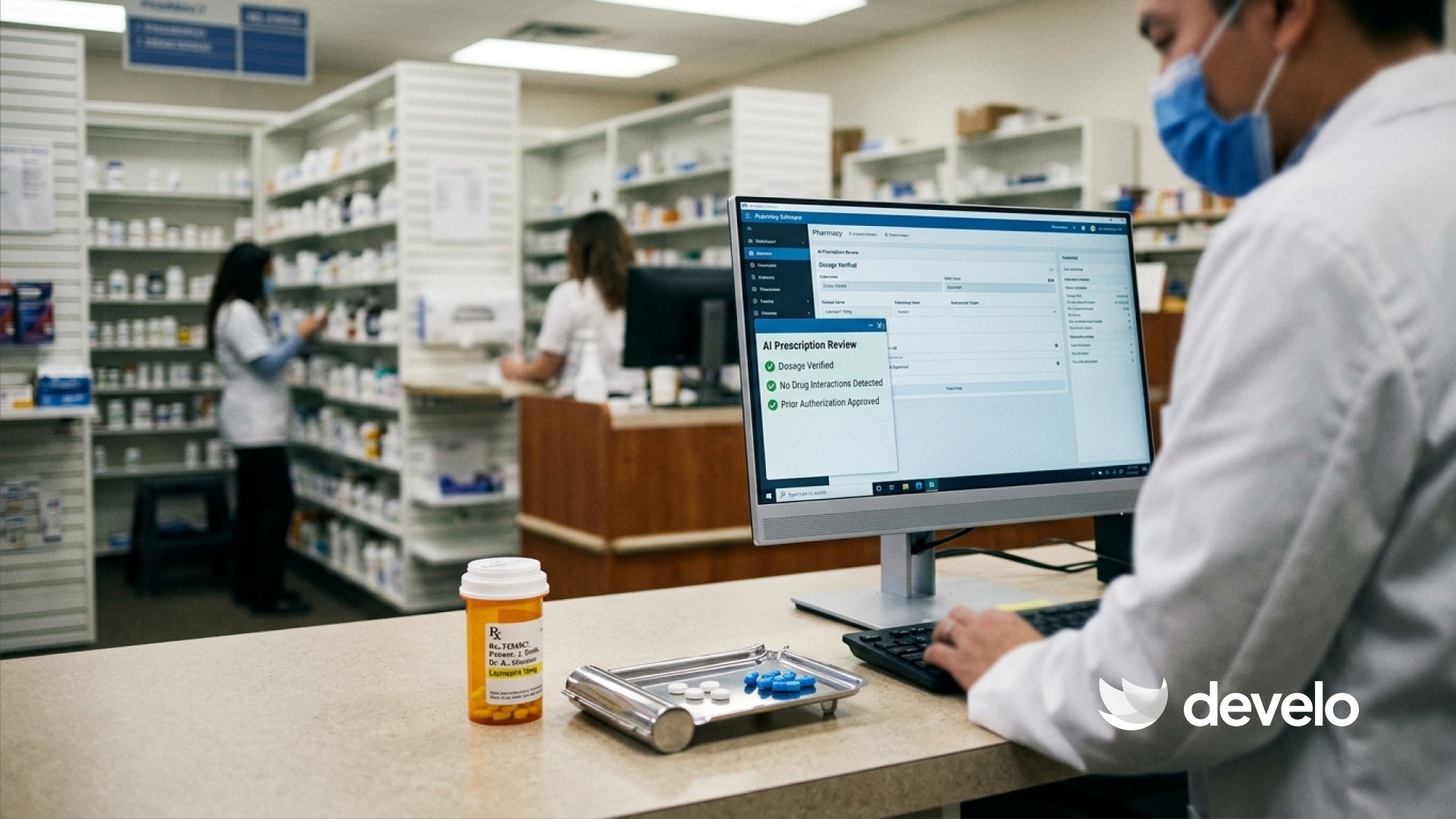
An AI SOAP note tool takes a recording, a dictation, or a typed summary of a visit and sorts the content into the four sections automatically.
- Capture: The tool records audio, accepts a typed summary, or both.
- Transcription: Speech converts to text, tuned to recognize medical terminology.
- Section mapping: A language model assigns each piece of information to a section based on what kind of statement it is.
- Draft delivery: The clinician receives a note to review, edit, and sign.
Section mapping carries the most judgment of the four steps. A parent's description of a symptom belongs in Subjective, and a measured vital sign belongs in Objective. Getting that call right on every statement (across sick visits, well child visits, and follow-ups) is harder than a short demo makes it look.
Notice what's missing from those four steps: the chart. Nearly every AI scribe, standalone or built into an EMR, writes the note from the visit transcript alone. That's drafting through a pinhole. No clinician writes a visit note without chart review, because what's said in the room only makes sense against the problem list, the growth trend, past screening results, and the immunization record. A scribe that can't see the chart can write down what was said, but not what's pertinent.
Where SOAP Note AI Gets It Wrong
Three failure types can show up in the draft itself, separate from the general transcription errors any ambient AI scribe can make.
- Misclassified statements: A caregiver's observation gets filed as an objective finding, or an exam result gets written up as if the parent reported it, and the note carries the wrong weight in the wrong section.
- Thin sections that look complete: A short visit can produce brief Subjective and Objective sections, and a tool can pad them with generic language nobody said or observed, so the note looks fuller than the visit was.
- Findings with no history behind them: A transcript-only draft records a weight or a screening score as if it were the first one, so a drop across two percentile lines or a second positive screen reads as routine.
How Much Time SOAP Note AI Saves
A 2026 study in JAMA tracked 8,581 ambulatory clinicians across five academic health systems and linked AI scribe adoption to 16 fewer minutes of documentation time per eight scheduled patient hours, a real but modest gain.
Clinicians who used the tool in at least half of their visits saw a larger drop of about 27 minutes, but only about 32% of adopters used it that often.
Adoption was also tied to roughly half an extra visit per week, though time in the record outside work hours didn't change by a statistically significant amount. The study tracked time and visit volume only, so it doesn't speak to how accurate the drafted notes were.
Why SOAP Doesn't Fit Every Pediatric Visit
A sick visit fits the SOAP structure reasonably well. A well child visit often doesn't, and four mismatches stand out between the format and what that visit contains.
- The reporter changes mid-visit: A caregiver answers most of the Subjective questions, but an older child may answer some directly, and an AI tool has to track who said what.
- Objective covers more than an exam: Growth has to be taken as a point in a series, since a single weight or height measurement means little without the percentile behind it. For a child born preterm, that percentile is plotted at corrected age (counted from the due date) through about age 2, and a draft that reports chronological-age percentiles raises a false concern.
- Developmental screening doesn't sort neatly: The AAP schedules screening at set ages, and each screen produces a scored result. Forcing that into prose within Objective loses the score, the cutoff, and the interpretation behind it.
- Plan carries anticipatory guidance: A well child plan includes counseling on sleep, nutrition, and safety, which a model trained mostly on sick visits may compress into one generic line.
The format can still work for pediatrics. A tool trained and tested mostly on adult, problem-oriented visits is likely to struggle more with a well child visit than a sick one, and a vendor's demo rarely shows that fault.
What to Check Before You Trust a SOAP Note AI Draft
Three checks apply to every draft, and four apply to the tool itself:
- Read Subjective and Objective separately, and confirm that nothing measured has been attributed to something said.
- Check growth and screening data against the source, since these are the fields most likely to get flattened into prose.
- Confirm that the Plan reflects the actual visit and hasn't defaulted to a generic template for that visit type.
- Make sure the vendor has signed a business associate agreement before patient data reaches it, since a scribe vendor handling that data counts as a business associate under HIPAA.
- Ask whether the tool was built for pediatric visit types or adapted from a general or adult model. Our guide to choosing an EMR for pediatrics covers this same build-versus-adapted question at the platform level.
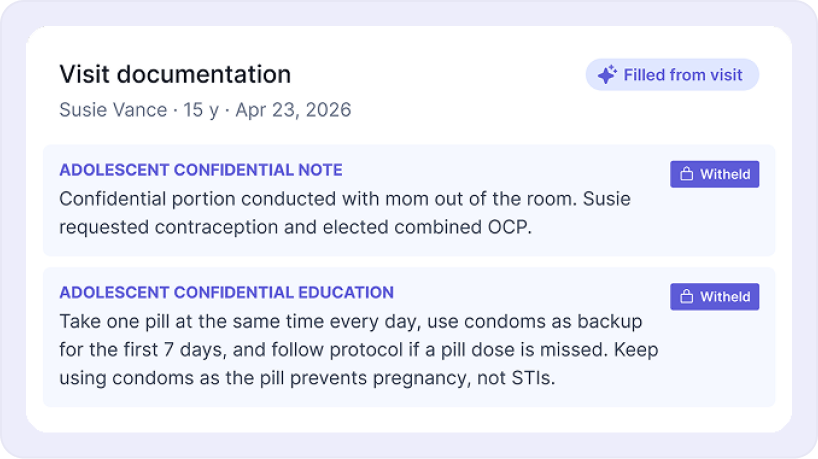
- Ask how the tool handles the confidential portion of an adolescent visit, since anything a teen shares with the parent out of the room shouldn't surface in a note or summary the parent can see.
- Ask what the tool reads besides the transcript, and whether it writes into your existing visit templates. A scribe that only hears the room can't know a child has dropped two percentile lines or that last month's screen came back positive, and one that writes in its own format leaves you copy-pasting into the template you already chart in.
A workflow built around digital intake captures family history and screening answers before the visit starts, which gives an AI tool structured data to work from. This way, it doesn't have to extract everything from the conversation alone. Getting that foundation right is a pediatric office workflow decision as much as a documentation one.
SOAP Note AI Built Around Pediatric Visits
Develo is the AI-native operating system for pediatrics, unifying charting, billing, practice management, and family engagement in one platform built for outpatient pediatric care.
That pediatric focus shapes how Develo drafts a visit: it starts where a clinician starts, with chart review. The Develo AI scribe reads pertinent chart data alongside the conversation (problem list, growth data, immunizations, in-house tests, and screening results) and brings in only what matters for today's visit, so the note reflects the whole patient, not just what was said in the room.
It writes directly into the visit note section by section, with no copy-paste step, and it's tuned for well child visits and sick-and-well splits while following whichever of your existing visit templates the clinician selects. A clinician approves every section before anything enters the note.
Screening results stay scored, not summarized. Digital screeners score automatically and keep the result as discrete data, and concerning results flag to a provider as a screening task. Families can complete forms and screeners before the visit with no account to set up, and the Develo intake scribe streamlines visit intake for nurses and medical assistants. Both scribe modes capture the visit in the family's language across dozens of supported languages, the note comes back in English, and no visit audio is ever retained. Develo signs a business associate agreement with every practice.
On the billing side, the Develo AI scribe suggests diagnoses from the visit transcript and proposes adding an E&M code when a well child visit turns into a sick-and-well split, so clinical documentation flows naturally into what billing needs. Automated charge capture applies code defaults from completed orders and rules by visit type, with final coding always the provider's call.
No scribe removes the review step, Develo's included, so treating a draft as final is the habit most worth breaking, whichever tool you're using.
Documentation is one part of a larger platform decision, and our best EMR for small pediatric practices guide covers the rest of it.
Book a demo to see how a well child visit and a sick visit draft differently.
Frequently Asked Questions
How Accurate Is AI-Generated SOAP Note Documentation?
AI-generated SOAP notes are a starting draft, not the record. Accuracy varies by tool and visit type, and the 2026 JAMA study above measured time saved, not note accuracy, so each draft needs a full clinician review before signing. Watch closely for statements filed under the wrong section and for visits that read longer than they actually were.
Do AI SOAP Note Tools Work for Pediatric Visits?
Yes, AI SOAP note tools work for pediatric visits, though general-purpose tools may not be designed around growth trends, scored developmental screens, and anticipatory guidance. Before committing, ask the vendor for a sample well child note, since that's where the gaps tend to show first.
Can AI SOAP Notes Be Used for Billing?
Yes, AI SOAP notes can support billing, since a claim's diagnosis and procedure codes rely on the Assessment and Plan sections. The same medical necessity standard applies whether a person or a tool wrote the first draft.
Is SOAP the Only Note Format AI Tools Generate?
No, SOAP isn't the only option. Many AI documentation tools also produce progress notes and other formats, and some, including the Develo AI scribe, follow whatever visit template the practice already uses.