

Pediatric claims can fail in small, specific ways. Age-based preventive codes, component-level vaccine billing, and modifier rules for same-day visits all leave room for errors that can be hard to spot one claim at a time.
A medical billing audit can catch these problems by checking a sample of claims against the chart notes behind them. When the same error turns up across several visits, it may point to a habit your team can correct.
Your billing lead and one clinician can run the audit in-house, then use the results to tighten coding before the next round of claims goes out.
What Is a Medical Billing Audit?
A medical billing audit is a review of your claims to check whether each one follows coding and documentation rules.
It compares the provider's note with every code, modifier (an add-on to a code that gives the payer more detail), and diagnosis on a claim. The audit then checks whether the payer paid the amount owed.
Audits come in two main types:
- Prospective (pre-bill): You review claims before they go out, so errors get corrected before anyone pays.
- Retrospective (post-payment): You review claims that were already paid or denied, which also shows you any underpayments.
How to Run a Medical Billing Audit in 7 Steps
A medical billing audit breaks down into seven steps that build on each other, so work through them in order.
1. Set a Narrow Scope
Pick a clear question to answer. "Are our sick visit evaluation and management (E/M) levels right?" gives you a precise target. "Is our billing okay?" is too broad to act on.
Other good starting points include well child visits with vaccines and claims from the payer that denies you most often.
2. Pick Pre-Bill or Post-Payment
Start pre-bill if compliance is your main concern, so you can correct errors before any money changes hands.
Start post-payment if cash flow is the concern, because that's where denials and underpayments show up.
3. Pull a Sample
No single sample size fits every practice. A common baseline is 5 to 10 charts per physician, weighted toward Medicaid and other government payers.
Mix randomly chosen visits with claims tied to your most frequent denial reasons.
4. Compare Each Note to Its Claim
Read the note first, then the claim. Decide what the documentation supports.
Then check each part of the claim:
- CPT codes and units
- Modifiers
- ICD-10 diagnosis codes
- Which diagnosis is linked to which service
Mark a line correct when the note supports it. Otherwise, label it undercoded (billed lower than the note supports), overcoded (billed higher), or missed (not billed at all).
For this review, pair your billing lead with a clinician who can judge the medical side of each note.
5. Check What the Payer Did
Match each claim to its electronic remittance advice (ERA), the payer's explanation of what it paid and why. Note whether each claim was paid in full, less than expected, or denied.
Then compare paid amounts to your contracted rates. Short-paid claims can slip by unnoticed.
6. Score the Results and Find Patterns
Calculate an error rate for each provider and each code group by dividing the lines with errors by the lines reviewed, then estimate the dollars involved. Errors that repeat for one provider suggest a training need.
Check for undercoding as closely as overcoding. In an audit of 176 otolaryngology clinic visits, 60% were billed inaccurately and needed a higher code.
7. Fix, Teach, and Re-Audit
Start by matching each fix to its cause. Billing errors often trace back to a lack of formal coding training, notes that don't support the billed level, or no system for feedback. A documentation problem may call for a template change, while a training problem may call for coaching.
Then share results with each provider one-on-one, using their own charts as examples. In the same otolaryngology study, providers raised their billing accuracy from 40% to 70% after a year of lectures and targeted emails from the billing team.
Plan to re-audit the same area a few months later to confirm that the fixes held.
If you find overpayments, act fast. Medicaid and Medicare overpayments must be reported and returned within 60 days of identification. For Medicare, that clock can pause for up to 180 days during a timely, good-faith investigation, but bring in your compliance lead or a healthcare attorney right away.
What to Check in a Pediatric Medical Billing Audit
A pediatric medical billing audit should also check the coding rules that apply only to children's care.
If a large share of your patients have Medicaid, coding errors can take a bigger bite out of your finances. Physicians lose an estimated 18% of Medicaid revenue to billing problems, compared with 2.4% for commercial insurance.
Build these pediatric checks into every audit:
- Age bands: Preventive visit codes are split by age group, such as 1 to 4 years (99392) and 5 to 11 years (99393) for established patients. Compare each code with the child's age on the date of the visit.
- Vaccine components: Each vaccine should have both a product code and an administration code. For patients 18 and younger who receive counseling, 90460 covers the first component of each vaccine and 90461 covers each extra one. An MMR vaccine bills as 90460 once and 90461 twice.
- Counseling notes: Codes 90460 and 90461 need notes showing that the physician or other qualified provider counseled the family on the risks and benefits of each vaccine component. Without that note, bill the vaccine administration with 90471–90474 instead.
- Screening codes: When a developmental (96110) or behavioral (96127) screening is billed with a visit, the visit code may need modifier 25, depending on the payer. The note should also record the screening score for each standardized tool used.
- Same-day well and sick care: When a problem is addressed at a well child visit, check that the note supports a separate problem-oriented E/M, that modifier 25 sits on that code (for example, 99392 with 99213-25), and that the sick diagnosis links to it rather than to the preventive code.
- VFC doses: For each Vaccines for Children dose, check that the child's VFC eligibility was documented at that visit and the dose came from VFC stock. The vaccine itself is never billable, only its administration, and whether your state's VFC program pays 90461 varies.
- Newborn claims: First visits are often billed under the mother's policy before the baby has a member ID. Check that each one was paid, or resubmitted once the baby's ID arrived, rather than left sitting in denials.
Before the review starts, hand your auditors a pediatric billing reference and an up-to-date list of pediatric CPT codes, so everyone checks claims against the same rules.
How Often Should You Run a Medical Billing Audit?
You should run a medical billing audit at least once a year, which OIG's compliance guidance for small physician practices recommends. Make the first one a baseline audit you can measure later results against.
Yearly code updates give you two more good opportunities for a quick review. The main ICD-10 diagnosis code update takes effect on October 1, and new CPT codes take effect on January 1. Checking the first few weeks of claims after each date can show whether your team picked up the changes.
Between full audits, a monthly check of each provider's spread of E/M levels can show drift early and keep your team current with pediatric coding guidelines.
Payers can also run their own reviews after paying a claim, and state Medicaid programs and commercial plans may ask for money back when the chart doesn't support what was billed. Regular internal audits give you a clearer record to work from if that request ever arrives.
Build Medical Billing Audit Checks Into Your Workflow With Develo
A yearly audit shows you where coding errors crept in, but your team still has to go back and fix the claims it turns up. Catching those errors during the visit, before the claim is even generated, cuts down on that cleanup.
Develo is the AI-native pediatric operating system built solely for independent pediatric practices, unifying charting, billing, practice management, and family engagement in one modern system. It was built for outpatient pediatric care from day one.
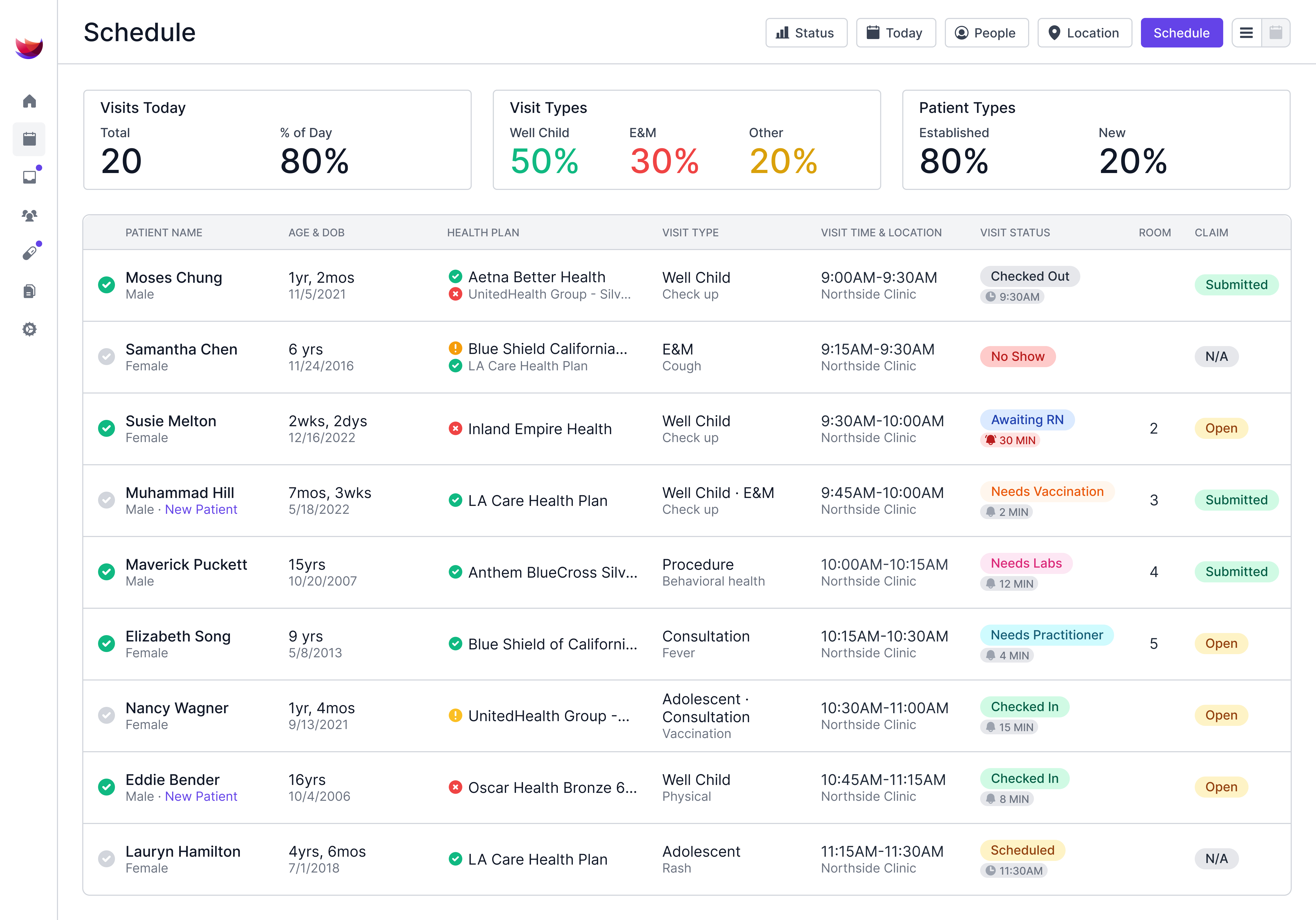
With coding and billing in one system, Develo automatically flags errors at three points in your revenue cycle: coverage problems at scheduling and check-in, coding errors before a claim goes out, and underpayments when the ERA posts.
Features that support your audits include:
- Eligibility and digital intake: Real-time eligibility checks return coverage details to staff, and caregivers can update insurance details on their phone before the visit.
- Digital screeners: Screeners are scored automatically, and the matching billing lines are added to the visit.
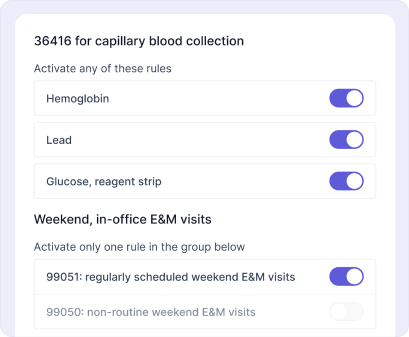
- Automated charge capture: Rules set pediatric codes, units, modifiers, and diagnoses by visit type and patient age during the visit, so each well child visit gets the preventive code for the child's age band. Dozens of pediatric-specific rules cover vaccine administration, BMI, and counseling codes.
- Intelligent E/M coding: Guidance inside the charge capture workflow helps providers choose and swap the E/M level for sick visits. The provider makes the final call.
- Develo AI scribe: The scribe suggests diagnoses for the visit, checks that each one is billable, and suggests the E/M level from the visit transcript, so what gets billed traces straight back to what was documented.
- Checks before submission: Incomplete claims, CPT and ICD-10 mismatches, and missing modifiers get flagged for review, so your team can fix them first.
- Denials, ERA posting, and underpayments: Denied claims land in one prioritized list for your billers, and payments from each ERA post automatically. With your fee schedule entered, Develo also flags payments that come in below your contracted rates.
- Rules that learn from your audit: Develo maintains its own library of charge capture and claim scrubbing rules and rolls them out proactively. When an audit turns up a pattern, a rule scoped to that payer, Medicaid, or a single provider can fix the claim automatically or route it to a work queue.
- Revenue cycle reporting: Reporting runs on real-time data, with configurable dashboards, data exports, and Develo reports Q&A for plain-English questions, so a monthly look at each provider's E/M spread doesn't wait for a spreadsheet.
Providers and billers still make the final coding call on every flagged claim. The yearly audit then starts from cleaner claims and spends its time on judgment calls, not missed modifiers.
Book a demo to see how Develo can support your next medical billing audit.
Frequently Asked Questions
What’s the Purpose of a Medical Billing Audit?
The purpose of a medical billing audit is to check that your claims match what providers documented and what payers require. It can also uncover revenue lost to undercoding or denials, and it can flag overcoding that could create a compliance risk.
How Many Charts Should a Medical Billing Audit Review?
A medical billing audit can start with about 5 to 10 charts for each provider. If that first pass turns up repeated errors, pull a larger sample for the affected provider or code group.
Who Can Perform a Medical Billing Audit?
A medical billing audit can be performed by an in-house team or an outside auditor. An in-house review works best when someone who knows billing rules and someone with clinical training read the same charts. An outside reviewer brings an independent perspective, which can be especially helpful with a baseline audit.
What's the Difference Between a Billing Audit and a Coding Audit?
The difference between a billing audit and a coding audit is mainly scope. A coding audit generally focuses on whether codes match the documentation, while a billing audit also follows each claim through charge entry, payment, and denial handling.