

Modifier 25 tells a payer that a same-day E/M service was significant and separately identifiable from another procedure or service, like treating an earache during a well child visit. Misapplying it can get the claim denied, while leaving it off out of caution means real work goes unbilled. In pediatrics, the question comes up any time a parent mentions a new problem at a checkup, so it's worth getting right.
What Is Modifier 25?
Modifier 25 is a CPT modifier added to an E/M code to show a significant, separately identifiable E/M service performed by the same clinician on the same day as another procedure or service.
It tells the payer that two distinct pieces of work were carried out during a single visit, so both can be considered for payment.
Per the AMA, that E/M work must be above and beyond the other service provided, or beyond the usual preoperative and postoperative care associated with the procedure or service performed on that same date.
Where the Modifier Goes
On a same-day well child visit and sick visit with no vaccines, modifier 25 goes on the problem-oriented office visit code, such as 99213, not on the preventive code or any procedure code, per AAP coding guidance.
For a same-day well child and sick visit with no vaccines:
Vaccines work differently. Since a 2013 National Correct Coding Initiative (NCCI) edit paired vaccine administration codes with preventive medicine codes, many state Medicaid programs require modifier 25 on the preventive code (such as 99391 or 99392) when vaccines are given, per the AAP.
Some commercial payers apply the same edit and others don't, and payers that do deny whichever line is missing modifier 25.
For a same-day well child and sick visit with vaccines:
Some payers also want modifier 25 on both lines whenever a sick visit is billed, with or without vaccines. Check each payer's policy before you submit.
Putting the modifier on the wrong line, or leaving it off entirely, is a common reason these claims come back denied.
When to Use Modifier 25
Modifier 25 fits when the E/M would stand on its own even if the other service hadn't happened. Here's how common pediatric scenarios break down, with global periods (000, 010, 090) taken from the Centers for Medicare and Medicaid Services (CMS) global surgery rules:
Ask one question: would you have billed this E/M if the other service hadn't happened? If yes, the modifier fits. If the E/M exists only because of the other service, it doesn't.
Same Diagnosis vs. Different Diagnoses
Modifier 25 doesn't require a different diagnosis for the E/M and the other service, according to CPT guidelines. The same diagnosis can support both, as long as the documentation shows the extra work.
In practice, a matching diagnosis is a common trigger for payer denials. Many automated edits read it as a sign the E/M was part of the procedure, and appealing that denial can take more time than the E/M pays.
When the visit involved two separate problems, link each service to its own diagnosis. Say a child comes in to have a chin laceration repaired, and the parent mentions three days of ear pain. You evaluate the ear and diagnose otitis media, so link the repair to the laceration and the E/M, with modifier 25, to the otitis media (H66.001). Don't reach for a symptom code to create the difference, though: once a definitive diagnosis is established, ICD-10-CM guidelines say not to code the symptoms that come with it, and an evaluation that only led to the procedure is already paid as part of the procedure.
A return visit for a problem that's already diagnosed usually doesn't get a separate E/M. If a child comes back for a follow-up treatment that was planned at the first visit, such as a second cryotherapy session, bill the procedure alone, because the evaluation and management plan happened at the first visit. If the parent raises something new that day, such as fever, cough, and body aches, bill the E/M with modifier 25 and link it to the new problem. Use symptom codes, like R50.9 (fever) and R05.9 (cough), when the cause is still unclear, or the condition once it's confirmed, like J10.1 (influenza) after a positive rapid flu test.
The Documentation Standard
When a claim gets reviewed, the documentation decides whether modifier 25 holds up. The test is whether a reader can see two clearly separate services in your note:
- Two distinct sections: Label the preventive work and the problem-oriented work separately in the note.
- A standalone E/M: The sick portion needs its own medically appropriate history and exam, and its own medical decision making.
- Linked diagnoses: Point the preventive code at Z00.121 (with abnormal findings) or Z00.129 (without), and point the E/M at the condition treated.
- Visible reasoning: The assessment and plan for the problem should read as a clinical decision in its own right.
- Medical decision-making (MDM) over time: If you level the problem-oriented E/M by time, count only the time spent on the problem, not the preventive visit. In practice, leveling by medical decision-making is easier on a same-day well child visit, because the two services' time is hard to separate cleanly.
The AMA says modifier 25 means documentation in the patient's record supports the E/M as significant and separately identifiable. If a reviewer can't find the separate service by reading the chart, the modifier is unlikely to survive an audit.
The Pediatric Same-Day Visit
A pediatric same-day visit is a well child visit during which a parent also raises a problem that requires its own evaluation. Here's a worked example of what the note has to carry.
The visit: A 4-year-old arrives for a well child visit and is due for vaccines. During the exam, a parent reports two days of right ear pain. The clinician completes the preventive exam, gives the vaccines, then separately evaluates the ear, diagnoses acute suppurative otitis media in the right ear, and prescribes an antibiotic.
The claim:
Modifier 25 sits on both lines here: on 99213 for the sick visit, and on 99392 because vaccines were given, per the NCCI edit covered above. Payer edits vary, so check each payer's policy before you submit a claim like this.
Three things in the note make it hold up: the preventive exam, a separate section on the ear complaint with the otoscopic findings and treatment decision, and, if you bill 90460/90461, documented counseling on the vaccines given.
Swap the earache for mild diaper rash and a recommendation of barrier cream, and the sick-visit charge disappears. The vaccine lines stay, and so does modifier 25 on 99392, if vaccines are still part of the visit.
Our pediatric CPT codes guide covers the preventive and problem-oriented code families in full, and the 99394 code breakdown covers adolescent well child visits.
Modifier 25 vs. Modifiers 24, 57, and 59
Modifiers 24, 25, and 57 all go on E/M codes, while 59 goes on a procedure. Each covers a different situation, and picking the wrong one can result in the claim being denied. Here's how they compare:
Using the wrong modifier can trigger Claim Adjustment Reason Code (CARC) 4, which means the procedure code is inconsistent with the modifier used. A missing modifier 25 on a bundled pair more often returns CARC 97 (bundled into another service) or CARC 236 (an NCCI incompatibility).
For Medicare claims, CMS asks you to use the more specific XE, XS, XP, or XU modifiers instead of 59 whenever possible. Our pediatric coding guidelines cover the wider modifier set.
Common Modifier 25 Mistakes
Payers look closely at modifier 25 claims, and these five errors come up often:
- Automatic appending: Adding modifier 25 to every same-day claim invites scrutiny. In a 2005 review, the HHS Office of Inspector General found that Medicare should not have allowed payment for 35% of sampled E/M claims billed with modifier 25.
- Wrong line: Putting it on a procedure code, leaving the problem-oriented visit unmodified, or leaving it off the preventive code when vaccines are given and the payer applies the NCCI edit.
- One blended note: A single narrative covers both services, with nothing marking where one ends.
- Unsupported level: Billing 99214 when the separate work documented supports only 99213.
- Skipping it entirely: Some clinicians leave a legitimate sick visit off the claim to avoid a denial or audit, so real work goes unpaid.
Getting It Right at the Point of Care
Modifier 25 is decided during documentation, but in most systems the coding that follows is still manual. Pediatric visits repeat the same patterns at high volume, yet providers and billers type the same codes, modifiers, and units visit after visit, and every claim depends on applying rules as nuanced as modifier 25 without a slip. The better approach automates the repetitive work and leaves your billers the complex claims that need review and judgment.
Develo is the AI-native pediatric operating system built solely for independent pediatric practices, unifying charting, billing, practice management, and family engagement in one modern system. Together, the features below automate the repetitive coding and route the complex claims to a biller.
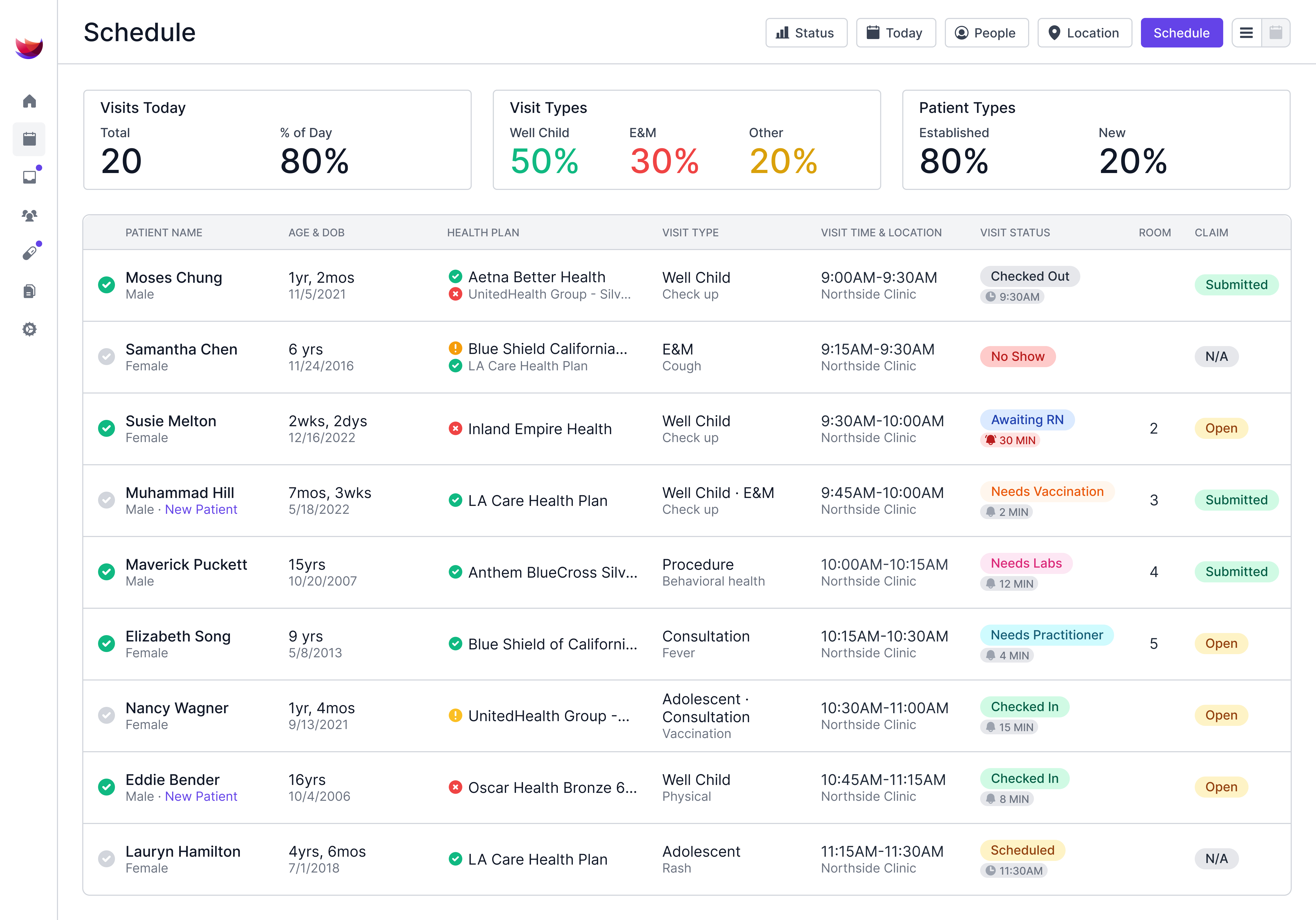
- Pediatric templates: Well child visits open with the expected documentation, vaccines, and orders already in place. Sick visits open with an E/M code matched to the scheduled visit type, and the provider adjusts the level with coding guidance before signing.
- Pediatric orders: A curated library of hundreds of in-house and external orders covers outpatient pediatric care. Each order carries default billing codes, diagnosis codes, and details like dose and billing units for in-house medications, so the charge is captured automatically once the order is completed and its result documented.
- Develo AI scribe: Writes directly into the visit note using the conversation and pertinent chart data, with well child and sick-visit work in separate sections. It suggests billable diagnoses, and when a well child visit includes a sick visit, it suggests adding the E/M code linked to the sick diagnoses. A clinician approves every section and suggestion before it's added.
- Automated charge capture: Codes, units, and modifiers populate from the documented visit based on visit type, so no one retypes the same codes visit after visit. A notification explains any modifier added automatically before the claim goes to biller review.
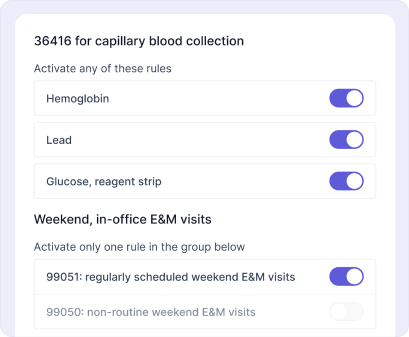
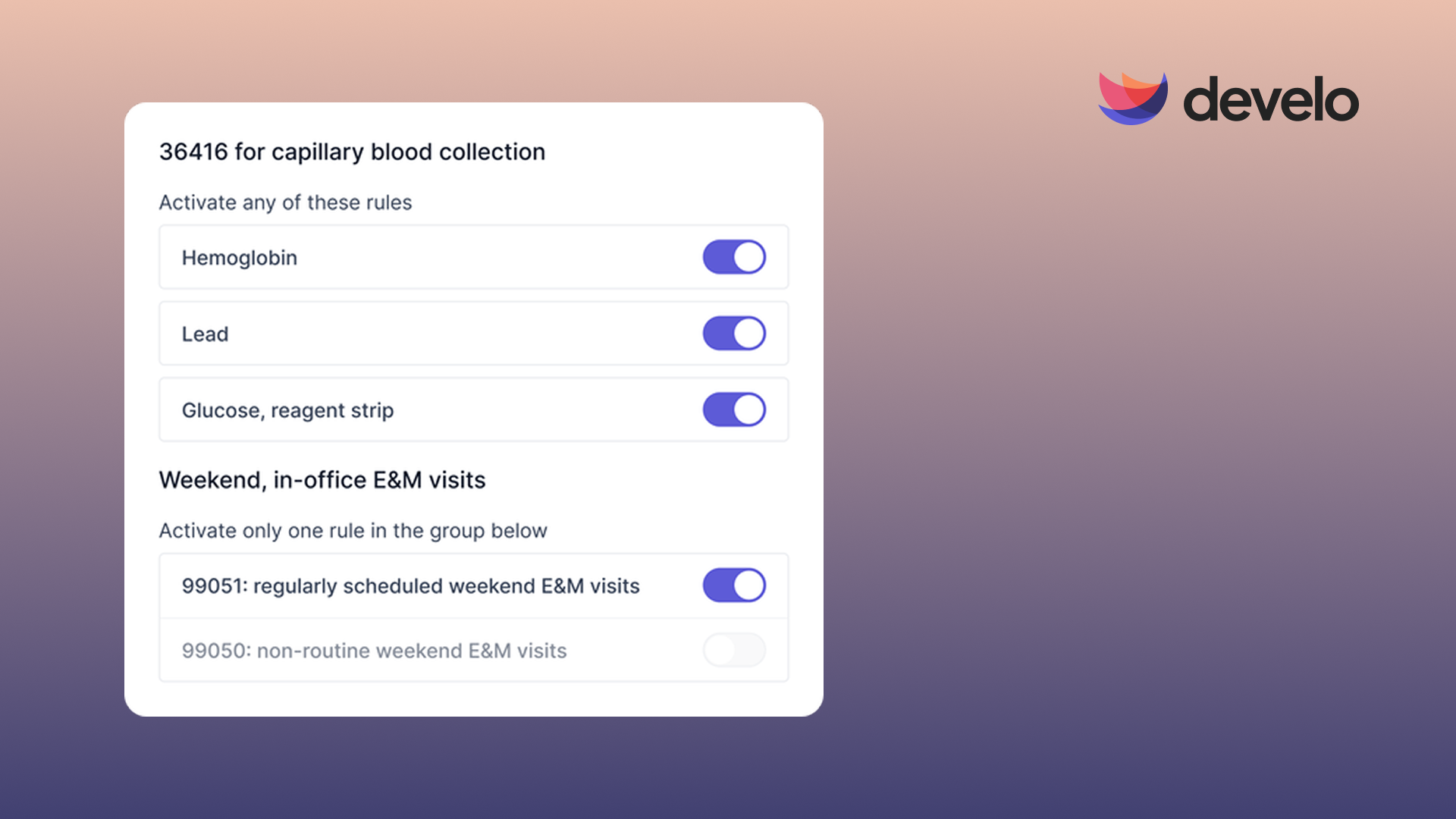
- Payer-specific rules: Set a coding rule once, then adjust it by payer. For example, apply modifier 25 to the E/M on every same-day well child and sick visit, then add it to the well child code only for the payers that want it on both lines.
- Claim checks: A rules engine scrubs each claim before submission and routes complex claims to a biller's work queue, so billers work the exceptions instead of every claim.
Our pediatric billing cheat sheet covers the code pairings behind these rules. Book a demo to see how same-day visits move from note to claim.
Frequently Asked Questions
What Is Modifier 25 Used For?
Modifier 25 is used to flag an E/M service that stands apart from another procedure or service performed on the same day. It signals that the evaluation went beyond the work already built into that other service, so both can be considered for payment.
Which Code Does Modifier 25 Go On?
Modifier 25 goes on the problem-oriented E/M code, such as 99213, when it's billed with 99392 for a checkup with no vaccines. When vaccines are given, many Medicaid programs and some commercial payers also require modifier 25 on the preventive code, and some payers want it on both lines even without vaccines. Placing it on the wrong line is a common cause of denial.
Does Modifier 25 Need a Different Diagnosis?
No, modifier 25 doesn't need a different diagnosis for the E/M and the other service, per CPT guidelines. The same diagnosis can support both when documentation shows the extra work. In practice, a matching diagnosis often triggers a denial, so when the visit involved two separate problems, link each service to its own diagnosis.
Can a Checkup and a Sick Visit Be Billed Together?
Yes, a checkup and a sick visit can be billed together when the problem needs significant work beyond the preventive exam. Bill the preventive code plus a problem-oriented E/M with modifier 25, and document both services separately. A minor issue handled inside the checkup doesn't qualify.
What's the Difference Between Modifier 25 and Modifier 59?
The main difference between modifier 25 and modifier 59 is where they go: 25 goes on an E/M service, and 59 goes on a procedure. Use 25 when an evaluation is separate from a same-day procedure or other service, and 59 when two procedures would otherwise bundle under payer edits.