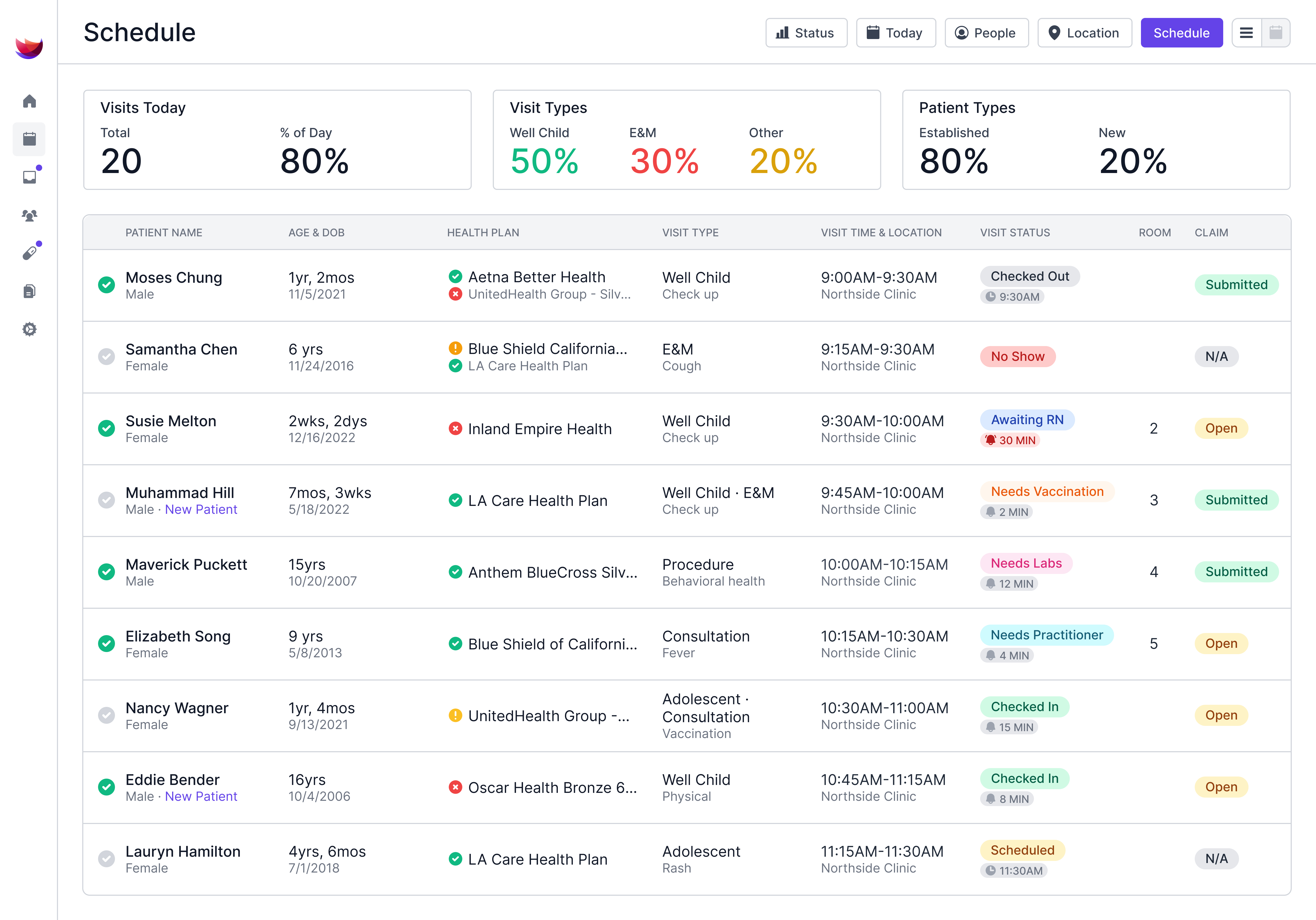


Insurance eligibility verification catches coverage problems before they turn into denied claims. That matters more in pediatrics, where one child might be on Medicaid or CHIP while a sibling is on a parent's employer plan. Here's how to build the check into scheduling and check-in.
What Is Insurance Eligibility Verification?
Insurance eligibility verification is the process of confirming a patient's active insurance coverage and benefits before a visit happens.
For your practice, that could mean checking a child's plan status, who's financially responsible for the visit, and what the plan covers for well child visits, immunizations, and sick visits.
This check should happen before check-in, ideally when the visit gets scheduled, so front-desk staff can catch problems while there's still time to fix them.
A complete verification confirms several things:
- Whether coverage is active
- The type of plan, such as an HMO or a PPO
- The copay and deductible amounts
- Whether the visit needs prior authorization
When this step is skipped, coverage problems tend to surface only after the visit; by then there's usually little anyone can do about it.
How Does Insurance Eligibility Verification Protect Pediatric Practice Revenue?
Insurance eligibility verification protects pediatric practice revenue by catching coverage issues before a claim is submitted.
One widely cited analysis at a single academic health system (Tseng et al., JAMA, 2018) put the billing-related administrative cost of a primary care visit at about 13 minutes and $20.49, or roughly 14.5% of the professional revenue from that visit.
Add an eligibility mismatch on top, and a routine well child visit can turn into hours of rework for front-desk and billing staff.
Unstable family coverage can add another layer of risk. In one study of more than 830,000 children in North Carolina Medicaid from 2016 to 2018, about 1 in 4 disenrolled at least once, and roughly 1 in 5 of those out for 30 days or more were back within six months, a pattern that often reflects paperwork rather than a real change in eligibility.
Since January 1, 2024, federal law has required states to give children under 19 in Medicaid and CHIP 12 months of continuous eligibility, but coverage can still lapse at annual renewal.
Catching a lapsed policy during a scheduled well child visit or vaccine visit can be the difference between a clean claim and a denied one. That's one reason eligibility checks sit at the center of pediatric revenue cycle management.
How to Verify Insurance Eligibility in 5 Steps
You can verify insurance eligibility in five steps. Built into your normal scheduling routine, each takes just a few minutes per patient.
1. Collect Insurance Information at Scheduling
Ask for the child's legal name and date of birth, the subscriber's name and date of birth, the child's relationship to the subscriber, the member ID, group number, and payer name as soon as the visit gets booked. For Medicaid, also capture the managed care plan name.
Getting these details early gives the front desk time to catch problems before the visit.
2. Run an Electronic Eligibility Check
Most clearinghouses and EMRs support a standard transaction called 270/271, which returns active coverage status within seconds.
That's a lot faster than sitting on hold with a payer's phone line.
3. Confirm Plan-Specific Benefits
Confirm plan-specific benefits by checking each service line individually.
Most plans cover well child visits, immunizations, and behavioral health screens as preventive care with no copay when they're done in network, while sick visits go toward the copay and deductible. An active policy doesn't guarantee that every visit is covered the same way.
4. Re-Verify at Check-In
Re-verify coverage at check-in to catch last-minute changes.
Coverage can shift between the day a visit is scheduled and the day it happens, especially for Medicaid and CHIP families in renewal.
5. Document the Verification and Flag Exceptions
Save the confirmation number and note any copay, deductible, or authorization requirement directly in the patient's chart, so billing staff aren't starting from scratch when they process the claim.
Solid pediatric insurance verification builds this documentation into scheduling and check-in, so it doesn't turn into a separate task.
Keeping a pediatric billing cheat sheet at the front desk can give your staff a fast reference for exactly what to capture at each step.
Common Eligibility Challenges in Pediatric Practices
Pediatric practices can run into eligibility problems that general medical offices rarely see, mostly tied to family structure and coverage instability.
Split Custody and Multiple Guardians
The policy might sit under one parent, while the other brings the child to the visit and can't confirm the plan details on the spot.
When parents are separated or divorced, the plan named in a court order pays first. Without a court order, the custodial parent's plan usually pays first.
If parents share custody and no court order names a plan, the birthday rule applies: the plan of the parent whose birthday falls earlier in the year is primary.
Ask at scheduling which parent holds the insurance, and get that person's contact details on file so staff can reach them directly if anything needs to be confirmed before the visit.
Siblings on Different Plans
One child might carry employer coverage while a sibling is on Medicaid or CHIP, which means separate verification for each child at every visit.
Set up your system to verify each child under their own record, so staff aren't copying one sibling's coverage details onto another's file.
Medicaid and CHIP Renewal Gaps
Annual renewal cycles can interrupt coverage for reasons unrelated to a child's actual eligibility. During the Medicaid unwinding that followed the end of pandemic-era continuous enrollment, 69% of people who lost coverage were cut for procedural reasons, such as missing paperwork, rather than a finding that they no longer qualified.
Flag Medicaid and CHIP patients for a fresh eligibility check a few weeks before their renewal date, so any lapsed policy is caught before it affects a scheduled visit.
Continuous eligibility keeps a child covered between renewals, but it doesn't lock in the plan. Families can switch Medicaid managed care plans, and a visit billed to the wrong plan or under the wrong assigned primary care provider (PCP) can be denied even though the child is covered.
At every visit, check the managed care plan and assigned PCP along with active coverage.
Newborns Not Yet Added to a Policy
New parents often haven't finished adding a baby to their plan by the time the first well child visit rolls around, which can delay verification until the policy update goes through.
Ask new parents at scheduling whether the baby has been added to the policy yet, and if not, confirm the expected effective date so billing knows what to expect.
Employer plans must give parents at least 30 days to add a newborn, and coverage back-dates to the date of birth once they do. Until the baby has a member ID, check the payer's newborn billing rules and flag the chart for re-verification.
If the mother is covered by Medicaid when the baby is born, the baby is automatically eligible for Medicaid through the first birthday.
Best Practices for Verifying Coverage
Following a few consistent habits keeps most insurance eligibility problems from turning into denied claims in the first place.
Verify Coverage Twice
Confirm coverage when the visit gets scheduled, then again at check-in.
A plan that was active last week isn't guaranteed to still be active today.
Run Checks Through Your EMR Instead of the Phone
Real-time electronic checks return an answer in seconds. According to the 2024 CAQH Index, moving a check from the phone or a payer portal to a fully electronic transaction saves medical providers about 12 minutes.
If your EMR supports electronic eligibility checks, enable that feature for every scheduled visit, even the simple ones.
Train Front-Desk Staff to Catch Small Mismatches
A misspelled name, a wrong date of birth, or a transposed digit in a member ID can be enough to trigger a rejection.
A quick double-check against the insurance card at check-in catches most of these before they reach billing.
Track Denials by Payer
Some plans reject claims for eligibility reasons more often than others.
Keep a running list by payer to show your team exactly where to focus training or process changes.
Keep Billing in the Loop on Exceptions
When a coverage exception comes up, whether that's a lapsed policy, a missing guarantor, or a mismatched plan, pass the details to billing right away.
Working from clear pediatric coding guidelines alongside a clean eligibility check means far less back-and-forth once the claim is submitted.
Simplify Insurance Eligibility Verification With Develo
If your front desk is still calling payers, second-guessing member IDs, or finding out about coverage problems only after a claim comes back denied, there's a faster way to run this process.
Develo is the AI-native operating system for pediatrics, built solely for independent pediatric practices rather than adapted from an adult medical record system.
Charting, billing, practice management, and family engagement run in one system, so an eligibility check made when a visit gets booked stays visible to whoever handles the billing days later.
With Develo, your practice also gets access to:
- Check-in notifications: Out-of-date demographics or insurance details are flagged at check-in, catching problems before they lead to a denial.
- Digital intake: Families update insurance and demographics, sign forms, and complete screens on their phone before the visit, with no app or login required, so front-desk staff aren't transcribing insurance cards on the day.
- Real-time eligibility: Coverage checks return copay, coinsurance, and deductible amounts to staff in real time, so there's no guessing at what to collect. The checks are fully configurable: practices set when they run and fine-tune how responses are read for specific payers.
- Vaccines for Children (VFC) eligibility matching: Eligibility results link to VFC status, so each dose comes from the right funding source at every vaccine visit.
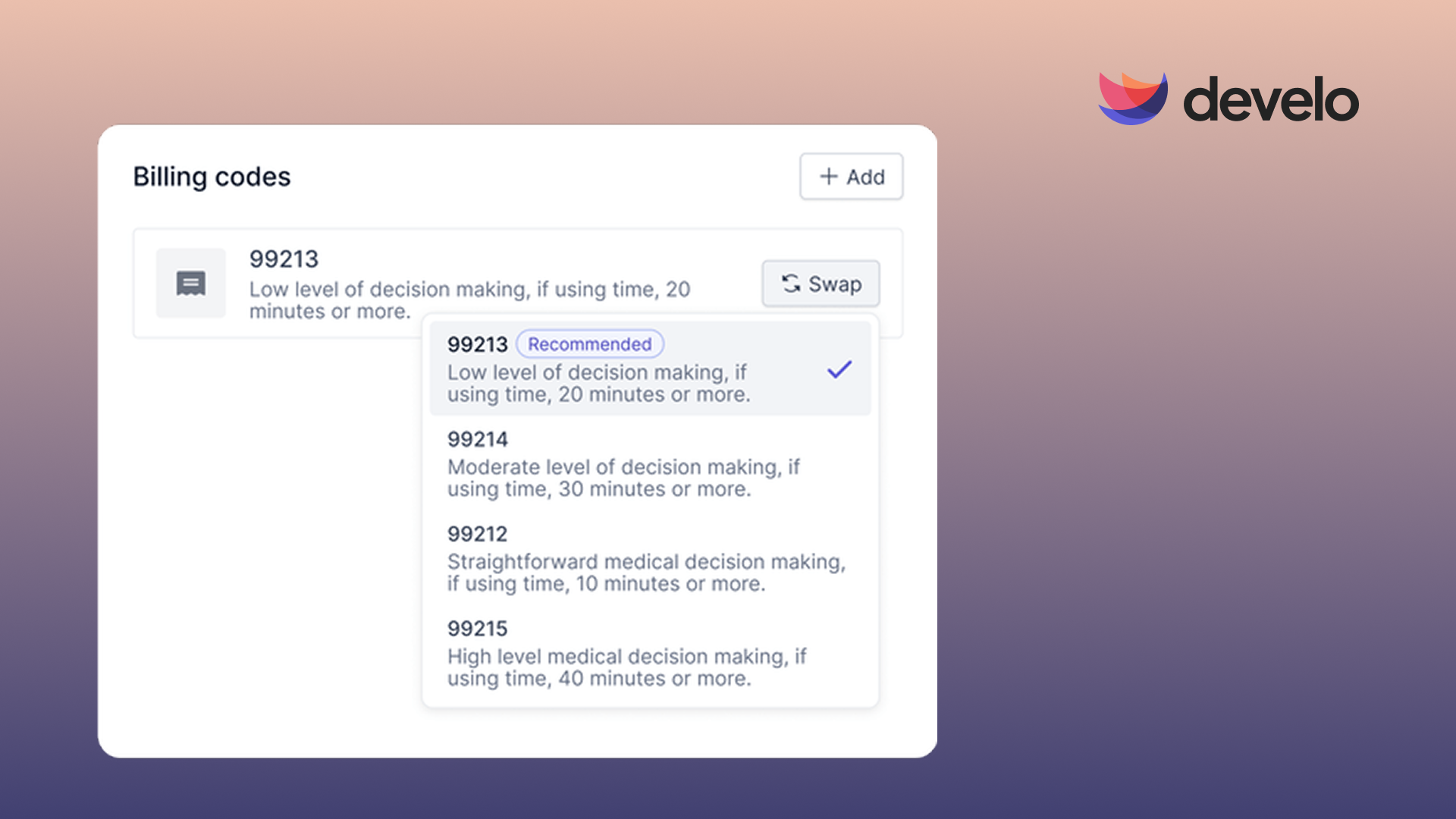
- Automated charge capture: Pediatric billing codes, units, modifiers, and visit diagnoses are set automatically for each visit, reducing provider coding burden and underbilling.
- Family structure tracking: Multiple guardians, blended households, and sibling relationships are clearly tracked, so staff always know which plan and contact apply to each child.
Book a demo to see how Develo handles eligibility verification from scheduling through payment.
Frequently Asked Questions
What Does Insurance Eligibility Verification Do?
Insurance eligibility verification confirms that a patient's coverage is active and what it will pay for before they're seen. It covers policy status, plan benefits, and what the family can expect to owe.
When Should You Verify Insurance Eligibility?
You should verify insurance eligibility both when a visit gets booked and again when the patient arrives. The second check catches a policy that ended or changed after the visit was booked.
What Information Do You Need to Verify Insurance Eligibility?
Have the payer name and member ID ready, along with the child's and the subscriber's names and dates of birth, how the two are related, and the group number if the plan uses one.
How Long Does Insurance Eligibility Verification Take?
An eligibility check takes seconds when it's done electronically, while a manual call to a payer takes far longer because of hold times and phone menus.
What Happens if You Skip Insurance Eligibility Verification?
Skipping the check raises the risk of a denied claim, a delayed payment, or a surprise bill for the family. Practices often find out about the problem weeks later, when a claim comes back unpaid.
.png)
.avif)


.avif)