

Many waits in a pediatric clinic start with the schedule. When slots are shorter than the visits booked into them, every late start carries into the next visit, and sick visits added to a full session push the whole afternoon back.
To reduce patient wait times, fix the schedule first, then move the paperwork, payments, and next booking off the front desk's plate. Most of the nine fixes below draw on published clinic improvement studies and scheduling advice from Family Practice Management, adapted for pediatric sessions.
How Long Waits Affect Your Clinic
Long waits cost a clinic in three places: its reviews, its families' loyalty, and its revenue.
- Waits show up in online reviews: In 1-star reviews of pediatric orthopaedic surgeons, 11.9% of complaints from patients who didn't have surgery mentioned wait times.
- Waits can send families to another practice: In a 2025 Talker Research survey of 2,000 U.S. adults who'd seen a doctor in the past year, conducted for Klara, waiting more than 30 minutes was the most common doctor's office turn-off, named by 52% of respondents.
- Unfilled slots cost revenue: When one academic medical center let patients move into slots opened by cancellations, the filled visits added an estimated $3 million in physician fees over nine months.
9 Ways to Reduce Patient Wait Times in a Pediatric Clinic
These strategies follow the order a family moves through the visit, from booking through checkout. Pick the stage where your own timestamps show the biggest gap, and begin there.
1. Match Slot Lengths to Visit Times
Pull a month of check-in and checkout timestamps from your EMR and average them by visit type. Then compare each average with the slot length in your template.
The gap can be wide. At one family medicine clinic, visits booked for 20 or 40 minutes averaged 71 minutes from check-in to checkout.
Limit long visits in each hour. Some practices book only one or two preventive visits per hour, since those visits pick up extra concerns, Christine Sinsky, MD, a vice president at the American Medical Association, notes in Family Practice Management. For a pediatric clinic, that means spreading well child visits across the session rather than booking them back to back.
2. Swap Chronic Overbooking for Wave Scheduling
Overbooking every session to cover no-shows stacks the delay on days when every family shows up. Wave scheduling plans for that variation.
In a wave template, two established patients book on the hour and one on the half hour. The provider starts with whoever is roomed first. If one family runs late or doesn't show, the provider uses that time on the others. Even when two families walk in at once, Sinsky writes, no one is likely to wait more than about 15 minutes.
Keep new patients and complex visits out of the doubled slot, so the hour doesn't start with two long visits.
If your scheduling issues stem from overbooking, work on reducing no-shows first.
3. Hold Same-Day Sick Slots in Every Session
Count every same-day request for two weeks, including calls, family portal messages, and walk-ins, and break down the count by weekday. That tells you how many slots to hold in each session.
Sinsky recommends a buffer of about an hour of unbooked time that staff can fill when same-day demand spikes. Mondays and the first day back after a vacation tend to bring more same-day requests, so book those days lighter.
Holding slots for same-day care can shorten how long families wait to get a visit. A 2026 systematic review of advanced access (same-day) scheduling found that the wait for a visit fell in all 23 studies that measured it, though only 13 reported a statistically significant drop.
Release any held slot still open by early afternoon to the next family on your waitlist.
4. Let Families Book and Fill Cancellations Online
Phone booking adds a wait before the visit even starts. In the Talker Research survey, respondents said they typically wait on hold about 8.5 minutes to book a visit, and they'd hang up on a new doctor's office after about 10 minutes.
Online self-scheduling for well child visits and follow-ups takes those calls off the front desk, so the person checking families in isn't also answering phones. Our roundup of medical scheduling software compares tools that handle self-scheduling and reminders.
Add an automated waitlist so cancellations get filled without a phone call. In the academic medical center study, patients who took an earlier slot were seen a median of 14 days sooner.
Patients who mainly spoke a language other than English were less likely to accept the automated offers, however, so keep a phone option open. Note each family's preferred language when the visit is booked, so an interpreter is scheduled before the family arrives rather than found while they wait.
5. Move Visits That Don't Need an Exam to Telehealth
Telehealth shortens the wait to receive care. A review of 53 studies found that telemedicine cut the time from request to care by a weighted average of 25.4 days across the 25 studies with enough data to measure it. Most of the studies tested specialist e-consults rather than video visits.
Some behavioral health follow-ups and skin concerns can work by video. Vaccines, ear exams, and other hands-on care still need an in-person visit, and the clinician decides case by case whether a video visit will work for the child.
If your clinic is in a Medicaid managed care network, be aware of the limit: under the federal Medicaid managed care rule, a plan can count a telehealth visit toward its wait time standard only if that provider also offers in-person visits.
6. Finish Registration Before Families Arrive
Check-in can hold up a session before a family ever reaches an exam room. When staff at the family medicine clinic voted on what slowed their visits, 26 of 57 votes pointed to check-in, which took about eight minutes per patient.
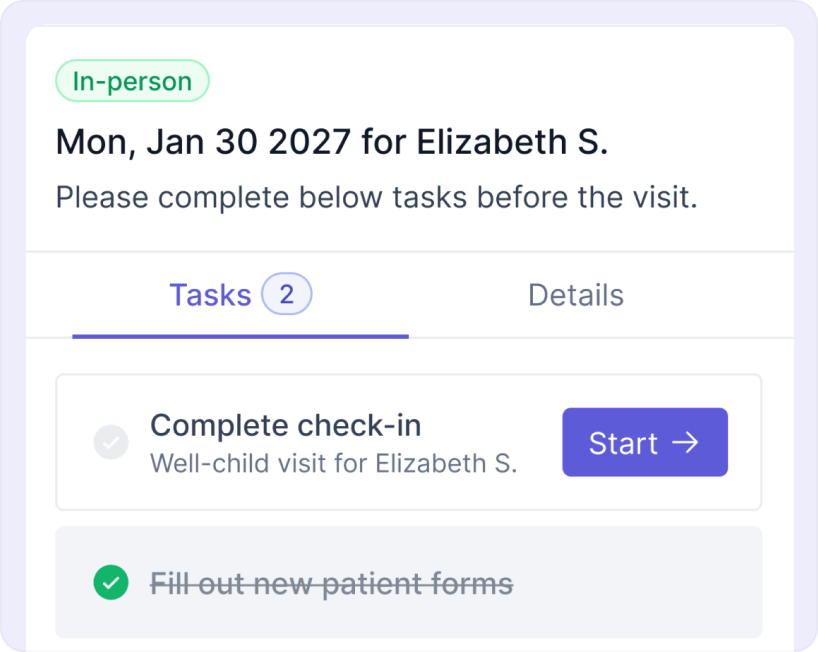
Send a text link when the visit is booked, so caregivers can update demographics and insurance, and complete age-based screeners at home. A digital patient intake setup and a tighter registration process let the front desk confirm details instead of collecting them. For visits with vaccines due, send the Vaccine Information Statements along with the intake link so parents can read them at home instead of in the exam room. CDC accepts electronic delivery before the visit, as long as the statement isn't sent months ahead.
7. Text Families When You're Running Behind
Delays will still happen, and families take them better when they know about them early. Set a trigger, like "15 minutes behind," and text every family who's either waiting or likely to be on their way.
At Stony Brook Primary Care, an academic internal medicine practice on Long Island, a waiting room concierge tells patients the cause of any delay past 15 minutes and offers to reschedule past 30. The share of top scores for communication about delays and office wait time rose from 60% to almost 90%.
A text with a new estimated time also lets a parent wait in the car with a sick child.
8. Keep the Provider's Next Patient Ready
Rooming a family doesn't end their wait, so plan the time between rooming and the provider as carefully as check-in.
Staff the start of each session. When the family medicine clinic scheduled medical assistants to be ready to room patients as each session began, and front-office staff tightened their own steps, average visit time fell from 74 to 67 minutes within a month.
Give each provider two or three exam rooms. This way, staff can room the next patient and finish the last family's vaccines or forms while the provider is in the third room, Sinsky writes.
A short huddle before each session can flag visits with shots due or extra concerns, so the team preps those rooms ahead of time.
9. Book the Next Visit Before Checkout
A line at the checkout desk adds a final wait, so close out the visit while the family is still in the exam room. Schedule the next well child visit using the AAP periodicity schedule, send referrals, and hand over forms before the family leaves.
Open your schedule 13 to 15 months ahead, as Sinsky recommends, so next year's checkup can be booked before this year's visit ends.
Skipping the front desk without a plan creates a different problem. At the family medicine clinic, patients who walked out without stopping at checkout missed follow-up scheduling and specialty referrals. A text-to-pay link or a card on file can take payment out of the line.
Patient Wait Time Benchmarks to Track
You can track patient wait times with four numbers built from EMR timestamps and your scheduling data. Most have no national standard, so treat the reference points below as context, and set targets from your own baseline.
Agree on your definitions before you compare numbers. Decide whether the clock starts at arrival or at the scheduled visit time, and how to count families who arrive very early.
Ask your EMR vendor for a provider-entry timestamp if your system doesn't record one. That single stamp separates the time a family sits in the exam room from the time the provider spends with them.
How Do Pediatric Clinics Reduce Wait Times?
Pediatric clinics reduce wait times with the same scheduling and check-in fixes as other practices. But they also plan around two very different kinds of visits: long, predictable well child visits and short, unplanned sick visits.
For Same-Day Sick Visits
- Size blocks by season: Use last year's weekly sick visit counts to set held slots for respiratory season and other predictable surges.
- Protect the blocks: Keep routine bookings out of held slots. Our pediatric office workflow guide suggests holding two to three same-day slots per provider per session.
- Plan for sick-and-well splits: When a parent mentions a new problem while booking a well child visit, extend the slot at booking.
For Well Child Visits
- Review the chart the day before: Confirm which vaccines are due, whether each dose comes from the Vaccines for Children program or private stock, and which screeners are still incomplete.
- Register newborns early: A newborn's first visit often comes before the plan has issued the baby's member ID, so check coverage ahead of time and ask the insurer how it handles temporary IDs and claims filed before the ID arrives.
- Book siblings back to back: One arrival and one check-in for the family takes less front-desk time than two separate trips.
For the minutes families still spend waiting, these pediatric waiting room ideas cover age-based play zones, sick and well separation, and sensory-friendly spaces.
Reduce Patient Wait Times With Develo
Shorter waits depend on the right information reaching staff before the family does. When intake answers, screener results, and the next booking are already in the system, no one has to chase them while a family waits.
Develo is the AI-native operating system for pediatrics, unifying charting, billing, practice management, and family engagement for independent pediatric practices of every size. Built for outpatient pediatric care, it keeps intake, scheduling, charting, and payment data in one system.
The platform's features that help cut waits at each stage of the visit include:
- Digital intake, with no app or login: Caregivers update demographics and insurance, and sign forms on their phones before the visit, so your front desk has less data to enter. Families who'd rather not use a phone can check in on a tablet kiosk in the waiting room.
- Self-scheduling, set up visit by visit: The practice decides which visits families can book online, down to specific visit types such as different kinds of allergy visits, plus which providers, days, and times offer each one and how long each visit runs, so slot lengths match how long visits actually take. Membership practices can offer select visits only to members or give members longer visits, and certain slots can be opened only for same-day or next-day sick visits.
- Telehealth visits: A dedicated telemedicine visit type sends families the video link ahead of time, and visit reminders make clear whether it's a telemedicine or telephone visit.
- Age-based screeners: Screeners go out based on each child's age, and results arrive in the chart already scored, so medical assistants can review them before rooming. An abnormal or critical result creates a screening task for the pediatrician, as early as ten days before the visit when the family completes it digitally.
- Pediatric visit templates: Well child and sick visit templates come preloaded with the orders, diagnoses, and billing codes each visit type typically needs.
- Develo AI scribe: The scribe drafts the visit note inside the chart (using the conversation plus pertinent chart data) and a clinician approves every section. An intake mode lets nurses and assistants use it during rooming, too. The scribe is priced separately.
- Task queues: Well child recalls and family reschedule requests land in scheduling queues, while lab results route to the right person for review and Develo doc intel auto-tags incoming e-faxes for single-click filing into the chart.
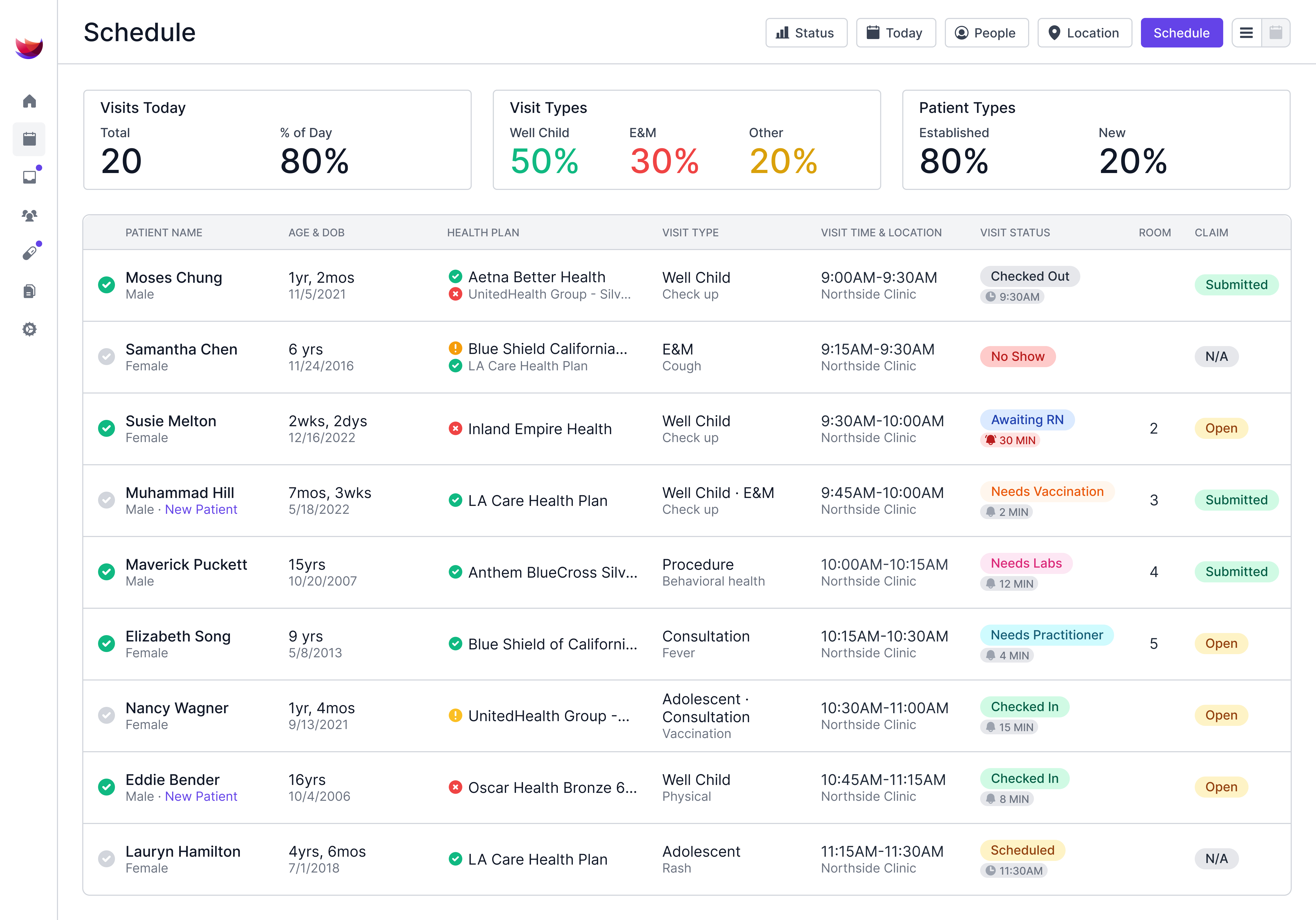
- Develo reports Q&A: Check-in, rooming, provider entry, and checkout are all time-stamped, so you can ask in plain English for door-to-room or total visit time by visit type and get answers from real-time data.
- Family outreach: Automated visit reminders reach both patients and caregivers, recall campaigns remind families to book the well child visits each child is due for, and families can message the practice and view records for every child in one family portal.
- Family payments: Automatic text reminders include payment links, and real-time balances show every sibling's charges in one view.
With fewer manual steps between stages, your team can spend more of each visit with families.
Book a demo to see how Develo can help reduce patient wait times at your practice, from the first intake text to the next well child visit.
Frequently Asked Questions
Which Scheduling Approach Is Best at Reducing Patient Waiting Times?
Wave scheduling combined with protected same-day slots is the most practical approach for many pediatric clinics, though no single method fits every practice. The wave lets a provider absorb a late arrival inside the hour, and the protected slots give sick children a place to land without bumping booked families.
What's a Good Patient Wait Time at a Doctor's Office?
A good patient wait time at a doctor's office is 30 minutes or less, the federal cap on nonemergency office waits for TRICARE network providers, though no national standard applies to every practice. Christine Sinsky, MD, recommends a stricter in-house target: seeing most patients within 20 minutes of their visit time.
How Do You Measure Patient Wait Time?
You measure patient wait time by comparing EMR timestamps from check-in to checkout, including stamps at rooming and provider entry.
Does Telehealth Reduce Patient Wait Times?
Yes, telehealth can cut how long a family waits for care, especially when a visit doesn't need a physical exam. Its effect on lobby time is indirect: each video visit frees an in-person slot for a child who needs one.