
.jpeg)
Empty exam rooms cost pediatric practices more than money. Missed visits delay catch-up shots, push back well child schedules, and force your front-desk team to chase families instead of welcoming them.
The good news is that you can reduce no-shows at pediatric clinic visits with the right systems in place.
Why Do No-Shows Hit Pediatric Clinics Harder Than Most?
Pediatric clinics run on family schedules rather than a single patient’s schedule. A toddler's checkup depends on a parent's work shift, a sibling's nap, or a babysitter showing up. When any one of those falls through, the whole visit does too.
Pediatrics is also a volume game. A handful of no-shows in one morning can throw off the rest of the schedule and push catch-up vaccines into next month.
What Causes No-Shows at Pediatric Clinics?
Most no-shows fall into three buckets: forgetfulness, friction, and finances.
Common no-show triggers include:
- Parents forgetting the appointment after weeks on the calendar
- Sibling illness or last-minute caregiver conflicts
- Confusion about copays, balances, or insurance status
- Reminder messages going to outdated phone numbers
- No simple way to reschedule from a phone
- Long check-in lines or lost paperwork on prior visits
Once you can identify which bucket each missed visit falls into, you can build a fix that targets the root cause.
10 Best Practices to Reduce Pediatric No-Shows
These practices come straight from how high-performing pediatric clinics keep schedules full and families on track. Let’s zoom in on them:
1. Send Automated Text Reminders at Multiple Touchpoints
A single reminder isn't enough. Most families need at least two reminders: One a few days out, and one the morning of the appointment.
One study found that increasing the number of text message reminders from 1 to 2 reduced the risk of no-showing for primary care visits by 7%.
Automated reminders lower no-show rates without adding more work for your staff. A randomized controlled trial found that the no-show rate was significantly lower with text reminders (23.5%) than without (38.1%), a difference of 14.6%.
Effective reminder cadence looks like this:
- Confirmation text right after booking
- Reminder 5 to 7 days before the visit
- Final reminder 24 hours before
- Optional same-morning ping for early appointments
Automated visit confirmation, reminder, and cancellation texts should run without staff lifting a finger. If your front desk is still calling families one by one, your software is the bottleneck.
2. Make Confirming or Rescheduling One Tap Away
Reminders only work if they make action easier. Families should be able to confirm, cancel, or reschedule directly from the text, rather than calling back during business hours.
The harder you make it to reschedule, the more no-shows you'll see. Busy parents will choose silence over a five-minute hold every single time.
3. Offer Self-Scheduling Through a Family Portal
A modern family portal lets parents book, move, or cancel visits on their phones at 10 PM after the kids are down.
Self-scheduling does three things at once: It frees up your front desk, captures appointments outside business hours, and gives families control.
All three help you reduce no-shows at pediatric clinic visits without adding workload.
4. Schedule the Next Well Child Visit Before Families Leave
Don't let families walk out without their next appointment scheduled. The AAP publishes a defined schedule of well-child visits from newborn through adolescence, and following this schedule helps families stay on track with preventive care.
Build this into your check-out workflow:
- Print or text the next visit date before payment
- Add automated reminders tied to that booking
- Capture updated growth charts and notes for continuity
- Flag any patient whose next visit isn't scheduled
This single habit closes care gaps and protects your future schedule.
5. Use a Same-Day Waitlist
When a family cancels, your slot doesn't have to stay empty. A digital waitlist can text other families with sick visit needs and offer the open spot on a first-come, first-served basis.
This works especially well for pediatric clinics with high demand for same-day or next-day sick visits. You fill the gap, the family gets seen sooner, and revenue stays intact.
6. Send Payment Reminders That Don't Block Care
Outstanding balances are a quiet driver of no-shows. Some parents skip the visit rather than face an awkward conversation at check-in.
Payment reminders should:
- Go out automatically with a clear payment link
- Allow caregivers to pay for multiple children at once
- Offer plans or partial payments where appropriate
- Connect to your billing workflow so balances stay current
7. Verify Insurance Before the Visit
Insurance surprises ruin appointments. A family arrives, learns their plan has changed, and either reschedules on the spot or walks out frustrated.
Real-time eligibility checks on insurance status before the visit catch these issues early. Your team can call the family, sort it out, and keep the appointment intact.
8. Track No-Show Patterns and Personalize Outreach
Not every family no-shows for the same reason. A repeat offender might need a phone call, while a one-time miss might call for a friendly text.
Look at your data by patient, by provider, and by appointment type. You'll spot trends like specific age groups, certain times of day, or even days of the week.
Then tailor your outreach. Personalized follow-up is also a quiet form of pediatric marketing that builds long-term family loyalty.
9. Cut Same-Day Friction With Digital Intake
Long check-in waits leave families with time to second-guess the whole visit. Digital pre-visit intake allows families to fill out forms, update demographics, and complete developmental screening tools on their phones before they arrive.
Less time at the front desk means more time with the provider and fewer parents leaving before being seen.
10. Train Staff to Catch Soft Cancellations Early
Sometimes a parent calls "just to ask" if Tuesday's visit can move to next week. That's a soft cancellation rather than an opportunity.
A trained front desk turns those calls into reschedules in the same conversation, rather than saying "we'll call you back," which often results in a no-show.
Pair this with a calm, family-friendly waiting room atmosphere from arrival through checkout. Small experience details add up to repeat visits.
How Does the Right Software Help You Reduce No-Shows?
Most of these best practices fall apart without the right software stack. You can't run multi-touchpoint reminders, self-scheduling, real-time eligibility, and personalized outreach by hand across a busy pediatric schedule.
What pediatric clinics need is a seamless, single-experience product that handles scheduling, intake, family communication, billing, and clinical work in one place. Bolt-on tools create gaps, and those gaps lead to higher no-show rates.
A purpose-built pediatrics operating system also understands family structures, sibling appointments, and specific communication preferences. That nuance matters when you're trying to reach the right caregiver at the right time.
Even small wins, like trimming intake friction or sharpening billing follow-up, compound over a year of visits.
Cut No-Shows With Develo
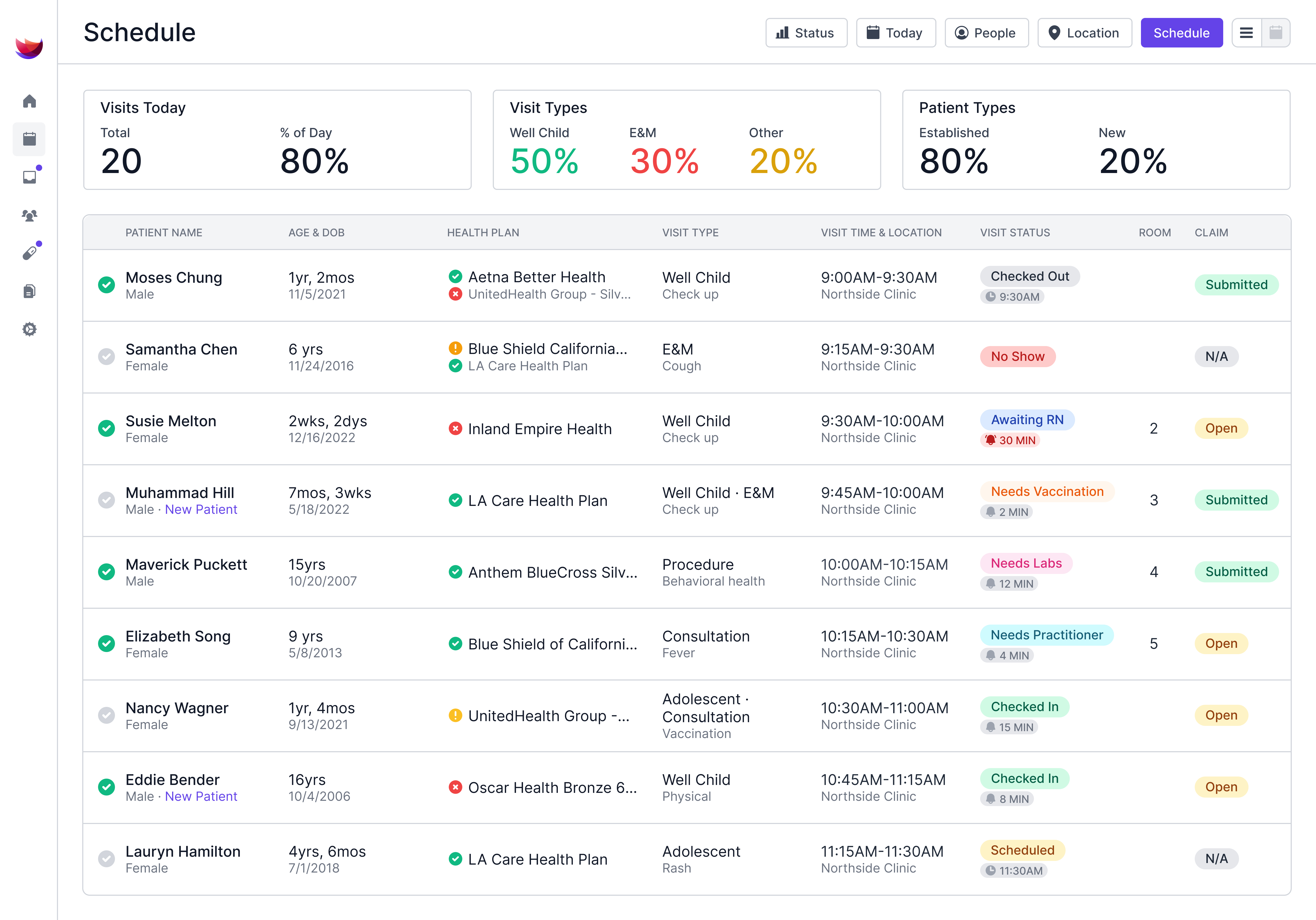
Develo is an AI-native operating system for pediatrics that unifies clinical (EMR), billing (RCM), and family engagement (CRM). Foundational capabilities include an embedded AI scribe, automated charge capture, AI reporting, and AI chart intelligence.
It was built from day one for outpatient pediatric care, replacing decades-old legacy EMR systems and their patchwork of reminder tools, intake apps, and portals that slow your team down.
Here's what Develo helps you do to reduce no-shows at pediatric clinic visits:
- Automated family communication: Send visit confirmation, reminder, and cancellation texts without manual staff effort, and full patient context.
- Family portal access: Caregivers self-schedule, message your team, and pay balances for multiple children from one login.
- Pre-visit eligibility checks: Catch insurance issues early to prevent families from being turned away at check-in.
- Built-in well child follow-up: Pre-schedule the next visit at checkout or schedule down the line with patient recall, all tied to AAP-recommended cadences.
- Automated charge capture: Keep revenue moving even when schedules shift, leveraging AI-driven charge capture with pre-submission checks built in.
- Pediatric-first solutions: Workflows match how pediatricians actually work, from immunizations to developmental screening.
You don't need five different vendors to keep your schedule full. Book a free demo to see how Develo helps your pediatric clinic reduce no-shows without adding work for your team.
Frequently Asked Questions
1. What Is the Average No-Show Rate at a Pediatric Clinic?
No-show rates vary widely by clinic, region, and patient mix. Most pediatric practices land somewhere in the high single digits up to around 30%. Tracking your own baseline by provider and visit type is more useful than chasing a national average.
2. Do Text Reminders Actually Reduce No-Shows at Pediatric Clinic Visits?
Yes. Automated text reminders are among the most reliable tools for reducing no-shows because they meet families where they already are: on their phones. Multi-touchpoint reminders (booking, week-out, day-before) outperform a single message every time.
3. Should a Pediatric Clinic Charge a No-Show Fee?
It depends on your patient population and policies. Some clinics use no-show fees to set expectations.
Others find the fees damage family relationships and create awkward billing conversations. Most pediatric practices see better long-term results from prevention systems than penalty fees.
4. How Do You Reduce No-Shows for Well Child Visits Specifically?
You can reduce no-shows for well child visits by scheduling the next visit at checkout, building automated reminders tied to that booking, and following AAP-recommended cadences. Families are far more likely to show up when the next visit is already on their calendar before they walk out the door.
5. How Far in Advance Should You Send Appointment Reminders?
Use a layered approach, where you send a confirmation at booking, a reminder 5 to 7 days out, and a final reminder 24 hours before the visit. A same-morning reminder also helps for early appointments. One message rarely catches busy parents.
.png)