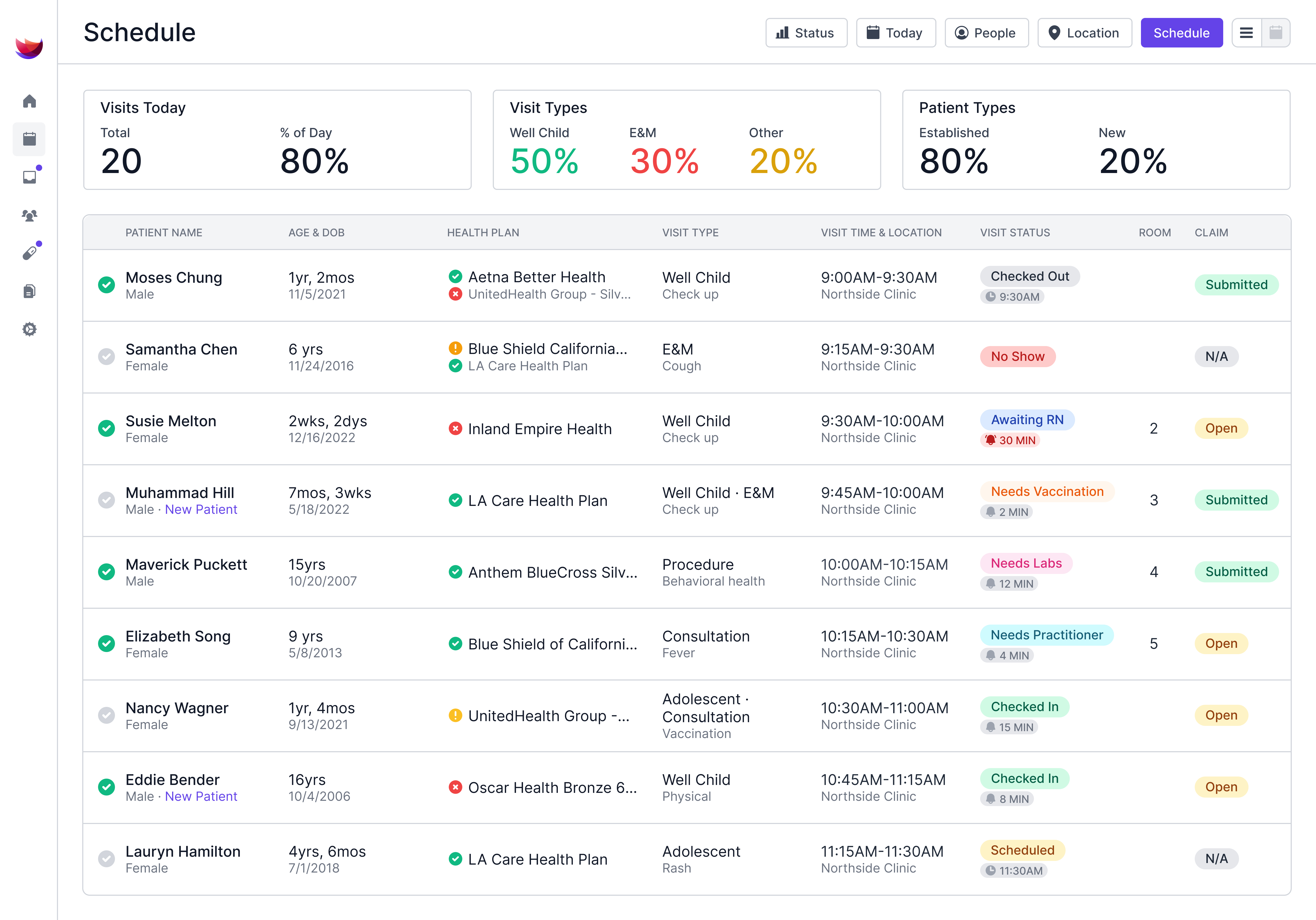
.avif)
The strongest Phreesia alternatives for pediatric clinics in 2026 are Develo, Yosi Health, and Klara. Each one tackles digital intake differently, and one of them eliminates the need for a separate intake vendor entirely.
Below, you'll find what every option does well, where it falls short, and which type of pediatric practice it actually fits.
7 Best Phreesia Alternatives at a Glance
Pricing pulled from each vendor's official site as of September 2026. Verify directly before buying.
Why Look for Phreesia Alternatives?
Phreesia helped popularize digital patient intake. The platform handles forms, payments, and kiosks well across general healthcare.
But pediatric practices have specific needs Phreesia wasn't designed around. A few friction points keep showing up when peds clinics review their stack.
- Cost stacks up quickly: Phreesia reports payment revenue as its own line, separate from subscription. In the quarter ended July 31, 2026, payment solutions brought in $38.5M against $52.7M in subscription and related services — payments growing while subscription revenue shrinks. For a practice running 30+ visits per provider per day, payments are the line that scales with you. The same budget buys an EMR, billing automation, or staff.
- Pediatric workflows feel bolted on: Sibling visits, family-level data, and AAP-aligned developmental screeners aren't core. Tools like CRAFFT for adolescents may need a separate vendor or custom forms.
- Integration gaps with pediatric platforms: Sync issues with legacy EMRs like Office Practicum and Greenway Health mean staff often re-key data or chase missing fields at check-in.
- Another vendor to manage: Intake living outside your EMR doubles up on logins, support tickets, and quarterly invoices. The vendor fatigue compounds when you're also paying for a portal, a screener tool, and a billing service.
If any of those sound familiar, you have good reasons to compare Phreesia alternatives. The right swap depends on whether you want a better intake tool or a system that replaces intake software altogether.
TL;DR: Which Phreesia Alternative Should You Choose?
Choose Develo if you run a pediatric practice and want intake, family portal, scheduling, billing, and clinical workflows on one platform. Not a fit if you're set on keeping your current EMR.
Choose Yosi Health if you want modern, mobile-first intake without switching EMRs.
Choose Klara if secure family messaging matters as much as digital forms.
Choose IntakeQ if you're a solo or 1 to 2 provider clinic keeping costs tight.
Choose NexHealth if scheduling is the bigger problem and intake is secondary.
Choose Clearwave if you need physical kiosks for a high-volume waiting room.
Choose Mend if you're a behavioral or mental health practice running heavy telehealth volume.
Stick with Phreesia if you're multi-specialty, staff are already trained, and pediatric-specific workflows aren't your priority.
The 7 Best Phreesia Alternatives
1. Develo
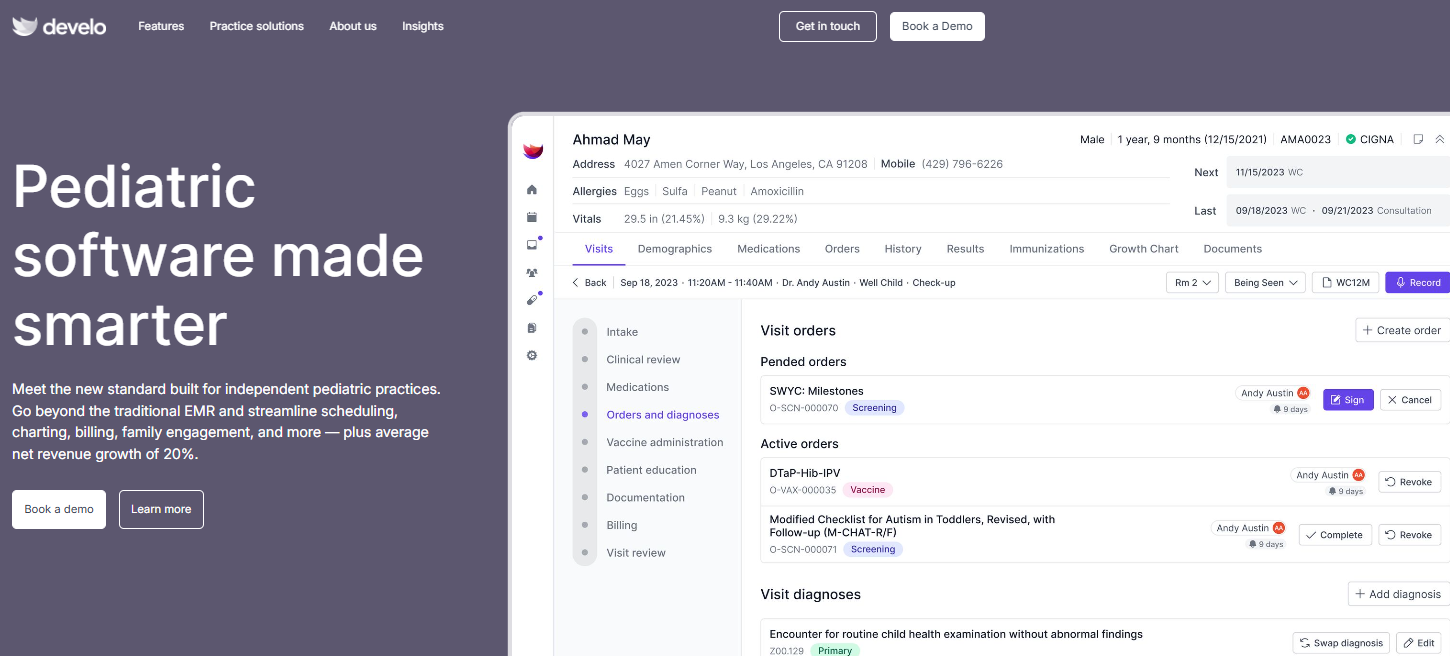
Develo is the AI-native pediatric operating system built solely for independent pediatric practices, with digital intake, family portal, and automated charge capture native to the same system that runs charting, billing, and practice management.
Caregivers can complete pre-visit forms, screeners, and payments from any browser. Front-desk staff stop chasing missing info because Develo flags exactly which demographic, insurance, or guarantor fields need re-validation at check-in.
Key Features
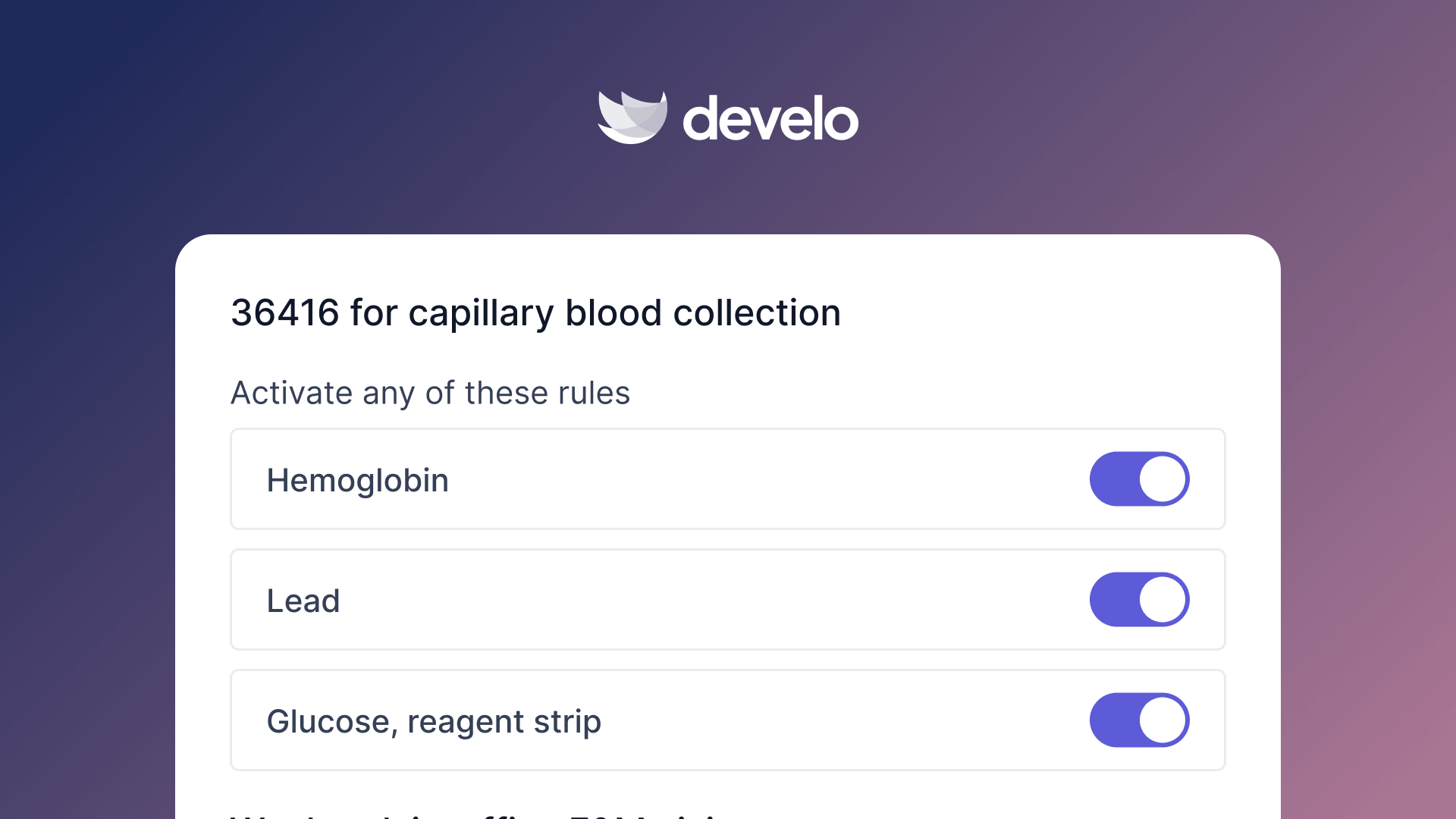
- Pre-visit digital intake: Caregivers complete forms, screeners, and consents before they walk in, so the front desk isn't data-entering at check-in.
- Family portal: Each caregiver gets individualized access to messaging, payments, growth charts, immunization records, and after-visit summaries.
- Automated charge capture: Visit context drives the right billing codes, which means fewer denials, better reimbursements, and less manual superbill work.
- A suite of AI, not one scribe: Develo provider scribe writes straight into the note using visit context beyond the transcript; Develo intake scribe brings the same multilingual, context-backed experience to visit intake, built for nurses and medical assistants; Develo AI forms turns any practice or patient form into a live digital form without a build project.
- AAP-aligned screening workflows: Built-in pediatric screeners follow AAP Bright Futures recommendations (e.g., EPDS for postpartum depression at well child visits).
- End-to-end pediatric solutions: Scheduling, check-in, billing, claims, payments, e-fax, e-prescribe, and labs all in one system.
Pros
- ✅ Comprehensive pricing covers intake, charting, billing, practice management, and the family portal, with implementation, training, upgrades, and support bundled in
- ✅ A suite of AI built in, not one bolted-on scribe — provider scribe, intake scribe, reports Q&A, document intelligence, and form digitization
- ✅ Modern, FHIR-native architecture with real bi-directional integrations
- ✅ Designed for the family-centered structure of pediatric care
Cons
- ❌ Requires switching EMRs, which is a bigger lift than a standalone intake swap
- ❌ Built specifically for pediatrics, so not a fit for multi-specialty groups
Best For
- Pediatric practices replacing Phreesia plus a legacy EMR with one product
- Practices wanting to consolidate vendors and stop paying for piecemeal tools
- Growing peds groups that need intake, billing, and clinical workflows in one system
Pricing
Comprehensive pricing with a flat per-provider model. Custom quote: book a demo for specifics.
2. Yosi Health

Yosi Health is a mobile-first patient intake platform that pediatric practices use to digitize forms, payments, and check-in without changing their EMR.
It's a clean Phreesia alternative for clinics that want a modern interface and faster setup, but plan to keep their current EMR for now. Yosi handles pre-visit forms, eligibility checks, and copay collection.
Key Features
- Mobile-first intake: Families complete forms on their phones before arrival, cutting waiting room paperwork.
- Real-time eligibility checks: Insurance verification runs automatically so staff aren't on hold with payers.
- Custom forms builder: Build the screeners and consents you need without dev work.
Pros
- ✅ Strong mobile UX
- ✅ Fast implementation compared to enterprise platforms
- ✅ Named customer case studies published on the official site
Cons
- ❌ No integrated EMR: pediatric clinics still need a separate pediatric-specific charting system
- ❌ Sibling and family-level workflows take customization
- ❌ Still adds another vendor on top of your EMR
Best For
- Multi-specialty groups that include pediatrics
- Practices that want better intake without switching EMRs
- Clinics replacing paper forms quickly
Pricing
Yosi Health doesn't publish pricing publicly. Practices request a custom quote through the Yosi Health contact page.
3. Klara (ModMed Patient Engagement)
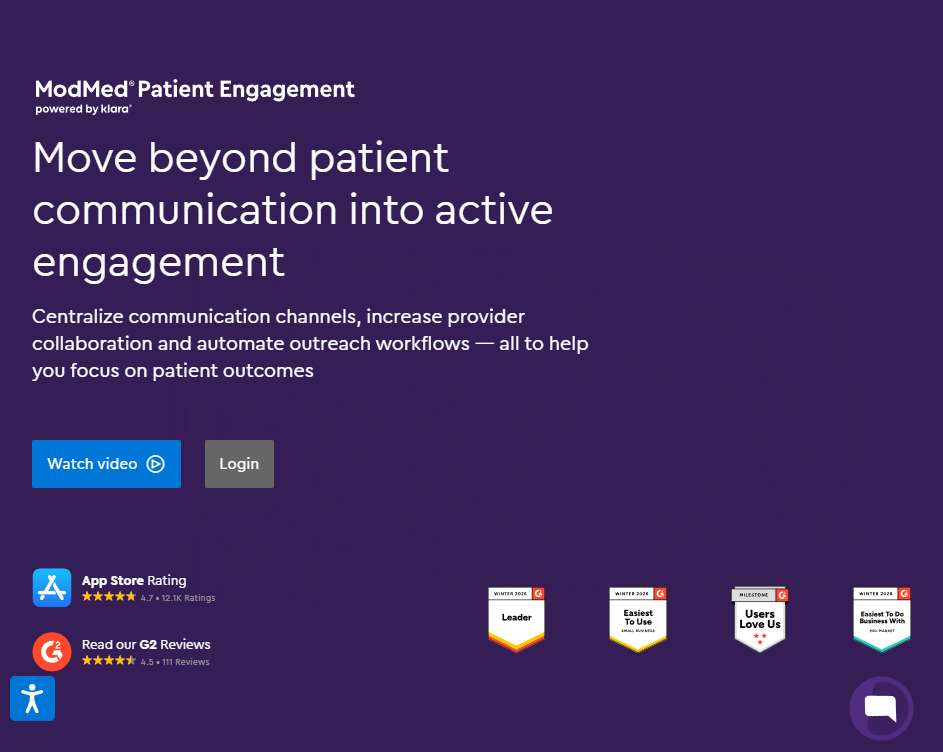
Klara combines secure family messaging with digital intake. Klara is a general patient engagement tool built for specialty practices (derm, ortho, ophthalmology, GI, OBGYN), not pediatrics specifically, but some pediatric clinics adopt it when caregiver phone tag is the bigger problem to solve than pediatric-specific workflows.
It's not as deep on forms as Phreesia, but the messaging-first approach helps reduce inbound calls. That's a real win when your front desk is also juggling sick visits and walk-ins.
Key Features
- Two-way secure messaging: Caregivers text the practice; staff reply from a unified inbox.
- Automated outreach: Visit reminders, recall messages, and follow-ups go out without manual work.
- Digital intake forms: Pre-visit forms tied to visits.
- Telemedicine: Video visits launch from the same thread.
Pros
- ✅ Caregivers actually respond to texts (vs. portal logins)
- ✅ Integrates with most major EMRs
Cons
- ❌ Forms engine is lighter than Phreesia or Yosi
- ❌ Not built for pediatrics — no native developmental screeners, well-visit workflows, or growth chart support
- ❌ Now operates as ModMed Patient Engagement, which limits independent product roadmap visibility
Best For
- Practices where caregiver phone volume is the biggest bottleneck
- Clinics that want messaging and intake bundled together
- Practices already happy with their EMR and willing to layer a non-pediatric tool on top
Pricing
Klara doesn't publish pricing publicly. Practices request a custom quote through the Klara website.
4. IntakeQ
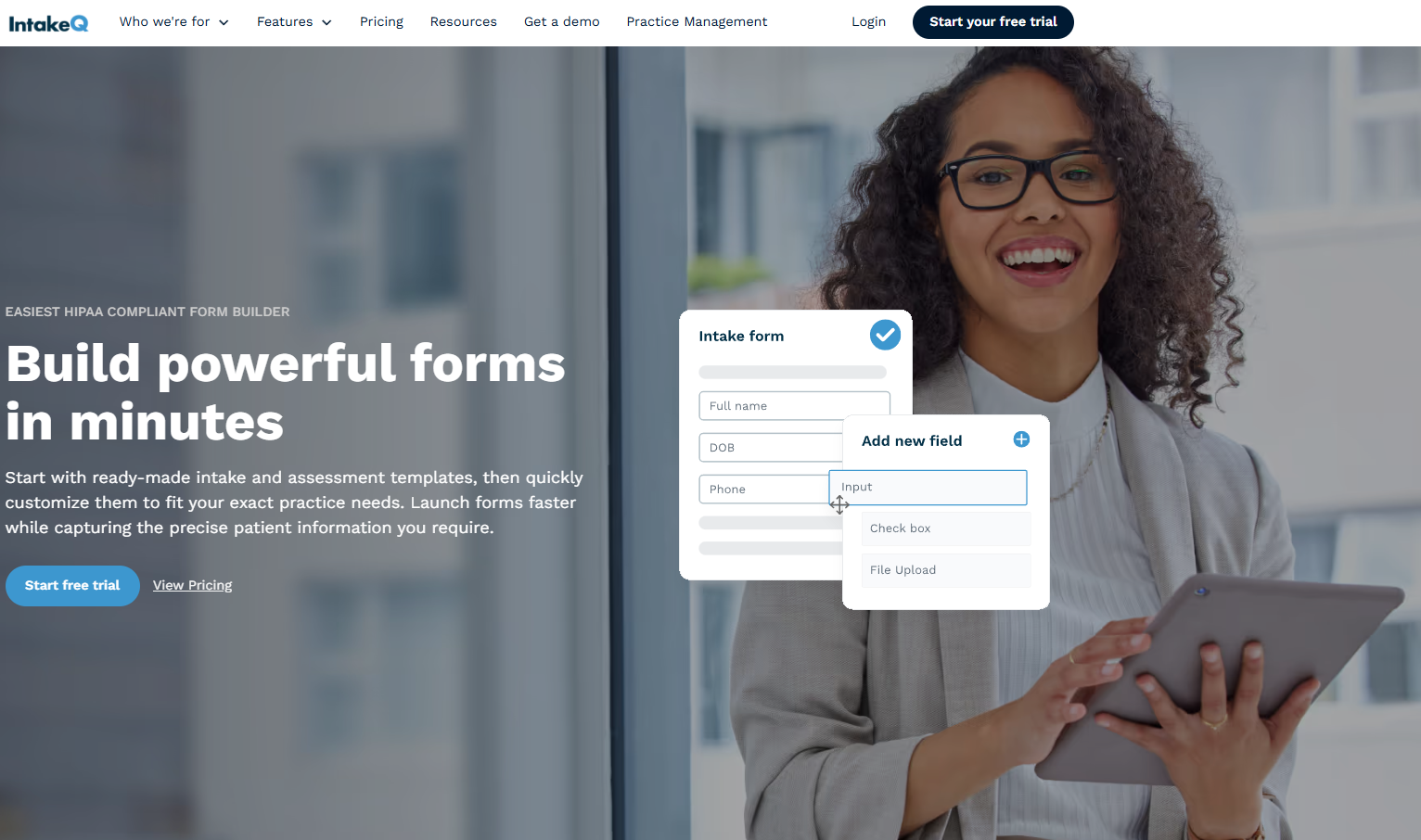
IntakeQ is the budget-friendly Phreesia alternative, used by solo pediatricians and 1 to 2 provider clinics that want clean digital forms without enterprise overhead. It's straightforward: build forms, send links, collect responses.
Key Features
- Drag-and-drop form builder: Create custom intake forms, screeners, and consents.
- Online booking: Caregivers self-schedule from a public booking page.
- Secure messaging: HIPAA-compliant communication built in.
- PracticeQ option: Add scheduling, billing, and notes for full practice management.
Pros
- ✅ Public, transparent pricing on their site
- ✅ Flexible forms for any specialty
Cons
- ❌ Not designed around pediatric workflows
- ❌ Limited automation compared to Phreesia
- ❌ Reporting is basic
Best For
- Solo pediatricians and very small practices
- Clinics replacing paper forms on a tight budget
- Practices that want to test digital intake before bigger investment
Pricing
Per IntakeQ's official pricing page: Forms Only at $54.90/month (plus $20/month per additional practitioner) and Practice Management at $84.90/month (plus $30/month per additional practitioner).
5. NexHealth
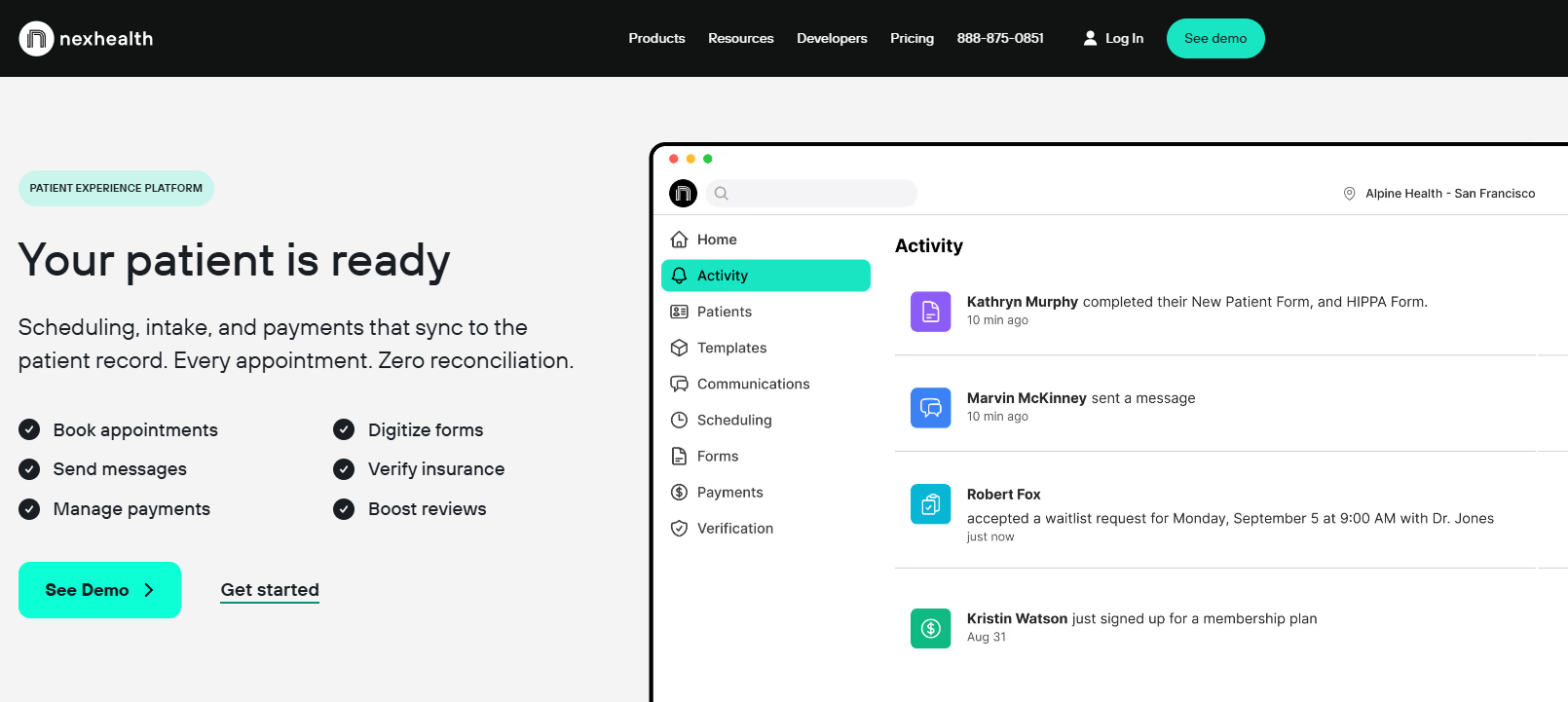
NexHealth is a patient experience platform where scheduling, intake, and payments live together in one workflow. Pediatric clinics pick NexHealth when self-scheduling is the bigger pain than forms.
The platform syncs with your EMR and turns your website into a real booking funnel. Intake forms attach to visits automatically.
Key Features
- Online self-scheduling: Real-time booking from your website or Google search results.
- Digital intake forms: Forms tied to visit types.
- Automated reminders: Text and email reminders reduce no-shows.
- Two-way EMR sync: Updates flow back to your EMR without manual posting.
Pros
- ✅ Strong scheduling experience for caregivers
- ✅ Reduces phone-booking volume
- ✅ Wide EMR integration list
Cons
- ❌ Intake is solid but not the deepest piece of the platform
- ❌ Pricing requires a sales conversation
- ❌ Less pediatric specialization than purpose-built tools
Best For
- Practices losing patients to scheduling friction
- Multi-location groups consolidating booking and intake
- Clinics with a strong website and digital marketing focus
Pricing
NexHealth offers custom monthly and annual plans. Pricing is quoted directly on the NexHealth pricing page.
6. Clearwave
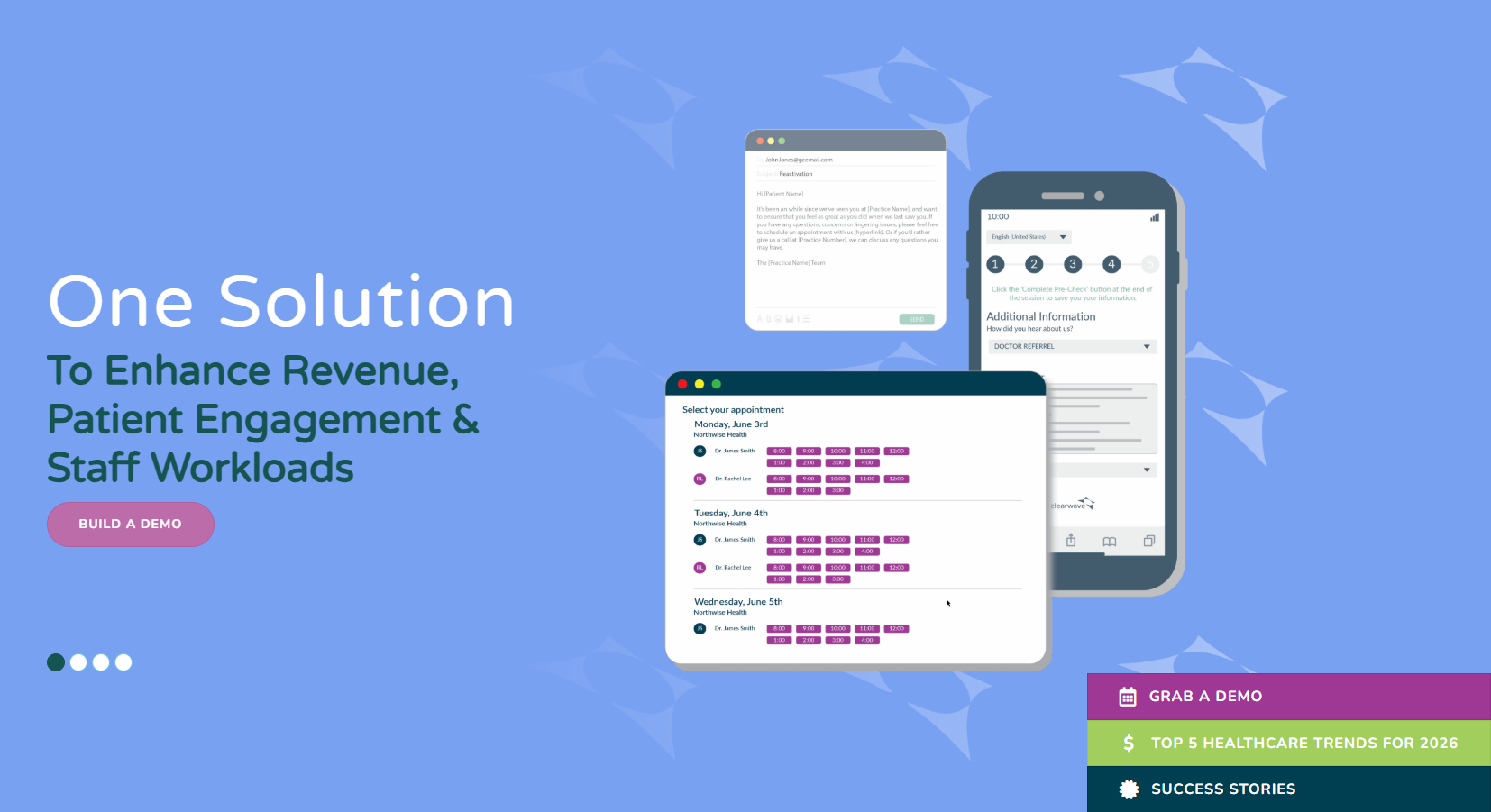
Clearwave is the kiosk-and-self-service Phreesia alternative for high-volume practices. Clearwave is built for specialty practices and health systems (ophthalmology, ortho, oncology, FQHCs) rather than pediatrics, but the kiosk model can work for large pediatric groups that want a physical check-in experience instead of mobile-only.
Key Features
- Physical and digital kiosks: Self-service check-in at the front desk.
- Eligibility verification: Real-time insurance checks built in.
- Patient self-service portal: Caregivers update info, pay balances, and confirm visits.
- Reporting and analytics: Practice-level dashboards on intake performance.
Pros
- ✅ Built for high-volume practices
- ✅ Strong eligibility verification engine
- ✅ Reduces front-desk staffing pressure
Cons
- ❌ Implementation is heavier than mobile-first tools
- ❌ Not pediatric-specific
- ❌ Pricing requires a sales conversation
Best For
- Large, high-volume pediatric or multi-specialty groups
- Practices that want a kiosk experience, not just mobile
- Clinics where eligibility verification is a chronic problem
Pricing
Clearwave doesn't publish pricing publicly. Practices request a custom quote through the Clearwave demo.
7. Mend
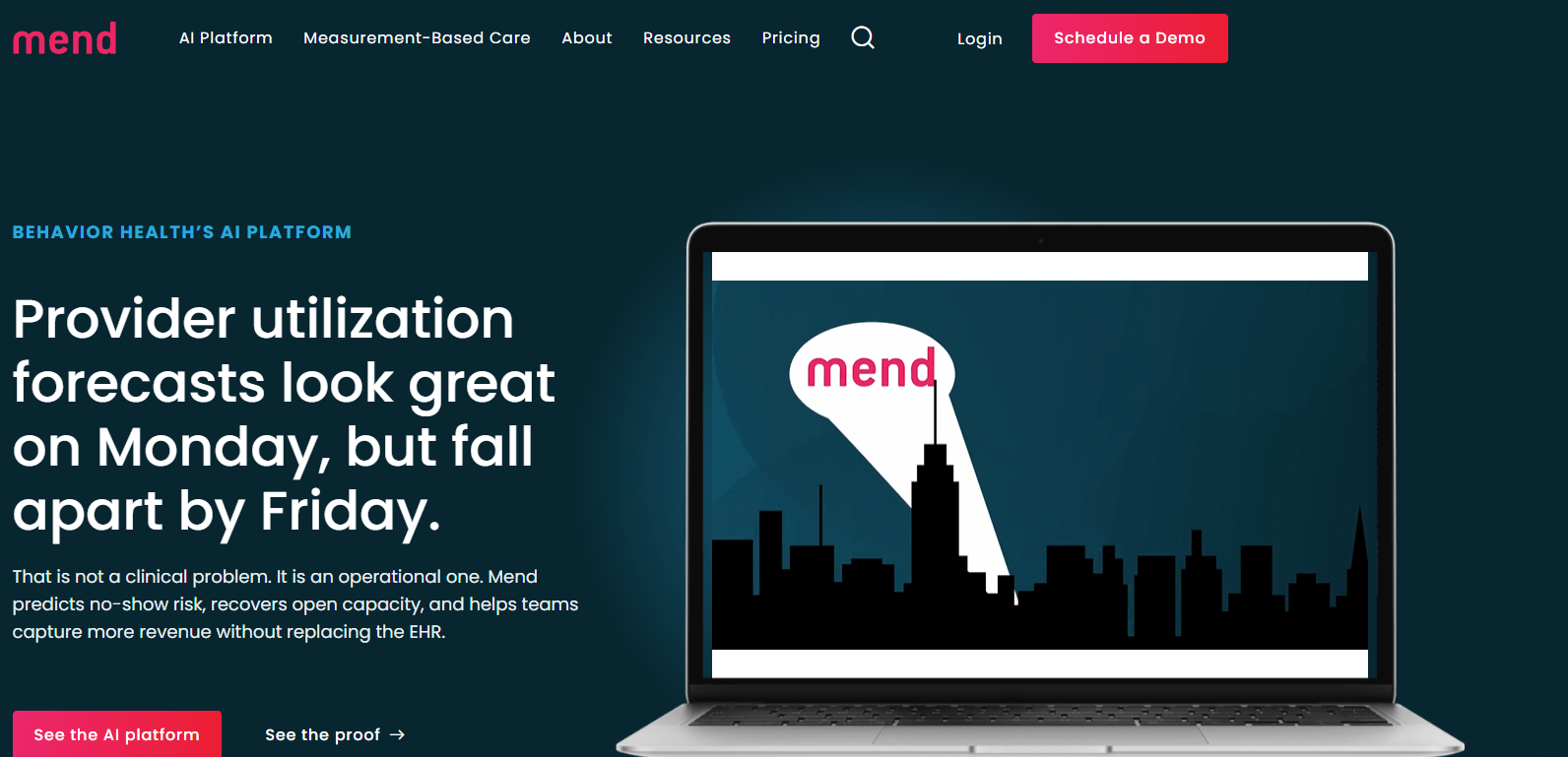
Mend is a telehealth-first patient engagement platform with digital intake bundled in. Mend now focuses specifically on mental and behavioral health organizations, which makes it a strong fit for pediatric behavioral health practices but a weaker match for general pediatrics.
Forms and screeners attach to visits. Video visits launch from the same link the caregiver used to fill out paperwork.
Key Features
- Telehealth platform: HIPAA-compliant video visits with no app download.
- Digital intake forms: Tied to visit types.
- Automated reminders: Text, email, and voice reminders to cut no-shows.
- No-show prediction: Attendance Predictor uses AI to flag visits most likely to be missed.
Pros
- ✅ Solid telehealth experience for caregivers
- ✅ Combines virtual and in-person workflows
- ✅ Strong reminder automation
Cons
- ❌ Now focused on mental and behavioral health, not general pediatrics
- ❌ Intake isn't as deep as Phreesia
- ❌ Less ideal for in-person-heavy practices
Best For
- Pediatric behavioral and mental health practices
- Telepsychiatry and developmental specialty clinics
- Multi-modal practices balancing video and in-person care
Pricing
Mend uses tailored pricing per organization. Practices request a custom quote through the Mend pricing page.
How to Evaluate Phreesia Alternatives
Patient intake software looks similar on a feature-checklist sheet. The real differences show up in workflows and integration depth. Use these criteria to make a decision that holds up after the demo:
- Pediatric workflow fit: General intake tools collect names, dates, and insurance. Pediatric clinics also handle siblings, multiple guardians, blended families, and adolescent confidentiality.
- EMR integration depth: Two-way sync matters more than checkbox-level "integration." Ask whether intake data writes back into discrete fields in your EMR or just shows up as a PDF. The first saves hours; the second creates more work.
- Total cost of ownership: Look beyond the monthly fee. Add transaction charges, payment processing markups, kiosk hardware, and implementation costs. The cheap-looking option often isn't, especially as visit volume grows.
- Pediatric clinical screening: Developmental screeners, EPDS, behavioral health intake, and adolescent confidential surveys are core to pediatric care. Confirm what's included natively versus what requires a separate vendor like CHADIS.
- Implementation and support: White-glove onboarding versus self-serve setup is a big swing in week-one experience. Ask for the implementation timeline in writing and check whether support is U.S.-based.
- Family experience: Caregivers don't tolerate clunky portals. Get families through intake on a phone with no app to download and no family portal login required to complete it. If it takes more than 90 seconds to complete, expect call volume to spike.
Stop Patching Together Pediatric Workflows
Phreesia is a fine intake tool for general healthcare. The reason pediatric clinics keep searching for Phreesia alternatives is that intake is only one piece of the problem.
The other pieces are billing automation, family communication, clinical screening, and EMR data accuracy. Patching together five vendors to cover all of them creates the exact friction you were trying to fix.
Modern pediatric practices are moving toward fewer tools that do more. The right Phreesia alternative depends on whether you want a better intake module bolted to your existing stack, or a single platform that makes the whole question of intake software irrelevant.
Both are valid. What matters is being honest about which problem you're actually solving.
Develo was built for independent pediatric practices that want charting, billing, practice management, and family engagement in one system designed around the way pediatrics actually works — so intake isn't a vendor you integrate but a workflow that already lives where the chart does. Here's what you can do with Develo:
- Collect pre-visit intake, screeners, and payments through a mobile-friendly family portal that caregivers can access from any browser
- Automate charge capture from visit context — codes, units, modifiers, and diagnoses set at the point of care for the provider to confirm, not a manual pass after documentation
- Run scheduling, check-in, check-out, and tasks from one screen with fewer clicks than legacy EMRs
- Send visit reminders, payment reminders, and family messages without paying for a separate engagement vendor
- Handle real pediatric family structures with adolescent confidentiality and family portal access that follows guardian and guarantor relationships across siblings
- Launch without an implementation invoice — configuration, training, data migration, and go-live support are bundled into the subscription, run by one customer success manager who stays with your practice after go-live
- Track immunizations against the AAP schedule with built-in state registry workflows
- Use age-appropriate clinical screeners like CRAFFT and EPDS, ready out of the box
- Scribe the visit and the intake with a multilingual provider scribe for pediatricians, and an intake scribe built for nurses and medical assistants
You don't need Phreesia plus an EMR plus a separate billing tool plus a portal vendor. You need one pediatric-specific platform that ties it all together. Book a free demo and see how Develo handles intake, billing, and clinical workflows in one place, without the Phreesia surcharge.
Frequently Asked Questions
1. What Is the Best Alternative to Phreesia for Pediatric Practices?
The best alternative to Phreesia for pediatric practices is Develo, because it replaces intake software and the legacy EMR underneath it with one pediatric-specific platform. For practices that want to keep their current EMR, Yosi Health and Klara are the strongest standalone intake replacements. The right choice depends on whether you're swapping a tool or rethinking your full stack.
2. How Much Does Phreesia Cost Compared to the Alternatives?
Phreesia and most of its alternatives use custom pricing models that require a sales conversation, including Yosi Health, Klara, NexHealth, Clearwave, and Mend.
The exception is IntakeQ, which publishes flat pricing on its site starting at $54.90/month for Forms Only and $84.90/month for Practice Management. For everyone else, expect to book a demo to get exact numbers tailored to your visit volume, provider count, and add-ons.
3. Can I Replace Phreesia With My EMR?
Yes, if your EMR includes native digital intake. Most general ambulatory EMRs (Athena, eClinicalWorks, NextGen) and legacy pediatric EMRs (Office Practicum, PCC) don't, which is why those practices buy Phreesia in the first place.
Pediatric-specific platforms like Develo include intake natively, so a single EMR change eliminates the need for Phreesia entirely.
4. Is Phreesia HIPAA Compliant, and Are the Alternatives?
Each vendor on this list markets itself as HIPAA compliant and offers BAAs for covered uses.
HIPAA compliance is table stakes for healthcare software in 2026, but it's still worth confirming during the procurement process and asking each vendor about breach history and security audits.

%20(1).png)


.avif)