

Elation Health was built for primary care, and pediatrics is the newest specialty on its site, listed next to specialties like internal medicine. Its billing software is sold as an add-on to the EHR or inside an EHR + Billing bundle.
Pediatric practices comparing options need to know how much of the system was designed for children and what a complete setup costs.
Develo leads the Elation Health alternatives for independent pediatric practices, including direct primary care (DPC) clinics. athenahealth suits groups that want help with billing, and eClinicalWorks fits teams that want a published monthly rate.
This overview draws on each vendor's own website, checked in November 2026, with a focus on pricing, DPC membership tools, and billing. For each pick, you'll see its strengths, its trade-offs, and the kind of practice it fits best, so you can narrow the field before sales calls and demos begin.
9 Best Elation Health Alternatives: TL;DR
For independent practices leaving Elation, these EMRs are the strongest Elation Health alternatives in 2026:
- Develo: Best for pediatric practices, whether they bill insurance or run DPC and concierge memberships.
- athenahealth: Best for insurance-based practices that want the vendor to take on part of their revenue cycle work.
- eClinicalWorks: Best for practices that want to see EMR prices before a demo.
- Tebra: Best for small practices that want EMR, billing, and telehealth bundled at a set monthly price.
- DrChrono: Best for practices that want charting and patient check-in on mobile devices.
- CareCloud: Best for practices that want outsourced billing plus AI note-taking.
- Canvas Medical: Best for value-based care teams with developers on staff.
- Praxis EMR: Best for providers who want template-free charting.
- ModMed: Best for OB/GYN or allergy groups that need a specialty EMR.
Of the nine, only Develo was built solely for pediatric care, and ModMed is the only pick without a primary care product.
Why Do Practices Look for Elation Health Alternatives?
Practices look for Elation Health alternatives when the way Elation is sold or set up stops matching how they run. Elation's platform covers primary care charting, DPC membership management, and value-based care tools.
The sticking points below can push a practice to compare other options:
- Billing as an add-on: Elation Billing can't be bought on its own, according to Elation's EHR product guide, so practices pay for it on top of the EHR or move to an EHR + Billing bundle. On Elation's published rates, adding billing takes a Standard seat from $425 to $699 per provider per month.
- Interface and integration costs: Elation's certification disclosure says complex setups and diagnostic interfaces may carry one-time and monthly costs. Plus, API access requires a Developer Platform subscription.
- A newer pediatric offering: Elation's site menu tags pediatrics as new, and its monthly product updates show how the push has held up. From September 2025 through September 2026, 10 of its 143 updates were pediatric, 9 of them from October 2025 to January 2026, and only 1 of 97 since.
- Annual commitments: Elation stopped offering month-to-month contracts in September 2023, and its payment policy says fees are nonrefundable and seat counts can't drop during the service period.
Starting the comparison a few months before your Elation renewal leaves time to run demos and plan the data export.
Which Elation Health Alternative Should You Choose?
Picking an Elation Health alternative comes down to who you treat, how patients pay you, and how much billing support you want:
- Choose Develo if your practice cares only for children, and you want membership plans, immunization tracking, and sibling-linked records in a single platform. Groups that also see adults will need a different system.
- Choose athenahealth if your billing staff need backup on claims and coding, and pricing tied to collections suits your budget.
- Choose eClinicalWorks if you want to budget from a listed per-provider rate.
- Choose Tebra if you're a small practice that wants scheduling, reminders, and billing in one subscription.
- Choose DrChrono if you want unlimited staff accounts and a form builder for practice-specific templates.
- Choose CareCloud if you'd like to hand off billing to an outside team and try AI notes on a free trial first.
- Choose Canvas Medical if per-patient pricing with unlimited users suits your care model, and you have engineers to customize the system.
- Choose Praxis EMR if your providers dislike templates and want notes built from their past encounters.
- Choose ModMed if your practice is an OB/GYN or allergy group that wants a specialty-specific EMR.
Stick with Elation if your team is comfortable with its three-panel chart, its DPC membership tools cover your plans, and your quote covers the billing setup you need.
9 Best Elation Health Alternatives at a Glance
The table below shows how nine Elation Health alternatives stack up on fit, starting price, DPC tools, and billing:
Pricing checked on vendor websites in November 2026. "Not listed" means no DPC membership tools were found on the vendor's site. Verify current details with each vendor.
The 9 Best Elation Health Alternatives
1. Develo
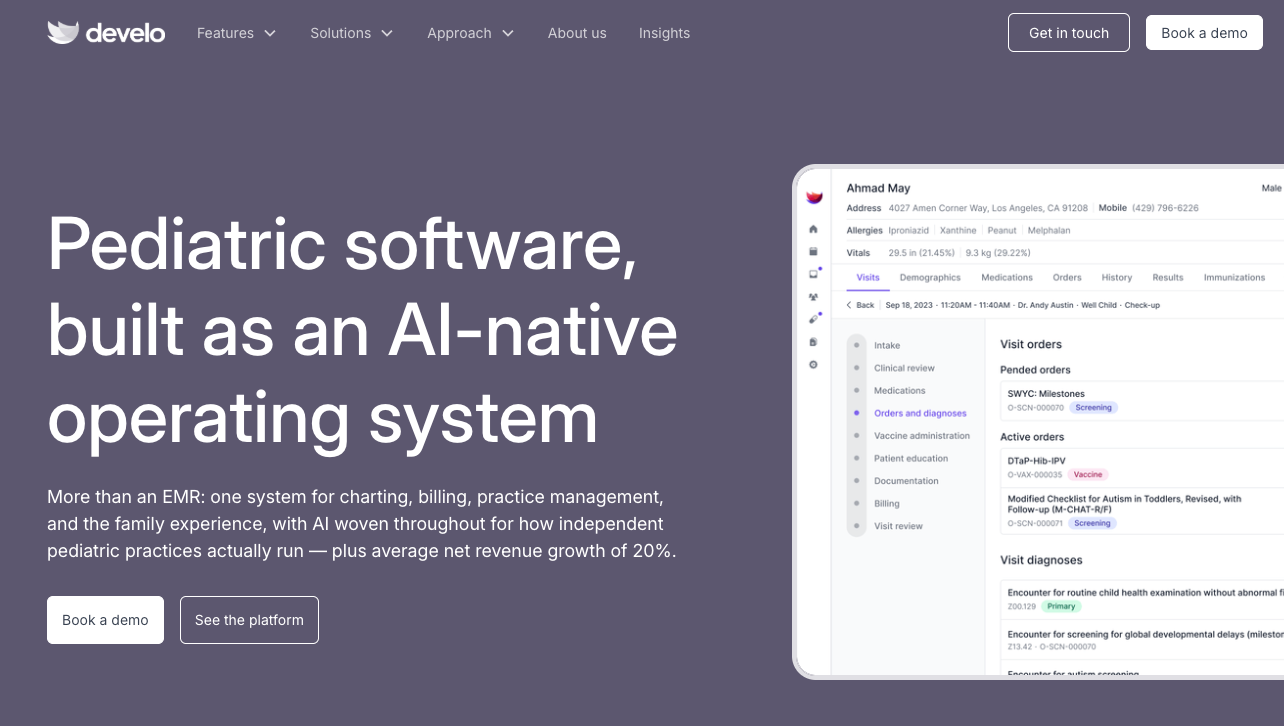
Develo is the AI-native operating system for pediatrics, designed by pediatricians for independent practices.
Practices that bill insurance and practices on DPC or concierge models both run on it. Membership plans, tiers, and family-level billing are built in, so membership payments run in the same system as the chart, with no separate billing platform. Moving from Elation to Develo means trading a multi-specialty primary care EMR for a system shaped entirely around children and their families.
Key Features
Develo builds in the pieces that Elation sells separately or added more recently:
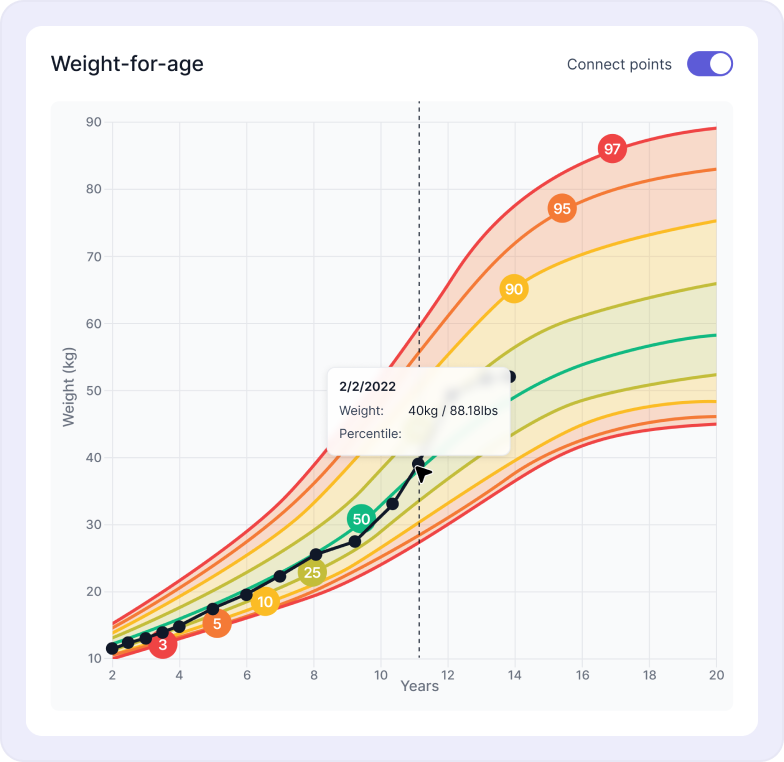
- Growth charts and dosing: Plot CDC, WHO, and Down syndrome charts with percentiles, Z-scores, and corrected-age plots for preterm infants, and bring the visit weight into weight-based medication dosing.
- Automated charge capture: Rules set codes, units, and modifiers by visit type, and providers confirm pediatric charges at the point of care.
- Immunization workflows: Flag due and invalid doses, sort inventory by funding source and lot expiry, and check Vaccines for Children eligibility against the funding source automatically.
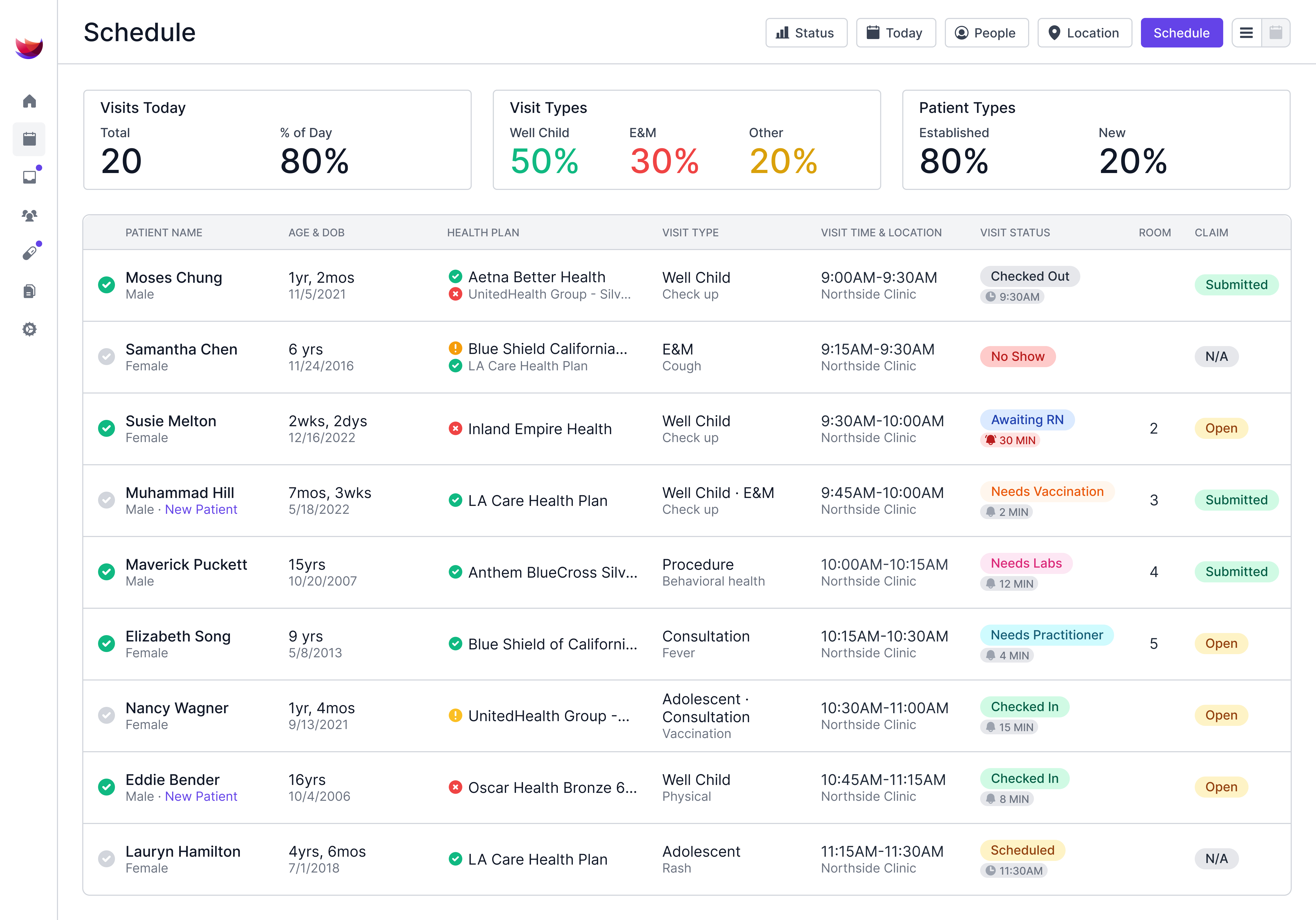
- DPC memberships: Set up membership plans and tiers, bill at the family level with cross-sibling memberships, and keep the card on file and payment history in the patient record, so DPC and hybrid practices don't need a separate membership platform.
Pros
✅ The Develo AI scribe writes straight into the visit note and reads chart data. A clinician approves each section.
✅ Family portal access follows guardian and guarantor links across siblings, with adolescent confidentiality built in.
Cons
❌ Built for pediatrics alone, so practices that also see adults would need another EMR.
❌ The AI scribe is an add-on priced separately.
Best For
Pediatric groups moving off a primary care EMR that want child-specific charting, vaccines, billing, and DPC memberships in one place.
Pricing
Develo's comprehensive pricing is a per-provider monthly fee set for each practice, covering billing and claims, digital intake, screeners, and the family portal, with no separate clearinghouse charge. Optional billing services are priced as a percentage of insurance collections.
2. athenahealth

athenahealth sells athenaOne, a cloud suite that bundles the EMR, medical billing, and patient engagement with hands-on help from its own revenue cycle staff.
The suite serves a range of outpatient specialties, which means pediatric clinics on athenaOne share their tools with adult practices.
Key Features
athenaOne puts most of its weight on getting claims paid:
- Claim scrubbing: A rules engine and billing experts fix claim errors before submission.
- Coding and authorizations: Certified coders and a specialist team take that work off your staff.
- Population health: Tools track patient outcomes under value-based care contracts.
Pros
✅ Practices can leave whenever they choose and take all their data with them.
✅ One vendor runs the EMR, the billing software, and the revenue cycle help.
Cons
❌ Pricing follows collections, so the monthly bill climbs with your revenue.
❌ Denial rework by athenahealth's billing teams comes through Enhanced Claim Resolution, a separate service sold as an athenaOne enhancement.
Best For
Insurance-heavy primary care groups that want their EMR vendor involved in day-to-day revenue work.
Pricing
athenahealth gives each practice its own quote. Pediatric practices on athenahealth tell us they pay 6% to 8% of collections, sometimes with a license estimated at about $140 per provider per month on top. You'll find more detail in our athenahealth pricing breakdown.
3. eClinicalWorks
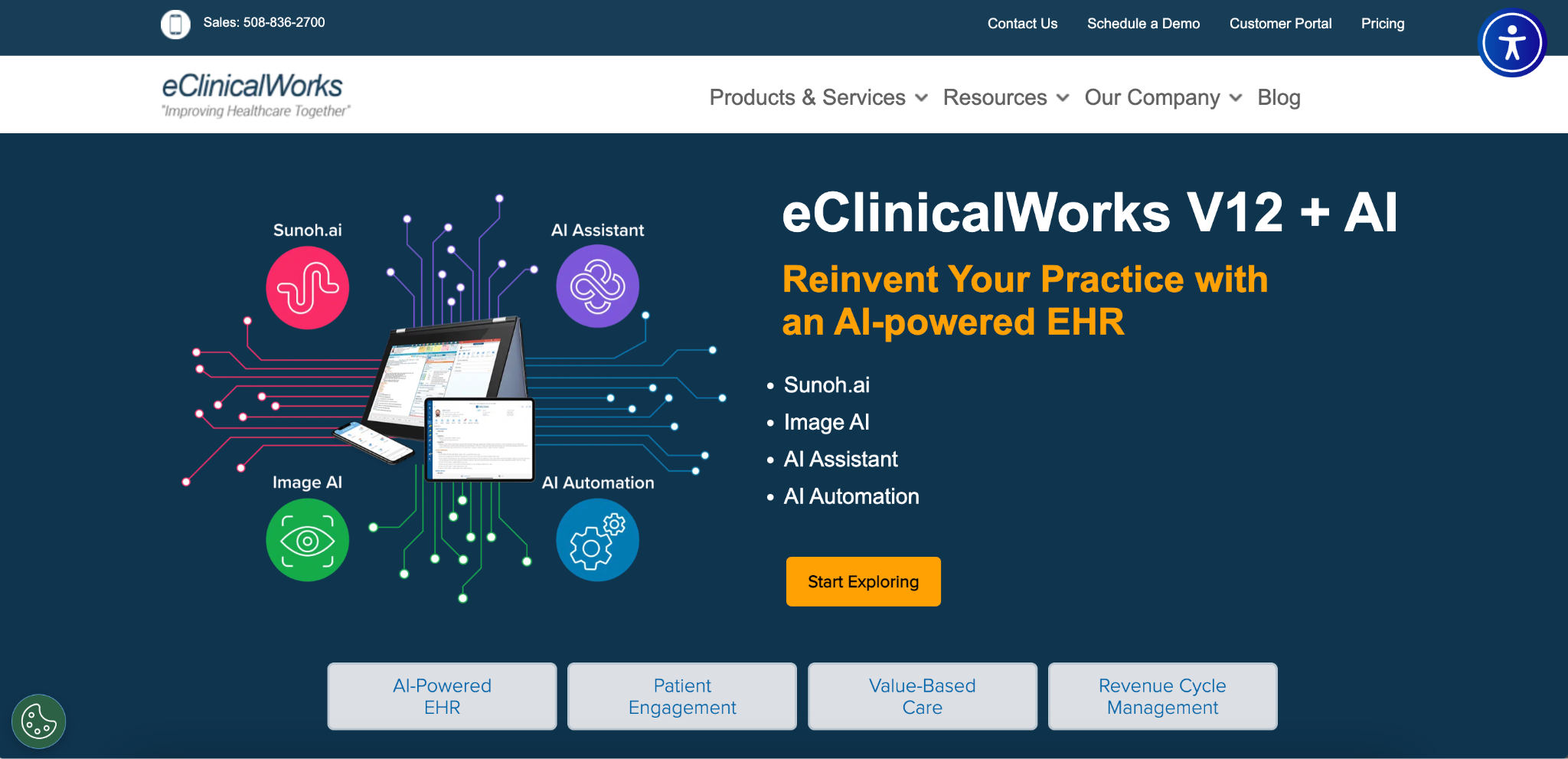
eClinicalWorks is an EMR vendor that posts per-provider plan prices on its site and hosts its software in the cloud. A separate revenue cycle service takes on claims, denials, and appeals for a share of collections.
Key Features
eClinicalWorks bundles these tools at no added charge:
- Free data migration: Transfer records from your current EMR at no cost.
- Mobile access: The EHR plans can be used on a smartphone.
- Reporting dashboards: eBO View reporting and Meaningful Use dashboards come with both EHR plans.
Pros
✅ No-cost extras include an evaluation and management coder, clinical decision support, and clinical templates.
✅ Practices with 1 to 9 providers get initial training included.
Cons
❌ Each patient statement and eClinicalMessenger message adds a transaction fee.
❌ Airfare for on-site training is billed on top of plan prices.
Best For
Primary care groups that want free record migration and a set plan price per provider.
Pricing
Plans start at $499 per provider per month for EHR Only. The cost rises to $599 with Practice Management, and the revenue cycle service costs 2.9% of practice collections.
4. Tebra
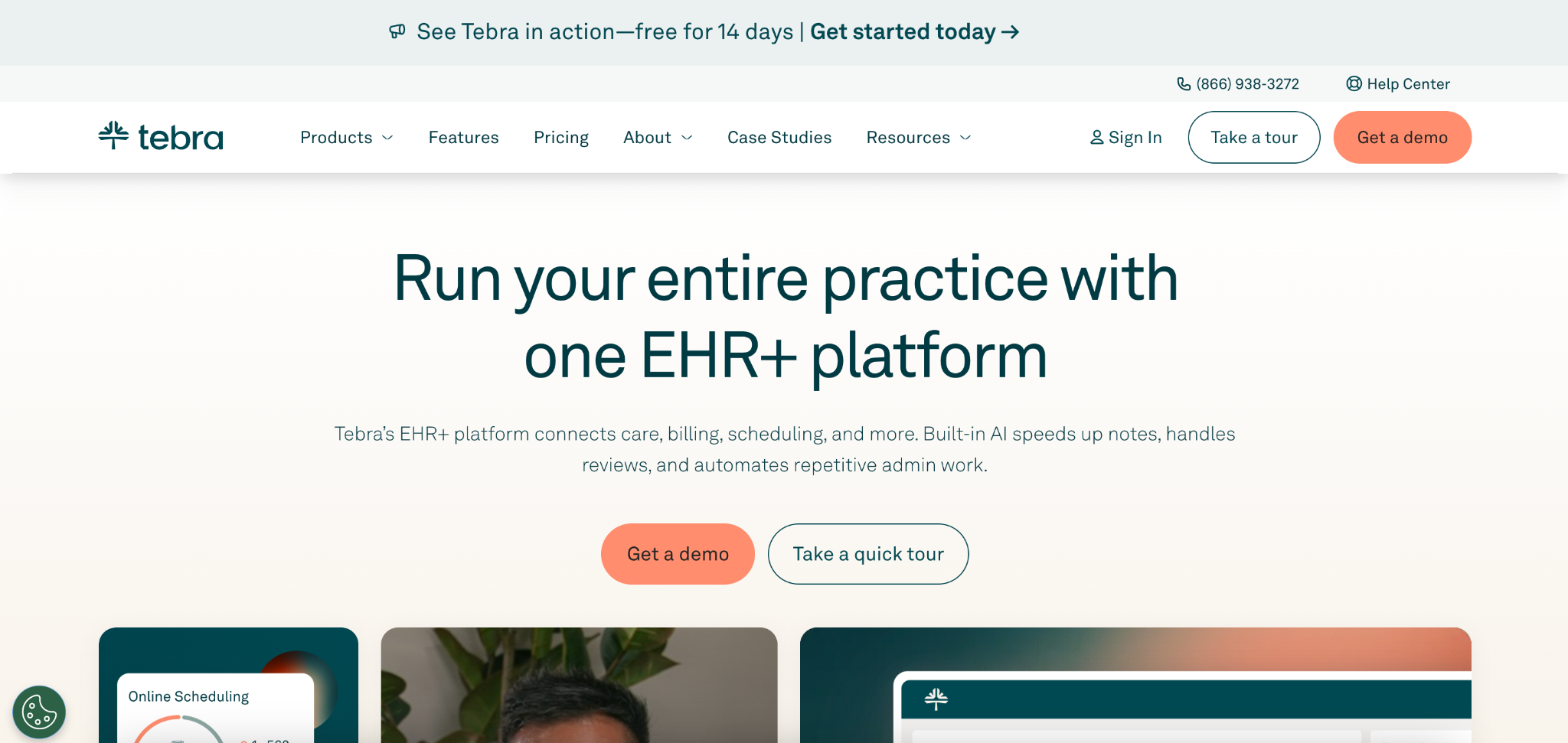
Tebra runs EMR, billing, and patient engagement on one cloud platform for independent practices, and its subscription is set by provider type and monthly claim volume rather than a share of collections. Pediatricians get well child templates by age, but pediatric practices on Tebra work in a system that also runs behavioral health and general primary care clinics.
Key Features
Tebra's bundles combine clinical and front-office tools:
- Eligibility checks: Insurance verification runs inside the billing tools, so staff can confirm coverage before the visit.
- Digital intake: On the Practice Automation bundle, patients fill out intake forms before they arrive.
- Practice marketing: Website building, directory listings, and review monitoring come with the Patient Experience + Marketing plan, which is sold apart from the EHR bundles.
Pros
✅ Separate price tiers for physicians, non-physician providers, and therapists.
✅ ePrescribing covers controlled substances and prescription drug monitoring checks.
Cons
❌ The AI Voice Assistant costs $149 per provider per month and must be turned on for every provider in the practice.
❌ The entry-level EHR Starter plan can't be bought without the Billing Starter plan.
Best For
Small practices with mixed provider types, such as physicians and nurse practitioners, that want one subscription for clinical and front-office work.
Pricing
A physician at standard claim volume pays $599 a month for Practice Essentials or $799 for Practice Automation, while low-volume physicians start at $349. Tebra's lowest listed price, $49, is the non-physician rate for its Patient Experience + Marketing plan and doesn't include the EMR. Practices filing fewer than 100 claims a month can pair EHR Starter and Billing Starter at $199 each per physician, or $398 together.
5. DrChrono
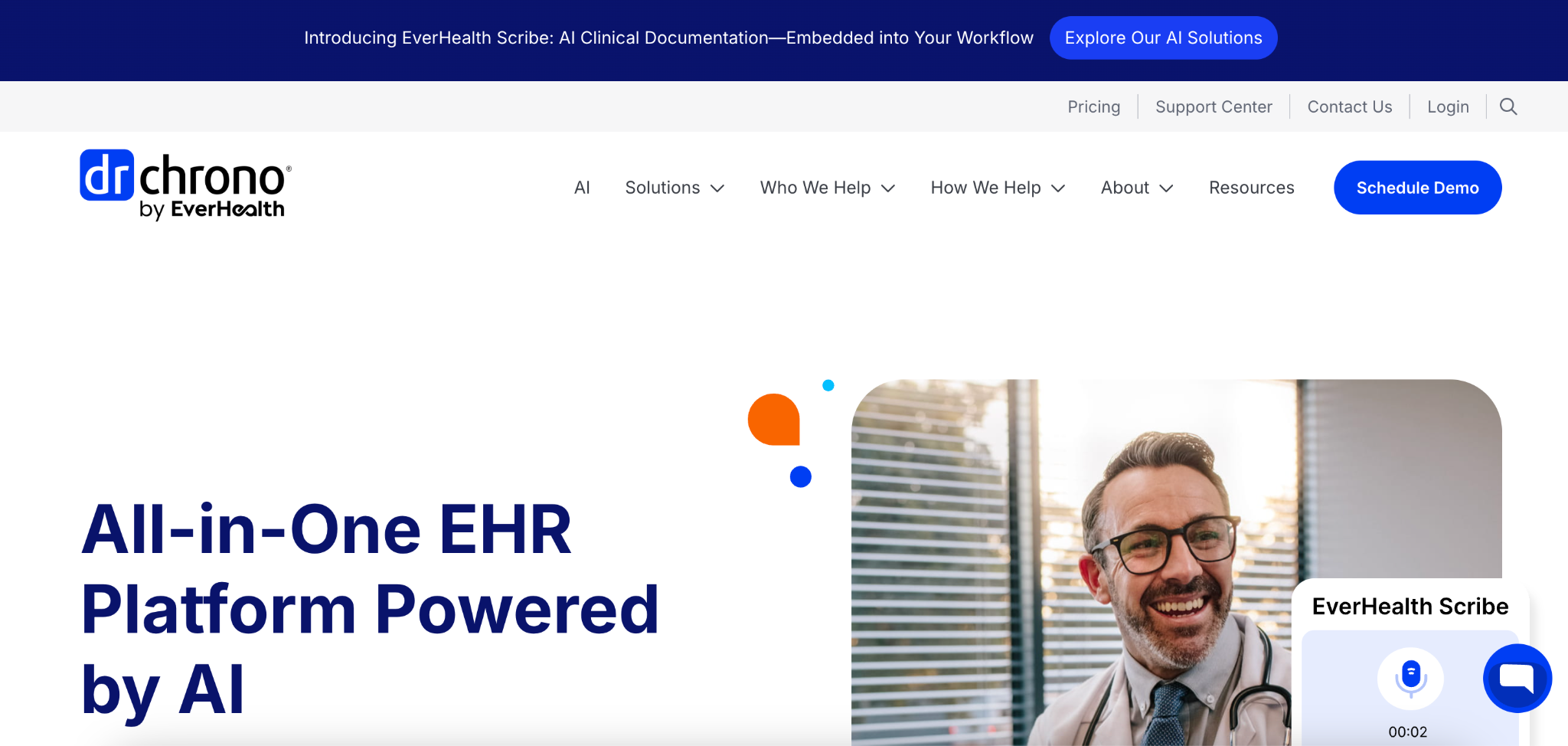
DrChrono is an EverHealth company that sells a mobile EMR and practice management system that providers can use on a tablet or desktop.
Clinical extras, such as photo and drawing tools and text-expanding macros, are built into the charting side.
Key Features
DrChrono's plans include these practice tools:
- Website scheduling widget: Patients can book visits straight from your practice's website.
- Automatic billing forms: Superbills and standard paper claim forms are filled in automatically.
- Setup support: DrChrono offers a dedicated implementation specialist and training team to help practices get started.
Pros
✅ Email reminders are unlimited on all three plans.
✅ Custom vitals fields let providers track the measurements their practice uses most.
Cons
❌ Data migration may carry a fee, depending on the format of your old records.
❌ Electronic patient statements cost $0.59 each, and paper claims cost $1.00 each.
Best For
Small practices that want an EMR their providers can carry from room to room on a tablet.
Pricing
DrChrono doesn't publish dollar figures for its Foundation, Growth, and Premium plans, and it asks practices to call for a quote.
6. CareCloud
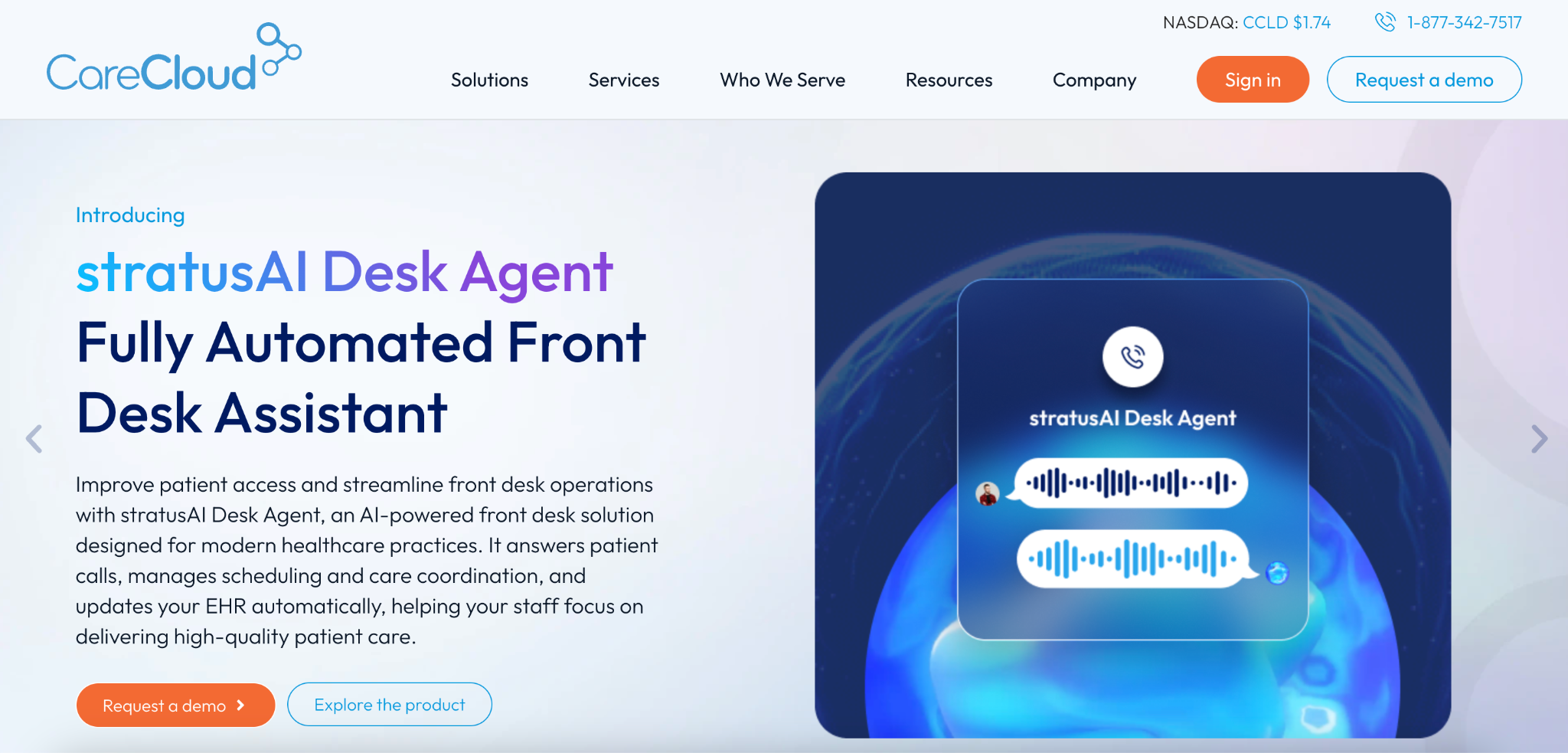
CareCloud offers a cloud EMR, practice management software, and revenue cycle services, plus an AI note-taking tool called cirrusAI Notes. Practices can run billing in-house on its software or hand claims work to its revenue cycle team.
Key Features
CareCloud's documentation tools include:
- cirrusAI Notes: Listens to the visit and drafts a structured note for the provider to review.
- Note settings: Providers can set templates and preferences that shape how each note is written.
- No stored recordings: Notes are generated without keeping voice recordings of the visit.
Pros
✅ Free one-month trial of cirrusAI Notes.
✅ cirrusAI Notes works in more than one language.
Cons
❌ cirrusAI Notes is a separate purchase, on top of the EMR.
❌ CareCloud's site doesn't list DPC membership billing tools.
Best For
Insurance-based groups that want an outside team to run their claims.
Pricing
CareCloud quotes its EMR and practice management software by request and lists cirrusAI Notes at $199 per provider per month.
7. Canvas Medical
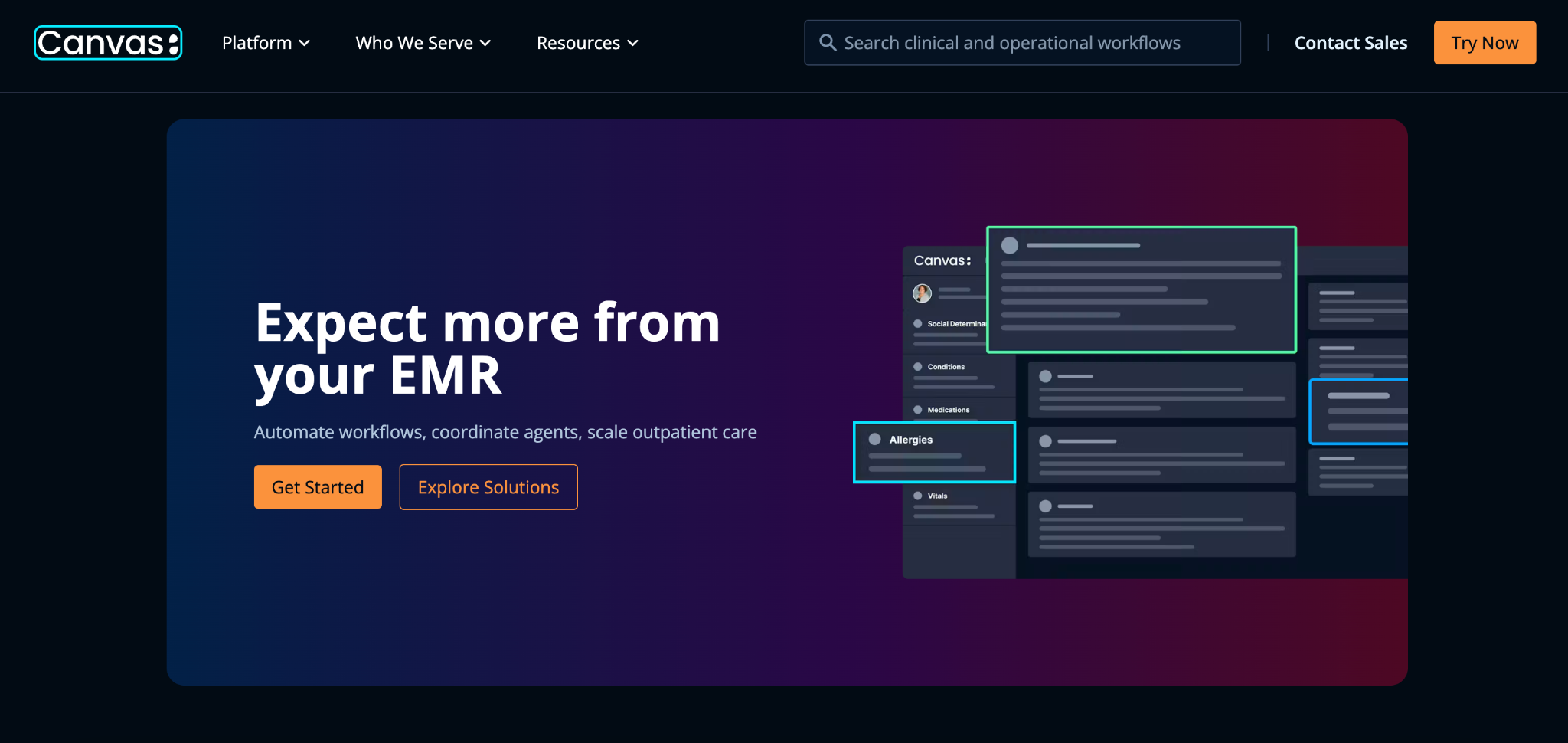
Canvas Medical is an EMR with open API access, built for care teams that have their own developers. Canvas announced its ONC certification in a 2022 article, saying it lets the EMR work with federal programs like Medicare.
Key Features
Canvas plans include these tools:
- Open API: Unlimited API calls plus support for plug-ins and custom development.
- Included onboarding: Standard implementation is part of the subscription and runs 2 to 8 weeks.
- Pre-built integrations: Most come bundled into the subscription at no extra charge.
Pros
✅ Builder and Enterprise plans allow unlimited users, so adding staff doesn't pile on seat fees.
✅ Add-on costs from partners are itemized on the invoice.
Cons
❌ Contracts generally start with a two-year term.
❌ Patients above the included minimum add fees, so a growing panel raises the monthly bill.
Best For
Care delivery companies that run custom models, such as virtual or at-risk primary care, and have engineers ready to build on the EMR.
Pricing
Canvas lists its Builder plan at $4,000 per month, covering the first 1,000 monthly active patients. It quotes Enterprise pricing separately.
8. Praxis EMR

Praxis EMR is a template-free EMR from Infor-Med, built on a neural network engine that the company calls its Concept Processor. Praxis markets the EMR to pediatrics, family practice, and concierge medicine, among other specialties.
Key Features
Praxis focuses on how notes get written:
- Concept Processor: Brings up your closest past case for each new visit and learns from the edits you make to it.
- Reflective AI: Pairs ambient speech capture with the provider's own past notes.
- PraxCoder: Flags under-coding against the documentation in each chart.
Pros
✅ No templates to build or keep up to date.
✅ Notes reflect each provider's own wording.
Cons
❌ Praxis lists billing partners for practice management, so billing likely involves a second company.
❌ Early notes need more manual editing, since the system speeds up as it memorizes your changes.
Best For
Physicians with set documentation habits who want the EMR to adapt to them.
Pricing
Praxis EMR doesn't list prices on its site and directs practices to book a demo.
9. ModMed
ModMed builds specialty-specific EMRs and serves 11 specialties, from allergy and OB/GYN to urology. Primary care and pediatrics aren't on that list, so ModMed only fits an Elation practice that does specialty work, such as gynecology.
Key Features
ModMed's platform includes:
- ModMed Scribe: AI documentation that turns conversation into suggested clinical actions.
- RCM AI Platform: Reviews claims for likely issues before submission.
- Revenue cycle services: Outsourced billing support that runs alongside its RCM software.
Pros
✅ Workflows and terminology tailored to each supported specialty.
✅ Clinical, operational, and financial work in one connected system.
Cons
❌ Confirm which ModMed AI assistants are live before signing.
❌ Its product lineup lists no DPC membership billing.
Best For
Elation practices with a strong gynecology focus that are ready to move to a women's health specialty EMR.
Pricing
ModMed doesn't post prices on its site, which points practices to a demo request.
How Should You Evaluate Elation Health Alternatives?
Judge each Elation Health alternative on the same ground Elation competes on, from daily charting to how your practice gets paid, and score them with a weighted EMR comparison matrix:
- Primary care and pediatric workflows: Ask each vendor to demo a full visit for your most common patient, from scheduling through the signed note. Check that weight-based dosing, growth charts, and vaccine inventory come standard (the baseline for a pediatric-specific EMR). Dosing tools carry extra weight here: EMR usability contributed to a medication event in 36% of about 9,000 pediatric safety reports from three hospitals (Ratwani et al., Health Affairs, 2018), and improper dosing was the most common error.
- DPC membership billing: If you run a DPC or hybrid practice, check whether membership plans, tiers, and family billing live inside the EMR or need a separate payments tool. Ask how the system handles failed payments and plan changes. Almost every DPC practice we know on Elation runs memberships through a separate billing platform, which puts a second vendor between the chart and the family's payment.
- Value-based care reporting: Ask which quality and population health reports come standard and which cost extra. If you have a value-based contract, confirm that the vendor can produce the reports your payer requires.
- Billing setup: Ask whether claims software, outsourced billing services, and clearinghouse fees come with the base price, and get the answer in the contract.
- Total cost: Add one-time fees for data migration, interfaces, and setup to the monthly rate to see the first-year cost. Develo, Tebra, CareCloud, and DrChrono price their AI scribes as add-ons.
Asking every vendor the same questions makes their quotes easier to compare.
Make the Move From Elation With Develo
A pediatric practice leaving Elation needs a system where family records, vaccines, and billing all sit in the core product.
Develo is the AI-native pediatric operating system built solely for independent pediatric practices, unifying charting, billing, practice management, and family engagement in one system.
Practices on Develo can:
- Simplify family payments: Set up payment plans, send automatic reminders, and let caregivers pay for more than one child at once.
- Run memberships in the same system: Offer DPC and concierge membership plans and tiers, bill at the family level across siblings, and collect payments in person or online, with no separate membership platform.
- Move intake online: Send check-in tasks, pediatric screens, and forms to families before the visit, with no app or portal login needed.
- Document in dozens of languages: Develo AI scribe, available at an added cost, captures visits in the family's language and returns the note in English for a clinician to approve.
- Stay current with releases: Get minor releases weekly and major releases every two weeks, with no downtime.
- Close quality gaps in the visit: A dedicated quality module shows real-time performance on measures such as well child visits and childhood immunizations, and care gaps surface inside the visit.
- Switch with support: Data migration, configuration, and training come bundled with no implementation fee. One customer success manager stays with your practice from implementation onward, backed by an on-call engineer around the clock for critical issues.
Book a demo to walk through a typical pediatric clinic day on Develo, and see why pediatric teams choose it as their Elation Health alternative.
Frequently Asked Questions
What's the Best Elation Alternative for DPC?
The best Elation alternative for DPC is Develo for practices that treat children, since it combines pediatric charting with DPC and concierge membership billing. Adult-focused DPC practices should look for built-in recurring billing, because most of the general EMRs on this list don't show DPC tools on their sites.
Is There a Cheaper Alternative to Elation?
Yes, a few EMRs list lower per-provider rates than Elation's Standard EHR plan. CharmHealth lists its Provider Plan at $200 a month, and Practice Fusion lists $199 per provider per month with an annual commitment.
Can I Migrate My Data Out of Elation?
Yes, you can migrate your data out of Elation. Its certification covers the federal criteria for a single-patient EHI export. Ask for that export early, and follow an EMR data migration plan that tests growth charts and vaccine histories before go-live. Practices have moved to Develo from Elation, and Elation Health is one of the systems on Develo's data migration page, with migration bundled in and no implementation fee.
How Much Does Elation Health Cost?
Elation Health costs $375 per provider per month on its Standard DPC Provider plan and $425 for a Standard Provider, based on its published product guide. See our Elation EHR pricing breakdown for add-on and billing fees. The Standard EHR + Billing bundle runs $699 per provider per month, and add-ons such as Elation AI ($199) and the Developer Platform ($150) are billed per provider on top.
Does Elation Health Work for Pediatric Practices?
Yes, Elation Health works for pediatric practices. It markets vaccine management with two-way registry connections, growth charts with percentiles, and pediatric screeners. But the same platform also serves adult primary care, so practices that see only children may want an EMR designed around pediatrics.