

Allscripts no longer sells software under its own name. In 2022, the company sold its hospital and large-practice products. It renamed itself Veradigm in 2023 and was still behind on its annual financial filings into 2026. Practices running Veradigm's software have good reason to ask where the company is headed.
If you're ready to move on, the strongest Allscripts alternatives are Develo for independent pediatric clinics, athenahealth for teams looking to hand off billing, and eClinicalWorks for multi-specialty groups.
This overview checks pricing for all nine EMRs against each vendor's own pages as of November 2026. You'll see what every pick does well, where it falls short, and which practices it suits, so you can build a tailored shortlist.
9 Best Allscripts Alternatives: TL;DR
Ranked by fit for independent practices, these are the best Allscripts alternatives in 2026:
- Develo: Best for pediatric practices that want charting, billing, practice management, and family engagement in one system.
- athenahealth: Best for practices that want an outside team working their claims.
- eClinicalWorks: Best for groups running several specialties on one platform with one per-provider monthly rate.
- NextGen: Best for practices that need on-premise servers or expect to reach 10 or more providers.
- Tebra: Best for small general practices that want plan prices listed up front.
- AdvancedMD: Best for clinics that want to pick and pay for individual modules.
- Greenway Health: Best for multi-location groups that want centralized billing and practice analytics.
- DrChrono: Best for providers who chart on an iPad.
- Oracle Health: Best for practices linked to a hospital system that runs Oracle Health.
Develo is the only pick on this list built solely for pediatrics. The other eight serve a mix of specialties.
Practice Fusion is left off because it's also a Veradigm product, so switching to it keeps your practice with the same vendor. Teams currently using it can browse these Practice Fusion alternatives.
Why Do Practices Leave Allscripts?
Practices may leave Allscripts, now called Veradigm, when concerns about the company or its software start to outweigh the effort of switching. Those concerns can show up in these areas:
- Vendor instability: The company filed its 2023 and 2024 annual reports in May 2026, after delays that it partly tied to restating earlier financial statements. Nasdaq delisted its shares in May 2024, and they now trade over the counter. Veradigm aims to file its 2025 report before the end of 2026. In January 2025, Veradigm ended a sale process without a deal, and its September 2026 investor deck commits to a portfolio review that will "invest, sustain, sunset/sell" products without naming which ones.
- Software that wears on clinicians: In a national survey, 870 physicians gave their EMRs an average usability score of 45.9 out of 100, a failing grade, and lower scores corresponded with higher odds of burnout.
- No pediatric focus: Veradigm's EHR page names nine specialties it customizes for, and pediatrics isn't one of them, so pediatric needs like family-linked records and vaccine inventory may need extra setup or tools.
An impending contract renewal is often when these concerns push a practice to compare other EMRs.
Which Allscripts Alternative Should You Choose?
The right Allscripts alternative depends on your specialty, practice size, and how you want to handle billing:
- Choose Develo if you run an independent pediatric practice and want vaccine workflows, family records, and pediatric billing codes built in. Skip it if your group also offers family medicine or other specialties.
- Choose athenahealth if you'd like the vendor to handle claim follow-up, and you can accept a fee tied to collections.
- Choose eClinicalWorks if your practice spans more than one specialty, and you want pricing you can check online.
- Choose NextGen if your IT team wants the software hosted in your own building, or your group is big enough for NextGen Enterprise.
- Choose Tebra if you want marketing and online review tools alongside your EMR.
- Choose AdvancedMD if you average 250 to 500 claims a month, since its per-claim pricing can cost less than a flat fee.
- Choose Greenway Health if you run billing for several locations from one office and want built-in practice analytics.
- Choose DrChrono if mobile charting and customizable forms top your list.
- Choose Oracle Health if your hospital network already runs Oracle Health, and you want an EMR that clinicians can query by voice.
Stick with Veradigm if your team is comfortable with the EMR, your contract terms are fair, and your daily work leans on its ePrescribe and FollowMyHealth tools.
9 Best Allscripts Alternatives at a Glance
Compare the nine Allscripts alternatives based on fit, starting price, and deployment, with full profiles below the chart.
Pricing researched in November 2026. Verify current pricing with each vendor.
The 9 Best Allscripts Alternatives
1. Develo
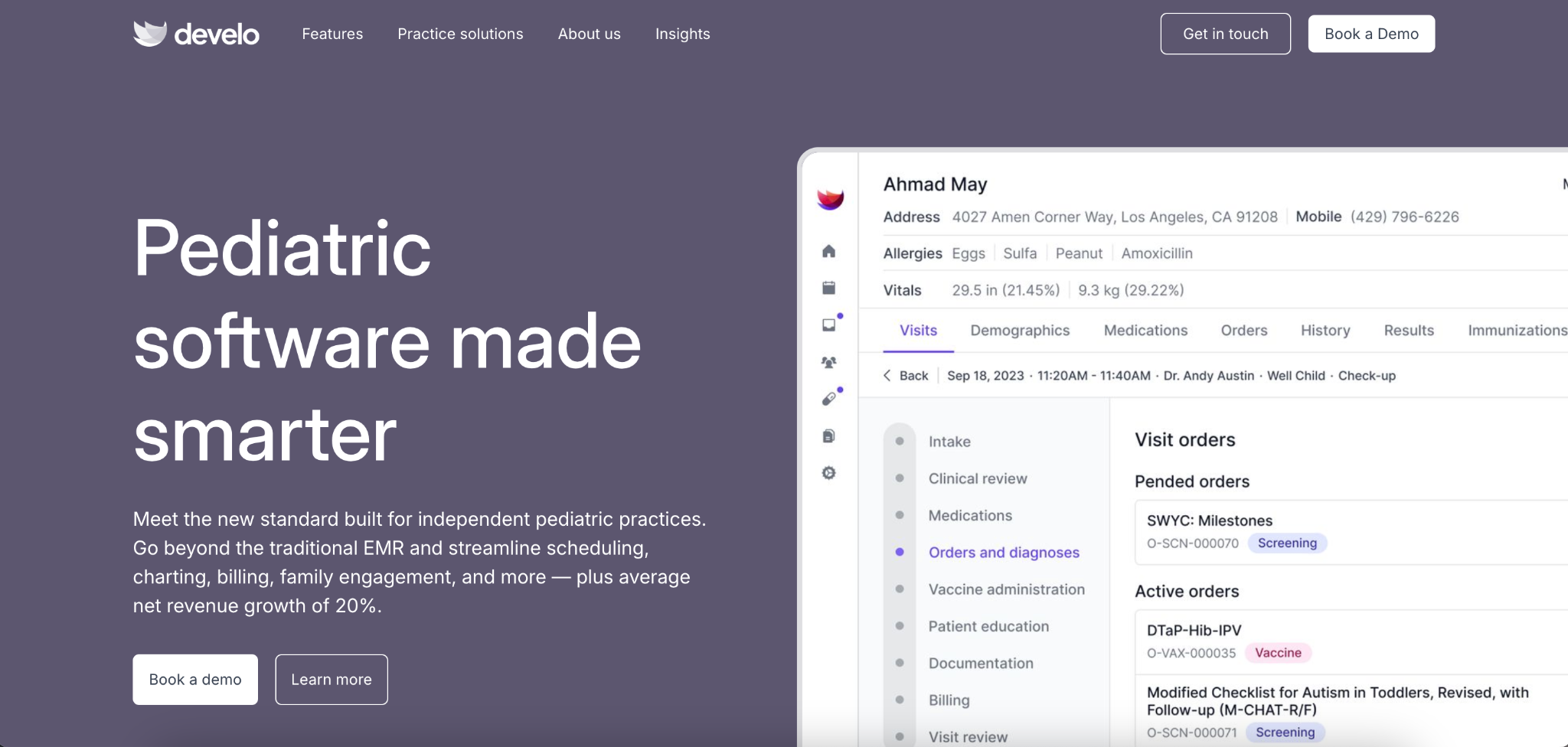
Develo is the AI-native operating system for pediatrics, built for independent outpatient practices.
It unifies charting, billing, practice management, and family engagement in one system, so pediatric workflows don't depend on bolt-on tools.
For a practice leaving Allscripts, the main change is a system designed around children and families, with no adult-care menus to work around.
Key Features
Develo's core tools cover a pediatric visit from charting to claim:
- Automated charge capture: Rules set pediatric billing codes, units, and modifiers at the point of care for the provider to confirm, which helps cut underbilling.
- A suite of AI, not one scribe: The Develo AI scribe drafts the visit note from the conversation and chart data for the provider to approve, while Ask Develo catches providers up on a patient and Develo doc intel files incoming e-faxes to the right chart.
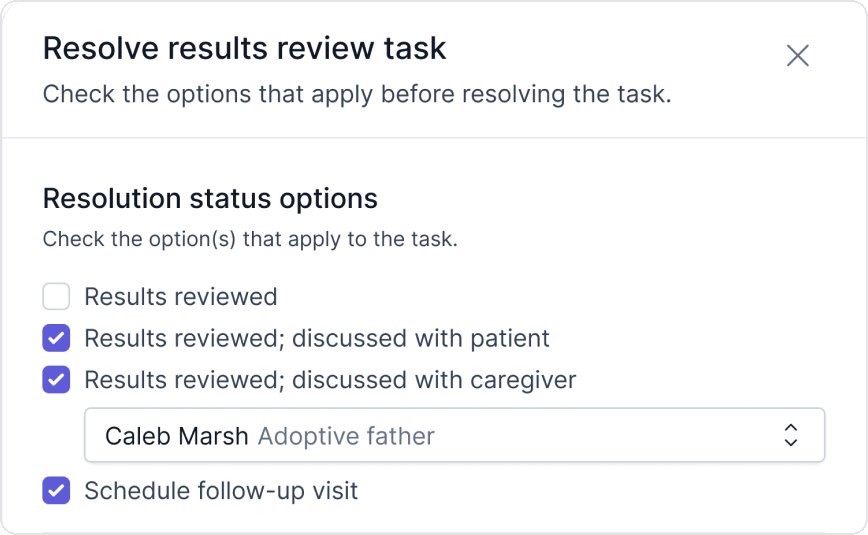
- Vaccine workflows: The platform forecasts due doses and tracks inventory by funding source, with Vaccines for Children (VFC) eligibility checks, so staff can see what each child needs and which stock to use.
Pros
✅ Family records link siblings, guardians, and guarantors, including in blended families.
✅ Onshore support with a dedicated customer success manager and weekly product upgrades.
Cons
❌ Pediatrics only, so mixed-specialty groups may need a second system.
❌ The Develo AI scribe is priced separately from the per-provider monthly fee.
Best For
Independent pediatric practices moving off Allscripts, especially those paying for separate intake or screening tools, or re-entering vaccine and family data across systems.
Pricing
Develo uses comprehensive pricing built on a per-provider monthly fee, quoted for each practice, that covers billing software, digital intake, screeners, and the family portal.
Data migration, configuration, and training are bundled in, with no implementation fee or per-interface registry fee, and optional billing services are priced as a percentage of insurance collections.
2. athenahealth

athenahealth is a cloud-based EMR and practice management platform built around bundled billing services. It serves multiple specialties on one system, so its workflows are shaped for general outpatient care, a common reason that pediatric teams compare athenahealth alternatives.
Key Features
athenahealth's platform focuses on revenue cycle work:
- athenaOne: It combines the EMR, practice management, and patient engagement tools, so clinical and billing staff work in one system.
- Claim rules engine: The system flags claim issues before submission, which helps cut avoidable denials.
- Enhanced Claim Resolution: This add-on has athenahealth's billing team rework denied claims for you.
Pros
✅ Billing support for practices short on billing staff.
✅ No long-term contract required.
Cons
❌ Pricing is tied to collections, so the fee grows as collections grow.
❌ athenahealth describes its billing help as co-sourcing, so practices should plan to keep some billing work in-house.
Best For
Multi-specialty groups that want EMR software and billing services from one vendor and are comfortable paying a share of collections.
Pricing
athenahealth doesn't list prices on its website, so practices need a custom quote from the sales team. Our athenahealth pricing breakdown puts the typical pediatric rate at 6% to 8% of collections.
3. eClinicalWorks
eClinicalWorks is a cloud EMR and practice management system. Family records and vaccine tracking may take workarounds for pediatric teams on eClinicalWorks, since the platform covers a mix of specialties.
Key Features
eClinicalWorks offers these tools for clinical and front-office work:
- healow patient engagement: Check-in and kiosk tools let patients complete front-desk steps themselves.
- Sunoh.ai integration: An AI medical scribe turns visit conversations into clinical notes.
- Registry reporting: This comes with every EHR plan, so practices don't need an add-on to report to registries.
Pros
✅ No start-up costs on any plan.
✅ Support, cloud hosting, and disaster recovery are part of the subscription.
Cons
❌ Fees apply per patient statement and per eClinicalMessenger transaction.
❌ Practices with more than nine providers pay extra implementation fees, and airfare is billed separately.
Best For
Multi-specialty groups of up to nine providers, where initial training is included and extra implementation fees don't apply.
Pricing
eClinicalWorks lists EHR Only at $499 per provider per month and EHR with Practice Management at $599, while its RCM service costs 2.9% of practice collections. Those are base rates, and add-ons such as the Sunoh.ai scribe cost extra.
4. NextGen
NextGen sells two EMRs: NextGen Office for practices with fewer than 10 providers and NextGen Enterprise for practices with 10 or more. The company serves more than 40 specialty markets, so pediatric practices using NextGen may need extra setup for digital screeners and family-level records.
Key Features
NextGen's tools vary between its products:
- Clinical AI: On both NextGen Office and NextGen Enterprise, Ambient Assist turns the visit conversation into a structured note in the chart for provider review, which helps cut after-hours charting.
- Diagnostics hub: This connects practices to more than 725 labs through one service, so staff don't manage each lab link separately.
- Hosting choices: Enterprise practices can host the software themselves or move it to NextGen's managed cloud on Amazon Web Services.
Pros
✅ Two products, sized for practices below and above 10 providers.
✅ The patient portal is part of the per-provider fee on NextGen Office.
Cons
❌ Lab and immunization registry interfaces cost extra on both products, with license, implementation, and ongoing support fees.
❌ Enterprise charges separately for its patient portal and drug database license.
Best For
Groups of 10 or more providers with in-house IT staff who want control over where their EMR is hosted.
Pricing
NextGen doesn't publish prices, so practices get a custom quote from the sales team. Our NextGen pricing breakdown puts it at about $300 to $550 per provider per month before add-ons, based on third-party estimates.
5. Tebra
Tebra, formed when Kareo and PatientPop merged in 2021, brings charting, billing, and patient engagement into one platform for independent practices.
Its pediatrics page markets age-based well child templates and growth charts, while the same platform also serves family medicine, primary care, and mental health practices.
Key Features
Tebra's pediatric and front-office tools include:
- Age-based templates: Well child templates load by the child's age, so each visit prompts the expected screenings and guidance.
- Pediatric billing checks: Common problems with vaccine administration codes and Medicaid or CHIP rules are flagged before the claims go out.
- Patient experience tools: The Practice Automation bundle adds patient experience tools, such as online scheduling and reminders, so families can book visits without calling the office.
Pros
✅ Prices are listed by bundle and provider type on Tebra's website.
✅ Lower rates for practices submitting 100 or fewer claims a month.
Cons
❌ Its pediatric tools share a platform built for family medicine, primary care, and mental health practices.
❌ Low-volume rates switch to standard pricing after three straight months above 100 claims.
Best For
Small independent practices that see patients of all ages and want to compare published bundle prices before booking a demo.
Pricing
Tebra publishes per-provider rates from $49 to $799 a month, depending on the plan and modules a practice picks. Its Practice Essentials and Practice Automation bundles run $599 and $799 per physician at standard claim volume, and our Tebra pricing breakdown covers the lower-volume tiers.
6. AdvancedMD
AdvancedMD is a cloud suite that combines practice management, EMR, and patient engagement software, priced by specialty. It serves pediatrics alongside family practice, mental health, and surgery.
Key Features
AdvancedMD's core plans include:
- Per-claim pricing: Low-volume practices can pay per submitted claim, so software costs follow patient activity.
- Patient portal and telehealth: Both come with the core plans, so practices don't need a separate tool for virtual visits.
- AI Clinical Assistant: This optional add-on listens to visits and drafts notes in five formats.
Pros
✅ Specialty price ranges are listed on AdvancedMD's website.
✅ Bundling practice management, EMR, and patient engagement software can save up to 40%.
Cons
❌ Data migration costs $800 to $2,000 for practice management data, and financial transaction history doesn't transfer.
❌ Card processing through AdvancedMD Pay runs 2% to 6% per transaction, depending on payment type.
Best For
Practices with in-house billers that want separate products for charting, patient outreach, and the front office from one vendor.
Pricing
AdvancedMD lists medical specialty plans at $429 to $1,070 per provider per month, plus setup fees from free to $6,000, depending on practice size and data needs.
7. Greenway Health
Greenway Health sells cloud EMR and practice management software for outpatient practices. The company now centers its AI-enabled Novare platform alongside Intergy, its long-running EMR. Greenway markets to many specialties, including primary care, pediatrics, and OB-GYN, and runs on AWS cloud architecture.
Key Features
Greenway's platform pairs clinical and billing tools:
- Eligibility checks: Greenway's practice management software automates eligibility verification, so staff can catch coverage problems before the visit.
- Multi-location oversight: Centralized tools help standardize billing and front-office processes across locations.
- Practice analytics: Pediatric dashboards track immunization rates and well child visit trends alongside financial reporting.
Pros
✅ Growth charts and milestone templates for each developmental stage.
✅ One vendor for the EMR, practice management, and revenue cycle work.
Cons
❌ Pediatrics is one of many specialties on the platform, so child-specific workflows share space with general outpatient tools.
❌ Rates aren't public, which makes side-by-side budgeting harder.
Best For
Multi-location practices that run billing from one central office.
Pricing
Greenway Health prices each practice through a custom quote. Our Greenway Health reviews roundup covers what current users say about support and value.
8. DrChrono
DrChrono is a cloud EMR and practice management platform, now part of EverHealth, with apps for iPad, iPhone, and the web. Its iPad app lets providers chart, prescribe, and run patient self-check-in from a tablet.
Key Features
DrChrono's plans share these tools:
- Form library and customization: Specialty-specific templates come with tools to build custom forms, so notes can match each practice's visit types.
- Check-in and portal apps: Patients check in at a kiosk or on their phone via a portal app, which cuts front-desk paperwork.
- EverHealth Scribe: This AI documentation tool opens from the mobile app and drafts notes for the provider to review.
Pros
✅ Native apps for iPad and iPhone alongside the web version.
✅ Unlimited staff accounts on every plan.
Cons
❌ Each plan caps texts, calls, and e-faxes, with overage fees such as $0.07 per faxed page.
❌ No plan lists a price, so practices can't compare costs before a sales call.
Best For
Small practices that run much of the visit on a tablet, from check-in to charting.
Pricing
DrChrono sells three plans, Foundation, Growth, and Premium, and it prices each one by custom quote. Growth adds automated revenue cycle workflows, and Premium adds advanced AI features.
9. Oracle Health
Oracle Health, formerly Cerner, made its new cloud EMR available to U.S. ambulatory clinics in November 2025. Clinicians can ask the EMR by voice for a patient's recent lab results or current medications, which cuts down on searching by screen.
Key Features
Oracle sells the EMR as part of a wider ambulatory suite:
- Oracle Health AI Agents: These automate routine administrative tasks for clinicians and revenue teams.
- Patient Administration: Patients schedule, register, and check in digitally, which lightens front-desk call volume.
- Patient Accounting: Billing is tied to the EMR, so charges can be captured automatically and claims built from clinical documentation.
Pros
✅ Certified by the DEA for EPCS.
✅ Patient portal, scheduling, and billing tools come from the same vendor.
Cons
❌ The track record with independent practices is short.
❌ The billing tool is an enterprise revenue cycle system, which can be more than a small practice needs.
Best For
Clinics affiliated with a health system that wants one vendor across hospital and outpatient care.
Pricing
Oracle Health doesn't post prices for its ambulatory suite, so clinics request a quote through its contact or demo forms.
How Should You Evaluate Allscripts Alternatives?
Evaluate each Allscripts alternative against how your practice runs day to day, using these criteria:
- Specialty fit: Pediatric clinics need family-linked records, vaccine inventory by funding source, and age-based screeners without a custom setup. Ask each vendor to demo a well child visit for a 12-month-old, from check-in to claim. That demo shows quickly whether a vendor's pediatric tools were built in or added on later.
- Pricing model: Flat per-provider fees stay the same as revenue grows, while collections-based fees can rise. Per-claim pricing can cost less at low volume but climbs as visits increase. Run your last 12 months of claims and collections through each model before you compare quotes.
- What the quote includes: Several vendors on this list charge separately for data migration, lab and registry interfaces, or AI scribe tools. Ask for a written list of every one-time and recurring fee, including migration and interface fees.
- Support and updates: Find out who answers the phone, whether support is onshore, and how fast critical issues get a response. Ask current customers in your specialty how long tickets take to close and how often new features ship.
- Vendor stability: Check who owns the vendor and how often the product has changed hands. Ownership changes can affect product roadmaps and support, so ask how long the company plans to keep developing the product you'd buy.
Scoring every finalist against the same five criteria makes the trade-offs easier to see before contract talks start.
How Do You Switch From Allscripts and Move Your Data?
Switching from Allscripts is a staged handoff from Veradigm to your new vendor. Work through it in this order:
- Read your contract: Note the renewal date, the notice period, and any fees for data exports or early exit. Veradigm's default terms renew automatically unless either side gives written notice at least 90 days before the term ends.
- Request a full export: EMRs certified under federal rules must be able to produce a patient population export of all the EHI they can store, in a computable format. The vendor creates that full export on request.
- Map pediatric data with care: Check immunization histories with lot numbers and VFC eligibility, growth and vitals series, and guardian and guarantor links.
- Keep chart access after go-live: Ask Veradigm about read-only access for lookups during the first months.
- Train by role: Run separate sessions for front desk, clinical, and billing staff before launch.
Start the export request as soon as you sign with a new vendor, since data mapping can set the pace for go-live.
Switch From Allscripts With Develo
A move off Allscripts is simpler when the new system already handles pediatric records, vaccines, and billing rules. This way, your team won't have to rebuild old workarounds.
Develo comes configured with those pediatric workflows before your first login, so your team isn't waiting on custom requests after go-live.
It replaces older EMRs and the extra tools practices have had to stack up, slowing down charting and scattering clinical data across systems.
With Develo, your practice can:
- Bill from the visit: Vaccine and admin codes are set by age, Medicaid status, and visit type, and providers confirm the final codes before claims go out.
- Chart with Develo AI scribe: Available at an added cost, the scribe writes into your visit note using chart history, like growth data and immunizations. It works in dozens of supported languages and returns notes in English. No visit audio is kept, and a clinician approves every section.
- Keep families connected: Siblings and guardians share linked records, and caregivers can pay balances across siblings in the family portal.
- Track every dose: See which vaccines each child is due for, manage VFC stock, and exchange records with supported state immunization registries.
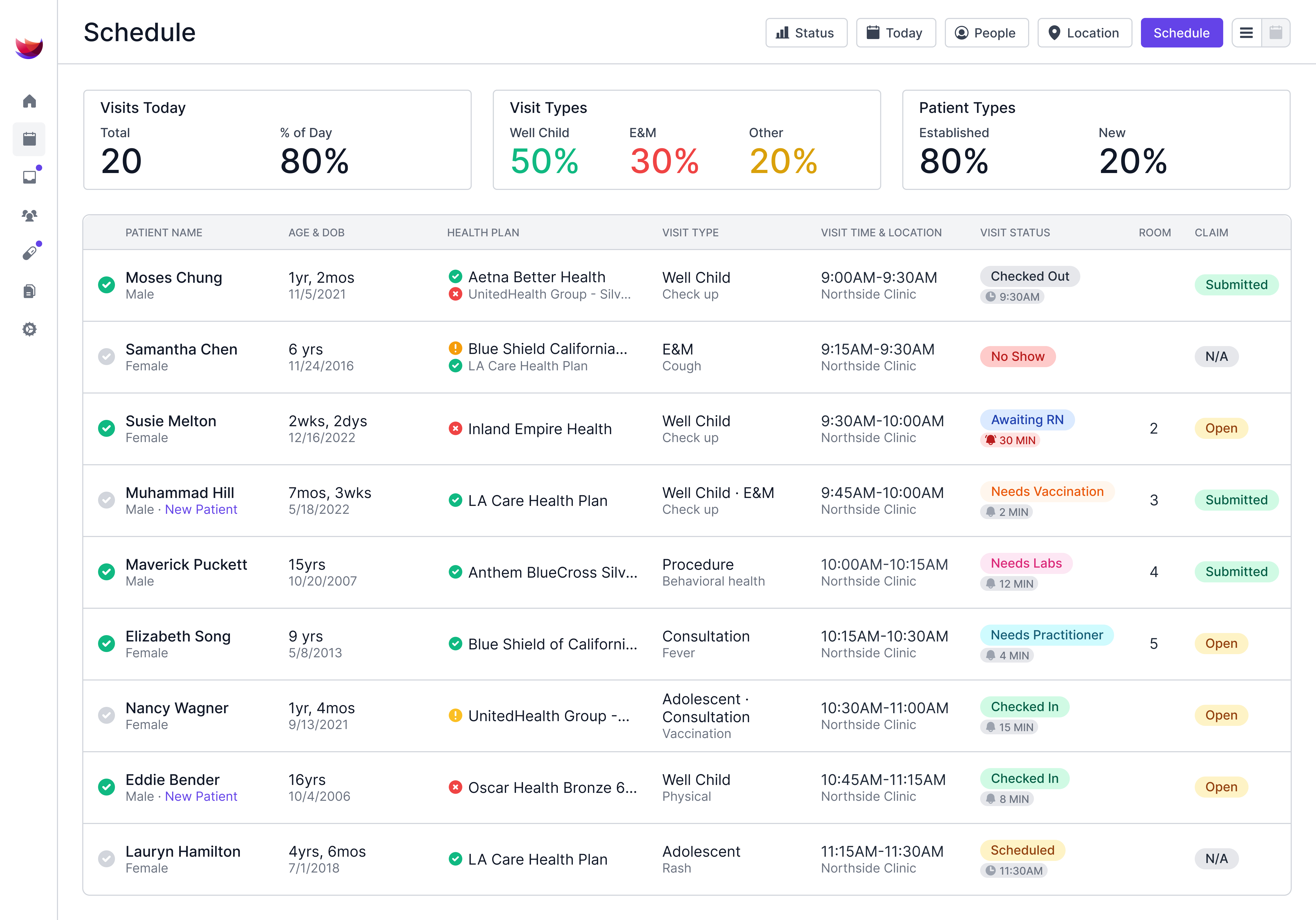
- Work the same chart together: Nurses, providers, and front desk staff can work in the same chart, or the same visit, at once, adding orders and documentation side by side.
- Get help switching: A dedicated customer success manager leads the move from Veradigm using a migration template built for that system. After go-live, the same customer success manager stays your contact, and an on-call engineer covers critical issues.
- Count on a stable vendor: Develo is founder-led and backed by a $14 million Series A led by Blueprint Equity, with investors including Paul Black, former CEO of Allscripts. Every practice runs the same cloud version, updated weekly.
Book a demo to see how Develo can be the Allscripts alternative worth your practice's move.
Frequently Asked Questions
Who Bought Allscripts?
Harris, part of Constellation Software, bought Allscripts' hospital and large physician practice business on May 2, 2022, for $670 million in cash, and that business now operates as Altera Digital Health. Allscripts kept its ambulatory software for independent practices.
Are Allscripts and Veradigm the Same Company?
Yes, Allscripts and Veradigm are the same company, since Allscripts Healthcare Solutions changed its name to Veradigm Inc. on January 1, 2023. The former Allscripts Professional EHR now goes by Veradigm EHR, while products like Sunrise and TouchWorks moved to Altera Digital Health.
How Much Does Allscripts Cost?
Allscripts, now Veradigm, costs a custom amount quoted by its sales team; most prices aren't listed on the company’s website. Its Practice Fusion EHR is one exception, listed at $199 per provider per month with a required annual commitment. Standalone Veradigm ePrescribe is another, from $59 per prescriber per month.
Can You Migrate From Allscripts to Another EMR?
Yes, you can migrate from Allscripts to another EMR. Veradigm EHR holds ONC certification, and certified EMRs must support a full EHI export. Ask each new vendor whether it already has a migration template for Veradigm data, because this shortens the mapping work. Develo has moved pediatric practices off Veradigm/Allscripts and has an established migration template for Veradigm/Allscripts data (and another for Practice Fusion), built around where pediatric records break: immunizations, vitals, and patient-caregiver links.
What's the Best Allscripts Alternative for Pediatric Practices?
The best Allscripts alternative for pediatric practices is Develo, since every workflow, from well child visits to sibling billing, is designed for children's outpatient care. Groups that also treat adults may find a general EMR, such as eClinicalWorks or AdvancedMD, to be a better fit.