
.avif)
Most pediatric clinics already screen. The harder question is whether your developmental screening questionnaire earns its place in the visit or drains time from it, because the tool you pick and how you run it decides whether a program catches delays early or just buries the front desk in paper.
What Is a Developmental Screening Questionnaire?
A developmental screening questionnaire is a standardized form that checks whether a child is hitting age-appropriate milestones, with questions spanning language, motor skills, problem-solving, and social-emotional behavior.
Most are filled out by a parent or caregiver, then scored by a clinician who decides whether the child needs a closer look. A concerning score sends the family on for a full developmental assessment, usually with a developmental pediatrician or an early intervention specialist.
The questionnaire's whole job is to sort the children who need that deeper look from the ones who don't, early enough for it to count.
The AAP sets the schedule: a general developmental screen at the 9-, 18-, and 30-month visits, an autism-specific screen at 18 and 24 months, and maternal depression screening at the 1-, 2-, 4-, and 6-month visits. For the full visit-by-visit breakdown, see our guide to early childhood developmental screening.
Why Pediatric Clinics Use Developmental Screening Questionnaires
You already know screening matters. It's worth being clear-eyed about why it earns a spot in an already-packed visit. Three reasons hold up:
- Early intervention pays off: early identification is what makes early intervention possible, and as AAP guidance puts it, "The earlier we can address these problems, the better."
- You catch what parents can't: subtle delays rarely look like delays at home, especially for first-time families with no baseline to compare against.
- The reimbursement is real: CPT code 96110 covers developmental screening, billed per instrument, and 47 state Medicaid programs reimburse it separately from the well child visit, so the documentation you're already doing can pay for itself.
The Screening Tools Pediatric Clinics Use Most
Here's a working profile of the questionnaires worth knowing, the ones that turn up again and again across pediatric primary care. For how these map onto specific visits, our rundown of the developmental screening tools used during well child visits walks through it visit by visit.
PEDS and PEDS:DM
PEDS (Parents' Evaluation of Developmental Status), now in a revised edition called PEDS-R, is a short parent-completed questionnaire, 12 questions in the current version, for kids from birth to age 8. PEDS:DM zeroes in on specific developmental milestones and runs either alongside PEDS or on its own. It's quick, comes in multiple languages, and shows up constantly in primary care because it fits inside a normal visit.
SWYC (Survey of Well-being of Young Children)
The SWYC is a free, age-specific questionnaire co-developed by Ellen Perrin, MD, and Chris Sheldrick, PhD, now stewarded by the TEAM UP Center at Boston Medical Center, covering ages 2 months to 5 years across developmental, behavioral, and family-risk domains. The broad coverage and the lack of a licensing fee make it an easy one to fold into well child workflows.
M-CHAT-R/F
The M-CHAT-R/F (Modified Checklist for Autism in Toddlers, Revised with Follow-Up) is the AAP-recommended autism screener at the 18- and 24-month visits, built as a 20-item parent questionnaire. When a child lands in the medium-risk range, the structured follow-up interview is what tells you whether to refer for a full evaluation. Our guide to autism screening tools covers M-CHAT-R/F alongside the alternatives.
Vanderbilt Assessment Scales
The Vanderbilt Assessment Scales are the workhorse ADHD rating scales for ages 6 to 12, developed by NICHQ, with the current third edition published by the AAP. Parents and teachers each complete a version, which gives you two vantage points on the same child, and many clinics lean on them to track treatment response over time, well beyond the initial screen.
Edinburgh Postnatal Depression Scale (EPDS)
The EPDS screens parents, usually mothers, for postpartum depression. Pediatric clinics screen for parental depression at the 1-, 2-, 4-, and 6-month infant visits, and the EPDS is the common choice. It's a reminder that the patient in the room isn't the only person whose health shapes the child's development.
SDQ (Strengths and Difficulties Questionnaire)
The SDQ is a behavioral and emotional screener for ages 2 to 17. Parent, teacher, and self-report versions all exist, so when a concern is fuzzy, you can triangulate it across the people who see the child in different settings.
CRAFFT
CRAFFT screens adolescents and young adults ages 12 to 21 for substance-use risk, and the AAP recommends it through its Bright Futures guidelines. For scoring details and the follow-up steps, see our breakdown of CRAFFT screening.
How Pediatric Clinics Administer Screening Questionnaires
This is where two clinics screening the same child can have wildly different days. Two models dominate:
- Paper at check-in: the front desk hands over a clipboard, the nurse scores it by hand, and the result gets scanned or retyped into the chart. Plenty of pediatric waiting room setups still run exactly this way.
- A pediatric-native EMR with built-in screeners: the right questionnaire assigns itself by patient age, goes to the family's phone before the visit, scores on submission, and tags the encounter with the billing code. The digital patient intake flow shows where this fits.
The Billing Side of Developmental Screening
Pediatric clinics bill screening questionnaires per standardized instrument, under three CPT codes: 96110 for developmental screens such as PEDS, SWYC, and M-CHAT-R/F; 96127 for brief emotional or behavioral assessments such as the Vanderbilt; and 96161 for caregiver-focused screens such as the EPDS. The AAP schedule stacks them: the 18-month visit alone calls for a general developmental screen and an autism screen, which is two units of 96110, reported as separate line items with modifier 59 where the payer requires it.
The catch is documentation. A missing score, date, or screener name is enough to trigger a denial, and those denials are tedious to chase. For the full code list you'll reach for in practice, our pediatric billing cheat sheet covers the essentials.
Where Paper Screeners Can Cost You
If your practice runs on paper, you've probably met every item on this list:
- Forms vanish somewhere between the front desk and the chart.
- Scoring eats up clinical staff time in the middle of a packed schedule.
- Missed billing codes leave money on the table, visit after visit.
- Tracking who's overdue turns into a manual headache nobody owns.
- Translation for families who don't speak English stays patchy and inconsistent.
- Results don't surface in time to act on while the family is still in the room.
None of these is dramatic on its own. Stacked across a full panel, they're the difference between a screening program that runs and one that limps.
What Changes When Screening Goes Digital
Going digital mostly comes down to handing the busywork to the system, so your team gets the time back.
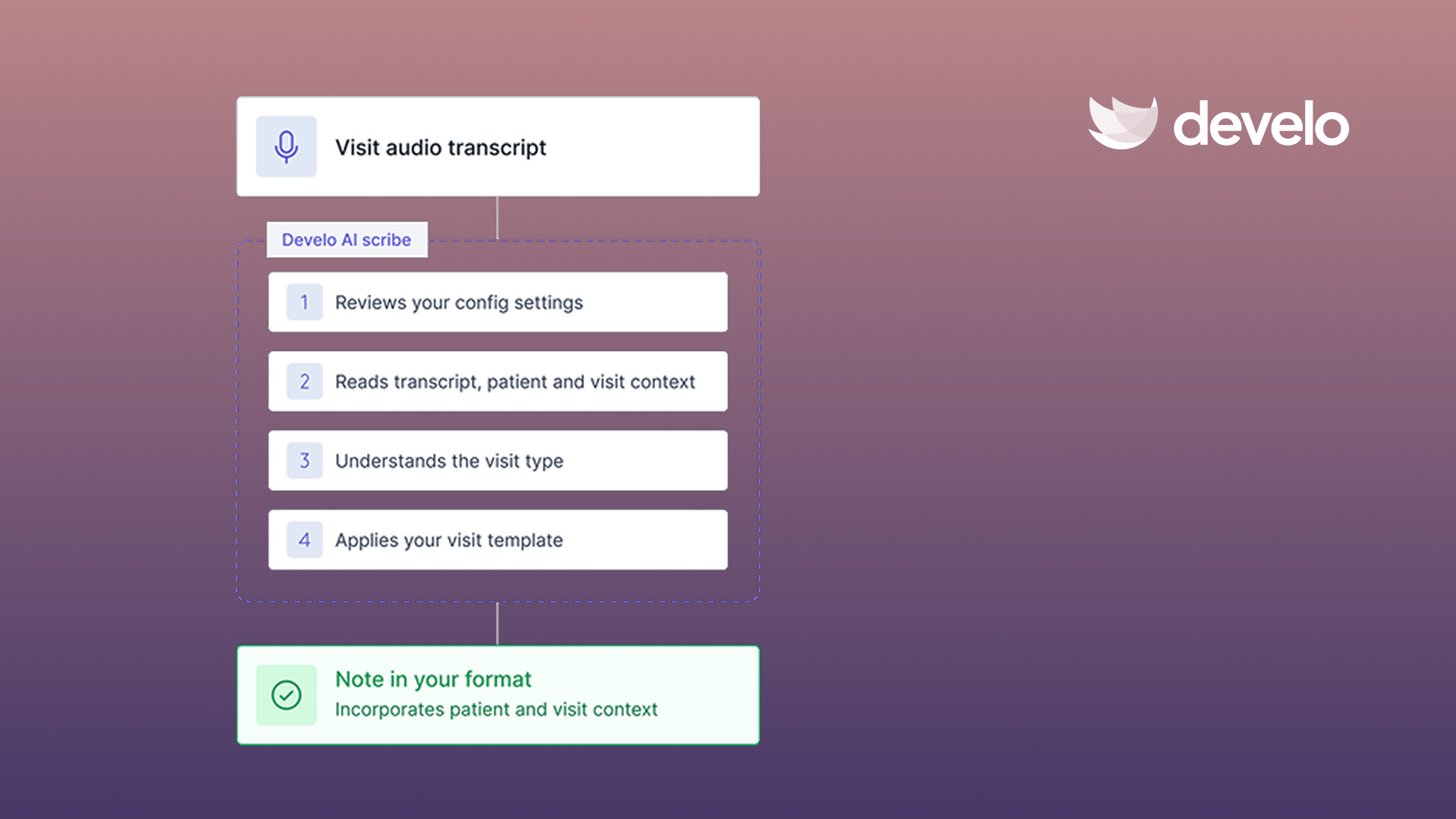
When the questionnaire assigns itself by age, the right screen shows up for the right visit without anyone deciding. When families complete it on their phones beforehand, the score is waiting in the chart when the provider walks in.
Scoring stops being a nurse's job. The right CPT code lands on the claim every time a screen is done, and year-over-year trends are visible without digging through scanned PDFs.
Added up, that's meaningful time back each week. For where screening sits in the rest of the day, see the full pediatric office workflow.
How to Choose the Right Screening Setup for Your Clinic
Before you commit to a workflow, run it through a few honest questions:
- Do screeners assign themselves by patient age, or does a staff member pick them by hand?
- Can families complete the questionnaire on their phone before the visit?
- Does scoring happen on its own and post straight to the chart?
- Does the system attach 96110 and other relevant codes to the encounter?
- Are non-English versions built in from the start?
- Can you pull screening completion rates as a quality-improvement report?
If you're answering "no" to most of these, the screening side of your practice is leaking time and revenue, week after week.
One pediatric wrinkle to build in: for babies born preterm, score against corrected age, counted from the due date rather than the birth date, through about age 2. A 6-month-old born two months early is screened as a 4-month-old, and skipping that correction is a common source of false-positive screens.
Run Every Developmental Screening Questionnaire Without the Paper Stack
The right questionnaire only helps if the workflow around it holds. That means the screen going out at the right age, scoring itself, landing in the chart before the visit, and carrying its billing code, all without anyone chasing paper across the office.
Develo is the AI-native pediatric operating system built solely for independent pediatric practices, unifying charting, billing, practice management, and family engagement in one system built from day one for outpatient pediatric care.
It replaces decades-old legacy EMR systems and the patchwork of generic tools that slow down documentation and create gaps in clinical data.
With Develo, teams can:
- Assign screeners by age automatically: Native digital screeners, including PEDS, SWYC, M-CHAT-R/F, EPDS, PHQ-A, and Vanderbilt, fire from age-aware triggers on the patient record, so the right questionnaire surfaces for the right visit in line with the AAP schedule.
- Let families complete screeners ahead of time: Caregivers complete screeners from their phone before the visit, in their preferred language — no app download or family portal login required.
- Score instantly and flag before the visit: Results auto-score into the chart, and a screening task surfaces concerning scores to the pediatrician ahead of the visit, with no tallying, scanning, or retyping.
- Keep every screen on schedule: Screeners live in the well child visit templates, so they run automatically at every well child visit; automated well child recall brings families back on time; and screening completion rates report out for quality improvement.
- Capture the billing automatically: Automated charge capture attaches 96110, 96127, or 96161 to every completed screen, billed per instrument and automatically paired with the right diagnosis codes, so reimbursement isn't left behind.
- Keep pricing predictable: Developmental and behavioral screeners are part of the platform, not a separate vendor add-on or a per-screen fee.
Book a demo to watch the entire screening workflow run end to end.
Frequently Asked Questions
Which Developmental Screening Questionnaires Do Pediatric Clinics Use Most?
PEDS and SWYC are widely used general developmental screeners in U.S. pediatric primary care, M-CHAT-R/F is the standard for autism screening at the 18- and 24-month visits, and the EPDS is the common choice for maternal depression at the 1-, 2-, 4-, and 6-month visits. The best choice depends on the visit, the child's age, and what you're screening for.
Is a Developmental Screening Questionnaire the Same as an Autism Screening?
No. A general developmental screen checks broad milestones across language, motor, and social-emotional development, while an autism screen like M-CHAT-R/F targets specific signs of autism spectrum disorder. The AAP recommends both, on different schedules.
Can Pediatric Clinics Bill for Developmental Screening?
Yes. Screening questionnaires are billed per standardized instrument: 96110 for developmental screens such as PEDS, SWYC, and M-CHAT-R/F; 96127 for brief emotional or behavioral assessments such as the Vanderbilt; and 96161 for caregiver-focused screens such as the EPDS. Developmental screening is a required EPSDT component, and 47 state Medicaid programs reimburse 96110 separately from the well child visit. Some payers cap how many screens you can bill per visit, so check your local payer policies.
What's Better, Paper or Digital Developmental Screening Questionnaires?
Digital wins on scoring time and billing capture, because the questionnaire scores itself and the code attaches automatically instead of depending on a hand tally. Paper does work when there's no other option, though it costs clinical staff time on every visit. A pediatric-specific EMR that assigns, sends, scores, and bills the questionnaire takes the manual steps off your team's plate.
.png)
.png)
.png)
.avif)