

A single wrong digit in a policy ID or a missing procedure modifier is enough for a payer to deny a claim, and the payment stays on hold until someone finds the mistake and fixes it. A claim scrubber catches errors like these before the claim goes out.
Because the check runs before submission, billers fix problems on their own schedule instead of the payer's schedule, and a practice benefits by reducing average days in AR: a denied claim can extend timeframes by weeks. By the end of this overview, you'll know what any scrubber should check and which pediatric billing rules to test it against.
What Is a Claim Scrubber?
A claim scrubber is pre-submission software that tests each claim against coding and payer rules. It can run inside your practice management system, at the clearinghouse, or both.
The rules range from basic formatting (missing fields, invalid dates) to code pairing and payer-specific requirements.
Claims that fail a rule land in a work queue with the reason attached. Billing staff fix those items while the claim is still in-house, so the claim goes out without the errors the rule set knows to look for.
What Gets Checked
Most scrubbers run some version of the same core checks, though depth varies widely between tools.
Code pair edits often draw on the National Correct Coding Initiative (NCCI), CMS's rule set for code combinations on Medicare claims. Medicaid runs its own NCCI edits, which state programs must apply to fee-for-service claims, and that's the set that matters most on a Medicaid-heavy pediatric panel.
NCCI updates its procedure-to-procedure edit tables every quarter. Some flagged pairs can be billed together when a modifier applies, and others can't be billed together at all. A scrubber's job is to catch a violation before it becomes a denial.
Where It Fits in the Billing Process
In the claim submission process, a scrubber sits after coding and before submission.
- The visit is documented, and the provider, a biller, or an automated system assigns CPT and ICD-10 codes. Dedicated coders are rare in outpatient pediatrics, so the provider often does much of the coding at the point of care.
- The claim is built, pulling together the codes, patient details, and payer information.
- The scrubber runs, checking the claim against its rule set.
- Flagged claims go back to a biller, who corrects the issue or confirms that the flag is a false positive.
- Clean claims go to the payer either straight from the scrub or right after a biller's fix.
Skip the scrub and the payer becomes the first reviewer. A small error then comes back as a rejection or denial, and fixing it means a correction, a resubmission, or an appeal.
Each denied claim also takes time to research, correct, and resubmit, and that time comes out of work on new claims. A scrubber that catches real problems before submission cuts off that rework at the source. A rejected or denied claim can add weeks to processing, which extends days in AR.
Where General Claim Scrubbers Miss Pediatric Rules
Scrubbers tuned for general or adult billing can trip over normal pediatric claims. Three pediatric requirements deserve a close look.
A rule set aware of these three requirements can flag the code, the age mismatch, or the missing modifier before submission, even where it can't verify the underlying documentation.
In the AAP's own billing example, a 2-month well child visit with Pentacel, pneumococcal, and rotavirus vaccines bills 90460 three times (once per vaccine) and 90461 four times (Pentacel's remaining components). Some payers reject repeated 90460 or 90461 lines as duplicates and want them billed as units on one line instead, so a pediatric rule set should know each payer's preference rather than flag the pattern.
What a Pediatric Practice Should Check in Its Scrubber
- Confirm the rule set includes pediatric preventive code ranges, alongside the adult ranges.
- Ask whether vaccine administration codes are checked against patient age, since the component-based codes stop applying at age 19.
- Ask how it handles Vaccines for Children program doses, since the AAP notes that the VFC program doesn't recognize component-based counseling and won't pay 90461, though state Medicaid rules vary.
- Ask whether it checks the vaccine product line on VFC doses, since the vaccine itself is free to the practice, cannot be billed as private stock, and state Medicaid programs set their own rules for how that line is reported.
- Verify that modifier 25 logic handles same-day well and sick visits without flagging every instance as suspect.
- Check that family and sibling claims process independently, since a shared guarantor shouldn't affect how each child's claim scrubs.
- Ask how it handles a newborn's first claims, which often go out before the baby has a member ID of their own, sometimes under the mother's policy, so a demographics check doesn't hold up every newborn visit.
For the code ranges behind those checks, see our pediatric coding guide. And for a quick reference of CPT, ICD-10, and vaccine codes, use our pediatric billing cheat sheet.
Claim Scrubbing Built for Pediatric Practices
A claim scrubber catches what its rule set knows to look for, and one tuned for general adult billing may read a routine pediatric claim as an error until someone configures it correctly.
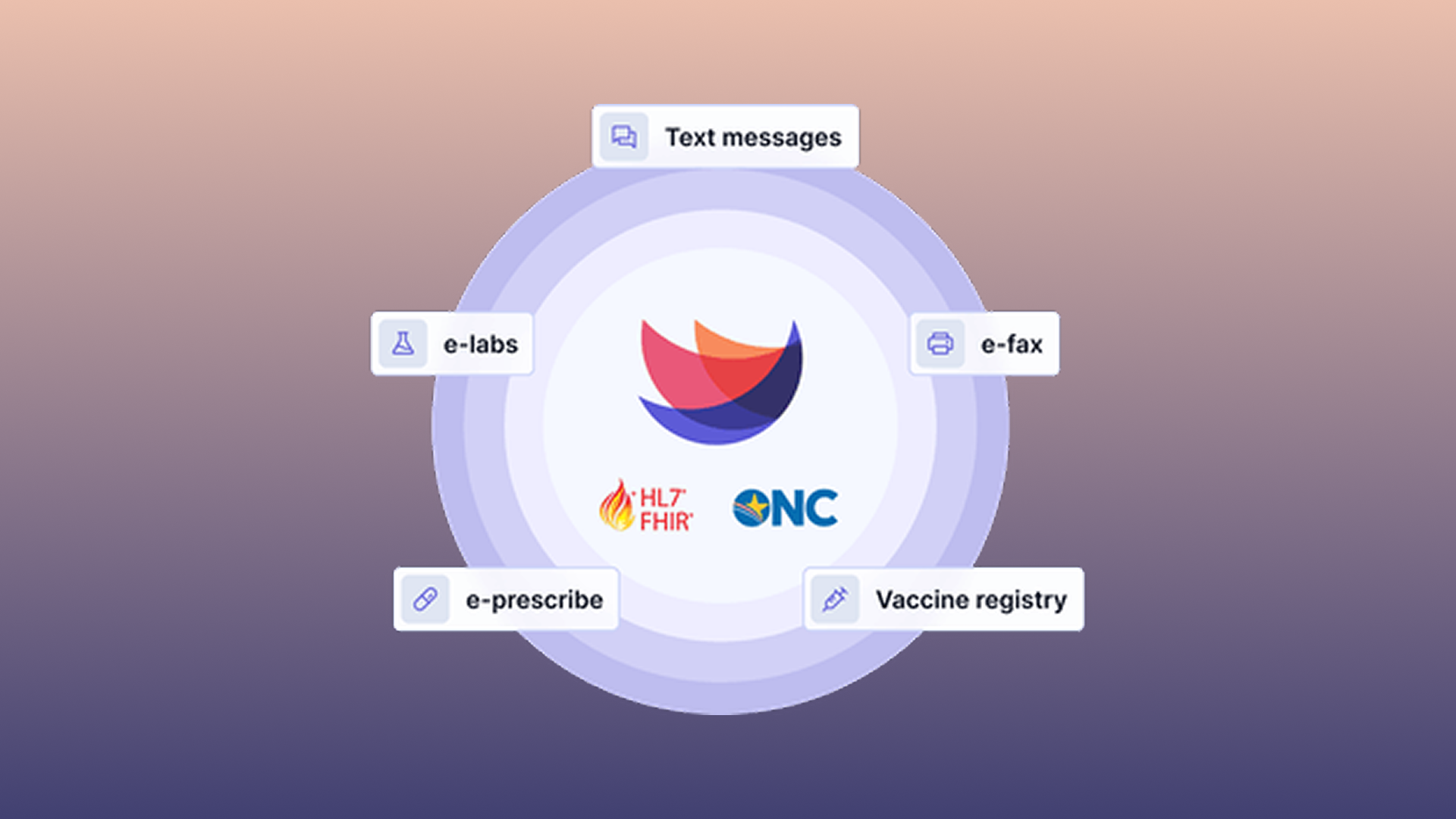
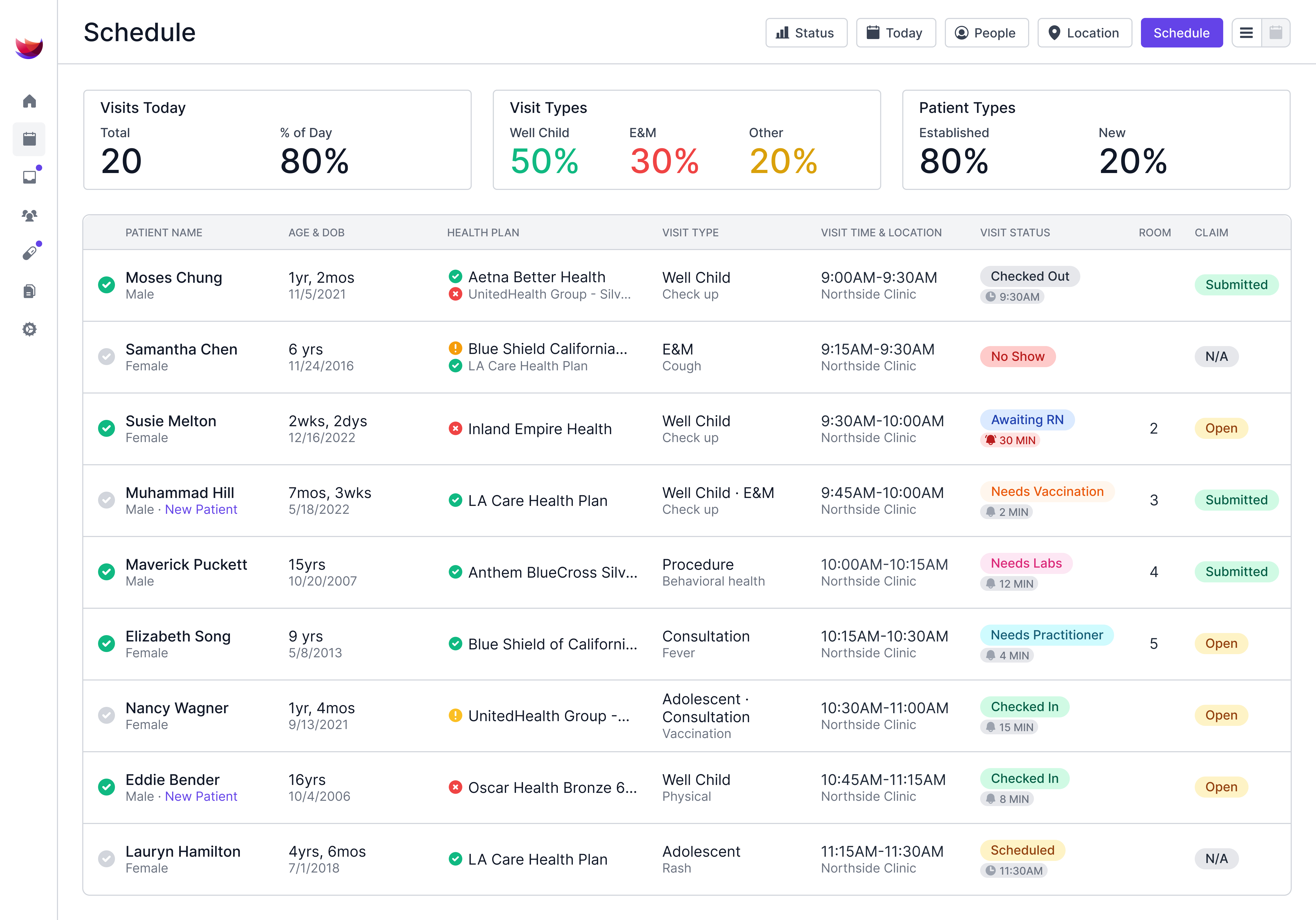
Develo is the AI-native pediatric operating system built solely for independent pediatric practices, unifying charting, billing, practice management, and family engagement in one system. It was built from day one for outpatient pediatric care. Nearly every claim scrubber works in the same window, after the provider finishes the visit and before the claim goes to the payer. Develo runs that scrub too, but its billing automation starts earlier, during the visit itself.
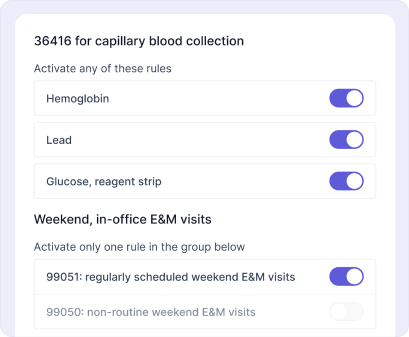
- Automated charge capture: Most EMRs automate charge capture only in part, with one code set at the visit level or a few codes pulled in from orders. Develo sets billing codes, modifiers, and diagnoses during the visit, before the claim is generated: by visit type and the child's age, inside visit templates, across well-sick visits with modifier 25, and as orders are added or changed. Dozens of pediatric-specific rules cover G2211, 99050 and 99051, vaccine administration and refusal, BMI, counseling, and more. When the Develo AI scribe picks up a sick diagnosis during a well child visit, Develo suggests adding the sick diagnoses and the E/M code on top of the preventive code. The provider always makes the final coding call.
- Automated claim checks: Develo's rules engine checks every claim after the visit and before submission. Each rule can fix the claim automatically or route it to a specific work queue for manual review, so billing staff work a short list of exceptions instead of every superbill. Rules can be scoped to a payer, to commercial or Medicaid plans, or to a single provider. Guardian and guarantor relationships are tracked for each child, so siblings who share a guarantor still get claims of their own. A newborn's first visits can be billed under the mother's policy before the baby has a member ID, as long as the insurer accepts the claim that way. The rules engine is available whether a practice bills with its own in-house team, outsources to a third party, or uses Develo's embedded billing services.
- Vaccine billing: Vaccine and administration codes are billed with the patient's Medicaid status, age, and visit type taken into account, and VFC eligibility is checked in two steps. First, Develo maps each patient's VFC eligibility automatically from their primary health plan. Then, when a dose is selected, automation flags any mismatch between the patient's VFC eligibility and the vaccine inventory chosen, or the practice can choose to block a mismatched dose outright.
Automation can cut rework, but the documentation and coding decisions behind a correct claim still rest with the provider and the biller.
A scrubber only works with the claim it's handed, so the steps on either side need attention, too: pediatric insurance verification catches eligibility problems before the visit, and pediatric RCM walks through fixes for any denials that do come back.
Book a demo to see how a claim moves from documented visit to submission on your own visit types.
Frequently Asked Questions
How Do I Know if a Claim Scrubber Is Working Well?
A scrubber that keeps flagging real, correctable errors is doing its job. If it goes quiet after the first few weeks, either your claims have gotten cleaner or the rule set has fallen behind your payer mix, and your denial reports will show which is true.
Who Keeps a Claim Scrubber's Rules Up to Date?
A scrubber is only as good as the rules behind it. Payers change their policies, CMS updates its NCCI edits every quarter, and the CPT and ICD-10 code sets change every year, so a rule set nobody maintains starts missing errors as those changes pile up. In most traditional systems, that upkeep falls to the practice's billers, whether that's an in-house team or an outsourced billing company, and it rarely happens consistently, which is why billing in many practices stays largely manual. Develo maintains its own library of pediatric charge capture and claim scrubbing rules and rolls updates out to practices proactively, so billers aren't left to build and maintain them on their own. Develo's RCM billing team is employed directly by Develo, never outsourced, and works only in pediatrics. The team stays on top of the latest coding changes and analyzes billing results to spot shifts in payer policy or claim adjudication early.
What Errors Does a Claim Scrubber Catch?
A claim scrubber catches structural errors on the claim itself, such as invalid codes, code pairs that can't be billed together, and modifier mistakes. Payer-specific rules only get caught if the tool's rule set includes them.
Is Claim Scrubbing the Same as Denial Management?
No, claim scrubbing happens before submission, and denial management happens after. A scrubber prevents errors from reaching the payer. Denial management works on claims that were submitted to the payer and rejected.
Do Claim Scrubbers Catch Pediatric-Specific Billing Errors?
Only if the rule set is built to recognize them. A scrubber without pediatric logic may flag same-day well and sick visits or component-based vaccine codes as errors, and it may let a preventive code billed in the wrong age band go through.
Does a Claim Scrubber Guarantee a Clean Claim?
No, a scrubber reduces errors but can't verify facts beyond the claim itself, like whether the counseling documented for a vaccine code ever took place. It catches what's structurally wrong with a claim.