
.avif)
After six weeks of demos, reference calls with pediatric clinic administrators, and hands-on workflow testing, I narrowed the field to seven platforms independent practices run on in 2026.
This guide breaks down features, pricing, and honest trade-offs so you can pick the best pediatric EMR for your clinic without sitting through five vendor demos.
7 Best Pediatric EMRs: Quick Comparison
How I Researched and Tested These Pediatric EMR Platforms
I spent six weeks evaluating pediatric EMR platforms across live demos, vendor documentation, and reference conversations with practice administrators. Where possible, I clicked through real workflows: well child visit charting, vaccine ordering, charge capture, and family portal flows.
- Pediatric workflows: How the platform handles growth charts, immunization registries, age-based screeners, and adolescent confidentiality — and specifically whether VFC and private vaccine stock are tracked separately along with patient-level VFC eligibility
- Family relationships: Whether siblings, multiple guardians, and blended families are first-class data structures
- Billing and revenue cycle: How charge capture, claims submission, and denials management work day to day
- Integrations: E-prescribe, e-labs, e-fax, and state vaccine registry connectivity
- User interface: Click counts, screen fatigue, and how fast new staff get productive
- Pricing transparency: Whether the quoted number is the real number or just the entry point
- Data migration: Which pediatric fields survive the move — immunization histories with lot numbers and VFC eligibility category, growth and vitals series with their dates intact, and patient-caregiver links — versus which arrive as a flat PDF
This hands-on approach helped me see which best pediatric EMR options hold up in a busy peds clinic versus which ones look polished in a sales deck.
1. Develo: Best for Independent Pediatric Practices Wanting AI-Native Operations
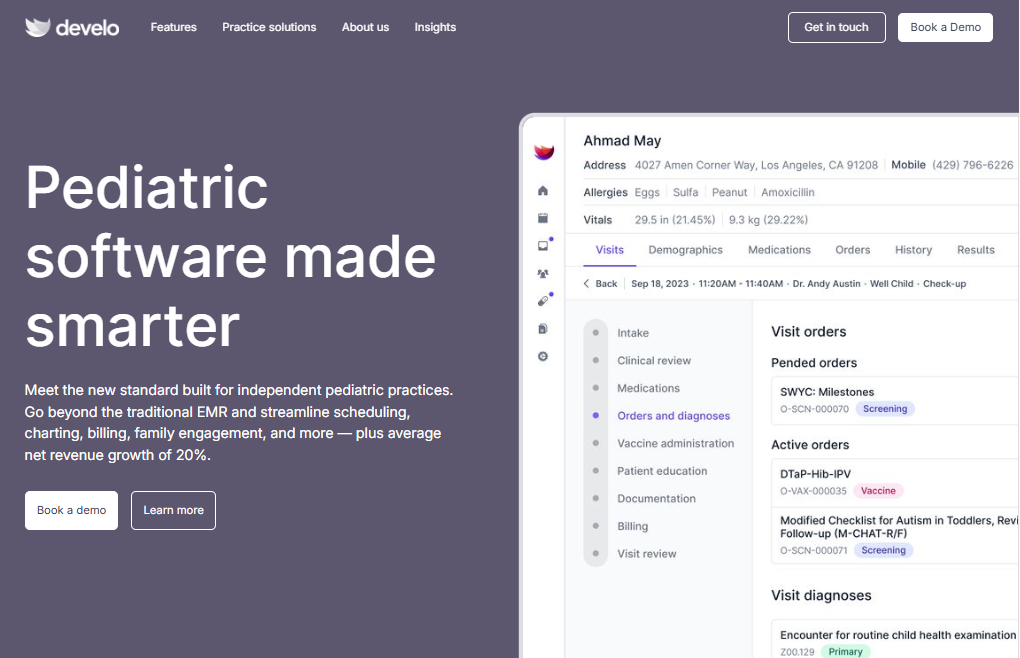
What it does: Develo is the AI-native operating system for pediatrics, unifying charting, billing, practice management, and family engagement in one system built solely for independent pediatric practices.
Best for: Independent pediatric practices replacing legacy EMR systems and the patchwork of generic tools that slow down documentation. Develo serves practices of every size, from solo providers to large multi-location groups.
Develo was built from day one for outpatient pediatric care, so its workflows assume pediatric realities like growth tracking, immunizations, and family relationships from the ground up.
Automated charge capture applies pediatric-specific coding rules in the background. That reduces under-coding and shrinks denial rates without adding biller workload, even across common pediatric coding scenarios that trip up generalist EMRs.
Key Features
- Develo AI scribe, embedded in the visit: The provider scribe writes straight into the note using visit context beyond the transcript; the intake scribe runs the same multilingual, no-audio-retained experience for nurses and medical assistants
- Automated charge capture: Applies pediatric coding logic (well child BMI Z-codes, vaccine admin codes, E&M levels) at the point of documentation, with real-time eligibility checks at check-in and claim scrubbing at submission
- Complete vaccine workflow: VFC eligibility matched to funding source, inventory tracked by funding source and lot expiry, a forecasting engine that flags doses due and invalid doses before they are given, and bi-directional state registry exchange
- Family-first data architecture: Siblings, guarantors, and multiple caregivers are native data structures in the core data model, with 21st Century Cures Act handling that separates adolescent-only records from parent visibility
- Built-in pre-visit intake and family portal: Digital screens, forms, and registration replace third-party tools, with self-scheduling, secure messaging, and terminal, online and portal payments posting in real time
Pros and Cons
Pros:
- ✅ Comprehensive pediatric workflows that competitors retrofit or skip
- ✅ Migration keeps the pediatric fields intact — immunization histories with lot numbers and VFC eligibility, growth and vitals series, and patient-caregiver links
- ✅ Browser-based with no server, no install, and updates pushed in real time
- ✅ Onshore support and engineering, with no offshored ticket queue
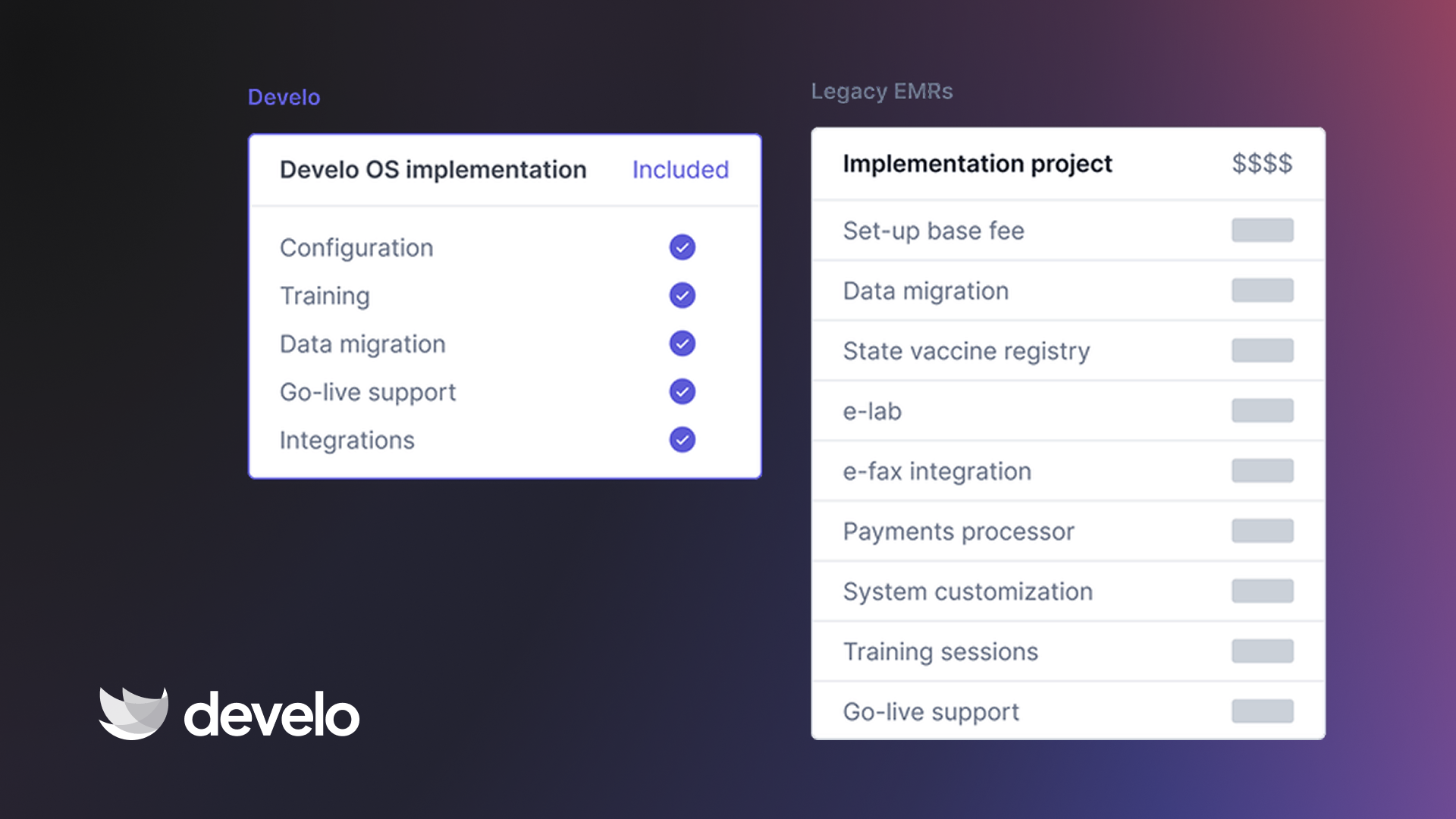
- ✅ Comprehensive pricing with implementation, training, data migration, and support bundled in rather than priced as add-ons
Cons:
- ❌ Newer to the market than PCC or Office Practicum, with a smaller customer base
- ❌ Smaller third-party integration catalog than athenahealth or eClinicalWorks
What Real Users Are Saying
Per Develo practice interviews:
- Quick onboarding compared to older EMR systems: One pediatric practice owner said Develo became easier to use within the first week than many legacy EMRs they had relied on for more than a decade, pointing to the platform's intuitive layout and streamlined workflow. — Practice Owner, Illinois
- Built specifically around pediatric and family workflows: Another reviewer said Develo brings scheduling, communication, and clinical tools into a single platform while supporting pediatric-focused needs like adolescent confidentiality and automated family management features. — Former EMR Executive
Pricing
Develo uses comprehensive subscription pricing tied to practice size and provider count. Implementation, support, and product upgrades are bundled in.
There are no à la carte module fees or charges for new vaccine code releases. AI capabilities are priced separately. Book a demo for a custom quote.
Bottom Line
If you want a pediatric EMR built for the next decade, Develo is the strongest fit.
I'd recommend it to independent pediatric practices tired of legacy interfaces, third-party intake tools, and offshored support. Develo gives you one platform handling charting, billing, practice management, and family engagement, plus a foundation that supports practice marketing growth.
2. PCC: Best for Practices Valuing Long-Term Pediatric Partnership
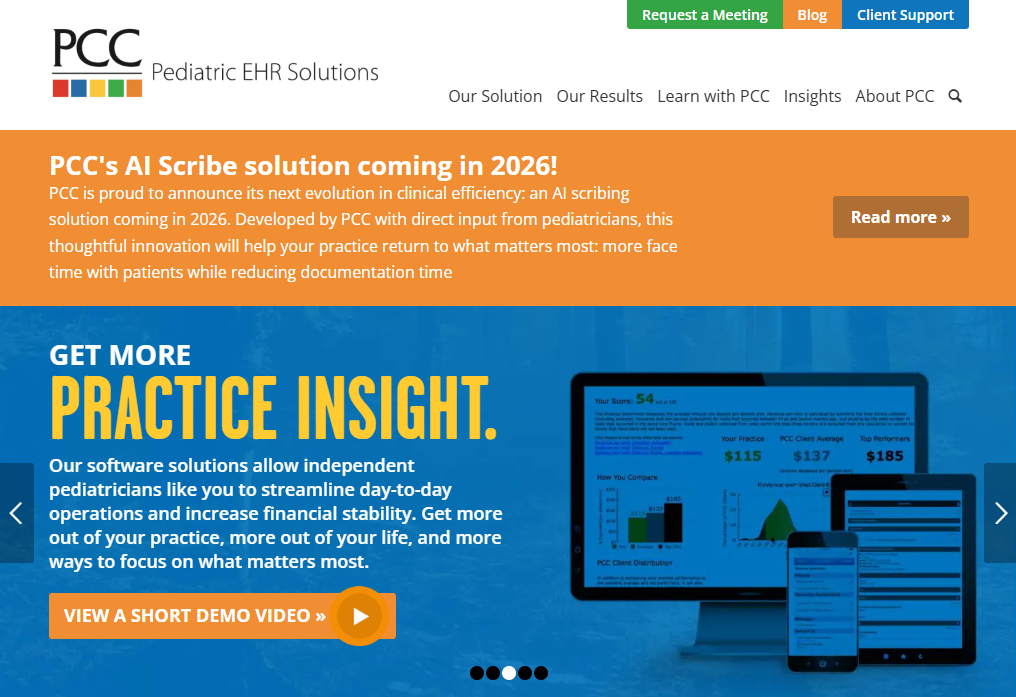
What it does: PCC (Physician's Computer Company) is a pediatric-dedicated EMR and practice management platform offered as both on-premise and cloud-hosted.
Best for: Established pediatric practices that prize long-term vendor relationships, peer benchmarking, and a tight customer community.
PCC's clinical content is deep, and the user community is one of the strongest in pediatric EMRs. Vaccine forecasting helps practices flag patients due for immunizations. Reporting includes anonymized peer benchmarking that few competitors match.
Key Features
- Vaccine forecasting: Identifies patients due for vaccines based on schedules and history
- Peer benchmarking reports: Compares your practice metrics against anonymized peer data
- Strong customer community: Annual user conference and active peer forums
- Pediatric clinical content: Templates for well child visits, sick visits, and developmental milestones
Pros and Cons
Pros:
- ✅ Deep pediatric clinical content built up over decades
- ✅ Comprehensive subscription pricing with $0 startup costs and $0 data conversion
Cons:
- ❌ Billing interface looks and behaves like 1990s software
- ❌ Its newest AI capability is a paid monthly add-on carrying its own implementation fee
- ❌ Innovation pace is slow compared to newer entrants
What Real Users Are Saying
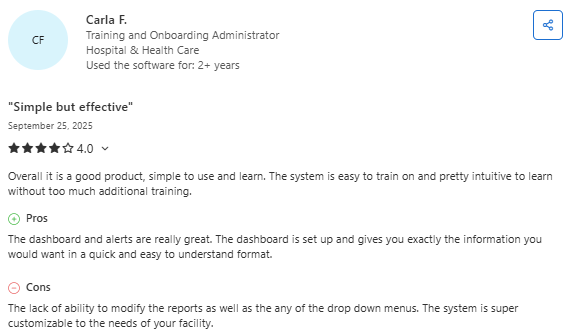
- Easy for clinicians and staff to learn quickly: One healthcare reviewer said PCC made it easier to stay organized and navigate patient information day to day, highlighting the platform's user-friendly design and straightforward workflows. — Venus C., Capterra
- Smaller practices liked the usability, but some users wanted more modern functionality: One reviewer praised PCC eRx and dashboard reporting for being simple and effective, but criticized the lack of multitasking, limited integrations, outdated workflows, and time-consuming insurance and demographic update processes. — Verified Reviewer, Capterra
Pricing
PCC does not publish a rate. Practices pay a platform fee plus a per-practitioner monthly fee, with clearinghouse fees included, and PCC publishes $0 startup costs and $0 data conversion. The standard contract term is three years, and an early termination fee applies. Request a demo for a custom quote.
Bottom Line
PCC is solid if your practice values community, support, and clinical depth more than modern interfaces. If your team is younger or expects the billing system to feel like 2026, you'll likely outgrow PCC's foundation.
3. Office Practicum: Best for Practices Wanting Modular Pediatric Functionality
What it does: Office Practicum (OP) is a pediatric-focused EMR with cloud-hosted and legacy on-premise options, sold modularly so practices can add components as they grow.
Best for: Pediatric practices that want to start with smaller scope and bolt on functionality over time, and that are comfortable working with a vendor backed by private equity since 2018.
The platform's pediatric templates, growth charts, and immunization management are well-developed. Form fill functionality is among the more mature in the category. The friction shows up in the commercial model and supporting integrations.
Key Features
- Pediatric templates and growth charts: Out-of-the-box content for well child visits, vaccines, and developmental tracking
- Modular purchasing: Buy individual components rather than the full platform
- Immunization management: Integrated with state registries and vaccine ordering
- Active user community: Webinars, training resources, and peer forums
Pros and Cons
Pros:
- ✅ Strong pediatric content and form fill functionality
- ✅ Lower entry cost for small practices buying limited modules
- ✅ Established ecosystem of third-party integrations and RCM services
Cons:
- ❌ Per-module charges add up as practices scale
- ❌ The core system is being rebuilt and released in stages via the OP Reimagined initiative, with forced transitions to a modern cloud setup along the way
- ❌ User reviews continue to flag slow support response times from an increasingly offshore support team
What Real Users Are Saying
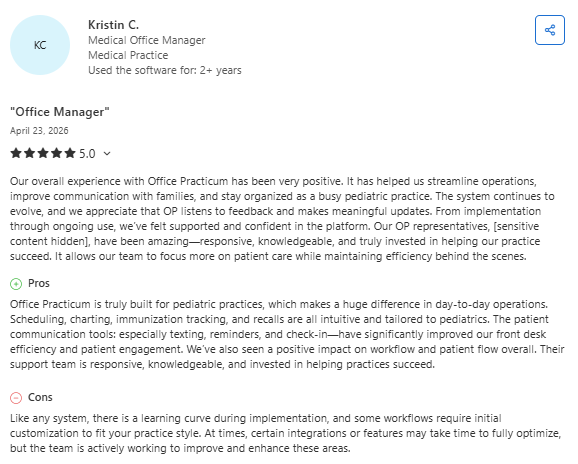
- Users value Office Practicum's pediatric-specific workflows and support: One reviewer said Office Practicum helped streamline pediatric operations with tailored scheduling, charting, reminders, and communication tools, while also praising the platform's responsive support and ongoing product improvements. — Holly V., Capterra
- Some users wanted more advanced customization and follow-up tools earlier on: One reviewer praised Office Practicum's reporting and patient communication capabilities, but said the platform historically lacked certain customizable tracking and follow-up workflows needed for overdue visits and vaccinations. — Martin J., Capterra
Pricing
Office Practicum does not publish pricing publicly. Pricing is modular, with separate fees for components like the family portal, billing, and feature updates. Clearinghouse fees are billed separately. Request a demo for a quote.
Bottom Line
OP works for practices that want to start small and add features as needed. If you want complete billing and modern integrations out of the box, you'll likely find OP frustrating to scale.
4. athenahealth: Best for Pediatric Lines Inside Multi-Specialty Organizations
What it does: athenahealth is a cloud-based, multi-specialty EMR and revenue cycle platform that adapts to pediatric practices through configurable templates.
Best for: Pediatric departments inside multi-specialty organizations or larger groups that need broad interoperability and don't want a peds-only system.
athenahealth is browser-based with regular updates and a polished scheduling module. The platform's biggest pull is its billing service: athenahealth handles claim preparation through denials management, priced against what the practice collects.
Key Features
- Cloud-based, multi-specialty platform: Updates push automatically with no server overhead
- athenaCollector billing services: End-to-end claims preparation, submission, and denials management
- Strong scheduling module: Widely cited as one of athenahealth's better experiences
- Broad integrations ecosystem: Wide partner network for connectivity
Pros and Cons
Pros:
- ✅ Strong if you need multi-specialty support beyond pediatrics
- ✅ Billing services reduce in-house biller workload
Cons:
- ❌ Collections-based pricing gets more expensive as revenue grows
- ❌ Pediatric feature requests often go unaddressed
- ❌ UI complexity reflects multi-specialty design, not pediatric workflows
What Real Users Are Saying
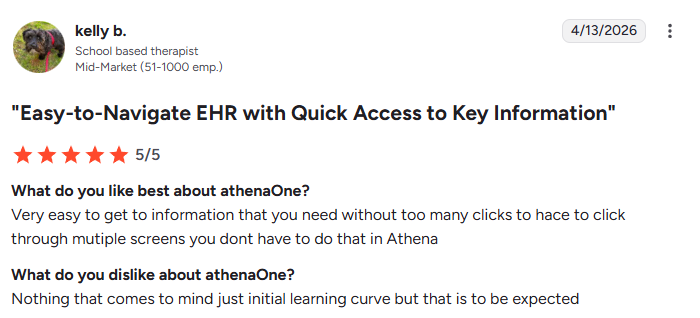
- Integrated workflows and strong support help growing practices: One mental health practice owner said athenaOne combined EHR and practice management tools into a streamlined system that reduced documentation time, supported flexible integrations, and provided responsive customer support throughout implementation and daily use. — Michelle G., G2
- Powerful customization and reporting, but harder for smaller practices: One practice owner praised athenaOne's workflow customization, reporting tools, and integrations, but criticized the platform's pricing increases, steep learning curve, long onboarding process, and inconsistent customer support experience for smaller teams. — David B., G2
Pricing
athenahealth uses pricing tied to your collections. It publishes no rates; third-party estimates put athenaOne around $140 per provider per month plus 4% to 8% of monthly collections. Request a quote.
Bottom Line
athenahealth is a solid choice for multi-specialty groups that happen to have pediatric volume. For pediatric-only independent practices, the UI complexity and pricing model usually argue for a peds-specific platform.
5. eClinicalWorks: Best for Cost-Sensitive General Practices
What it does: eClinicalWorks is a general ambulatory EMR and practice management platform with cloud and on-premise deployment options.
Best for: Cost-sensitive practices that can live with general ambulatory workflows and don't need pediatric-specific features as a top priority.
eCW competes primarily on price and breadth. The platform covers EHR, practice management, family engagement, and RCM services, with a feature list long enough to satisfy most checkbox comparisons.
Key Features
- Cloud-based EMR with PM and RCM services: Multiple deployment options
- Broad feature checklist: Family engagement, telehealth, and analytics modules
- Established RCM services: Available as an add-on for billing-heavy practices
Pros and Cons
Pros:
- ✅ Publishes its rates, unlike most pediatric-specific platforms
- ✅ Wide feature footprint across EHR, PM, and engagement
- ✅ Broad integration partners
Cons:
- ❌ Pediatric content is configured on top of a general ambulatory core rather than built into the data model
- ❌ User reviews flag missed roadmap commitments and temporary fixes
- ❌ Generalist UI requires workarounds for peds workflows
What Real Users Are Saying
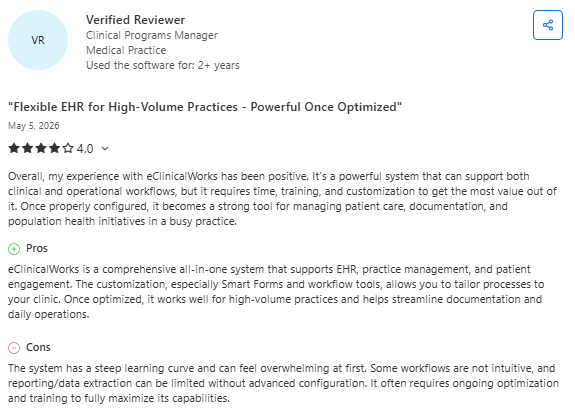
- Users praise eClinicalWorks for patient management and revenue cycle workflows: One practice owner described eClinicalWorks as a highly capable all-in-one system for chart management, claims processing, and revenue cycle operations, highlighting its ease of use for handling denials and unpaid claims. — Kristin H., Capterra
- Some users report challenges with medication and prescription workflows: One reviewer said eClinicalWorks offered extensive features for a wide range of medical practices, but noted that updating medications and prescriptions could become cumbersome after changes were made to patient charts. — Haley D., Capterra
Pricing
eClinicalWorks publishes EHR pricing on its site, across three tiers: EHR Only, EHR with Practice Management at $599 per provider per month, and RCM as a Service at 2.9% of collections, all with no start-up costs. As of September 2026, the published rate is $499 per provider per month for EHR Only.
Bottom Line
eCW makes sense when cost is the deciding factor and pediatric depth is secondary. If you run a pediatric-focused practice, the pediatric content is there, but the workflows around it are built for general ambulatory care, and you'll likely outgrow it.
6. Greenway Health: Best for Practices in the Greenway Ecosystem
What it does: Greenway Health offers Intergy and PrimeSuite, hybrid EMR and practice management platforms used across multiple specialties.
Best for: Practices already running Greenway products in their organization, or that need a generalist EMR with established billing and reporting.
Key Features
- Intergy and PrimeSuite EMR platforms: Multi-specialty support
- Established RCM and reporting: Comprehensive billing workflow
- Broad integration partner network: Extensibility through third-party tools
Pros and Cons
Pros:
- ✅ Broad multi-specialty footprint
- ✅ Established billing, reporting, and care management functionality
- ✅ Long-standing vendor relationships and references
Cons:
- ❌ Generalist platform with limited pediatric-specific workflows
- ❌ Click-heavy interface and aging architecture
- ❌ Add-on charges and inflexible contract terms
What Real Users Are Saying
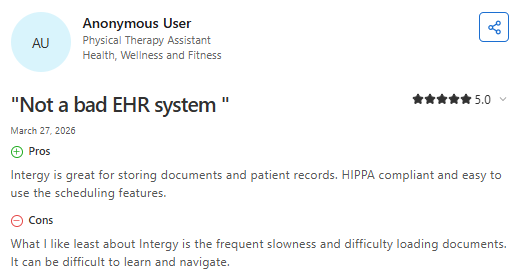
- Users praise Intergy's billing and practice management capabilities: One long-time user said Intergy provided strong control over billing, accounts receivable, and business operations while also highlighting the platform's training resources and responsive IT support. — Tonya C., Capterra
- Some users report complexity and occasional performance issues: One reviewer liked that Intergy combined clinical and administrative workflows into a single platform, but said the system could feel overwhelming for beginners and occasionally experienced shutdowns during billing tasks. — Freya G., Capterra
Pricing
Greenway Health does not publish pricing publicly. Pricing typically includes licensing, implementation, and support, with separate clearinghouse fees. Request a demo for a quote.
Bottom Line
Greenway works for practices already invested in the platform or running mixed specialties under one EMR. For a pediatric-focused practice starting fresh in 2026, the generalist foundation and contract terms usually outweigh the breadth.
7. NextGen: Best for Mid-to-Large Multi-Specialty Groups
What it does: NextGen Healthcare is an ambulatory EMR and practice management platform serving multi-specialty groups.
Best for: Mid-to-large multi-specialty groups that include pediatric departments and need one platform across specialties.
The platform supports integrations with state registries, labs, and clearinghouses. The pediatric experience is where things get thinner. NextGen is built for general ambulatory care, so pediatric-specific workflows often need configuration work or third-party tools.
Key Features
- Multi-specialty EMR and PM platform: Configurable for varied specialties
- Integrations and interoperability: Established connectivity with hospitals, labs, and registries
- Compliance and reporting: Strong support for regulatory reporting requirements
Pros and Cons
Pros:
- ✅ Strong multi-specialty capabilities
- ✅ Established integrations with hospitals and labs
- ✅ Robust reporting and compliance tools
Cons:
- ❌ Pediatric workflows often require configuration or third-party add-ons
- ❌ Click-heavy interface compared to modern alternatives
- ❌ Slower pace of new feature releases
What Real Users Are Saying
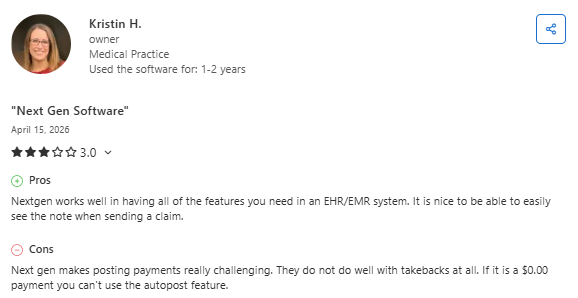
- Users praise NextGen's workflow management and cloud accessibility: One reviewer said NextGen helped simplify document management, collaboration, and office workflows through an intuitive interface and convenient cloud-based access that improved day-to-day productivity. — Verified Reviewer, Capterra
- Some users report delays and usability frustrations in daily operations: One reviewer said NextGen performed well for converting paper charts to EMR and managing healthcare workflows, but criticized delayed fax handling, limited communication tools, and slow documentation processes for new patients. — Muhammad U., Capterra
Pricing
NextGen does not publish pricing publicly. Pricing varies by group size, modules, and services. Request a demo for a custom quote.
Bottom Line
NextGen is a defensible choice for multi-specialty groups that need one ambulatory EMR across pediatrics and other lines. For a pediatric-only practice, the lack of deep peds workflows usually argues for a peds-specific platform.
Which Pediatric EMR Should You Choose?
The best pediatric EMR for your practice comes down to whether you want a system built for pediatrics from day one or a generalist platform you'll configure to fit. Each platform earns its position for a specific kind of buyer:
Choose Develo if you ...
- Run an independent pediatric practice — solo, multi-site, or an MSO-backed group — and want charting, billing, practice management, and family engagement in one platform
- Want AI scribe and automated charge capture working in real visit context
- Prefer onshore support, comprehensive pricing, and a fast product roadmap
Choose PCC if you ...
- Value long-term vendor partnership and a strong customer community
- Are willing to live with a dated billing interface in exchange for stability and pediatric depth
Choose Office Practicum if you ...
- Want to start with a smaller module footprint and add components over time
- Have a billing team comfortable with per-module pricing and add-on fees
Choose athenahealth, eClinicalWorks, Greenway Health, or NextGen if you ...
- Run pediatrics inside a larger multi-specialty group standardizing on one EMR
- Are willing to trade peds-specific workflows for breadth, scale, or more dense user interfaces
Skip this category entirely if you ...
- Need a system for adult primary care, urgent care, or family practice with adult patients
Final Verdict
When comparing the best pediatric EMR options, the deciding factor is which platform fits how your practice runs day to day, well beyond the length of any feature checklist.
That's where Develo comes in. Develo is the AI-native operating system for pediatrics, replacing decades-old legacy systems and the patchwork of generic tools that slow down documentation and create gaps in clinical data.
Here's what you can do with Develo:
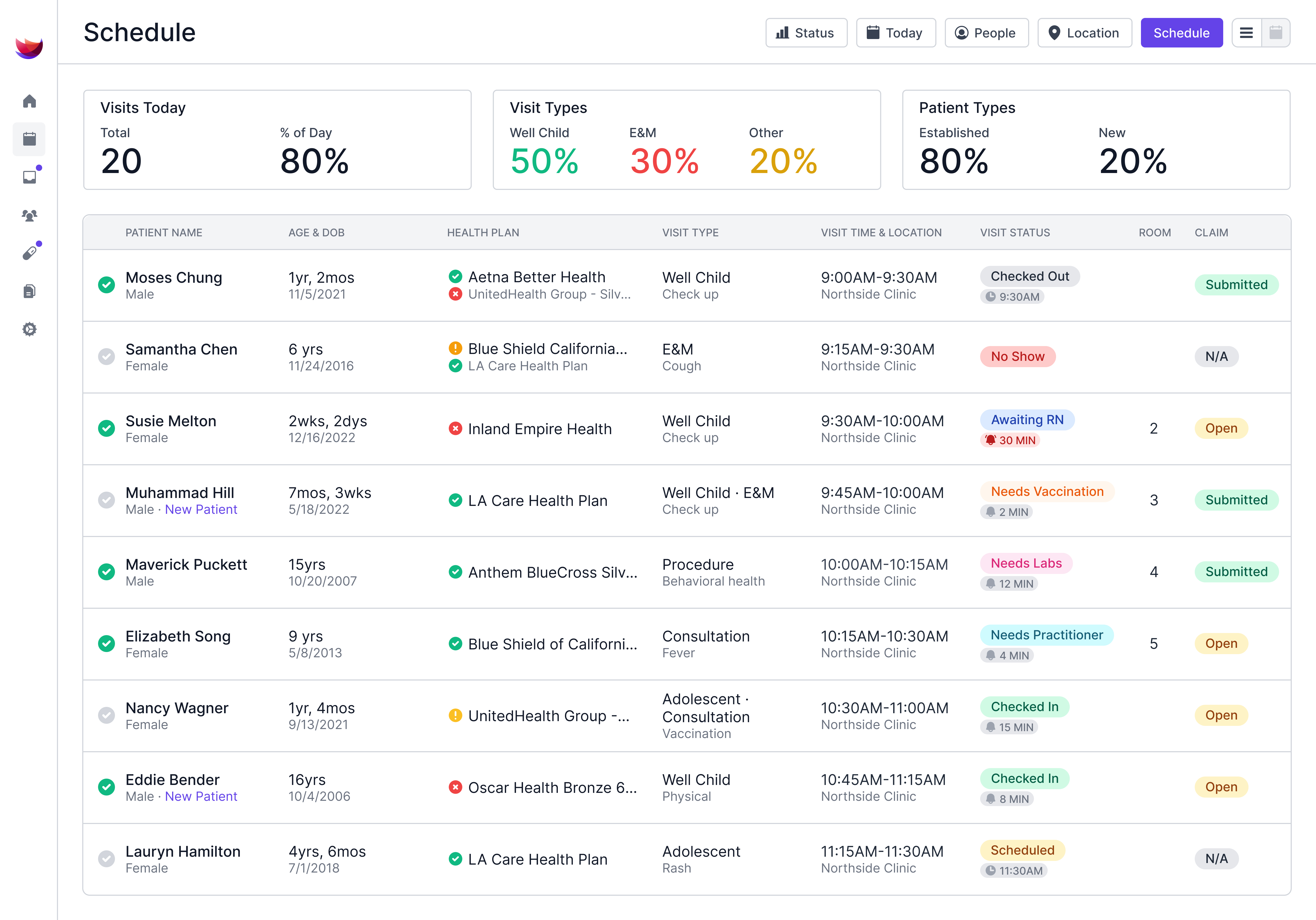
- Run end-to-end pediatric workflows: Visits, orders, chart review, charge capture, claims, and payments in one browser-based system
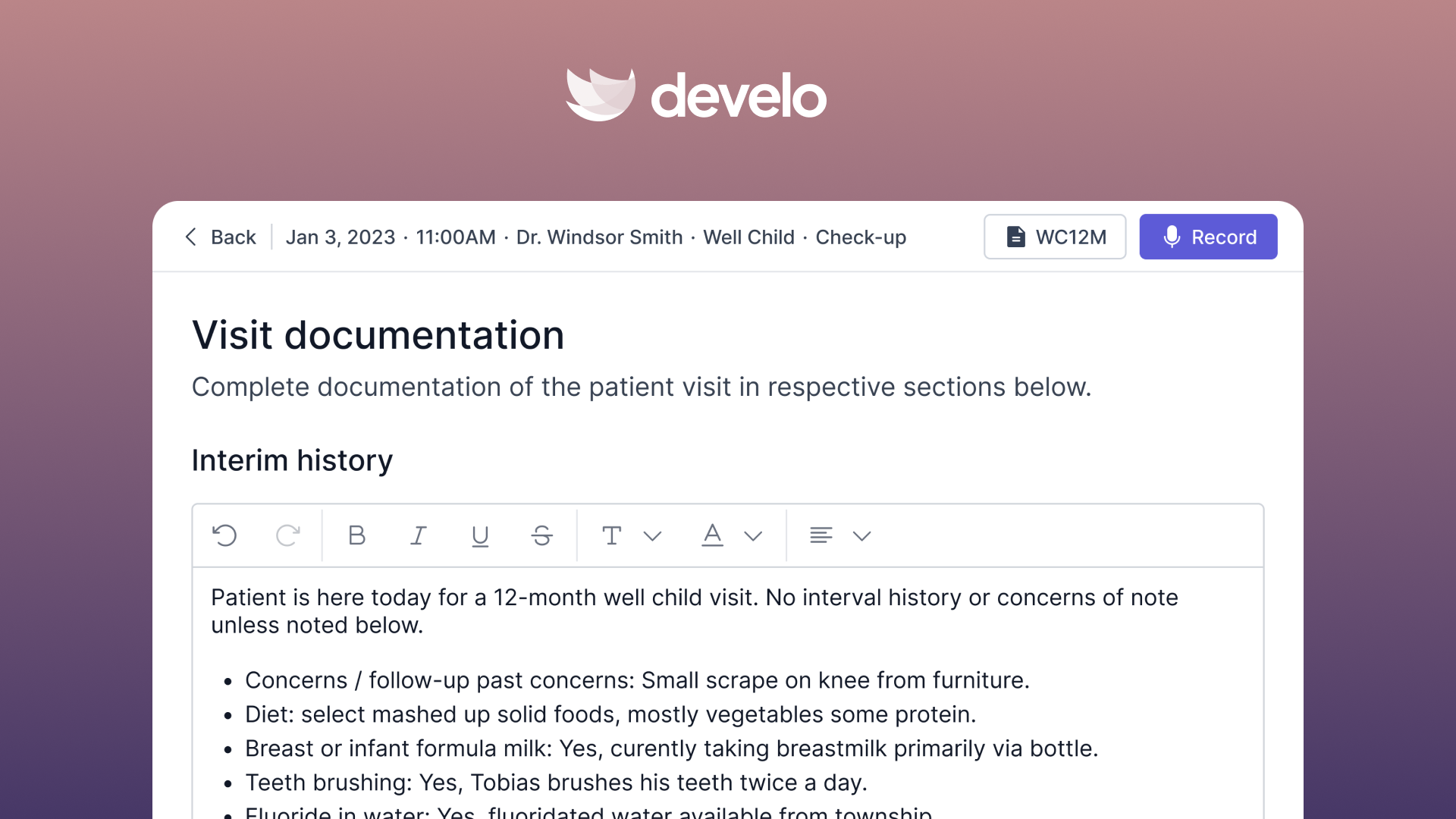
- Automate documentation: AI scribe records visits and generates structured notes in seconds, embedded directly in the chart
- Capture revenue automatically: Automated charge capture applies pediatric-specific billing codes from documentation, reducing under-coding and denials
- Engage families natively: Self-scheduling, payment reminders, digital screens, digital forms, and a family portal that handles siblings and multiple guardians correctly
- Grow your practice: Modern tools that fit how independent pediatric clinics work, with weekly product releases keeping the system current
One platform built for outpatient pediatric care from day one can run the whole practice, replacing the five-tool patchwork most clinics stitch together. Book a free demo and see how Develo helps your practice from check-in to claims.
Frequently Asked Questions
What Is the Best Pediatric EMR for Independent Practices in 2026?
The best pediatric EMR for independent practices in 2026 is the platform that handles family relationships, pediatric coding, vaccine workflows, and family engagement without third-party patchwork.
Develo, PCC, and Office Practicum lead the pediatric-specific category. Develo stands out as the AI-native option for practices replacing legacy systems.
How Much Does a Pediatric EMR Cost?
Pediatric EMR pricing typically falls into three models: per-provider monthly subscription, percentage of collections, or modular per-feature pricing.
Most pediatric-specific platforms do not publish rates publicly. Pricing comes through a demo or quote. Comprehensive subscription pricing usually offers the most predictable total cost.
What's the Difference Between a Pediatric EMR and a General EMR?
A pediatric EMR is built specifically for outpatient pediatric care. It includes native support for growth charts, immunization registries, family relationships, age-based screeners, and adolescent confidentiality.
A general ambulatory EMR retrofits these capabilities, often through third-party add-ons that create gaps in pediatric data.
Should My Practice Switch From Office Practicum or PCC?
Consider switching if your team is frustrated with dated interfaces, slow innovation, third-party portal patches, or feature-level add-on fees.
Develo delivers a suite of AI — provider and intake scribes, chart and reporting Q&A, document intelligence, and form digitization — alongside automated charge capture and built-in family engagement, without the bolted-on tools legacy platforms require.
Can You Migrate From PCC or Office Practicum to Develo?
Yes. Develo has migrated practices off both, along with athenahealth, eClinicalWorks, Greenway, NextGen and others. The pediatric fields that need attention are the ones generalist migrations flatten: immunization histories with lot numbers and VFC eligibility, growth and vitals series, and patient-caregiver links. Configuration, training, data migration, and go-live support are bundled into the subscription — there's no separate implementation project.
Does a Pediatric EMR Help With Billing and Coding?
Yes. A pediatric EMR helps with billing and coding through automated charge capture, pediatric-specific coding rules, claims pre-submission checks, and denials management.
Modern platforms apply well child BMI codes, vaccine admin codes, and E&M levels at the point of documentation. That reduces under-coding and shrinks denial rates. The American Academy of Pediatrics publishes coding guidance that pediatric EMRs should reflect natively.