

If your practice runs on a legacy EMR, your vendor may have sent you some version of this email: a reimagined platform is on the way, the product has a new name, or a two-year roadmap is ready for review. Each means your practice has to keep on waiting.
A legacy EMR that needs to modernize has to rebuild the plane while it's flying. No one would choose to rebuild a plane in the air, because one failed part can bring it down, and your practice is on board. Talented engineers and a sound flight plan don't change who rides out every bump: your staff. And not every flight lands.
That isn't hypothetical. Practices that moved from a vendor's first platform to its second, or through a major upgrade, have watched workflows that used to run smoothly slow down or break outright. For some, the move their vendor called an upgrade was catastrophic. One practice came to Develo in an emergency switch after its vendor stopped working with it partway through the transition and left it on its own.
Office Practicum has told its customers it is rebuilding its platform in stages, Greenway is moving practices from an older EMR to a rebranded one called Novare, and Elation, a cloud-based EMR built for all ages, is retrofitting pediatric features onto it. Each is a different way to rebuild the plane in flight, and your practice is still on board.
Why Legacy EMRs Say They're Rebuilding Now
Legacy EMRs are rebuilding because most predate the modern internet and browser-based software, and they're playing catch-up on cloud hosting and the newest automation tools. But not every vendor that announces a rebuild is actually rebuilding.
A legacy EMR is an electronic medical record system built on a foundation that predates modern AI, and its vendor now has to replace that foundation to keep up.
Rebuilding a live EMR is hard, and the vendor doesn't absorb the risk. Your practice does. Standing still isn't safe either, since practices can be forced to switch systems when vendors stop supporting older software.
Vendors tend to call all three paths a rebuild, but only the first one even attempts to replace the foundation:
- The rebuild: The vendor writes a new platform and moves customers onto it in stages.
- The rebrand: The vendor puts a new name and new AI on an existing EMR, then moves customers onto it.
- The retrofit: The vendor adds pediatric features to an established system that wasn't designed around children's care.
The retrofit path applies to newer systems too. An EMR that started partway through the shift to cloud, automation, and AI is still catching up to systems built after it, and one designed around adult care still lacks tools that children's visits need.
Most legacy foundations weren't built for modern automation, and the internet proves it. About 30 years after the internet went mainstream, many EMRs still hand their online pieces to other companies: portals, reminders, digital intake, forms, and screeners are some of the most commonly outsourced parts of an EMR. Office Practicum, for example, has two portal vendors: its own portal is powered by BridgeInteract, and InteliChart powers the portal, reminders, and digital intake for more than 1,000 OP providers. Intake also runs through Phreesia, and pre-visit questionnaires through CHADIS. AI is arriving the same way. OP's AI scribe, Opie AI, is "a white-labeled version of Insight Health's AI scribe technology," in the companies' own words. A vendor still catching up to the internet isn't building AI into its foundation. It's bolting it on.
The Rebuild: Office Practicum's Staged Rebuild
Office Practicum (OP) has told its customers it is rebuilding its pediatric EMR in stages over about 24 months, from early 2026 through the end of 2027. OP calls it the Reimagination Initiative, a move to a "fully cloud-native" platform, and the pace protects the vendor more than the practices using it.
Pilots give OP time to find problems, on pilot practices' live workflows, before everyone else moves over. In a September 2026 announcement, OP said its new chief medical officer will help guide how its technology develops for pediatric practices.
OP's own roadmap shows the order. Front desk and sick visits come first. Well visits, the core of pediatric care, come after sick visits. Charge entry runs into mid-2027, and payment entry and supporting workflows aren't scheduled until the second half of 2027. For about two years, practices on OP will be partway through a rebuild.
Find out which reimagined workflows are live for every customer today, not just pilot practices. On OP's own timeline, front desk and sick visits should already be arriving.
Two systems at once
OP promises "no big bang." Practices choose when to adopt each new workflow, and the new platform runs alongside OP Cloud on the same database. That makes running two systems at once the plan, not a risk. In a single day, a sick visit could run in the new screens while a well visit stays in the old ones. If the practice controls the pace, the practice carries the cost of switching back and forth, over every single staged rollout.
The risk compounds because OP's core doesn't fly alone. Its portal, reminders, intake, screeners, and AI scribe run through outside vendors, and for the portal, two of them, each with its own contract, help desk, and update calendar. Rebuilding the core piece by piece means every one of those connections has to keep working through each stage, and each one is another part that can fail in flight.
A new cockpit on the old plane
OP even borrows the plane metaphor: its redesign is modeled on how Boeing lays out a cockpit. But turboprops and turbofan jets have different cockpits for a reason. A cockpit is built around the plane underneath it, and a new one on the old airframe still has to be installed in the air, with your practice on board.
Ask whether the new screens run on a fresh foundation. OP says the platform is "not refactored legacy software," yet it reads from the same database as OP Cloud. New screens on the same database are still flying the same plane. The old airframe shows in daily work: a well visit that turns into a sick visit still takes two separate notes, and a chart opens to one user at a time.
A roadmap is a forecast, so plan around the tools that are already working in pediatric practices.
The on-premises double move
If your EMR still lives on a server in your office (an on-premises setup), OP's own guidance confirms a double move. OP has told on-premises customers to start planning their move to OP Cloud now, because new features will reach only cloud customers. That's one move from your server to OP Cloud, and a second from OP Cloud to the reimagined platform.
Ask whether both can happen as a single transition, and who pays for hardware and tech support in between.
The Rebrand: Greenway Health and Novare
Greenway Health launched Novare in March 2026 and calls it "the first natively AI-enabled platform built to reinvent the legacy EHR."
At launch, Greenway's chief product and technology officer put it plainly: "Novare starts over." The platform is pitched as a clean break, designed with agentic AI at its core.
Yet Greenway's own Intergy product page describes Novare as "the next evolution of Intergy EHR," and a billing company that works with Intergy practices reports that fee schedules and claim history carry straight over. Read together, Novare looks like Intergy under a new name. A new name on the fuselage doesn't change what's under the wings.
Greenway's AI followed the same pattern. Its Clinical Assist scribe arrived in April 2024 as an add-on for Intergy and Prime Suite, built by a partner, Nabla. Two years later, Greenway's product chief argues the opposite: "You can't fix fragmentation by optimizing the fragments."
Greenway still sells both older EMRs, Intergy and Prime Suite, the products of a 2013 merger, and has signaled to practices on each that they'll eventually need to move to Novare. It hasn't published a general availability date, Novare pricing, or a migration timeline.
If you run Intergy or Prime Suite, a data move is coming either way. Before renewing a contract for Greenway's existing EMRs, ask in writing whether Novare means a new contract, a new implementation, or a data conversion, and when support ends for the version you run today. Then weigh that move against one to a system built for pediatrics from the start.
The Retrofit: Elation Health's One-Time Pediatric Push
Elation Health announced expanded pediatric capabilities in a November 2025 press release, and its pediatric features guide lays them out.
Elation's pediatric features now include:
- A weight-based dosing calculator
- Growth charts with preterm and Down syndrome curves
- Well child templates from newborn to age 18
- A two-way connection to immunization registries
The features guide also lists three screening tools: the M-CHAT-R, the Vanderbilt rating scales for ADHD, and the Survey of Well-being of Young Children (SWYC).
Pediatrics fell to 1% of updates
Elation's own release notes show how that expansion has played out. From September 2025 through September 2026, just 7% of its product updates were pediatric-specific (10 of 143), and 9 of those arrived in a four-month launch burst from October 2025 to January 2026. Since then, pediatrics has fallen to 1% of updates: 1 of 97 in eight months, a refresh of the preterm growth charts.
Elation serves primary care across all ages, so ask how pediatric requests are prioritized on its roadmap, and treat that 1% as the best guide to the answer.
Six workflows to see live
These six pediatric workflows show how far a retrofit really goes. Ask to see each one live:
- Guardians: Check how the chart handles two households, multiple guardians, and an adolescent's confidential notes.
- Screening workflow: Elation's pediatric features guide doesn't include the Edinburgh Postnatal Depression Scale, the PSC-17, or the CRAFFT, so practices that use them may need another way to send, score, and bill. In a pediatric-built workflow, the right screener goes to the family by age before the visit, comes back scored, and adds its billing code.
- Charge capture and vaccines: Confirm whether the billing codes for each shot are added automatically, and ask for a demo that takes a vaccine visit through to the claim.
- VFC stock: Ask whether the system keeps VFC and private vaccine inventory separate and checks each child's VFC eligibility against the dose's funding source before the shot is given.
- Recall: Find out whether recall can target the exact well child visit a 15-month-old is due for, or if it only sends a general wellness visit reminder.
- Billing software: Check whether claims and payment tools come with the base subscription or cost extra.
Clear answers on these points show how much of a retrofit is finished and how much is still on the roadmap.
The 5 Hidden Costs of Waiting on a Legacy EMR
Even in the best case, where a vendor truly rebuilds and commits the engineering time, a legacy EMR rebuild costs your practice time, money, and staff attention. With a rebrand or a retrofit, the core system may barely change, and your practice pays the same costs waiting for a rebuild that isn't coming.
- Waiting: While your practice circles in a holding pattern, your clinicians keep charting the way they do today. In one children's health system, primary care pediatricians spent about 10 minutes in the EMR outside scheduled hours for every hour of EMR use during scheduled clinic hours.
- Retraining twice: Moving to a new EMR is a major organizational change that affects almost every role in a practice. A staged rebuild and an eventual switch to another vendor can mean extra rounds of retraining for your team.
- Workarounds: Side spreadsheets, paper screeners, and add-on tools pile up while you wait, and clinicians who report frustration with their EMR have a higher likelihood of burnout.
- Contract timing: Expect your renewal to come due before the new platform reaches you.
- Price at the finish line: Ask for the new platform's price in writing before you renew, since migration fees or new modules can change your invoice.
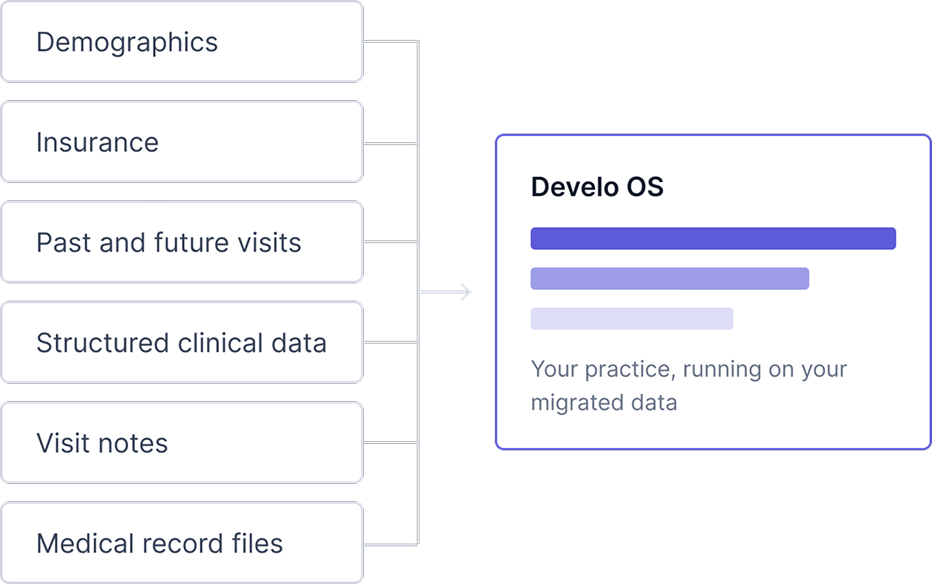
Leaving has costs too. A cloud EMR migration has to bring over demographics, insurance, visit history, immunizations, and links between patients and caregivers. And claims sent from your current system may need follow-up there until they're paid.
Ask any new vendor how data migration works for the EMR you use today, and how long you'll keep access to the old one.
Questions to Ask Before You Wait It Out
Before you agree to wait for a rebuild, get clear answers on dates, costs, and how your team will work during the changeover. Treat these as your preflight checklist:
- Which workflows ship last, and which dates are committed in writing? Red flag: Billing or immunizations have a promised window but no committed date.
- Is the new platform built on new code, or is it new screens on the existing system? Red flag: A vague answer about "modern architecture."
- Will we run two systems at once, and for how long? Red flag: No plan to avoid entering the same data twice.
- How many times will my staff need training? Red flag: Several rounds of training before the final version arrives.
- What will the new platform cost, and does my current contract carry over? Red flag: "Pricing to be announced."
- How are engineers split between the old product and the new one? Red flag: New features land only on the platform you aren't using yet.
- Can you demo a full pediatric visit, from an age-based screener to the vaccine charges on the claim? Red flag: A slide where a live demo should be.
- What happens to our data and open claims if we leave partway through? Red flag: Fees to get your data out, or no clear file format.
A vendor with a solid plan should be able to answer all eight questions in writing. Answers that stay vague are a sign to start comparing other options.
Wait, or Move Once?
For most pediatric practices, waiting costs more than moving.
Staying put makes sense only if both are true:
- Your contract has years left.
- Your staff is stable, and the vendor's existing modules are passable.
The risk grows if staff leave, or if the new modules fall behind schedule or never arrive.
Move now if any of these is true:
- Pediatric workflows you rely on today are breaking down, with no fix on the near-term roadmap.
- The pediatric workflows you're missing are scheduled far in the future.
- Your renewal date is close.
- Your clinicians chart late every night.
- Front desk and billing staff lose hours to double entry, workarounds, and claim follow-up.
A modern pediatric EMR is built that way from the start: a cloud-native, FHIR-native foundation that updates weekly instead of yearly, automation that runs routine pediatric tasks in the background, a family-first data model that links each child to caregivers, siblings, insurance, and guarantors, and AI that's native to the workflow rather than added on.
Back to the plane. Modern means turbofan engines, and you get those by boarding a new plane. A rebuild swaps jet engines onto a turboprop while it's in the air. A rebrand paints a jet engine on the side. A retrofit runs propellers and a jet engine at the same time. Whether your vendor is doing one of these or a mix of all three, you're still flying the old plane. Switching once, to software built modern from the start, can spare your staff a second transition a few years later.
How Develo Was Built
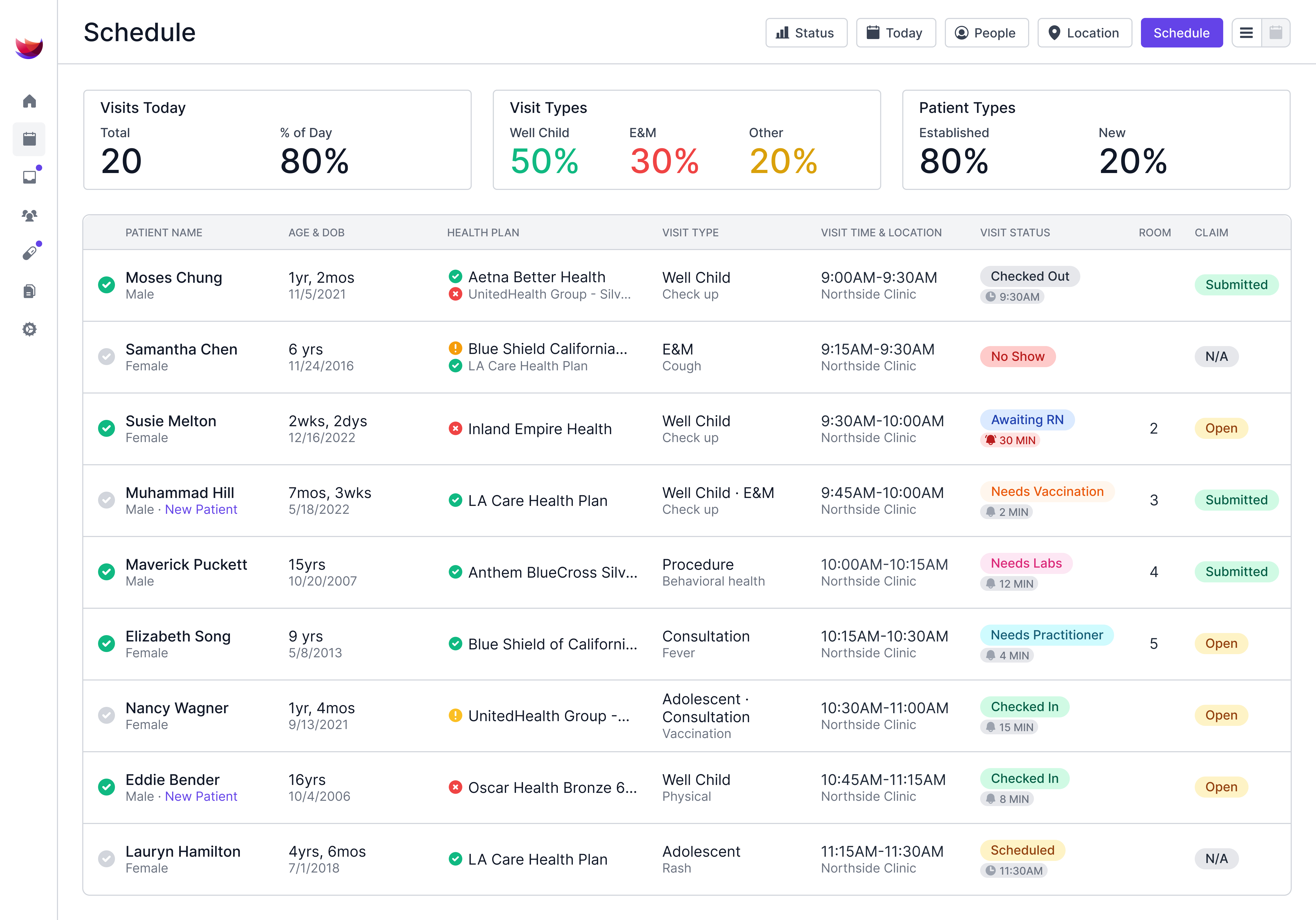
Develo started from a clean foundation. It's the AI-native pediatric operating system, built from the start for outpatient pediatric care exclusively, with charting, billing, practice management, and family engagement in one system. It's built for every type of outpatient pediatric practice, from independent practices and pediatric urgent care to large multi-site groups, MSOs, and care networks, whether they bill insurance or run a direct primary care or concierge model.
The platform runs on modern foundations: it's cloud-based and hosted on Amazon Web Services. Minor releases go out every week and major releases every two weeks, all in the background with no downtime.
For pediatric practices ready to leave a legacy EMR, Develo covers the pediatric workflow end to end:
- AI suite: An expansive set of capabilities is built into the operating system. Develo provider scribe and Develo intake scribe handle documentation, writing straight into the visit note instead of a separate window you copy from, and pulling in what's pertinent from the chart, not just the visit transcript. The provider scribe suggests diagnoses to add or change, checks that each one is billable, and suggests E&M updates, such as adding an E&M code on top of the well child code for a well-sick visit, all in one note for the clinician to confirm. AI eligibility checks verify each family's insurance coverage. Ask Develo catches you up on any patient, Develo doc intel files e-faxes and uploads to the right chart, Develo reports Q&A answers data questions in plain English, and Develo AI forms digitizes practice forms.
- Digital screeners: Age-based screeners, including the Edinburgh Postnatal Depression Scale, the Pediatric Symptom Checklist, and the CRAFFT, go to families before the visit, come back scored, and drop their billing and diagnosis codes onto the visit.
- Vaccine billing: Automated charge capture is built around pediatric billing rules, so vaccine and vaccine administration codes are added automatically for every shot, counting components and injections across all the vaccines given, with the child's age, commercial or Medicaid coverage, nurse visits, and VFC eligibility taken into account.
- Built for families: The family portal, unlike a traditional patient portal, shows siblings' records and balances in one view, customizes billing statements per guarantor, and adjusts as guardian roles change, with confidential visit summaries for teens and limited summaries for parents.
- Recall and reminders: Well child recall is timed to each child's schedule, so it targets the exact visit that child is due for, such as the 15-month well child visit. Payment reminders go out on their own.
White-glove implementation comes bundled into your Develo subscription with no implementation fee, from data migration and setup to training and go-live support. Practices have moved to Develo from the systems in this article, including Office Practicum, Greenway, and Elation, drawing on dozens of migration templates, each built for a specific system.
Book a demo to see a full pediatric visit in Develo, from pre-visit screener to the claim.
Frequently Asked Questions
What is a legacy EMR?
A legacy EMR is an older system built before today's AI tools, and often before the modern internet and cloud hosting. Even EMRs that started partway through those shifts are still catching up to systems built after them, and most weren't designed around children's care. They can still handle daily charting and billing, but adding new features often takes major rework.
What does EMR modernization mean?
EMR modernization means moving an EMR onto newer technology, such as cloud hosting and built-in AI. Vendors can do this by building a new platform, relaunching under a new name, or adding features to an existing system. Only the first replaces the foundation.
What happens to your data in a cloud EMR migration?
In a cloud EMR migration, your data moves from the old system to the new one, including patient records, insurance details, and visit history. A careful migration includes a test run, so your team can spot missing or mismatched records before the big switch.
When should you switch EMRs instead of waiting?
You should switch EMRs instead of waiting when the cost of staying (including workarounds, after-hours charting, and an upcoming renewal) outweighs what the vendor's rebuild promises. One planned switch is easier on staff than a long changeover followed by an eventual move.