

After reviewing PCC's pricing page, published contract terms, and pricing across the pediatric EMR market, we've mapped what pediatric clinics can expect to pay for PCC EHR in 2026. You'll also see what PCC's monthly fee doesn't tell you up front.
PCC EHR Pricing vs. Other Pediatric Software: Quick Comparison
How PCC Pricing Works
PCC markets one monthly fee that covers the EHR software, billing tools, patient portal, mobile app (pocketPCC), tech support, data conversion, and server upgrades. That fee isn't a single flat number, though: it's typically a per-provider monthly charge that scales with claims volume, and some practices, often smaller ones, also pay a practice-level fee and usage charges for services such as text messaging.
PCC doesn't publish exact dollar amounts on its website.
According to PCC's official pricing page, the model includes $0 startup costs and $0 data conversion fees. The company positions this as a partnership-first approach with no large up-front bill. The trade-off sits in the contract term.
The standard PCC contract term is three years with an early termination fee. That's worth noting: even though there are no up-front charges, you're still committed for 36 months.
What Does PCC EHR Cost per Month?
PCC pricing isn't publicly listed, and the exact monthly cost depends on your provider count and claims volume. PCC requires a consultation to receive a quote.
When you get that quote, ask for it in writing and ask how the total changes as you add providers, as claim volume grows, and which usage charges, such as text messaging, sit outside the base fee.
A fee that scales with claims volume lands differently in pediatrics. A Medicaid-weighted panel generates a high number of well child and vaccine administration claims at lower reimbursement rates, so ask PCC to model your cost against your actual claim count, not just your provider count.
Important: Ask whether claim submission and clearinghouse costs are included in your quote or tied to your claim volume, since vendors handle that line differently.
What's Included in the PCC Monthly Fee
PCC bundles most services into its monthly fee, so you won't see separate line items for them. Here's what the monthly fee covers:
- PCC EHR: Pediatric-specific clinical workflow software
- PCC Billing: Financial management and claims processing
- Patient portal (My Kid's Chart): Immunization records, visit scheduling, messaging, and optional payments
- pocketPCC: Mobile app with EHR access, billing data, e-prescribing, and task completion
- Data conversion: All historical records migrated at no extra charge
- Tech support: Dedicated team of experts, including IT, network, and hardware support
- 24/7 emergency support: After-hours coverage for urgent issues, 365 days a year
- Server upgrades: Regular system updates to protect data integrity
- PCC Learn: Online knowledgebase with video guides
- PCCTalk: Peer community of other PCC clients
- Annual users' conference: Included in the fee
This bundled structure means custom reports, template changes, and extra training don't trigger extra invoices, though the total still moves with your provider count and claims volume.
What PCC Doesn't Cover
The monthly fee covers most things, but a few costs sit outside it:
- Third-party Direct messaging: PCC uses Updox for Direct messaging (care transitions, referral notes). Some destination providers may not be available through Updox's trust network, and PCC has limited ability to search for Direct subscribers.
- Family messaging: PCC's automated visit reminders run through a third-party provider, TeleVox, and its Send Text tool sends one-way texts. Two-way family messaging is coming through a Luma Health partnership announced August 19, 2026, so ask whether reminders and messaging are in your fee or billed separately.
- AI documentation and coding automation: PCC Scribe is now available as an optional monthly add-on, with a small implementation fee and a monthly price based on practice size. PCC's 2026 training says Scribe transcription works on local PCC EHR installations only, so confirm your setup qualifies. As practice software moves to the browser and the cloud, a new AI feature tied to installed software is a step backward. PCC hasn't publicly announced an automated charge capture feature.
- Paper family statements: PCC's billing guide gives two ways to send family statements: print and mail them in the office, or send them to a third-party bill printing service, OSG (formerly Diamond Health), to print and mail. Either way, families get paper days later, and you pay printing and postage on every statement. The patient portal lists unpaid charges by visit, but PCC's documentation doesn't describe a statement there, and an online payment doesn't update the balance until your staff post it.
- Digital screeners: Families can update demographics and insurance through the portal's Pre-Check-In, but CHADIS screeners require a separate CHADIS subscription.
- EPCS token fee: Providers enrolling in EPCS pay a one-time fee for the electronic token. PCC doesn't disclose this amount publicly.
- Multi-location connectivity: PCC EHR requires a server at the practice or a cloud-hosted connection. Practices with multiple offices need business-class internet connections between locations.
PCC Alternatives and Pricing Comparison
PCC falls in the premium tier for pediatric EMR software. Here's how the broader market breaks down based on EMR Guides' 2026 market data:
- Budget tier ($200 to $350/provider/month): Basic EMRs with growth charts, immunization tracking, and e-prescribing, but limited customization and support. Examples include CharmHealth and TriMed.
- Mid-tier ($350 to $500/provider/month): Full pediatric capabilities, Vaccines for Children (VFC) tracking, developmental screenings, and state registry interfaces. Examples include CureMD and NextGen Office.
- Premium tier ($500 to $700/provider/month): Pediatric-specific platforms with advanced vaccine management, NCQA PCMH pre-validation, and advanced analytics. PCC sits in this tier with Office Practicum and athenaOne.
What's the difference between PCC and other premium options? PCC's model removes most service charges: you won't pay extra for support calls at 2 a.m., a custom report build, or the annual conference. It doesn't remove every variable cost, since the fee scales with providers and claims, and PCC Scribe is billed separately.
Hidden Costs Most Clinics Miss When Evaluating PCC
Here are costs that don't appear in PCC quotes but still hit your budget:
- Implementation time: PCC charges $0 for setup, but your staff still gives up hours to new workflows, template setup, and running parallel systems during migration. To size that cost, multiply your team's average hourly rate by the training hours you expect.
- On-site server and IT: Unless you're cloud-hosted, PCC installs a physical server in your office, and PCC's 2026 training says Scribe transcription works on local installations only, so PCC's newest AI feature depends on the installed desktop program. PCC supplies the server, firewall, and backup unit, but your practice handles the rest: a contractor for network cabling, a dedicated room and electrical outlet, business-class internet, the workstations that run the installed PCC program, and a local IT consultant for computers, printers, and security updates. Cloud-based EMRs run in a browser, so staff log in and get to work with nothing to install, and anyone with the right permissions can work securely from anywhere, without a VPN or a computer that first had to be set up at the office.
- Biller ramp-up time: Some advanced billing still runs in Partner, PCC's older billing back end, where screens are keyboard-driven and opened by typed program names. A biller new to PCC starts from scratch, so ask how long a new biller typically takes to work independently and how many training hours are included.
- State immunization registry setup: PCC's base fee includes connecting to your state's immunization information system, but this process can involve delays and troubleshooting that eat into admin time. Multi-state practices face additional complexity.
- Contract lock-in risk: The three-year commitment and early termination fee make switching costly. If your practice outgrows PCC or needs features the platform doesn't support, you're either paying the termination fee or waiting out the contract.
If you pair PCC with outside tools, such as Phreesia or a standalone AI scribe, each comes with its own subscription, so get current quotes before you total your costs.
Comparing intake options built for pediatrics? Start with this pediatric intake software checklist.
Questions to Ask Before You Sign a PCC Quote
- How is the monthly fee calculated: per provider, by claims volume, or with a practice-level fee on top?
- Which usage charges, such as text messaging, sit outside the base fee?
- What does PCC Scribe cost to switch on, including the implementation fee, how is its monthly price set, and does your setup qualify, since PCC limits Scribe transcription to local installations?
- Will you need a CHADIS subscription for digital screeners, and what does it cost?
- What does each paper statement cost to print and mail, and can parents open an itemized statement and pay it from their phone?
- What is the early termination fee in dollars, and when does it step down?
- What does a full data export look like when the three-year term ends?
- Will PCC give you a live billing demo, including the Partner screens your billers use for claim corrections, rebatching, and collections? Push for one before you sign, not just a clinical walkthrough.
Is PCC Worth the Cost?
PCC pricing reflects a premium product with strong support and deep pediatric specialization. The company has earned eight consecutive Best in KLAS awards, and its client community is genuinely engaged. PCC holds 4.7 out of 5 across 21 Capterra reviews as of October 9, 2026.
Practices that value high-touch service and are comfortable with the legacy interface often stay for years.
With that said, PCC has served pediatricians for more than 40 years, and parts of the system show their age. PCC's billing back end, Partner, which users call the "Dark Side," still runs advanced billing tasks such as claim corrections, rebatching unpaid claims, and collections, and reviewers say it's hard for a new biller to learn. PCC EHR also runs as an installed program on each workstation rather than in a browser.
In 2026, PCC's price makes sense when you value support, stability, and community more than a modern interface and AI tools.
PCC is a weaker fit if you want a browser-based system, intake screeners without a separate subscription, AI beyond a single paid add-on, or statements families can open and pay from their phone.
If billing is your biggest worry, this billing cheat sheet lists the codes your EMR should capture at every visit.
Which PCC Setup Fits Your Practice Size?
Practice size changes how far PCC's monthly fee stretches, so small and large groups weigh its value differently.
- Solo and two-provider practices may pay a practice-level fee on top of per-provider charges, so divide your full quote by your provider count and compare it against budget-tier options at $200 to $350/provider/month. The value depends on how much you rely on PCC's support and pediatric-specific tooling.
- Mid-size practices (3 to 8 providers) get the most from PCC's bundle if they lean on extensive training, custom reports, and after-hours emergency help, since all three sit inside the monthly fee.
- Large practices (9+ providers) should weigh PCC's per-provider pricing against its technology limits. Larger groups often need automation and multi-location management, and PCC's installed software and business-class connections between offices add friction there.
The Bottom Line on PCC EHR Pricing
PCC EHR pricing makes the most sense for practices that value high-touch support and a long-standing pediatric community over a modern interface. If your team relies on outside intake, screener, or scribe tools, or mails paper statements, add those costs to PCC's quote before you compare it with other pediatric EMRs.
Develo vs. PCC: Which Should You Choose?
If you're researching PCC pricing because you want a pediatric-specific system with intake and screeners built in, Develo is worth a look. For a wider comparison, see our roundup of PCC EHR alternatives.
Develo is the AI-native operating system for pediatrics, unifying charting, billing, practice management, and family engagement in one system built from day one for outpatient pediatric care. Here's what Develo brings to pediatric practices out of the box:
- Develo AI scribe: It writes directly into your visit note with no copy-paste and reads pertinent chart data, not only the room. A clinician approves every section. It's part of a native AI suite that also includes Ask Develo, Develo doc intel, Develo reports Q&A, and Develo AI forms.
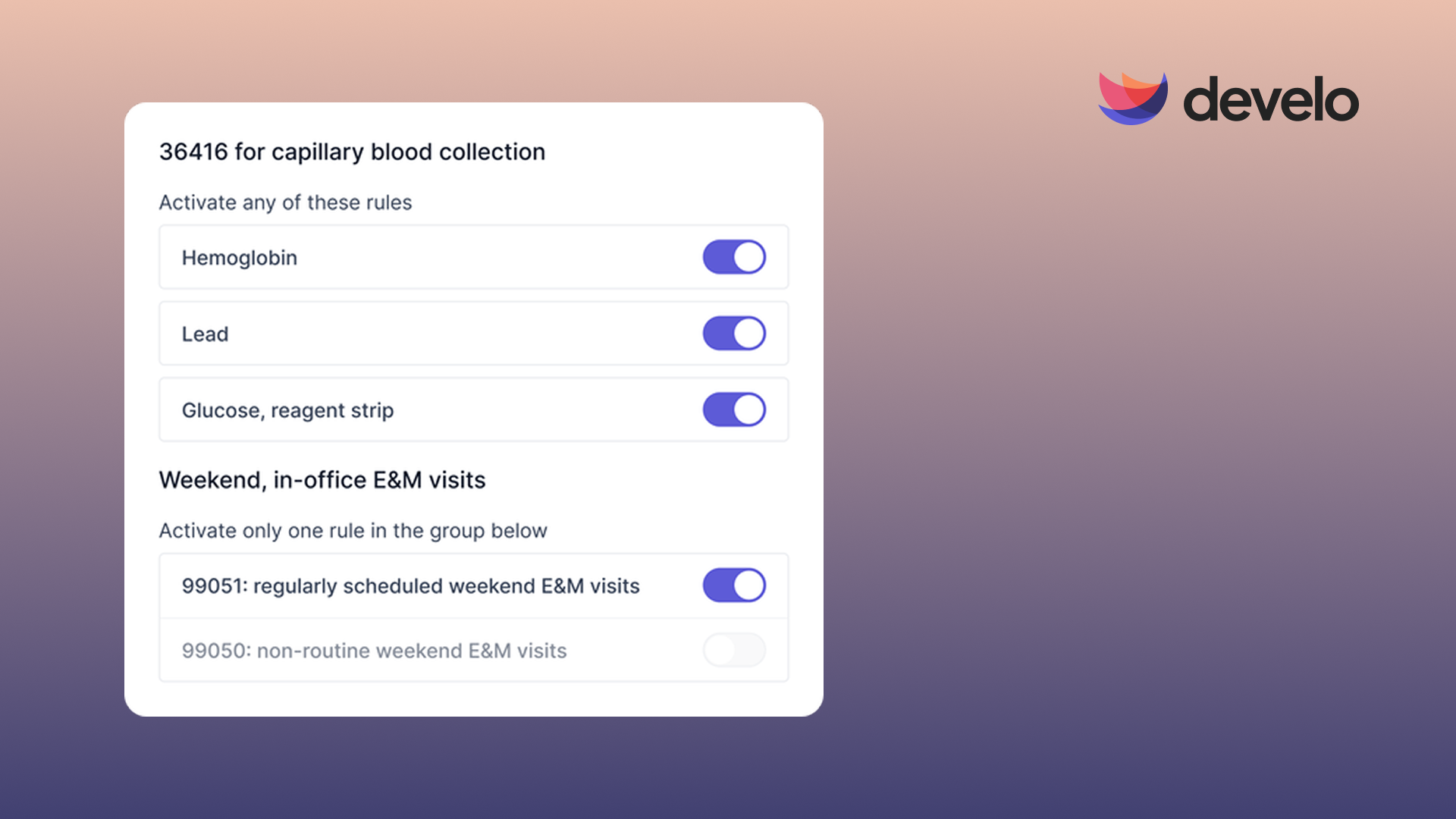
- Automated charge capture: Rules set pediatric codes, units, and modifiers by visit type, and alerts flag possible underbilling to providers, who always make the final coding call. Billing runs in the same system as the chart, with no separate back end.
- Native digital intake: Families complete pre-visit check-in, digital forms, and clinical screeners on their phones, so you don't need Phreesia, CHADIS, or IntakeQ.
- Family relationship management: Blended families, multiple guardians, and sibling links are built into the chart, with adolescent confidential information kept separate.
- Family portal: Parents see detailed statements for each guarantor and pay balances in full or in part across siblings, all in one mobile-friendly view. They can also share photos and files and view each child's records, and automated visit reminders reach both patients and caregivers.
- Browser-based and always current: Develo runs in any browser, with no workstation installs or office server, and ships minor releases weekly and major releases biweekly with zero downtime. E-fax and two-way exchange with state vaccine registries are built in.
- Support that knows pediatrics: An onshore, in-house support team fluent in pediatric workflows and billing, with a 24/7 on-call engineer for critical issues.
- Comprehensive pricing: Charting, billing, practice management, and family engagement come under one quote, sized to practice volume, with implementation, training, and data migration in the subscription rather than priced as add-ons. AI capabilities are priced separately.
For independent pediatric clinics of any size, Develo brings intake, screeners, charting, billing, and the family portal into one system, with product updates shipped every week.
Book a demo and we'll show you billing live, from check-in to claim submission, in the same system as the chart.
Frequently Asked Questions
Does PCC Offer a Free Trial?
PCC doesn't advertise a free trial, and its standard contract term is three years. You can request a one-on-one consultation and demo through its website.
Does PCC Pricing Include a Patient Portal?
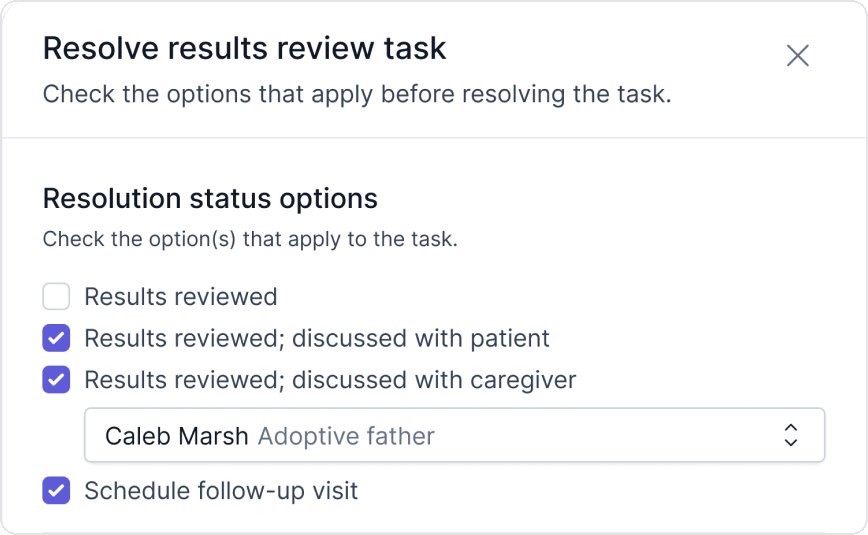
Yes, PCC's monthly fee includes My Kid's Chart, its patient portal. Parents can view immunization records, schedule visits, and message the practice at no extra cost. Families can also see unpaid charges by visit and pay a balance, but PCC's documentation doesn't describe a statement there, and the statements themselves go out on paper. Before you sign, ask how access gets set up for each child, for parents in separate households, and when the guarantor isn't the parent who brings the child in. Develo's family portal works from one set of family demographics, so caregivers get access automatically, with guardian and guarantor relationships linked to each child.
How Long Is the PCC EHR Contract?
The standard PCC EHR contract is three years, and an early termination fee applies if you leave before it ends.
Does PCC Include Billing Software?
Yes, PCC includes billing software, PCC Billing, in its monthly fee. It covers claims management, revenue cycle workflows, and financial reporting. PCC's own documentation says some advanced billing tasks still run in Partner, PCC's older billing back end that predates its EHR, including claim corrections, rebatching, collections, fee schedules, and financial reports. Partner screens are keyboard-driven and opened by typed program names, so billers work across two systems and new billers take longer to learn the workflow. Ask PCC to show you Partner during your billing demo.
Does PCC Have an AI Scribe or Automated Charge Capture?
Yes, PCC has an AI scribe, PCC Scribe, sold as an optional monthly add-on with a small implementation fee. PCC hasn't publicly announced an automated charge capture feature.
Can You Migrate From PCC to Develo?
Yes. PCC is one of the source systems on Develo's data migration page. Migration templates are built for each source system, and migration is included in implementation rather than charged as a separate fee. Whichever system you move to, ask how it will carry over immunization histories with lot numbers and VFC eligibility, growth and vitals series, and links between siblings and caregivers.