
.avif)
HEDIS scores affect how pediatric clinics measure preventive care performance across visits, immunizations, screenings, and follow-up care. Strong performance can help clinics identify care gaps earlier, improve operational efficiency, and support value-based care initiatives.
Here’s how to improve HEDIS scores in your clinic in 2026, with 7 practical methods you can use without creating extra administrative work.
What Are HEDIS Scores?
HEDIS stands for Healthcare Effectiveness Data and Information Set. It's a standardized set of performance measures developed by the National Committee for Quality Assurance (NCQA) to evaluate how well health plans and providers deliver care.
For pediatric clinics, HEDIS measures track things like well child visit rates, childhood immunization status, BMI screening, adolescent depression screening, and lead testing.
Payers use these scores to determine quality bonuses, value-based contract eligibility, and even network inclusion.
The measurement year runs January 1 through December 31. Health plans collect HEDIS data from claims, medical records, and EHRs, then report results to NCQA. Plans then compare provider performance against national benchmarks and percentile thresholds.
Here's why this matters to your bottom line: Payers tie HEDIS performance to pay-for-performance (P4P) incentive bonuses and value-based care contracts.
Higher percentile rankings typically mean higher reimbursement rates, quality bonuses, and preferred network placement. Lower rankings can lead to reduced rates or exclusion from certain payer networks.
Exact thresholds vary by plan, but NCQA's benchmarking data gives you a clear picture of where your clinic stands nationally.
The pediatric HEDIS measures that matter most include:
Remember: Understanding which measures apply to your patient population is the first step toward improving HEDIS scores in a targeted way.
How to Improve HEDIS Scores in Your Pediatric Clinic: 7 Ways
There's no single fix for low HEDIS performance. Your clinic's weak spots could be in visit completion, documentation gaps, or outreach failures.
Here are 7 methods that address the most common root causes:
Method 1: Close Well Child Visit Gaps with Automated Outreach
What it is: Using automated text and portal-based reminders to bring patients in for overdue well child visits before the measurement year ends.
How it works: Well child visits drive multiple HEDIS measures at once. A single well child visit can satisfy W30, WCV, CIS, WCC, DEV, and depression screening requirements. That makes them the highest-leverage appointment type for HEDIS performance.
The problem is that many families fall off schedule. Life gets busy. Parents forget. And your front desk doesn't have time to call hundreds of families one by one.
Automated outreach solves this. Your EMR should flag patients who are due or overdue for well child visits and trigger text reminders to caregivers. Families can then book directly from their phones through a family portal or self-scheduling tool.
When to use it: Start running gap reports quarterly, then shift to monthly in Q3 and weekly in Q4 as the measurement year deadline approaches.
What this looks like in practice: A clinic with 2,000 active patients under age 3 might find 20 to 25% haven't completed their required well child visits by September, for example.
According to a study drawing on the National Survey of Children's Health, 27.6% of children in the US delayed or missed well-child visits between June 2021 and January 2022
Running a gap report and triggering targeted text reminders in Q3 and Q4 gives you three full months to recover those patients before the measurement year closes.
Method 2: Automate Immunization Tracking and Registry Reporting
What it is: Using your EMR's built-in immunization management to track vaccine status, forecast what's due, and report to state registries automatically.
How it works: Childhood Immunization Status (CIS) is one of the most heavily weighted pediatric HEDIS measures.
It requires completion of the Combo 10 vaccine series by a child's second birthday. Current NCQA specifications include DTaP, IPV, MMR, HiB, Hep B, VZV, PCV, Hep A, Rotavirus, and influenza, though exact measurement specifications can vary by measurement year.
Tracking this manually is a recipe for missed doses. Your EMR should forecast which vaccines are due for each patient based on each patient's age and immunization history.
It should also automatically submit administered vaccines to your state's immunization registry through a bidirectional connection.
Bidirectional registry integration matters here. If a patient received a vaccine at a hospital or urgent care, that dose should pull back into your chart.
Without it, you risk duplicate administration or, more commonly, marking a patient as non-compliant when they're actually up to date.
When to use it: This should run in the background during every visit. Make it a standing part of your well child and sick-visit workflows so your MAs and nurses see vaccine alerts before the provider walks into the room.
What this looks like in practice: Automated vaccine forecasting and bidirectional registry connections can help reduce missed doses and improve visibility into patient immunization status.
The key factor is visibility. When your EMR alerts staff to exactly which antigens a patient still needs before they walk in the door, missed doses drop significantly.
Method 3: Standardize Clinical Screeners Across Every Visit
What it is: Deploying age-appropriate digital screeners before or during visits so that developmental, behavioral, and mental health measures are captured consistently.
How it works: HEDIS measures like Developmental Screening (DEV), Depression Screening and Follow-Up (DSF), and Weight Assessment and Counseling (WCC) all require documented evidence of standardized screening.
If your providers are doing these assessments verbally but not recording them in a structured, billable format, those visits won't count toward your HEDIS numerator.
Digital screeners change this. When a family checks in, the platform can send age-appropriate questionnaires to the caregiver's phone.
The screeners auto-score, populate into the chart, and trigger the correct billing codes. That's three problems solved at once: clinical documentation, HEDIS compliance, and revenue capture.
When to use it: Every well child visit, every adolescent visit for depression screening, and any visit where a care gap flag appears for that patient.
What this looks like in practice: Paper-based screener workflows are prone to incompletion. Forms get lost, staff forget to hand them out, and scoring is manual.
Digital pre-visit screeners can reduce workflow bottlenecks by allowing families to complete forms before arriving, rather than relying entirely on in-office staff handoffs and paper workflows.
Method 4: Use Data to Identify At-Risk Patients Before Deadlines
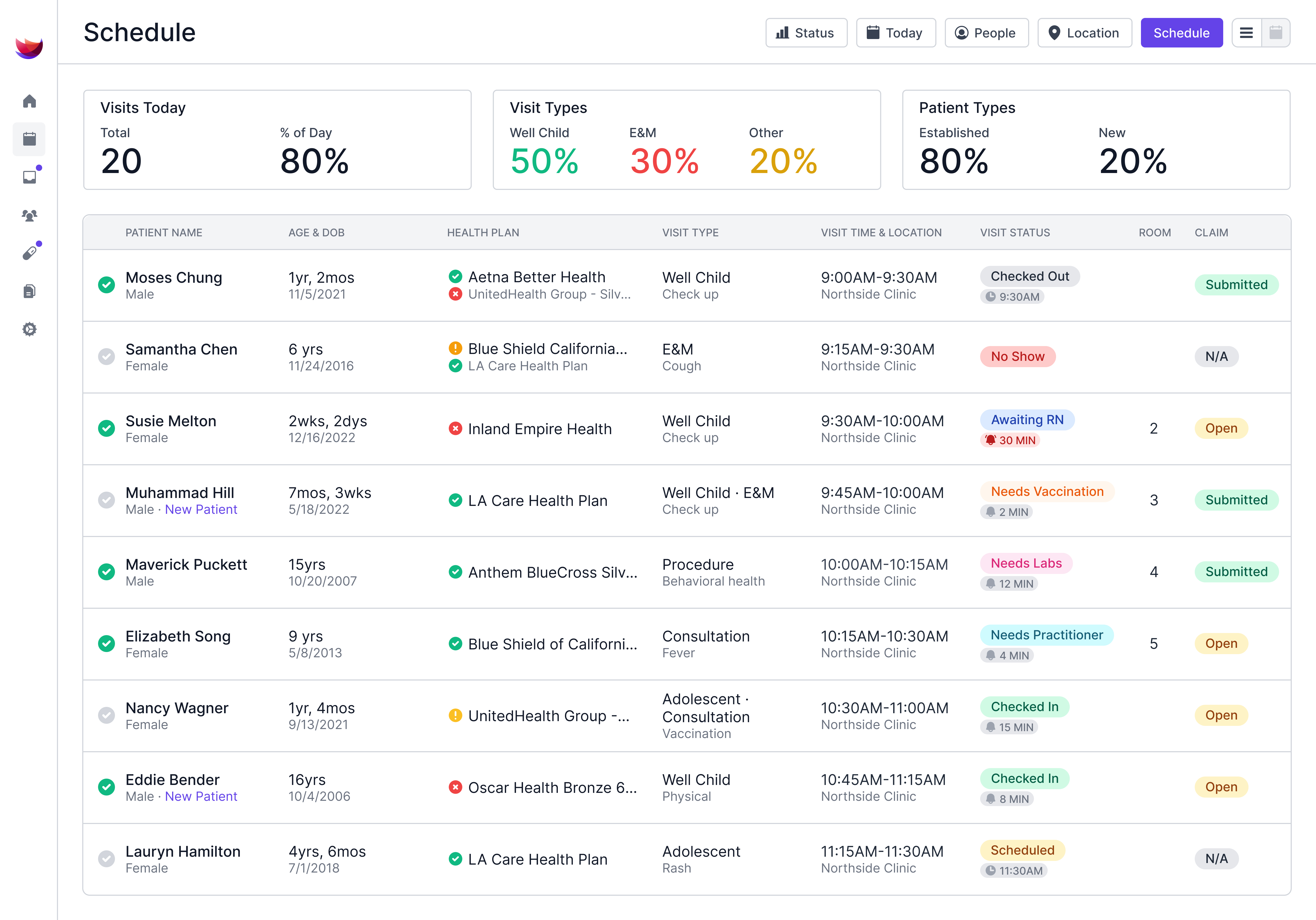
What it is: Running gap-in-care reports from your EMR to proactively identify patients who are falling behind on HEDIS-relevant services.
How it works: Most pediatric EMRs can generate reports that show which patients are missing required visits, vaccines, or screenings. The key is to run these reports regularly and act on them before the measurement year closes.
A good gap report should filter by measure, age group, and payer. For example, you might pull a list of all Medicaid patients between ages 3 and 11 who haven't had a well child visit yet this year. Or flag every 12-year-old who is missing their adolescent immunization combo.
Assign someone on your team to own this process. That person reviews reports, coordinates outreach, and tracks which patients have been contacted.
When to use it: At least quarterly. Monthly starting in Q3. Weekly in November and December.
What this looks like in practice: Assign one team member to review gap reports biweekly. That person pulls lists by measure and payer, contacts families who are overdue, and tracks outreach outcomes.
Method 5: Optimize Billing and Documentation Accuracy
What it is: Aligning your documentation and charge capture workflows so that every completed HEDIS service is properly coded, billed, and visible to payers.
How it works: You can deliver perfect care and still score poorly on HEDIS if your documentation doesn't support it. Payers pull HEDIS data from claims first.
If a well child visit isn't coded correctly, or a developmental screener isn't linked to the right CPT code, it won't show up in your HEDIS numerator.
Here's where it gets specific for pediatrics. Vaccine administration codes (90460, 90461, 90471 to 90474) have payer-specific rules based on the child's age and insurance type.
HEDIS WCC documentation requires recording the BMI percentile for patients ages 3 to 17 rather than a raw BMI value. Pediatric clinics also need accurate WHO charts and percentile tracking workflows to support compliant documentation.
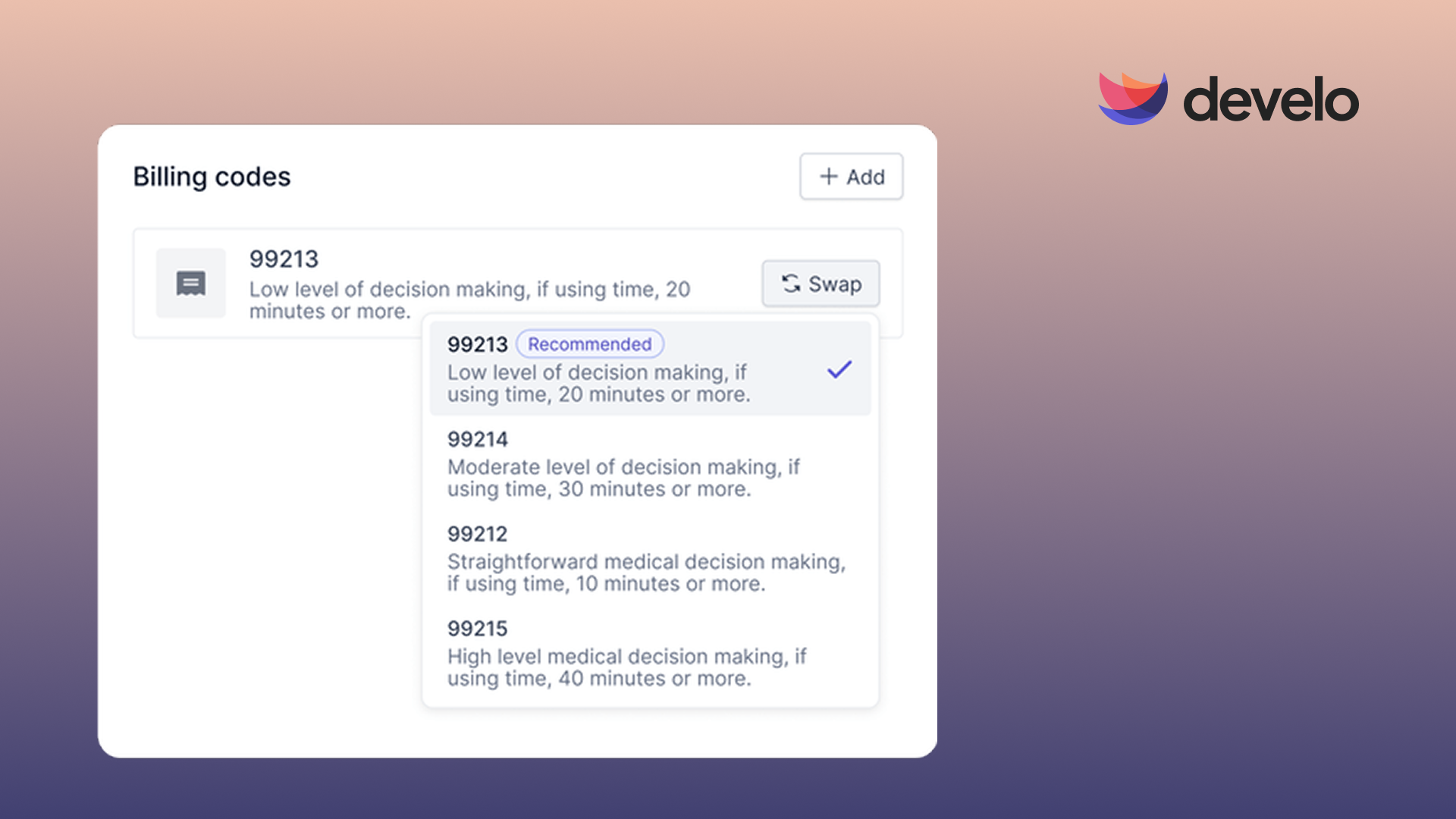
Automated charge capture can handle a lot of this. Look for an EMR that automatically applies billing codes based on the visit type, patient age, and documented services. That reduces the chance of undercoding and missed revenue.
Review your growth chart, including documentation, too. HEDIS WCC requires BMI percentile charting, and if your EMR doesn't automatically calculate and record it, your providers will forget.
When to use it: This is an ongoing operational improvement. Audit a sample of charts monthly to catch patterns.
Method 6: Improve Patient and Family Engagement
What it is: Reducing no-shows, re-engaging inactive families, and making it easier for caregivers to complete visit requirements through digital tools and communication.
How it works: HEDIS scores depend on patients actually showing up. Pediatric no-show rates can reach up to 30% in some settings, and every missed well child visit is a missed HEDIS opportunity.
Text-based appointment reminders make a measurable difference. A meta-analysis and systematic review found that phone and SMS reminders reduced non-attendance by an average of 34% relative to baseline rates.
A randomized controlled trial in an urban pediatric clinic with a 30% baseline no-show rate confirmed that adding text reminders greatly improved appointment adherence. But engagement goes deeper than reminders.
Your family portal should let caregivers view upcoming appointments, complete pre-visit intake forms, and access educational materials. When families can handle paperwork from their phones before arriving, the visit itself becomes more productive.
Consider your waiting room experience, too. A streamlined check-in process with digital intake improves office workflow efficiency and makes families more likely to return on schedule.
For inactive patients, run a report of families who haven't visited in over 12 months and send a targeted re-engagement message. Frame it around their child's health needs, not your clinic's metrics.
When to use it: Appointment reminders should be automated and ongoing. Re-engagement campaigns work best in January (new measurement year) and in September (the final push before year-end).
Method 7: Build a HEDIS-Focused Quality Improvement Team
What it is: Creating a small, cross-functional team that owns HEDIS performance as a standing responsibility.
How it works: HEDIS improvement fails when it's everybody's job and nobody's priority. Designate a quality improvement (QI) lead, even if it's a part-time role. This person should partner with your billing manager, a clinical champion (provider), and your front desk lead.
The QI team should meet monthly to review gap reports, track progress against benchmarks, and troubleshoot bottlenecks. Are screeners not getting completed? Dig into why. Is BMI counseling consistently missing from one provider's documentation? Coach them specifically.
Set specific targets for each measure. "Improve HEDIS scores" is too vague. "Increase CIS Combo 10 rates from 62% to 75% by December" gives your team a number to chase.
Use NCQA's benchmarking resources to compare your clinic's performance against national percentiles. If you're at the 25th percentile on a measure, aim for the 50th percentile first.
When to use it: This should be an ongoing initiative with monthly check-ins and quarterly strategy reviews. The QI team should start in January to set targets and ramp up outreach cadence through Q3 and Q4.
Which Method Should You Choose?
The right starting point depends on where your biggest gaps are. Here's a quick guide:
Choose Method 1 (Well Child Outreach) if:
- Your well child visit completion rates are below the 50th percentile
- You have a large number of patients who haven't visited in over 12 months
Choose Method 2 (Immunization Tracking) if:
- Your CIS or adolescent immunization rates are lagging
- You're still manually tracking vaccines or lacking bidirectional registry integration
Choose Method 3 (Standardized Screeners) if:
- Developmental, depression, or BMI screening rates are your weakest HEDIS measures
- Providers do screenings, but documentation doesn't capture them in a structured format
Choose Method 4 (Gap Reports) if:
- You don't currently run care gap reports at all
- You have the outreach infrastructure, but aren't targeting the right patients
Choose Method 5 (Billing Accuracy) if:
- You suspect you're delivering care that isn't being captured in claims
- Denial rates are high for preventive visit codes
Choose Method 6 (Family Engagement) if:
- No-show rates are above 20%
- Family portal adoption is low
Choose Method 7 (QI Team) if:
- Nobody in your clinic currently owns HEDIS performance
- You've tried other methods, but lack coordination and follow-through
Most clinics benefit from a combination. Start with the two or three methods that target your weakest measures, then expand from there.
Best Practices for Improving HEDIS Scores
Regardless of which methods you choose, these practices apply across the board:
📅 Run gap reports on a consistent schedule: Quarterly at minimum, monthly in the second half of the year, and weekly in November and December. Consistency beats intensity.
📋 Document everything in structured fields: Free-text notes don't count for HEDIS. BMI percentiles, screener scores, and counseling topics need to live in discrete, reportable data fields within your EMR.
🤝 Engage families as partners, not patients: Send reminders, provide educational resources through your family portal, and make it easy to schedule and complete visits. The more accessible your clinic is, the fewer gaps you'll have.
🔄 Treat every visit as a HEDIS opportunity: Sick visits are missed opportunities if your team doesn't check for outstanding care gaps. An MA who flags a missing vaccine or overdue screener during a sick visit can close a gap that might otherwise stay open until the next well child appointment.
📊 Benchmark against national data: Percentile benchmarks are available through NCQA's Quality Compass, and clinics can use them as targets (via their contracted payers' P4P programs).
Use them if possible. Knowing where you stand compared to peers makes your targets specific and your progress measurable.
How to Improve HEDIS Scores Easier with Develo
Develo is an AI-native operating system for pediatrics, unifying clinical (EMR), billing (RCM), and family engagement (CRM) capabilities, built from day one exclusively for outpatient pediatric care.
If you're looking for how to improve HEDIS scores without adding manual work to your team's plate, Develo's automation-first platform can help you close care gaps faster, rather than just orienting around HEDIS reporting without the performance management.
Here's how it supports HEDIS performance:
- Automated immunization forecasting and state registry integration: Connects bidirectionally with state immunization registries, so vaccine records stay current, and CIS rates improve without manual data entry.
- Digital clinical screeners sent pre-visit: Age-appropriate developmental, behavioral, and mental health screeners are auto-populated based on the patient's age, completed on caregivers' phones, automatically scored, and billed.
- AI-powered charge capture for pediatric billing codes: Automates billing code selection based on visit documentation, patient age, and insurance type, reducing undercoding and missed revenue on preventive visits.
- Family-centered engagement tools: Automated visit reminders, pre-visit digital intake, payment reminders, and a family portal that lets caregivers complete tasks before arriving at the clinic.
- Pediatric-specific workflows and reporting: Built-in well child visit templates, growth chart tracking with automatic BMI percentile calculation, and structured documentation fields that feed directly into HEDIS-reportable data.
You don't need to patch together five different tools to track quality metrics. Develo brings together clinical documentation, screening, billing, and family engagement on one pediatric-focused platform. Book a demo and see how Develo helps your clinic improve HEDIS scores.
Frequently Asked Questions
1. How Long Does It Take to Improve HEDIS Scores?
Most clinics see measurable improvement within one measurement year (12 months) after implementing targeted strategies.
Quick wins like automated outreach and gap reports can show results within a single quarter. Systemic changes like switching EMRs or building a QI team typically take 6 to 12 months to fully impact scores.
2. Which HEDIS Measures Matter Most for Pediatric Clinics?
The highest-impact pediatric HEDIS measures are Well Child Visits in the First 30 Months (W30), Child and Adolescent Well-Care Visits (WCV), Childhood Immunization Status (CIS), Weight Assessment and Counseling (WCC), Developmental Screening (DEV), and Depression Screening and Follow-Up (DSF).
These measures are tied to the most common payer quality incentive programs and affect the largest portion of your patient population.
3. Can a Pediatric Operating System Help Improve HEDIS Scores?
Yes. As the first and only pediatrics operating system, Develo automates many of the workflows that drive HEDIS performance end-to-end.
This includes immunization forecasting, digital clinical screeners, automated visit reminders, and structured documentation fields that translate into downstream performance reporting.
Generic EMRs often lack these pediatric-specific features, which means more manual work and more missed opportunities.
4. What Is the Biggest Barrier to Better HEDIS Performance?
The most common barrier is the lack of visibility into care gaps. Clinics that don't regularly run gap-in-care reports can't identify which patients are missing required visits, vaccines, or screenings.
The second biggest barrier is documentation that doesn't translate into claims. Providers may deliver excellent care, but if it's documented in free text instead of structured fields, payers won't count it.
5. How Do Payers Use HEDIS Scores to Determine Reimbursement?
Payers use HEDIS scores as a key input for pay-for-performance (P4P) programs, value-based care contracts, and quality bonus structures. Clinics that rank in higher percentiles earn bonus payments, preferred network placement, and higher reimbursement rates.
Clinics below benchmarks may face reduced rates or be excluded from certain networks. Medicaid managed care plans and commercial payers both use HEDIS data to evaluate provider performance.
.png)
.avif)