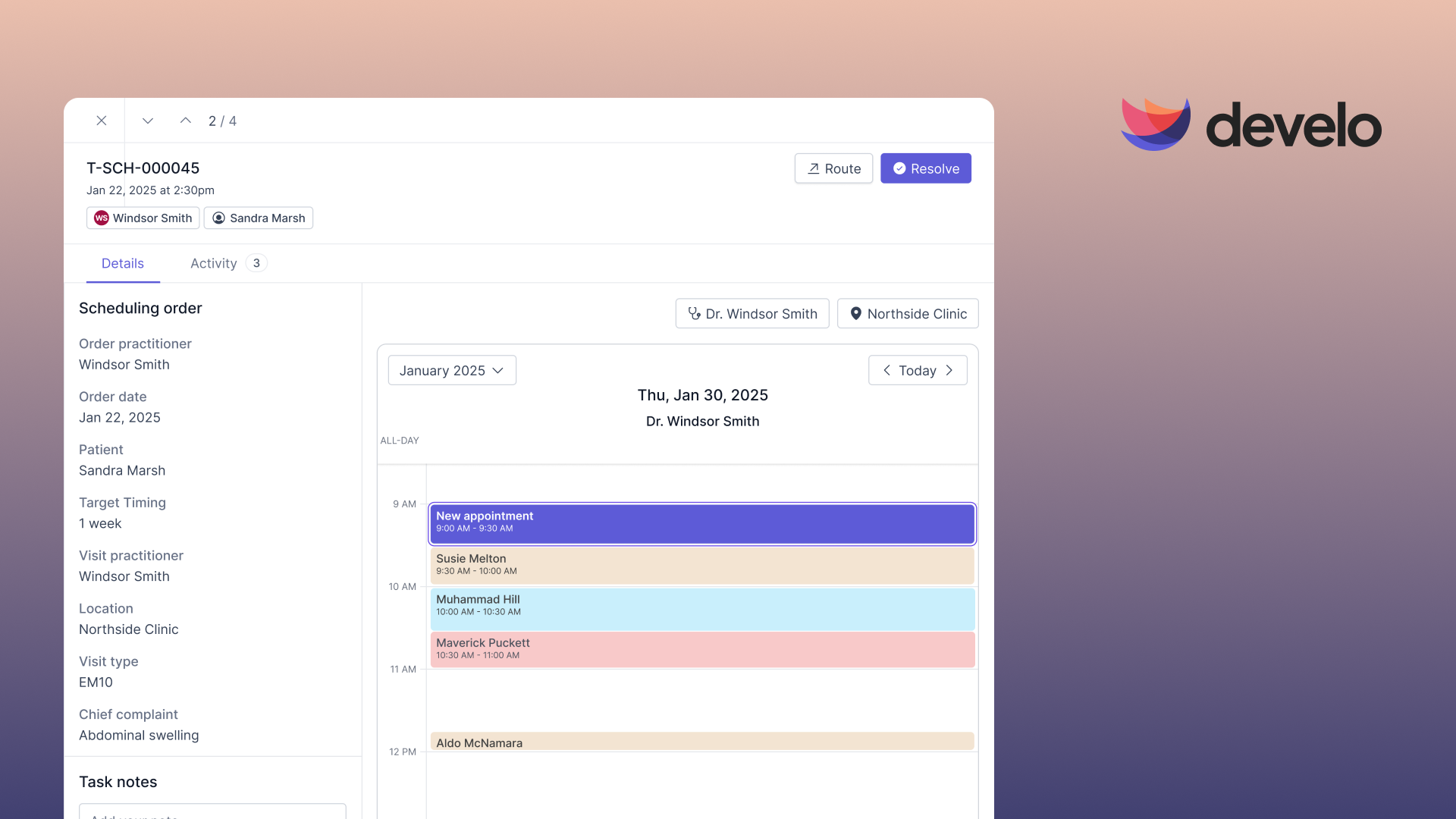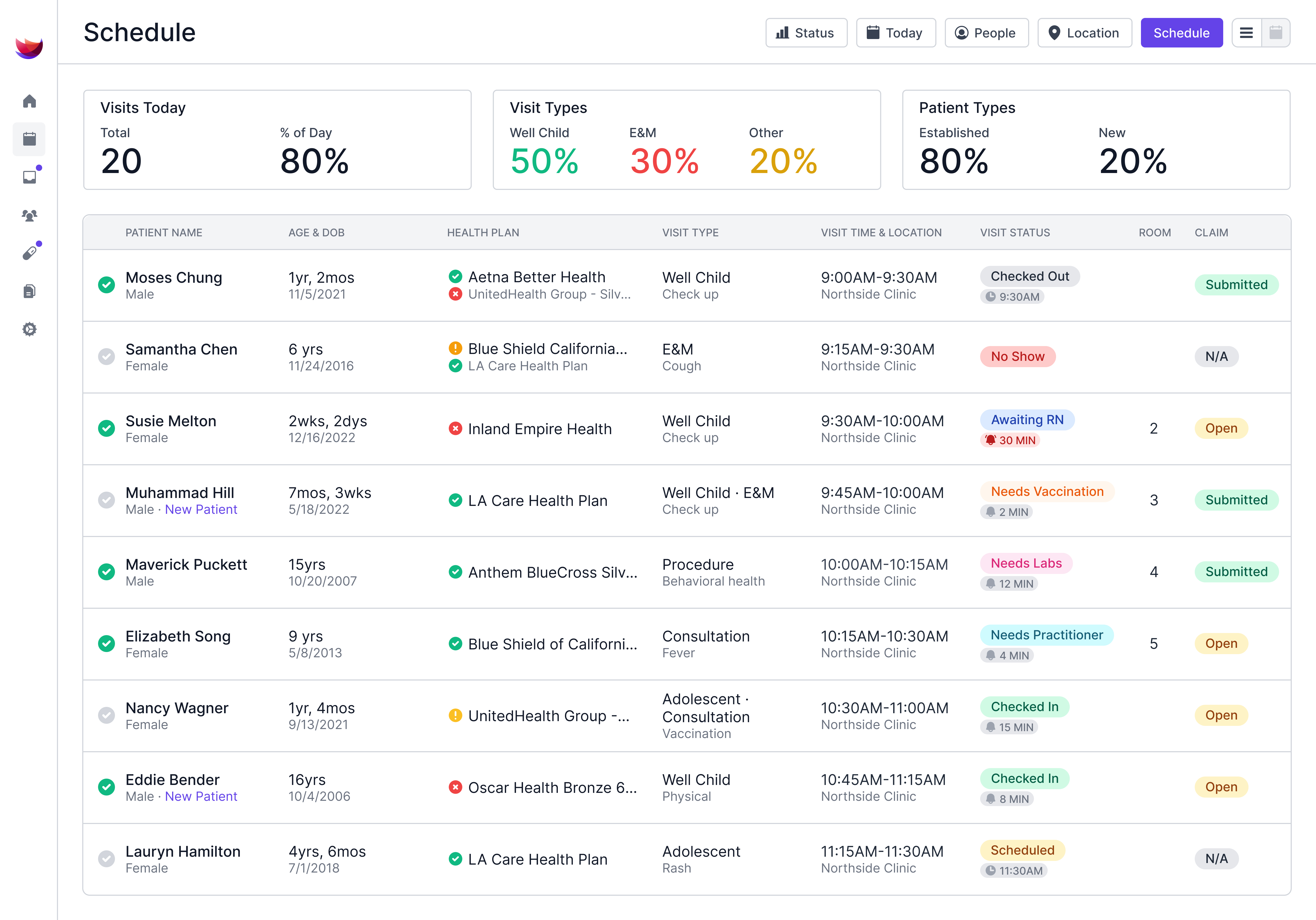


EMR billing speeds up claims by turning the documentation a clinician already creates into the data a clean claim needs, so the visit and the claim run on one system.
Every denied claim traces back to something that happened before it was sent: a missing code, an unverified plan, or a note that didn't support the charge. Linking records to billing catches those problems while they're still cheap to fix, before a claim ever goes out.
What Is EMR Billing?
EMR billing uses an electronic medical record to run the billing workflow, so the documentation from a visit feeds directly into the codes, checks, and claims that follow. The record and the claim share the same data, so no one re-reads a note and re-enters it.
When the record and the billing system are a single flow, a service documented at the point of care becomes a coded, checked, and submittable claim in one pass.
How a Connected Record Moves a Claim From Visit to Payment
A connected system carries a claim through a series of steps, each one catching errors that the next would otherwise inherit.
Documentation at the Point of Care
The clinician documents the visit, and the record prompts for the details a claim needs. Complete, structured documentation at this stage is what supports the codes later, since a charge is only as defensible as the note behind it.
Code Capture
The system maps the documented services to the right CPT, ICD-10, and HCPCS codes, either suggesting them from the note or applying them automatically. Accurate documentation becomes an accurate charge, so no biller has to guess a clinician's intent.
Eligibility and Claim Scrubbing
Eligibility is verified before the visit, so a lapsed or changed plan surfaces at check-in rather than in a denial. Before the claim is sent, the system runs it against payer rules to catch missing fields, mismatched codes, or coverage issues.
Pediatrics adds two eligibility traps. A newborn is often seen before a member ID exists, so early claims run against the mother's policy or a pending ID until the baby is added, and coverage generally back-dates to birth. Medicaid and CHIP coverage renews once a year, so a child's plan can lapse between two well child visits with no notice to the practice. Checking eligibility before every visit, not once a year, catches both.
The system should also flag services that need prior authorization, which in pediatrics often means some imaging, palivizumab (Synagis) for RSV, and specialty referrals under HMO plans, so a claim isn't denied for a missing authorization or referral number. Fixing these here, before a denial, lifts first-pass acceptance.
Electronic Submission and Tracking
The clean claim is submitted electronically to the clearinghouse and payer, often within seconds. Real-time tracking then shows payer responses and rejections, so staff can follow up and resubmit the same day a rejection lands.
Why Connected Billing Reduces Denials
Most denials trace back to preventable errors: an incorrect insurance ID, a missing modifier, or a code the note doesn't support. In Change Healthcare's 2020 Denials Index, drawn from hospital claims, 86% of denials were potentially avoidable, and registration and eligibility was the largest single cause, at about 26.6%. Each preventable denial is a claim a practice has to rework, which delays payment and ties up staff time.
A connected EMR catches those errors at the point they happen. The documentation drives the code, the eligibility check runs before the visit, and the scrubber flags problems before submission.
The 2025 CAQH Index puts the medical industry's savings opportunity from automating routine transactions at $18.7 billion, across providers and health plans combined. In the 2024 edition, eligibility and benefit verification alone accounted for $11.7 billion of an $18.4 billion total, the largest share of any transaction.
The result is more claims accepted the first time, fewer reworks, and a shorter wait between the visit and the payment.
Common Billing Mistakes
Even with a connected system, a few patterns cost practices revenue:
- Unsupported documentation: a charge with no note behind it will not survive a denial or an audit.
- Skipping eligibility checks: checking coverage only when the schedule allows is a leading source of preventable denials.
- Manual re-entry between systems: retyping data from the record into a separate billing system introduces typos and dropped charges.
- Ignoring rejections: electronic rejection notices left to sit cost a practice its window to resubmit while the claim is still timely.
- Billing as a back-office step: when billing is kept separate from documentation, errors can go unnoticed until weeks after the visit.
Types of EMR and What They Mean for Billing
Systems fall into one of three billing camps:
- A general ambulatory traditional EMR covers many specialties and handles pediatric rules through configuration, where it can.
- A pediatric-specific traditional EMR knows pediatric codes and VFC handling, but its billing automation sits on an older foundation, with multiple capabilities added later on as separate add-on modules rather than built into the workflow.
- A pediatric operating system builds pediatric billing rules in, so age-based codes, vaccine components, and Vaccines for Children (VFC) handling work without setup, and runs AI and automation natively across documentation, coding, eligibility, and claims.
For a practice that bills mostly well child visits and immunizations, a pediatric operating system turns what would be a configuration project into clean claims out of the box.
Why Pediatric Billing Needs More Than a Generic System
Pediatric billing runs on rules that a traditional EMR, general ambulatory or pediatric-specific, handles only through configuration, and the misses turn into denials.
- Age-based preventive codes: well child visits bill under age-specific preventive codes (99381–99385 for new patients, 99391–99395 for established), so the system ties the code to the child's age and visit type.
- Vaccine administration coding: per the AAPC, 90460 and 90461 apply when a physician or other qualified professional counsels face-to-face with a patient who is 18 or younger. 90460 covers the first component, 90461 each additional. Without counseling, or for patients over 18, use 90471–90474.
- VFC vs. private stock: a VFC dose bills only the administration code, because the vaccine itself is free to the practice, and many Medicaid programs require the vaccine product code on the claim at $0 or with the SL (state-supplied) modifier. A private-stock dose bills both the vaccine and its administration. The claim has to follow the vial, so the VFC eligibility captured at check-in has to reach the lot chosen in the exam room.
- Screening documentation: developmental screening billed under 96110, once per standardized instrument, only when the note records the tool, the score, and the interpretation, so the documentation and the code must move together.
- Same-day sick and well visits: when a child is seen for both, modifier 25 on the sick-visit E/M code plus clearly separated documentation is what gets both services paid.
- Medicaid-heavy panels: nearly half of U.S. children are insured by Medicaid or CHIP, so many pediatric practices carry a large Medicaid share, which brings frequent re-verification and payer rules that a generic system isn't tuned for.
A traditional EMR can be configured toward these, but configuration isn't the same as modern billing logic built for pediatrics, and a practice feels that in coding errors and reworked claims.
Modern Billing Built for Pediatrics
The cleanest way to connect documentation and billing in a pediatric practice is to run both within a system that already understands pediatric rules. Develo is the AI-native pediatric operating system built solely for independent pediatric practices, unifying charting, billing, practice management, and family engagement in one system, so the record and the claim run as a single workflow.
Its automated charge capture sets pediatric billing codes, units, modifiers, and visit diagnoses through rules configured by visit, and completed orders carry their own billing and diagnosis codes into the charge, so a vaccine given or a screen finished lands on the claim without a separate coding pass.
Because it was built for children's practices, the pediatric coding rules are already built in. Screening codes apply when the score is documented, same-day visits carry the correct modifier, and real-time eligibility checks run automatically at scheduling and check-in, with co-pay and coverage details surfaced to staff.
From there, claims go through pre-submission checks and are submitted automatically, ERAs are posted, corrected claims are re-billed, and denials land in a prioritized work queue so billers work on exceptions rather than stacks. Practices that would rather hand off the work entirely can use Develo's embedded billing services: pediatric-only billers working inside the same system, with AI-powered revenue cycle intelligence surfacing reimbursement opportunities automatically.
Develo’s AI scribe writes straight into the visit note section by section, using chart context beyond the transcript, such as problem lists, immunizations, and screening results, so the note that drives the claim is ready for review by the end of the visit. With Develo reports Q&A, billers and practice leaders can ask plain-English questions of the practice's clinical and administrative data and get back detailed text and graph answers.
Book a demo to see how Develo turns pediatric documentation into clean claims.
Frequently Asked Questions
How Does an EMR Reduce Claim Denials?
An EMR reduces claim denials by catching errors before submission. It ties codes to the documentation, verifies eligibility before the visit, and scrubs claims against payer rules, so preventable problems are fixed before a claim goes out.
What Is the Difference Between EMR and EHR in Billing?
The difference is scope. An EMR is the chart used within one practice, while an EHR shares records across organizations. Both support billing the same way, by turning documentation into billing-ready data, so the billing mechanics apply to either system.
Does Billing Software Replace a Biller?
No, billing software doesn't replace a biller. It automates the repetitive, error-prone steps: code capture, eligibility, and scrubbing. Billing staff spend less time on manual entry and more on denials, appeals, and the cases that need judgment.
Why Is Pediatric Billing Different?
Pediatric billing differs because it uses age-based codes, vaccine administration and VFC rules, screening documentation, and same-day visit modifiers. A generic EMR handles these only through configuration, so a pediatric operating system produces cleaner claims with fewer denials.
.png)
.avif)
.avif)